
 Worksheets
Resistance to Social Influence and Minority Influence
Total questions: 32
Worksheet time: 16mins
What does resistance to social influence refer to?
The ability to always conform to group pressure
The ability to remain independent despite pressures to conform or obey
The tendency to obey authority figures
The inability to make decisions independently
Social support can help people resist conformity.
True
False
In a variation of Asch’s study, when the participant was in a group with a confederate who gave the correct response, conformity levels dropped from ____% to 5.5%.
32%
50%
20%
75%
According to research, what happened to conformity rates when the 'dissenter' in Asch's study wore thick glasses and admitted to a sight problem?
Conformity rates increased
Conformity rates stayed the same
Conformity rates dropped
Conformity rates were not measured
Albrecht et al (2006) found that pregnant teenagers aged 14-19 who were given a 'buddy' as social support were ____ likely to smoke than those not given a buddy.
less
more
equally
not
Social support can help people resist obedience. The pressure to obey can be reduced if another person _____
disobeys
agrees
leaves
remains silent
In one of Milgram’s variations, when two confederates refused to continue, obedience to continue to 450 volts fell to what percentage?
32%
10%
50%
5.5%
What does the term 'locus of control' (LOC) refer to?
A) Individual differences in beliefs about what controls events in their lives
B) The ability to control other people
C) The tendency to obey authority
D) The need for social approval
Which type of locus of control is associated with being less likely to conform and less likely to obey?
Internal LOC
External LOC
Fill in the blank: People with a strong internal locus of control are more likely to be ______ to social influences.
resistant
susceptible
vulnerable
open
People with an external locus of control are more likely to conform or obey.
True
False
According to the evaluation, what did Gamson (1982) find about group discussion and obedience?
It increased obedience
It reduced obedience
It had no effect on obedience
It made people more likely to conform
African-American college students who participated in civil rights activities in the early 1960s were higher on ______ locus of control than those who weren’t interested in taking part.
internal
external
random
fixed
According to Atgis (1999), people with an external locus of control are more easily persuaded and likely to conform than those who are internal.
True
False
A replication of Milgram’s study by Holland found that 37% of internals refused to obey to the full voltage, whereas only 23% of externals did so. What does this support?
Internals are more likely to resist obedience than externals
Externals are more likely to resist obedience than internals
Both groups are equally likely to resist obedience
Obedience is not related to locus of control
What does minority influence refer to?
When a large group influences a small group
When one person or a small group influences the beliefs and behaviours of other people
When the majority always agrees with the minority
When everyone has the same opinion
Fill in the blank: Minorities are more powerful if they demonstrate dedication and perseverance even in the face of opposition, for example, by making personal sacrifices and _________
risk-taking
complaining
withdrawing
ignoring
According to Nemeth (1986), why is flexibility important in minority influence?
Because being rigid is always persuasive
Because flexibility allows the minority to adapt and accept reasonable counter-arguments
Because flexibility means changing opinions constantly
Because flexibility is not important at all
Consistency in minority influence can involve which of the following?
Synchronic consistency
Diachronic consistency
Both A and B
Neither A nor B
Fill in the blank: The process by which the minority viewpoint gradually becomes the majority view is known as the ________ effect.
snowball
domino
cascade
echo
High levels of commitment from the minority can lead the majority to question why the minority feels so strongly, prompting deeper processing of the minority's message.
True
False
According to the worksheet, what factor is supported by research as being influential in persuading a majority?
Consistency
Flexibility
Authority
Obedience
Martin et al (2003) found that individuals who had originally heard the message from the minority group were more resistant to changing their opinions when exposed to the conflicting view.
True
False
According to the worksheet, being flexible and compromising can cause minority influence.
True
False
In the Moscovici et al (1969) study, how many participants were in each group?
6
4
8
10
In the Moscovici et al (1969) study, what percentage of trials did participants give the same wrong answer as the minority on at least one trial?
8.4%
32%
1.25%
50%
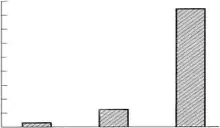
Refer to the graph provided. Which group had the highest percentage of agreement?
Control
Inconsistent minority
Consistent minority
Nemeth and Brilmayer’s (1987) experiment was based on a mock jury in which groups of ___ participants and 1 confederate had to decide on the amount of compensation to be given to the victim of a ski lift accident.
3
5
7
10
In Nemeth and Brilmayer’s (1987) experiment, what happened when the minority (a confederate) remained consistent and refused to change position?
He influenced the majority
He had no effect on the majority
The majority immediately agreed with him
The experiment was stopped
The study by Nemeth and Brilmayer (1987) is supported by many other similar studies, suggesting it has high internal validity.
True
False
According to the evaluation, the study is a laboratory experiment and therefore may not reflect real life minority influence.
True
False
When the confederate in Nemeth and Brilmayer’s (1987) experiment compromised and moved some way towards the majority view, what did the majority do?
They also compromised and changed their view.
They became more rigid in their opinion.
They ignored the confederate's compromise.
They asked the confederate to revert to their original position.

