
 Worksheets
Tema 3 Materiales (Ingles)
Total questions: 30
Worksheet time: 15mins
What are raw materials according to the text?
Substances obtained directly from nature used to make common objects
Materials created artificially in laboratories
Objects that are already manufactured
Substances that cannot be found in nature
What is the main characteristic of natural raw materials?
They are artificially created
They have undergone no transformation
They are extracted from factories
They are only used for decoration
Diagram showing examples of raw materials categorized as animal, vegetal, and mineral.
Diagram showing examples of raw materials categorized as animal, vegetal, and mineral.
Diagram showing examples of finished products categorized as animal, vegetal, and mineral.
Diagram showing examples of raw materials categorized as synthetic, vegetal, and mineral.
Diagram showing examples of raw materials categorized as animal, synthetic, and mineral.
What is the main focus of the science of materials?
Studying the composition and microstructure of elements to design new materials.
Investigating the properties of existing materials without modification.
Creating materials without considering their application.
Designing materials only for aesthetic purposes.
What is the purpose of biomaterials?
To manipulate materials at a nanometric scale.
To replicate biological processes for applications in bones, tissues, and muscles.
To respond to physical or chemical stimuli.
To create materials for aesthetic purposes only.
What are artificial materials obtained from?
Natural materials without any transformation
Raw materials transformed through physical and chemical processes
Materials found directly in nature
Materials created without any human intervention
What is the main polymer obtained from petroleum used to create metacrylate?
Gasoline
Nafta
Lubricant
Residues
What process follows extrusion in the production of metacrylate?
Granulation
Lamination
Polymerization
Cooling
What is the purpose of the extruder in the production process?
To cool the polymer
To shape the polymer into sheets
To heat the polymer
To mix the polymer with other substances
Which group of materials is obtained from natural or synthetic cellulose?
Metals
Polymers
Ceramics
Composites
What is a characteristic of composites?
They are porous and fragile.
They are lightweight and resistant to corrosion.
They combine properties of different components.
They conduct electricity and resist impact.
Which material group includes wood and its derivatives?
Metals
Polymers
Others like wood and its derivatives
Composites
What is the main characteristic of intelligent biomaterials?
They are materials manipulated to respond in a controlled way to external stimuli.
They are materials that can repair themselves after damage, such as scratches.
They are materials used only in dental applications.
They are materials that do not interact with external stimuli.
Which type of material changes its color when subjected to variations in temperature, light, or pressure?
Materials with memory of shape.
Materials piezoelectrics.
Materials chromoactives.
Materials magnetoreologics.
Which type of material emits light when powered by electrical impulses?
Materials electro-luminescents.
Materials piezoelectrics.
Materials magnetoreologics.
Materials chromoactives.
Which type of material can return to its original shape after deformation?
Materials with memory of shape.
Materials piezoelectrics.
Materials chromoactives.
Materials electro-luminescents.
What is the relationship between the mass and volume of a material called?
Magnetism
Density
Optical properties
Resistance to oxidation
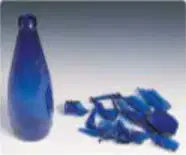
What is an example of a material with high fragility?
Wood
Glass
Rubber
Steel
What is the consequence of "pesca intensiva" (intensive fishing) as mentioned in the text?
Increase in fish populations.
Disappearance of species due to overfishing.
Reduction in ocean pollution.
Creation of new fishing zones.
What is the impact of contamination caused by human activities?
Enrichment of soil and water.
Damage to the soil, oceans, and atmosphere.
Reduction in solid waste production.
Increase in biodiversity.
What does "impacto ocasionado por la ocupación del territorio" (impact caused by land occupation) refer to?
The creation of new ecosystems.
The modification of natural conditions due to human activities.
The reduction of pollution in urban areas.
The increase in water resources.
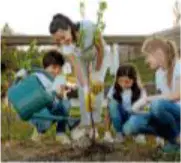
Why is reforestation and creating parks and green areas important for the environment?
It helps maintain green lungs and beautifies the community.
It increases pollution in urban areas.
It reduces the availability of green spaces.
It promotes the use of non-biodegradable materials.
What is one way to regenerate a burned area after a fire?
Planting species different from those that existed before the fire.
Leaving the area untouched indefinitely.
Planting the same species of vegetation that existed before the fire.
Covering the area with non-biodegradable materials.
What is the main environmental impact of not recycling smartphone batteries?
Increased extraction of raw materials.
Reduced energy consumption.
Decreased atmospheric emissions.
Improved battery lifespan.
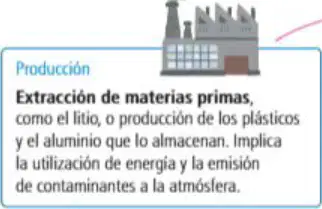
What happens during the production stage of a smartphone battery lifecycle?
Batteries are transported to consumers.
Raw materials like lithium are extracted, using energy and emitting contaminants.
Consumers use the smartphone and its battery.
Batteries are disposed of in special containers.
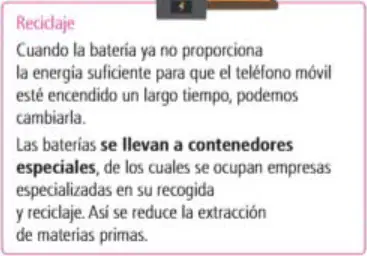
What is the purpose of special containers used during the recycling stage of a smartphone battery lifecycle?
To store batteries for future use.
To reduce the extraction of raw materials and facilitate recycling.
To transport batteries to consumers.
To increase battery energy efficiency.
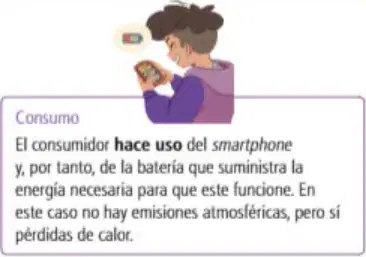
What happens during the consumption stage of a smartphone battery lifecycle?
The battery is used to power the smartphone without atmospheric emissions.
Batteries are transported to the point of sale.
Raw materials are extracted for battery production.
Batteries are disposed of in special containers.
What is the environmental benefit of recycling smartphone batteries?
It increases the energy efficiency of batteries.
It reduces the extraction of raw materials and minimizes waste.
It eliminates the need for battery production.
It prevents the transport of batteries to consumers.
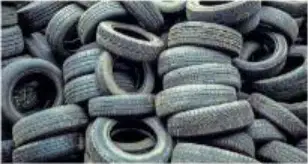
What is one example of reusing materials in the circular economy model?
Using tires to make new cars.
Using tires to create pavement and shoe soles.
Using tires to produce energy directly.
Using tires to manufacture plastic bags.

What is the key difference between the circular economy and the traditional linear economy?
The circular economy focuses on using cheap resources, while the linear economy focuses on expensive resources.
The circular economy promotes sharing and reusing, while the linear economy promotes using and discarding.
The circular economy encourages programmed obsolescence, while the linear economy avoids it.
The circular economy relies on large quantities of materials, while the linear economy minimizes material use.

