
 Worksheets
Environmental Science Final Review
Total questions: 68
Worksheet time: 4hrs 41mins

Non-living factor that affects an ecosystem...
biotic factor
abiotic factor
food chain
biome

What are the biotic factors in this image?
sunlight, elephants, grasses
sunlight, water, air
elephants, plants, trees
elephants, clouds, grasses
Which definition best fits the term ecosystem?
A group or organisms of the same species that live in the same area and interact with one another.
A group of many populations (of different species) that live and interact with one another
A group of populations of many different species that live and interact with both one another and all of the abiotic factors in their environment.
A set of different ecosystems that acer connected by similar geographic features and share the same or similar climate.
Anywhere on earth that life exists.
All of the different BIOTIC organisms found in the same area.
Organism
Population
Community
Ecosystem

A collection of living organisms that belong to different populations but all live in the same area and interact with one another is a...
Population
Ecosystem
Community
Ecosphere


A rabbit gains energy from eating grass and vegetables. The rabbit is a __________.
Producer
Primary Consumer
Secondary Consumer
Tertiary Consumer
A caterpillar gains energy from eating leaves. A frog gains energy from eating the caterpillar. The frog is a __________.
Producer
Primary Consumer
Secondary Consumer
Tertiary Consumer


As a part of the water cycle, water from Earth's surface enters the clouds and finally falls back to the ground in the form of rain. What is the correct sequence of processes water undergoes?
Evaporation, Condensation, Precipitation
Precipitation, Condensation, Evaporation
Condensation, Evaporation, Precipitation
Evaporation, Precipitation, Condensation
La Niña is characterized by ______________ of the Western Pacific Ocean.
a warming
a cooling
average temperatures
When La Nina and hurricanes pull cold water to the surface and bring nutrient rich sediments from the seafloor, this is called ___________________.
upwelling
downwelling
El zapato
La Gloria

The image is of a(n):
El Nino event
La Nina event
Non-El Nino (normal conditions)
What causes the unequal distribution of warm and cold water?
shifts in the Earth's orbit
prevailing wind patterns (Trade Winds)
changes in fishing patterns
changes in water density
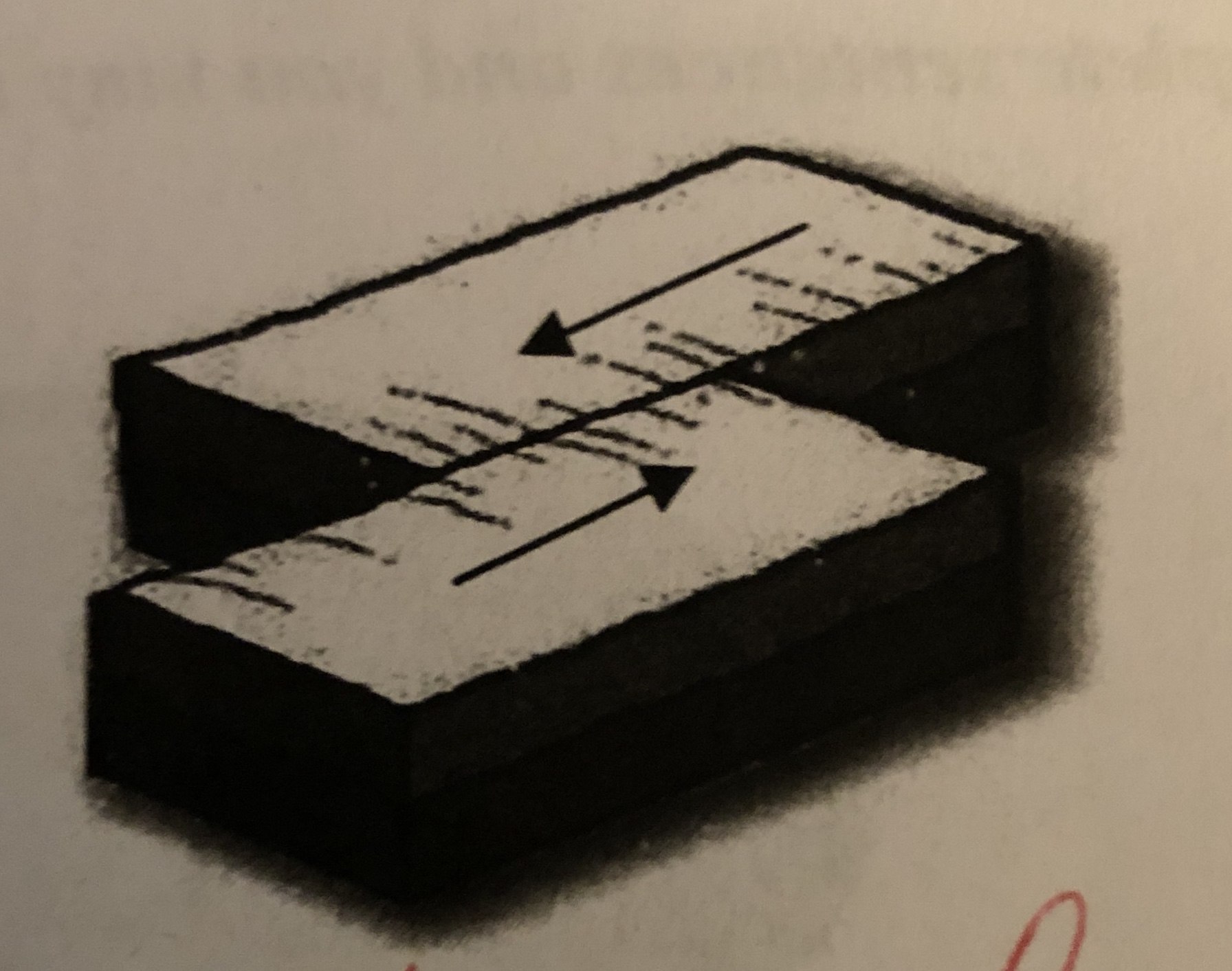
What type of boundary is this?
convergent
divergent
transform
Changes in the shape of Earth’s orbit around the Sun are called ___.
eccentricity
obliquity
precession
The wobbling of Earth's axis as it orbits the Sun is called ___.
eccentricity
obliquity
precession
The angle of Earth’s tilt as it orbits the Sun is called ___.
eccentricity
obliquity
precession
Which statement is an example of mutualism?
Bees sting other organisms when they sense danger.
Bees pollinate flowers while obtaining nectar.
Bees have black and yellow stripes that warn other organisms of danger.
Bees help maintain an ecosystem’s native cacti species through pollination.
Which statement is an example of parasitism?
Psuedoscorpions hide under beetles’ wings for protection and transport.
Wasps lay eggs inside hornworms and after the eggs hatch, the wasp larvae feed on the hornworm.
Lions and hyenas live in a savanna ecosystem and eat the same prey, antelopes.
Otters contribute to a high level of diversity in their ecosystem because they eat urchins, allowing kelp to grow.
Ladybugs consume insects such as aphids, mealyworms, and spider mites.


Sharks consume (eat) smaller fish they catch in the ocean. Frogs catch and eat flying insects in ponds. What type of relationship is this?
mutulism
predation
parasitism
interspecific


What is a renewable resource?
A resource that exists in limited supply
Any natural or human wealth that can be used for satisfying human needs.
A resource that can be replaced in a relatively short time
Harvestable things from space that provide value to humankind
Renewable energy resources produce less_____________ than fossil fuels.
pollution
energy
wind
light

Choose ALL of the renewable resources
sun
coal
wind
fossil fuels
Earth (geothermal)
What are greenhouse gases?
Gases that cool the Earth
Gases that trap or absorb heat in the atmosphere
Gases that are only found in greenhouses
Gases that are harmful to plants
What is the greenhouse effect?
The cooling of the Earth's surface
The trapping of heat by gases in the atmosphere and increasing the temperature
The reflection of sunlight by clouds
The absorption of sunlight by oceans
What is the definition of Reuse?
Using something again instead of throwing it away.
Turning waste into new products.
Breaking down food scraps to make soil.
Using fewer resources to make products.
What is the definition of Recycling?
Using fewer resources to make products.
Turning trash into new products, so we don’t need to use as many new resources.
Breaking down food scraps to make soil.
Reusing items instead of throwing them away.
What are natural resources?
Harmful substances that damage air, water, or land
Materials like water, wood, and metals that we use
The environment where plants, animals, and people live together
The rich soil made from organic waste
A factory is located next to a river. The factory has a sewage pipe running straight out of the factory and into the river. This is an example of ________________________.
point source pollution
non-point pollution
tertiary receiving stream
pollutants entering waterways from a general area, such as runoff from farmland or suburban communities
Pollution
Point Source Pollution
Non-point Source Pollution
What is the first step in the water treatment process?
coagulation
filtration
flocs
What does "reduce" mean?
use more
use less
make new things
Which will occur if humans continue to overload water systems with excess nutrients?
A. chemosynthesis
B. eutrophication
C. nitrification
D. photosynthesis
The Environmental Protection Agency was assigned with which task?
setting standards and governing the cleanliness of water used by Americans
setting standards and governing the highways and interstates in the United States
setting standards and governing the use of national parks and monuments in the United States
setting standards and governing the civil and commercial air transportation in the United States.
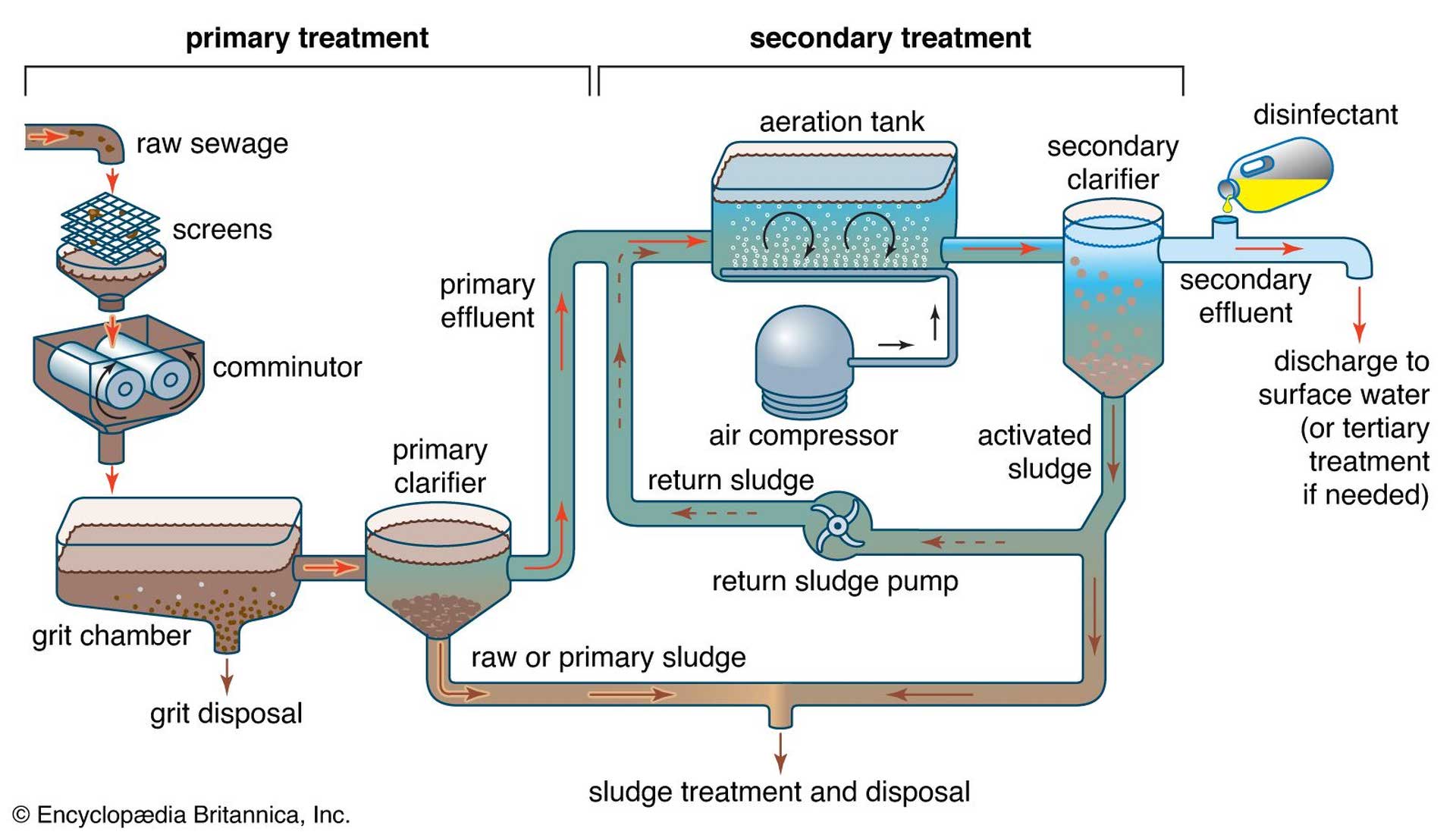
Wastewater Treatment: Keeping Our Water Clean
Water is essential for life, and keeping it clean is super important. Water treatment is the process of removing all the bad stuff from water so it's safe to use. This includes getting rid of bacteria, viruses, chemicals, and other pollutants that can make us sick or harm the environment. Wastewater treatment is a key part of this, focusing on cleaning water that has already been used.
Wastewater treatment involves several stages, each designed to remove specific types of pollutants. These stages include primary treatment, secondary treatment, and tertiary treatment.
Primary treatment is the first step in the wastewater treatment process. During this stage, large debris and solid materials are removed from the wastewater. This is typically done through screening and sedimentation. Screening involves using screens to filter out large objects like trash, leaves, and other debris. Sedimentation allows heavier solids to settle to the bottom of the tank, forming sludge. The sludge is then removed for further treatment or disposal.
Secondary treatment follows primary treatment and focuses on removing dissolved and suspended organic matter from the wastewater. This is typically achieved through biological processes, where microorganisms consume the organic pollutants. Common secondary treatment methods include activated sludge systems and trickling filters. In activated sludge systems, wastewater is mixed with a culture of microorganisms that break down the organic matter. Trickling filters involve spraying wastewater over a bed of rocks or plastic media, where microorganisms grow and consume the pollutants.
Tertiary treatment is the final stage of wastewater treatment and aims to remove any remaining pollutants that were not removed during primary and secondary treatment. This can include nutrients like nitrogen and phosphorus, as well as pathogens and other contaminants. Tertiary treatment methods vary depending on the specific pollutants that need to be removed. Some common methods include filtration, disinfection, and nutrient removal. Filtration involves passing the wastewater through a filter to remove any remaining suspended solids. Disinfection uses chemicals like chlorine or ultraviolet (UV) light to kill any remaining pathogens. Nutrient removal processes, such as denitrification and phosphorus precipitation, are used to reduce the levels of nitrogen and phosphorus in the wastewater.
Why is wastewater treatment so important? Imagine if all the water from our toilets, showers, and sinks just flowed directly into rivers and lakes. It would be a stinky, unhealthy mess! Wastewater treatment plants clean this water before it's released back into the environment, protecting both our health and the environment.
Untreated wastewater can cause serious problems. It can spread diseases, harm fish and plants, and even make it harder for aquatic life to survive by using up all the oxygen in the water. That's why wastewater treatment is a big deal for public health and the well-being of communities.
The good news is that wastewater treatment plants use different processes to clean the water. These processes can include physical, chemical, and biological methods to remove pollutants and make the water safe again. The goal is to remove as much of the bad stuff as possible before the water is released back into the environment.
However, wastewater treatment isn't perfect. One of the biggest challenges is that it uses a lot of energy. Treatment plants need energy to pump water, mix chemicals, and operate equipment. This energy often comes from fossil fuels, which contribute to greenhouse gas emissions and climate change.
Another challenge is dealing with sludge, which is the solid waste that's removed from the wastewater during treatment. Sludge can contain harmful substances, and if it's not managed properly, it can pollute the soil, air, and groundwater.
Also, wastewater often contains high levels of nutrients like nitrogen and phosphorus. While these nutrients are good for plants in small amounts, too much of them can cause problems in water bodies, leading to excessive algae growth and harming aquatic life.
To address these challenges, wastewater treatment plants are finding new ways to be more sustainable. This includes using less energy, finding better ways to manage sludge, and reducing the amount of chemicals used in the treatment process. Some plants are even using renewable energy sources like solar and wind power to reduce their carbon footprint.
Overall, wastewater treatment is a vital process that protects our health and the environment. While there are challenges, ongoing innovation and a focus on sustainability are making wastewater treatment more effective and environmentally friendly.
Summary
Wastewater treatment cleans used water to protect health and the environment.
Treatment plants use physical, chemical, and biological methods to remove pollutants.
Challenges include energy use, sludge management, and nutrient removal, but solutions are being developed.
What is the primary purpose of wastewater treatment?
To clean used water to protect health and the environment
To increase the water supply
To generate electricity
To produce drinking water
Which stage of wastewater treatment involves the removal of large debris and solid materials?
Primary treatment
Secondary treatment
Tertiary treatment
Quaternary treatment
During secondary treatment, what is used to consume organic pollutants?
Microorganisms
Chemicals
Filters
UV light
What is a major challenge faced by wastewater treatment plants?
High energy use
Lack of water supply
Excessive water production
Overproduction of clean water
Wastewater treatment plants use physical, chemical, and (a) methods to remove pollutants.
What is the final stage of wastewater treatment that aims to remove remaining pollutants?
Tertiary treatment
Primary treatment
Secondary treatment
Initial treatment
a negative ENVIRONMENTAL impact of timber harvesting is...
increased erosion
more biodiversity
buffer zones created
production of paper goods
a negative ENVIRONMENTAL impact of deforestation is...
decreased erosion
increased use of products
decreased biodiversity
more jobs created
a negative ENVIRONMENTAL impact of urban sprawl is...
decreased erosion
increased biodiversity
habitat fragmentation
build up of fuel on forest floor
Sustainability is making sure that the planet and its resources can continue to provide life.
True
False
An accurate definition of Sustainability is
meeting population needs
meeting the needs of the present without compromising the ability of future generations to survive
meeting the needs of the future without worrying about todays
meeting the food needs of animals
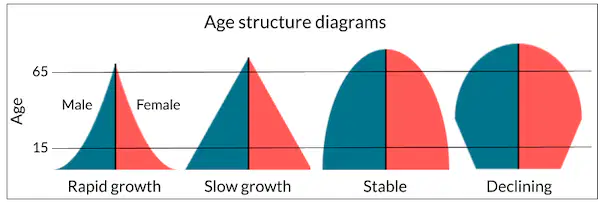
What is an age structure diagram?
A type of graph showing economic growth over time.
A graphical representation of the age distribution of a population, showing the number of individuals in different age groups.
A chart that displays the income levels of different age groups.
A diagram that illustrates the geographical distribution of a population.

What does a population pyramid with a wide base indicate?
A high birth rate and potential for rapid population growth.
A low birth rate and aging population.
A stable population with equal birth and death rates.
A declining population with fewer young people.

Is the pictured graph exponential growth, exponential decay, or linear or none?
Exponential Growth
Exponential Decay
Linear
None

