
NEW
Font size
S
M
L
XL
 Worksheets
Forensics Final Review
Total questions: 50
Worksheet time: 25mins
Name
Class
Date
1.
Which of the following professionals would be responsible for excavating dental remains on a crime scene?
a)
odontologist
b)
pathologist
c)
toxicologist
d)
anthropologist
2.
When is anthropological evidence particularly useful?
a)
whenever a body is found on a crime scene
b)
when a body is not present on a crime scene
c)
when a decomposed body is unrecognizable
d)
when tissue remains on the body
3.
What category would include lawyers that are skilled in forensic science?
a)
anthropology
b)
behavioral science
c)
criminalists
d)
jurisprudence
4.
The study of diseases in the human body by performing an autopsy is labeled what?
a)
odontology
b)
anthropology
c)
pathology
d)
toxicology
5.
What area of forensic science specializes in such issues as regarding the competence of and the assessment of mental illness as it relates to diminished responsibility or innocence by reason of mental illness or defect are the focus?
a)
criminology
b)
behavioral science
c)
jurisprudence
d)
anthropology
6.
The toxicology subset of forensic science involves
a)
the identification of bodies.
b)
studying the effects of chemicals on living systems.
c)
using dental impressions.
d)
discovering and proving facts concerning documents.
7.
The CSI Effect is a hindrance in many court cases. When one refers to the CSI Effect they are referring to which of the following?
a)
the ability of a jury to understand forensic science
b)
the jury believing that there should be an abundance of evidence in each case
c)
the jury to come to a logical solution based off their knowledge of criminal tv shows
d)
the ability of the jury to convict on circumstantial evidence
8.
Detectives depend on the observation skills of all involved. The main role of the detective is to
a)
secure the scene.
b)
document the scene and collect evidence.
c)
interview witnesses.
d)
determine the manner of death.
9.
The Innocence Project's purpose was to reexamine post-conviction cases using
a)
direct evidence to provide proof of guilt or innocence.
b)
DNA evidence to provide conclusive proof of innocence or guilt.
c)
eyewitness testimony to provide conclusive proof of innocence or guilt.
d)
circumstantial evidence to provide conclusive proof of innocence or guilt.
10.
A forensic scientist, Dave, leaves the lab with evidence left on the counter. Another lab technician, Larry, picks up the evidence and secures it in the locked cabinets. Where did the chain of custody FIRST become broken?
a)
when the lab technician, Larry, put the evidence in the locked cabinet
b)
when the forensic scientist, Dave, left the evidence on the counter
c)
when the lab technician, Larry, forgot to sign the chain of custody log before putting the evidence away
d)
when the forensic scientist, Dave, forgot to sign the chain of custody log before leaving the lab
11.
Collecting evidence requires which of the following?
a)
documenting the location and time found, using proper packaging, and maintaining chain of custody
b)
documenting the location and time found, using plastic packaging, and maintaining chain of custody
c)
documenting the location it was found, using proper packaging, and maintaining chain of custody
d)
documenting the location and time found, using paper packaging, and maintaining chain of custody.
12.
In the following scenario, determine what type of evidence is being described. SCENARIO: A ripped receipt for payment of a monthly bus pass purchased earlier in February by a murder victim was compared with a piece of the ripped receipt found in the suspect’s home. The two pieces matched and thus were originally part of the same ticket.
a)
This is class evidence because it narrows the suspect to people who have bus passes.
b)
This is direct evidence because it places the suspect at the crime.
c)
This is individual evidence because it narrows down the suspect pool to one person with that specific pass.
d)
This is trace evidence because only a small piece of the pass was recovered.
13.
In the following scenario, determine what type of evidence is being described. SCENARIO: Several blue-colored cotton fibers are found upon the door frame of a home that had been broken into. A suspect wearing a torn blue cotton jacket is apprehended nearby. Tests conducted later show that the fibers from the crime scene and the fibers from the suspect’s jacket have the same physical properties.
a)
This is class evidence because it narrows the suspect to people who have that specific jacket.
b)
This is direct evidence because it places the suspect at the crime.
c)
This is individual evidence because it narrows down the suspect pool to one person with that specific jacket.
d)
This is biological evidence because DNA was found in the fiber.
14.
In the following scenario, determine what type of evidence is being described. SCENARIO: A woman was assaulted in the Piggly Wiggly parking lot. She fought off her attacker by scratching and biting. When the criminal investigators processed her defensive wounds, they found skin cells under her nails.
a)
This is class evidence because it can narrow it down to people with a certain skin color.
b)
This is physical evidence because the suspect left something behind.
c)
This is biological evidence because the skin cells have DNA that can be used to identify the attacker.
d)
This is direct evidence because it can lead to the environment the attacker came from.
15.
In the following scenario, determine what type of evidence is being described. SCENARIO: A man in a green truck blows through a stop sign hitting a small white car going through the intersection. A person jogging down the road saw the license plate of the green truck.
a)
This is direct evidence because a person jogging on the road saw everything first hand.
b)
This is class evidence because the paint colors can be used to narrow down in the DMV.
c)
This is circumstantial evidence because there is no way to prove that the man in the green truck was the same one involved in the accident.
d)
This is physical evidence because the witnesses saw what happened using their senses.
16.
In the following scenario, determine what type of evidence is being described. SCENARIO: A person murders a family in their home. During the investigation, wood slivers are found on the staircase. The wood doesn't match any of the furniture or trees in the neighborhood.
a)
This is trace evidence because it was transferred from the suspect to the staircase and only small amounts were found.
b)
This is biological evidence because it comes from natural fibers.
c)
This is direct evidence because it links a suspect to the home.
d)
This is individual evidence because it matches trees that are being cut in a lumber yard.
17.
If a body feels cold and stiff, investigators can estimate that the PMI would be
a)
more than 3 hours.
b)
between 3 and 8 hours.
c)
less than (<) 3 hours.
d)
between 8 and 36 hours.
18.
A body was found in the woods swarming with insects around the decaying flesh. Splits in the skin were observed by investigators along with the marbling of the skin and swelling in the abdominal area. What stage of decomposition is being described?
a)
bloating (putrefaction)
b)
active decay (black putrefaction)
c)
fresh (initial)
d)
advanced decay
19.
A body was found in an abandoned building that was set to be demolished soon. The corpse emitted a very strong odor with the skin rupturing and deflating as gases escape. What stage of decomposition is being described?
a)
bloating (putrefaction)
b)
active decay (black putrefaction)
c)
fresh (initial)
d)
advanced decay
20.
What term describes when blood cells and blood vessels decompose and the result is a pooling of blood?
a)
livor mortis
b)
rigor mortis
c)
algor mortis
d)
bior mortis
21.
Which is not a factor that increases the rate of livor and rigor mortis?
a)
body mass
b)
ambient temperature
c)
body temperature
d)
race
22.
When would lividity begin to show on a body?
a)
36 + hours
b)
2-4 hours
c)
10 hours
d)
12-24 hours
23.
Which statement has the correct manner, cause, and mechanism of death for the following scenario: A chronic smoker develops emphysema (lung damage) and dies?
a)
Manner-accidental; Cause-smoking; Mechanism-emphysema
b)
Manner-natural; Cause-smoking; Mechanism-emphysema
c)
Manner-accidental; Cause-emphysema; Mechanism-smoking
d)
Manner-natural; Cause-emphysema; Mechanism-smoking
24.
Which statement has the correct manner, cause, and mechanism of death for the following scenario: A teenager was found dead after consuming an energy drink and Adderall together; no note was left behind?
a)
Manner--accidental; Cause--overindulging; Mechanism--cardiac arrest
b)
Manner--suicidal; Cause--overindulging; Mechanism--cardiac arrest
c)
Manner--natural; Cause--overindulging; Mechanism--cardiac arrest
d)
Manner--homicidal; Cause--overindulging; Mechanism--cardiac arrest
25.
Which statement has the correct manner, cause, and mechanism of death for the following scenario: While being mugged on the street, a person is struck with a pipe on the head and dies after losing a large volume of blood?
a)
Manner--accidental; Cause--blunt force trauma; Mechanism--blood loss
b)
Manner--homicidal; Cause--blunt force trauma; Mechanism--blood loss
c)
Manner--accidental; Cause--blood loss; Mechanism--blunt force trauma
d)
Manner--homicidal; Cause--blood loss; Mechanism--blunt force trauma
26.
Which of the following is the 𝗯𝗲𝘀𝘁 description for the importance of skeletal remains in forensic investigations?
a)
Skeletal remains will help forensic investigators determine the sex of the victim to determine identity.
b)
Skeletal remains will help forensic investigators determine the age of the victim to determine identity.
c)
Skeletal remains will help forensic investigators form a biological profile of the victim to determine identity.
d)
Skeletal remains will help forensic investigators find family members to determine the identify of the victim.
27.
Which is the most reliable bone to determine the sex of a skeleton?
a)
femur
b)
skull
c)
pelvic bone
d)
collarbone
28.
Choose the true statement below.
a)
Carbon-14 is traced in bones through groundwater absorption.
b)
Carbon-13 is traced in teeth through food ingestion.
c)
Strontium is traced in bones through groundwater absorption.
d)
Strontium is traced in teeth through groundwater absorption.
29.
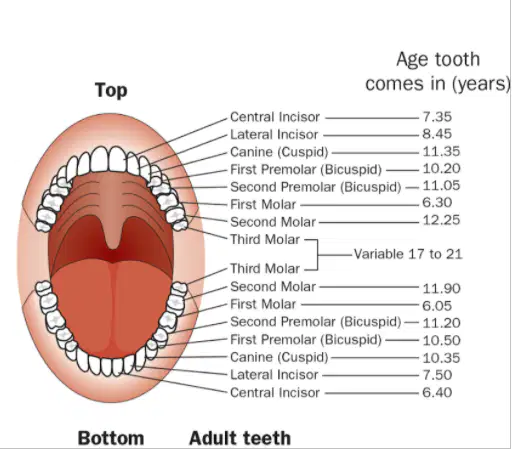
A) At Jane Doe’s dental examination, the following teeth were found: set of first premolars, set of second premolars, and both second molars. Based on the information below, which girl could possibly be the Jane Doe that was found in the woods? 𝐒𝐂𝐄𝐍𝐀𝐑𝐈𝐎: One partial set of female skeletal remains were found in a wooded area off of a minor highway. Detectives believe that the remains are incomplete due to scavengers feeding off the body and dragging it throughout the woods. Investigators found a skull at the primary crime scene and other bones scattered throughout the surrounding area. Investigators determined the post mortem interval to be 6 months. Three girls were reported missing around the estimated time interval from different locations across the state. The missing girls were reported to be the following ages: Dinah Mite 10, Kay Oss 15, and Holly Wood 12.
a)
Kay Oss
b)
Dinah Mite
c)
Holly Wood
d)
can not be determined
30.
A _________________ is formed by the concentrated decomposition products emitted from the body and vegetation is initially killed.
a)
CDI (cadaver decompression island)
b)
soil profile
c)
chemical profile
d)
CDI (cadaver decomposition island)
31.
Blowflies at a crime scene carry a certain amount of significance. What is the significance of the blowflies?
a)
indicates a maximum postmortem interval long enough for insects to lay eggs
b)
indicates the site of decomposing organic material
c)
indicates a minimum postmortem interval long enough for insects to develop into adulthood
d)
adds to the environmental factors surrounding the decomposing organic tissue
32.
When is insect data least helpful when solving a case?
a)
when the body has been under extreme weather conditions
b)
when the body has been wrapped in some type of material
c)
when the body has been moved from the original location
d)
when the body has been submerged in water
33.
Which is NOT an indication of a NEW gravesite?
a)
site sinks into the ground and settles
b)
absences of vegetation
c)
CDI (cadaver decomposition island)
34.
Choose the TRUE statement below.
a)
Fewer than 20 species of diatoms indicate a longer PMI.
b)
Fewer than 50 species of diatoms suggest a longer PMI.
c)
Fewer than 20 species of diatoms indicate a more recent drowning.
35.
Which of the following IS an indication of an OLD gravesite?
a)
mound of soil
b)
different plants other than the dominant plants in the area
c)
an absence of vegetation
36.
Dr. Jane Bock and a select group of students created a manual to assist in the identification of plant cells in a person's last meal. This manual was used to determine what?
a)
victim's last meal
b)
postmortem interval
c)
who the victim last saw
d)
how long ago the victim ate
37.
What signals that a body has been in an area long enough for the blowfly to complete its full life cycle?
a)
empty pupal cases
b)
large maggots
c)
empty egg cases
d)
adult blowflies
38.
When there is only one fiber or hair collected from the crime scene, why must you use a damage less method of analyzing the evidence?
a)
It causes a break in the chain of custody.
b)
It will destroy the only evidence available.
c)
It will cause analysis results to not be able to be repeated.
d)
It will alter the DNA of the evidence.
39.
Animal hair and human hair have several differences. Which of the following is NOT a difference?
a)
pattern of pigmentation
b)
cuticle type
c)
medullary index
d)
medulla types
40.
Fill in the following statement with the correct vocabulary: _________ DNA is found in the _________ and is specific to a(n) ___________ and will yield __________ evidence.
a)
Nuclear; follicle; individual; individualized
b)
Mitochondrial (mtDNA); hair shaft; individual; individualized
c)
Mitochondrial (mtDNA); follicle; group of people; class
d)
Nuclear; hair shaft; group of people; class
41.
Which of the following is not a way to detect poisons, toxins, or drugs during a routine autopsy?
a)
vitreous humour
b)
stomach contents
c)
urine
d)
blood
42.
Fingerprints can’t be altered permanently because…
a)
they are formed in the deepest layer of the skin the basal layer.
b)
they are formed during the 10th week of gestation.
c)
they are formed in the deepest layer of the skin the epidermis.
d)
nothing can penetrate the skin to cause permanent damage.
43.
Select the whorl fingerprint.
a)
Fingerprint X
b)
Fingerprint S
c)
Fingerprint M
44.
Select the loop fingerprint.
a)
Fingerprint X
b)
Fingerprint S
c)
Fingerprint M
45.
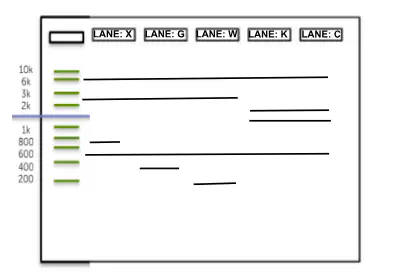
In LANE: X, what is the size of fragment 1?
a)
6000
b)
2000
c)
800
d)
500
46.
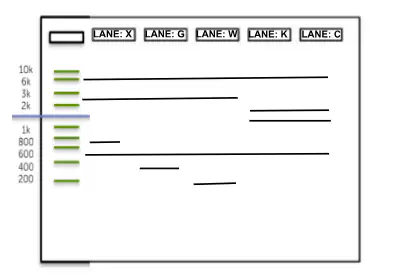
In LANE: X, what is the size of fragment 2?
a)
6000
b)
2500
c)
800
d)
500
47.
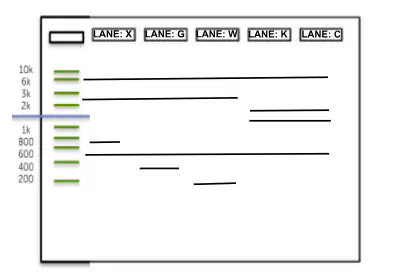
In LANE: X, what is the size of fragment 3?
a)
6000
b)
2500
c)
700
d)
500
48.
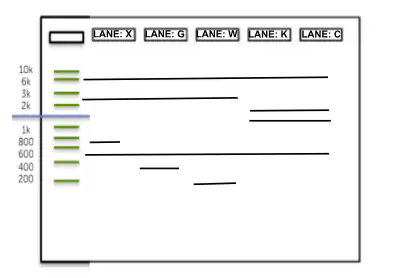
In LANE: X, what is the size of fragment 4?
a)
6000
b)
2500
c)
750
d)
250
49.
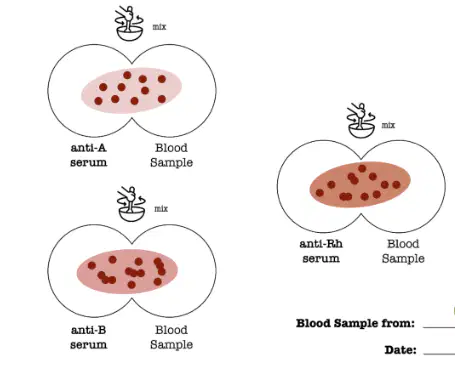
What blood type is represented below?
a)
A-
b)
A+
c)
AB-
d)
B+
50.
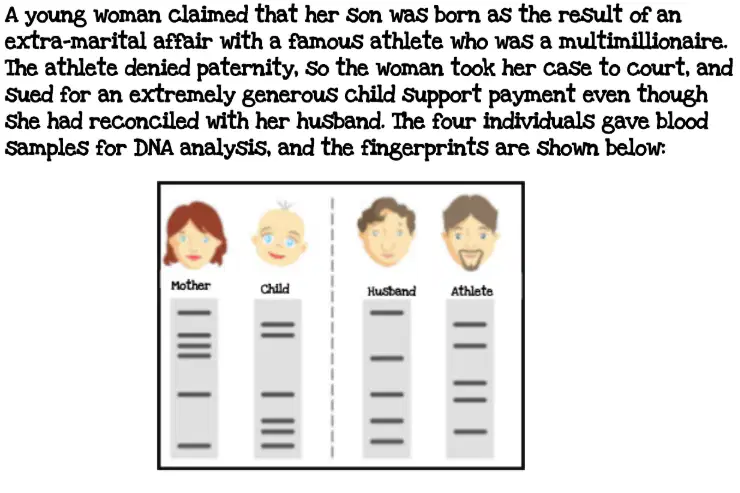
Using the information below answer the following question?
Was the woman's claim justified? Use the DNA Profile to explain your answers
a)
yes she was justified because more bands are in common with the athlete than the husband
b)
yes more bands are in common with the husband than the athlete she was not justified
c)
the child does not match either the athlete or the husband she was not justified
Reset

