
 Worksheets
Fall 2025 Final Exam Reveiw A&P
Total questions: 76
Worksheet time: 38mins
Which body system includes the skin, hair, nails, and associated glands?
Endocrine system
Muscular system
Integumentary system
Skeletal system
Match each integumentary structure to its primary function.
Sebaceous glands
Secrete oil to lubricate skin and hair
Sweat glands
Produce sweat for thermoregulation
Epidermis
Superficial barrier of stratified epithelial cells
Dermis
Deep connective tissue with nerves and vessels
The main function of skin is to protect the body, regulate temperature, and prevent water loss.
True
False
Which receptor is specialized for deep pressure and vibration within the skin?
Meissner corpuscle
Pacini corpuscle
Merkel disc
Free nerve ending
Identify the body system primarily responsible for structural support, protection of organs, and mineral storage.
Integumentary system
Skeletal system
Muscular system
Lymphatic system
Match each skeletal subdivision with the regions it includes.
Axial skeleton
Skull, vertebral column, thoracic cage
Appendicular skeleton
Limbs and girdles
Thoracic cage
Ribs and sternum protecting thoracic organs
Vertebrae
Bones forming the spine
Which bones collectively form the protective case around the brain?
Facial bones
Cranium bones
Vertebral bones
Pelvic bones
Articulations are better known as which anatomical structures?
Muscle bellies
Ligament insertions
Joints between bones
Cartilage plates
Cartilage in the skeletal system primarily functions to provide smooth surfaces at joints and support flexible structures.
Agrees fully
Disagrees fully
Applies only to infants
Applies only to long bones
Which muscle type is striated, voluntary, and attached to bones by tendons?
Fascia muscle
Skeletal muscle
Cardiac muscle
Smooth muscle
Match each muscle type to its location and control.
Cardiac muscle
Heart; involuntary, rhythmic
Smooth muscle
Walls of hollow organs; involuntary
Skeletal muscle
Attached to skeleton; voluntary
Which structure connects muscle to bone to transmit force for movement?
Cartilage
Tendon
Fascia
Ligament
The sarcomere is best defined as which functional unit?
Unit of cartilage growth
Unit of ligament tension
Unit of neuronal signaling
Unit of muscle contraction
Which layer of the skin is avascular and primarily composed of keratinized stratified squamous epithelium?
Dermis
Basement membrane
Epidermis
Hypodermis
Match the following nervous system divisions and structures to their roles.
Central nervous system
Brain and spinal cord—processing center
Peripheral nervous system
Nerves outside CNS—communication lines
Cranial nerves
Nerves emerging from the brain
Spinal cord
Major conduit between brain and body
Neuron
Excitable cell transmitting signals
Which brain region primarily coordinates balance and fine motor control?
Medulla oblongata
Thalamus
Cerebellum
Cerebrum
Fascia in the muscular system primarily functions to separate, support, and wrap muscle groups.
Only true for deep fascia
Incorrect statement
Correct statement
Only true for superficial fascia
Which integumentary receptor is specialized for light touch near the skin surface?
Tactile corpuscle
Golgi tendon organ
Pacinian corpuscle
Ruffini ending
Which statement best explains how sweat glands contribute to homeostasis during exercise?
They produce sweat that cools by evaporation
They secrete oil to reduce friction
They dilate arteries to increase flow
They thicken the epidermis against abrasion
A ligament connects bone to bone at a joint, while a tendon connects muscle to bone. Which pairing is correct for movement production?
Ligament creates force for movement
Tendon transmits muscle force
Cartilage pulls bones together
Fascia directly moves joints
Which blood vessel type primarily returns deoxygenated blood to the heart?
Lymphatics drain interstitial fluid
Veins return blood to the heart
Arteries carry blood away from heart
Capillaries exchange gases with tissues
Identify the function of capillaries within the cardiovascular system.
Regulate heart rhythm electrically
Exchange gases, nutrients, and wastes
Prevent backflow through large veins
Store red blood cells temporarily
In hemostasis, what forms when platelets aggregate at an injury site?
Coagulation cascade end
Scar tissue patch
Platelet plug forms
Fibrin clot matrix
Name the chamber that receives blood returning to the heart from veins.
Left atrium ejects to aorta
Right ventricle sends to lungs
Right atrium receives venous blood
Left ventricle pumps systemically
Which cardiac chamber primarily generates systemic arterial pressure?
Right atrium fills passively
Left ventricle pumps to aorta
Left atrium drives pulmonary
Right ventricle supplies coronary
The tricuspid valve separates which two structures?
Left atrium and left ventricle
Right atrium and right ventricle
Right ventricle and pulmonary trunk
Left ventricle and aorta
Which valve prevents backflow from the pulmonary trunk into the right ventricle?
Bicuspid valve
Aortic valve
Pulmonary valve
Tricuspid valve
The bicuspid (mitral) valve controls flow between which chambers?
Left ventricle and aorta
Right ventricle and pulmonary trunk
Left atrium and left ventricle
Right atrium and right ventricle
Which urinary structure filters blood to form filtrate?
Renal pyramid stores filtrate
Ureters transport urine
Urethra expels urine
Glomerulus filters plasma
Identify the functional unit of the kidney responsible for urine formation.
Renal pyramid is nephron
Ureter is filtrate maker
Glomerulus is whole kidney
Nephron is functional unit
Which paired structures carry urine from kidneys to the bladder?
Nephrons expel urine
Renal pyramids drain externally
Ureters conduct urine
Urethra stores urine
Which digestive structure begins mechanical digestion by mastication?
Pharynx moves bolus
Teeth perform chewing
Tongue mixes bolus
Esophagus transports bolus
Which sphincter prevents gastric contents from refluxing into the esophagus?
Anal sphincter
Pyloric sphincter
Cardiac sphincter
Ileocecal sphincter
Which organ chemically digests proteins with pepsin and churns food?
Stomach digests proteins
Small intestine absorbs bile
Liver secretes amylase
Gallbladder makes enzymes
Which gland secretes insulin and digestive enzymes into the duodenum?
Liver stores glycogen
Pancreas secretes insulin
Stomach releases bile acids
Gallbladder produces insulin
Which organ produces bile to aid lipid digestion?
Liver produces bile
Stomach forms bile
Pancreas produces bile
Gallbladder synthesizes bile
Which muscle sheet drives ventilation by changing thoracic volume?
Larynx opens vocal cords
Diaphragm changes volume
Alveoli contract actively
Trachea expands robustly
Which female structure produces gametes and ovarian hormones?
Uterus produces gametes
Fallopian tubes produce gametes
Ovaries produce gametes
Vagina produces gametes
Which statement best defines mitosis in human cells?
Programmed cell death removing damaged cells
Division producing four genetically unique cells
Division producing two identical daughter cells
DNA replication without any cell division occurring
Homeostasis refers to the body’s ability to
Maintain a stable internal environment
Increase heart rate during exercise
Eliminate metabolic wastes via kidneys
Store excess glucose in adipose tissue
Movement in physiology primarily describes
Muscle contraction generating body motion
Oxygen binding to hemoglobin molecules
Neuron depolarization along axons
Enzyme catalysis within mitochondria
Neuron communication involves
Only hormonal messaging via endocrine glands
Passive diffusion of ions without channels
Purely mechanical transmission through dendrites
Electrical and chemical signaling across synapses
Systemic circulation is the pathway that
Sends oxygenated blood from heart to body
Moves deoxygenated blood from body to lungs
Filters blood through renal capillaries
Transfers nutrients from gut to the liver
Micturition is best defined as
Filtration of blood in the kidneys
Defecation regulated by colon motility
Urination controlled by bladder reflexes
Reabsorption of water in nephron loops
Digestion primarily refers to
Mechanical and chemical breakdown of food
Transport of nutrients in bloodstream
Metabolic oxidation of glucose in cells
Excretion of waste through the rectum
Peristalsis is the
Rapid enzyme reactions that digest proteins
Valve opening events in the heart during systole
Random skeletal muscle twitches generating heat
Wave-like smooth muscle contractions moving contents
Excretion is the process of
Removing metabolic wastes from the body
Absorbing nutrients across intestinal villi
Producing ATP inside mitochondria
Neutralizing pathogens using antibodies
Match each circulation term with its description.
Pulmonary circulation
Heart–lungs–heart pathway for gas exchange
Systemic circulation
Heart–body tissues–heart distribution loop
Hepatic portal circulation
Gut capillaries to liver for nutrient processing
Coronary circulation
Blood supply dedicated to cardiac muscle
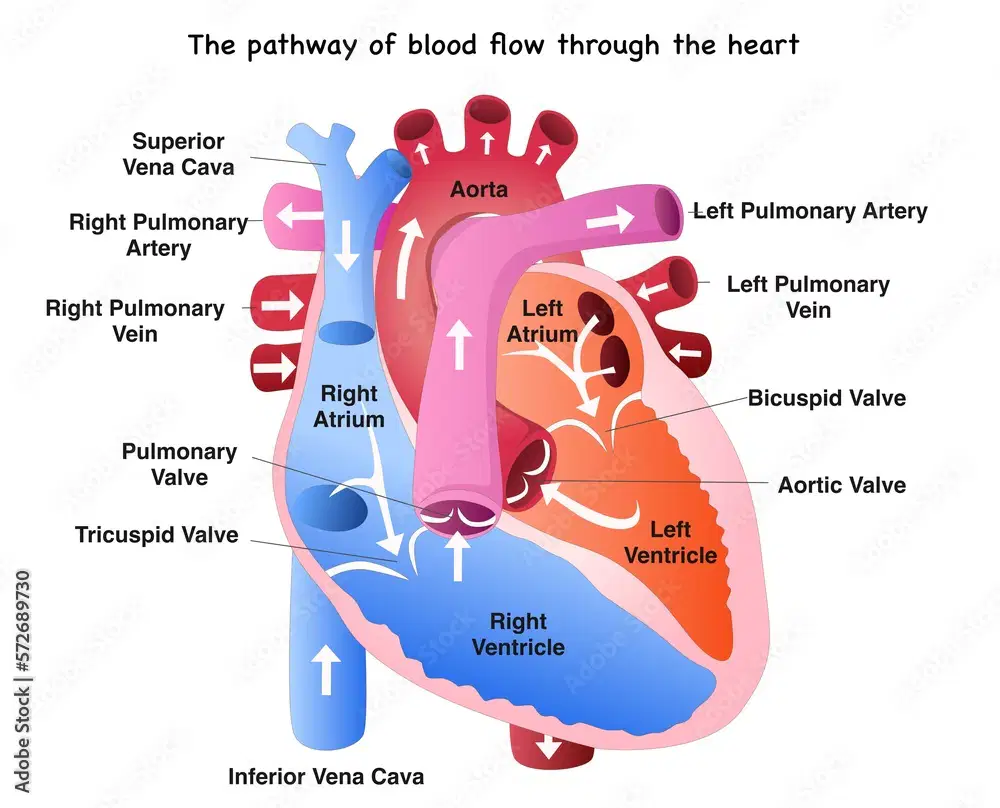
Place the FIRST 4 steps of the typical blood flow pathway in order from the body back to the lungs.
Right ventricle → pulmonary veins → left atrium → aorta
Pulmonary veins → right atrium → right ventricle → aorta
Aorta → systemic veins → pulmonary arteries → left ventricle
Vena Cava → right atrium → right ventricle → pulmonary arteries
Which structure directly receives blood from the right ventricle?
Pulmonary Artery
Aorta
Left atrium
Which vessel returns oxygenated blood to the heart from the lungs?
Coronary sinus
Superior vena cava
Pulmonary arteries
Pulmonary veins

Arrange these structures to show the flow of oxygenated blood to the body.
Left atrium → right ventricle → aorta → systemic veins
Pulmonary veins → left atrium → left ventricle → aorta valve → aorta
Pulmonary arteries → right atrium → left ventricle → aorta
Left ventricle → pulmonary trunk → aorta → systemic capillaries
During inhalation, air first passes through which structure?
External nose or oral cavity
Bronchioles before bronchi
Alveolar ducts initially
Trachea directly at the carina
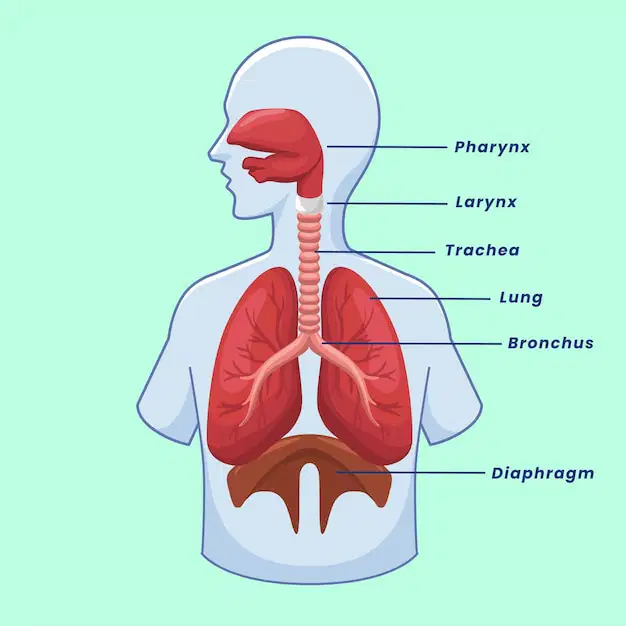
Order the major airway structures during normal breathing from upper to lower.
Pharynx
Throat passage behind nasal and oral cavities
Larynx
Voice box guarding the airway entrance
Trachea
Windpipe conducting air to thorax
Primary bronchi
First branching airways entering lungs
Gas exchange occurs primarily at the
Primary bronchi
Alveoli
Trachea
Larynx
Which muscular action drives ventilation at rest?
Vocal cords contracting to open the glottis
Abdominal muscles forcefully decreasing lung volume
Diaphragm contraction increasing thoracic volume
Intercostals relaxing to collapse the rib cage
Match each digestive process term with its best example.
Mechanical digestion
Chewing and churning of food
Chemical digestion
Enzymatic breakdown of macromolecules
Peristalsis
Propulsive waves moving contents forward
Absorption
Transport of nutrients into blood or lymph
Predict the immediate effect if pulmonary arteries were blocked.
Increased oxygen delivery to systemic tissues
Enhanced venous return to right atrium
Direct shunting of blood into pulmonary veins
Reduced blood flow to lungs impairs oxygenation
Which event most directly triggers micturition?
Activation of digestive peristalsis in colon
Stretch receptors in the bladder wall firing
Increased aldosterone release from adrenal cortex
Arteriolar constriction in renal medulla
During exhalation at rest, the diaphragm
Contracts, lowering intrapulmonary pressure
Contracts, increasing thoracic pressure
Relaxes, increasing alveolar oxygen
Relaxes, decreasing thoracic volume
Match neuron communication components to their role.
Axon
Conducts action potentials away from soma
Synapse
Junction where signaling occurs between cells
Neurotransmitter
Chemical messenger released into synaptic cleft
Myelin
Insulating material speeding impulse conduction
Which structure receives food immediately after it passes through the esophagus?
Duodenum
Mouth
Pharynx
Stomach
Place these digestive structures in order for the food pathway: mouth, esophagus, stomach, small intestine.
1st
Mouth
2nd
Esophagus
3rd
Stomach
4th
Small intestine
During digestion, nutrient absorption primarily occurs in the small intestine rather than the stomach. What is the main reason?
More acidic lumen pH
Presence of bile only
Stronger muscular contractions
Large surface area from villi
In spermatogenesis, sperm travel from the epididymis into which structure next during ejaculation?
Urethra
Seminiferous tubules
Prostate gland
Vas deferens
Match each male reproductive structure to its role in the sperm pathway.
Seminiferous tubules
Sperm production
Epididymis
Sperm maturation and storage
Vas deferens
Sperm transport to ejaculatory ducts
Urethra
Exit pathway through penis
During oogenesis, after ovulation the egg typically enters which structure first?
Cervical canal
Ovary cortex
Uterus
Fallopian tube
Match each female reproductive structure to the egg’s sequential pathway following ovulation.
Fimbriae
Sweep oocyte from ovary
Fallopian tube
Site of fertilization and transport
Uterus
Implantation or shedding
Which is the correct next step: After the stomach, chyme moves into the (a) for further digestion and absorption.
Which accessory organ delivers bile to aid fat digestion in the small intestine?
Liver
Pancreas
Gallbladder
Appendix
Identify the correct sequence for sperm from production to exit: seminiferous tubules → (a) → vas deferens → urethra.
Which event occurs just before an oocyte can implant in the uterine lining?
Cervical dilation
Ovulation from ovary
Fertilization in tube
Arrival in uterus
Match each digestive step to its function.
Mouth
Mechanical breakdown and saliva
Stomach
Acidic protein digestion
Small intestine
Most nutrient absorption
Large intestine
Water and electrolyte absorption
During ejaculation, which gland contributes alkaline fluid to protect sperm from acidic environments?
Adrenal gland
Bulbourethral glands
Seminal vesicles
Prostate gland
Which structure captures the ovulated oocyte from the ovary surface?
Endometrium
Cervix
Fimbriae
Labia minora
Which pathway correctly lists major digestive organs from ingestion to absorption focus?
Mouth → esophagus → stomach → small intestine → large intestine → anus
Esophagus → mouth → stomach → small intestine → colon → rectum
Mouth → stomach → esophagus → large intestine → small intestine → anus
Stomach → mouth → small intestine → large intestine → rectum

