
 Worksheets
SHS Economics – Semester Review
Total questions: 128
Worksheet time: 1hrs 4mins
Define ECONOMICS.
The study of using resources to address scarcity
The practice of setting prices for goods
The process of voting on public policies
The measurement of national population growth
What is an ECONOMIC SYSTEM?
How a community or government uses its available resources or services
A set of rules for electing government officials
A plan for raising taxes to fund public programs
A list of goods and services produced by a nation
Select the three big economic questions.
What to produce
How is it being produced
Who is it being produced for
Where will it be sold
How much profit should be kept
How do TRADITIONAL economies answer the big economic questions?
A barter system determined by community needs
Central planning with government price-setting
Market prices based on supply and demand
Private firms guided by profit maximization only
How do COMMAND economies answer the big economic questions?
Complete control by the government to set prices and manage distribution
Decentralized decisions by households and firms
Tradition-based exchanges with minimal monetary pricing
Consumer preferences determining all production choices
How do MARKET economies answer the big economic questions?
Limited government involvement with outcomes based on supply and demand
Government ministries assign production quotas and prices
Elders allocate resources through customary rules
Prices are fixed by law to stabilize markets
Match each Five Pillar of Free Enterprise with its definition.
Private Enterprise
Owned by an individual or business
Competition
More than one company offering a similar service or good in the market
Private Property
Citizens’ right to own property
Profit Motive
Operation focused on earning money
Consumer Sovereignty
Consumers have freedom of choice in the market
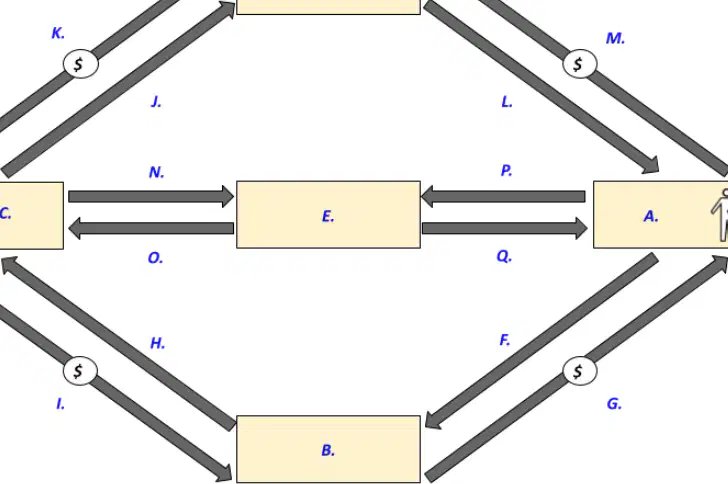
Label each of the parts of the Circular Flow Model by matching each boxed component label to the correct sector or market using the word bank.
A
Households
B
Resource Markets
C
Business
D
Product Market
E
Gov’t
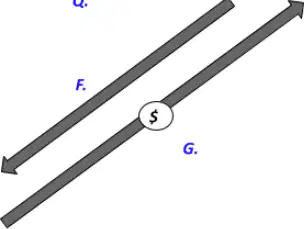
Use the word bank to match each flow label to the correct term shown on the circular flow diagram.
F
Land Labor Capital
G
Wages
H
Buy Productive Resources
I
Price Payments
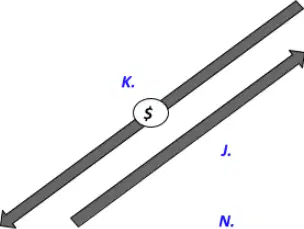
Match each label to the correct goods or income term from the word bank.
J
Goods and Services
K
Business Income
L
Consumer good and services
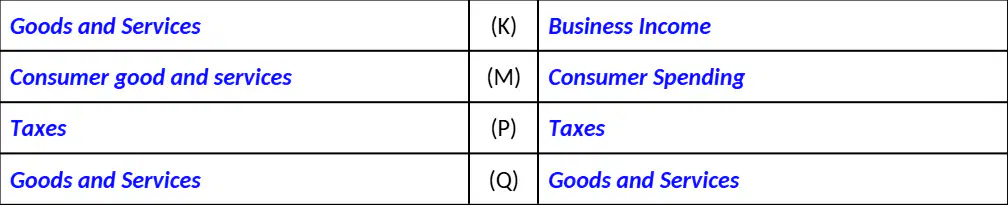
Match each spending or tax label to the correct term from the word bank.
M
Consumer Spending
N
Taxes
O
Goods and Services
P
Taxes
Q
Goods and Services
Match each market or sector to its description as listed in the prompt: List and describe the 4 market structures.
Produce Market
The marketplace where final goods or services are sold to households
Resource Market
A market where factors of production are bought and sold
Business Sector
Comprises various companies that produce goods and services in the economy
Household Sector
Comprises individuals or groups of individuals as consumers and workers
For SOLE PROPRIETORSHIP, select the correct advantage from the list provided in the prompt on business organizations.
Makes all decisions, gets all profits, least regulated, easy to start up
Limited liability and easy to raise capital
Shares decisions, easy start up, little regulation
Most regulated and difficult to start up
For SOLE PROPRIETORSHIP, select the correct disadvantage from the list provided in the prompt on business organizations.
Unlimited liability and difficult to raise capital
Limited liability and easy to raise capital
Conflict among owners and higher taxes
Expensive to start up
For PARTNERSHIP, select the correct advantage from the list provided in the prompt on business organizations.
Share decisions, easy start up, little regulation
Limited liability and easy to raise capital
Makes all decisions and gets all profits
Most regulated and difficult to start up
For PARTNERSHIP, select the correct disadvantage from the list provided in the prompt on business organizations.
Unlimited liability, difficult to raise capital, conflict, taxes
Limited liability and easy to raise capital
Least regulated and easy to start up
Expensive to start up
For CORPORATION, select the correct advantage from the list provided in the prompt on business organizations.
Limited liability and easy to raise capital
Makes all decisions and gets all profits
Shares decisions and is lightly regulated
Least regulated and easy to start up
For CORPORATION, select the correct disadvantage from the list provided in the prompt on business organizations.
Most regulated, difficult to start up, expensive to start up
Unlimited liability and difficult to raise capital
Conflict among owners and higher taxes
Least regulated and easy to start up
Match each stage in the PRODUCTION PROCESS to its description as listed in the prompt: Describe each of the 4 stages in the production process.
Raw Goods Producer
Provides natural resources and raw materials to manufacturers
Manufacturer
Takes raw goods through the production process
Wholesaler
Middleman who distributes goods and services from manufacturers to retailers
Retailer
Sells goods/services to a consumer
Match each type of MERGER to its definition as listed in the prompt: Define and provide examples of the types of mergers.
Horizontal Merger
The combination of two or more businesses (firms) competing in the same market with the same good or service
Vertical Merger
Two or more businesses (firms) involved in different stages of the production process of a product or line of products
Conglomerate
Occur between businesses (firms) that are seemingly unrelated and at different stages in the production process
Select the example that best illustrates a HORIZONTAL MERGER from the examples provided in the prompt on mergers.
Chili’s and Applebees (retailers) competing in the same market with the same good or service
Lululemon (manufacturer) and Macy’s (retailer) involved in different stages of production
Disney acquiring a firm in an unrelated industry
A wholesaler buying raw materials from a producer
Select the example that best illustrates a VERTICAL MERGER from the examples provided in the prompt on mergers.
Lululemon (manufacturer) and Macy’s (retailer) involved in different stages of production
Chili’s and Applebees (retailers) competing in the same market
Disney acquiring a firm in an unrelated industry
Two retailers opening stores in the same mall
Select the example that best illustrates a CONGLOMERATE MERGER from the examples provided in the prompt on mergers.
Disney acquiring a firm in an unrelated industry
Chili’s combining with Applebees
Lululemon combining with Macy’s
A manufacturer purchasing additional raw materials
Using the definitions provided in the prompt for Opportunity Cost and Trade-Off, select the correct definition of Opportunity Cost.
The value of your next best choice
Any option not chosen
The total cost of producing a good
The price paid for the chosen option
Using the definitions provided in the prompt for Opportunity Cost and Trade-Off, select the correct definition of a Trade-Off.
Any option not chosen
The value of your next best choice
A cost paid in money only
A choice that always results in efficiency
Based on the prompt explanation, select the statement that correctly explains the difference between an opportunity cost and trade-offs.
There is only one opportunity cost in a decision, but there can be many trade-offs
There can be many opportunity costs and only one trade-off
Both opportunity cost and trade-offs are always the same number
Trade-offs are always monetary, opportunity costs are not
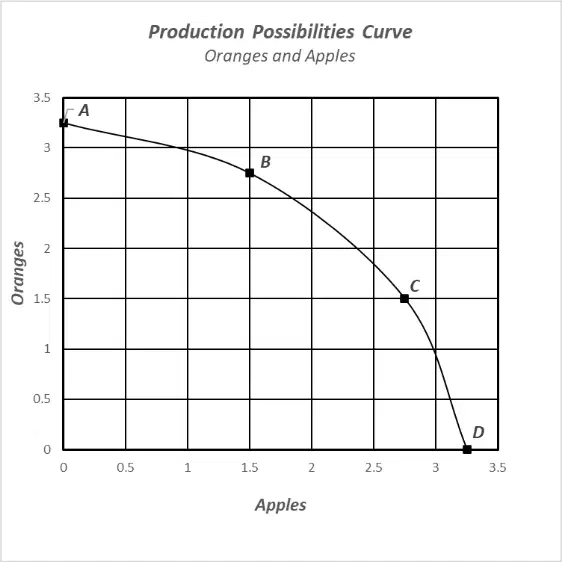
Use the Production Possibilities Curve (PPC) diagram to answer: What do Points A, B, and C on the PPC represent?
The most efficient use of technology and resources resulting in maximum output along the production process
Underutilization of resources and technology
Combinations beyond the maximum output of current technology and resources
A shift of the curve due to increased resources
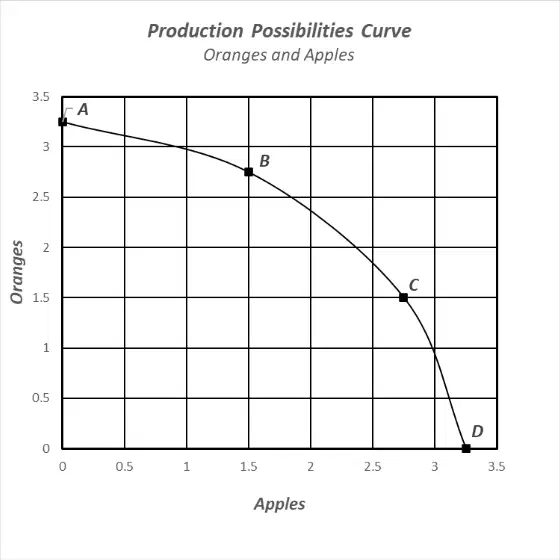
Use the Production Possibilities Curve (PPC) diagram to answer: What does any point inside the PPC represent?
Resources and technology are underutilized, or not efficient
The most efficient use of technology and resources
Combinations unattainable with current technology and resources
A change in technology shifting the curve outward
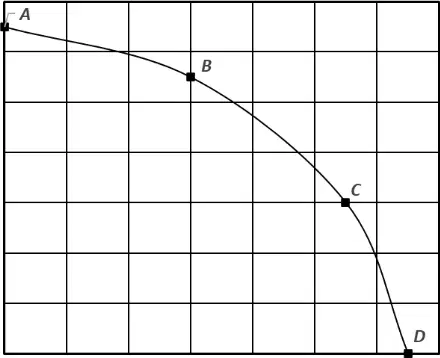
Use the Production Possibilities Curve (PPC) diagram to answer: Why is Point E considered “unattainable”?
It is beyond the maximum output of the current technology and resources
It lies inside the PPC where resources are underutilized
It represents specialization in one good only
It is on the curve and therefore efficient
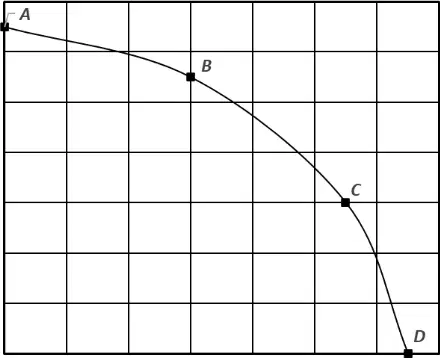
Use the Production Possibilities Curve (PPC) diagram to answer: What is the opportunity cost of moving from Point B to Point C?
1.25 oranges
0.75 oranges
2 oranges
0.25 oranges
Define Quantity Demanded as listed in the prompt under Demand/Supply.
The quantity of a good or service consumers are willing and able to purchase at a specific price
The total amount producers are willing to supply at any price
The number of goods produced in a market
The change in quantity supplied when price changes
What is the “Law of Demand”?
As price increases, quantity demanded increases.
As price decreases, quantity demanded decreases.
As price increases, quantity demanded decreases, and as price decreases, quantity demanded increases.
Price changes do not affect quantity demanded.
What type of relationship does demand have with price?
Direct relationship
Inverse relationship
No relationship
Proportional relationship only at low prices

Label the type of curve shown: a downward-sloping line of plotted points where price on the vertical axis decreases from 5to 1 as quantity on the horizontal axis increases from 1 to 5.
Demand curve
Supply curve
Production possibilities frontier
Average total cost curve
Describe the difference: Movement along the demand curve is caused by which change?
A change in price
A change in income
A change in tastes and preferences
A change in the number of consumers
A shift of the demand curve is caused by what?
A change in price only
A change in any factor other than price
Random market noise
Government cannot cause shifts
List the non-price determinants of demand by matching each letter to its determinant.
T
taste and preferences
I
income
M
market size (number of consumers in a market)
E
expectation of consumers
R
related goods (substitute goods / complementary goods)
What is the “Law of Supply”?
As price increases, quantity supplied decreases.
As price increases, quantity supplied increases, and as price decreases, quantity supplied decreases.
Price changes do not affect quantity supplied.
As price decreases, quantity supplied increases.
What type of relationship does supply have with price?
Inverse relationship
Direct relationship
No relationship
Variable relationship only at high prices

Label the type of curve shown: an upward-sloping line of plotted points where price on the vertical axis increases with quantity on the horizontal axis.
Demand curve
Supply curve
Laffer curve
Indifference curve
Describe the difference: Movement along the supply curve is caused by which change?
A change in price
A change in technology
A change in input costs
A change in the number of producers
A shift of the supply curve is caused by what?
A change in price only
A change in any factor other than price
Seasonal variation in demand
Government cannot cause shifts
Match each letter code with the non‑price determinant of supply.
P
Producer expectations
R
Regulations
O
Input costs
What happens when Quantity Supplied ( Qs ) equals Quantity Demanded ( Qd )?
A surplus occurs
A shortage occurs
What is Ep ?
The quantity at which Qs=Qd
The price at which Qs=Qd
What is Eq ?
The quantity at which Qs=Qd
The price at which Qs=Qd
What is the relationship between Qs and Qd when there is a surplus?
Qs>Qd
Qs<Qd
In order to return to equilibrium, what happens to prices when there is a surplus?
Prices need to increase
Prices need to decrease
What is the relationship between Qs and Qd when there is a shortage?
Qs>Qd
Qs<Qd
In order to return to equilibrium, what happens to prices when there is a shortage?
Prices need to increase
Prices need to decrease

Show the relationship between Demand ( D ), price equilibrium ( Ep ), and quantity equilibrium ( Eq ) when Demand increases or decreases. Select the option that correctly summarizes both cases.
When D increases: Ep increases, Eq increases; when D decreases: Ep decreases, Eq decreases
When D increases: Ep decreases, Eq decreases
What is a price floor?
A legal minimum price below which the price of a good may not fall
A legal maximum price above which the price may not rise
What is traded in international trade? Select all that apply.
Raw materials
Technology
Ideas
Personal chores
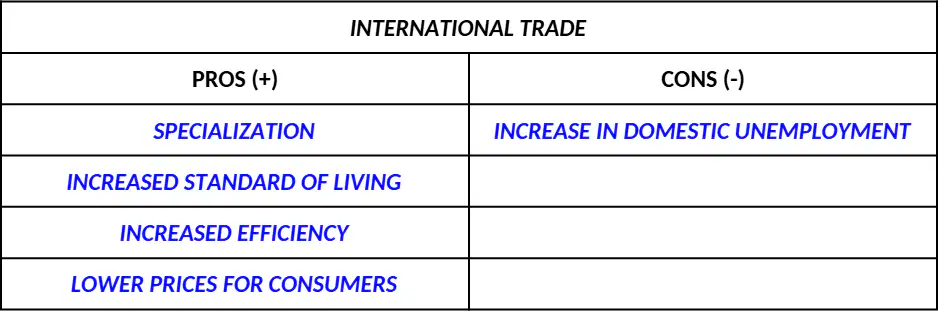
According to the table labeled INTERNATIONAL TRADE, which item is listed as a pro of international trade?
Increase in domestic unemployment
Specialization
Political retaliation
Embargoes
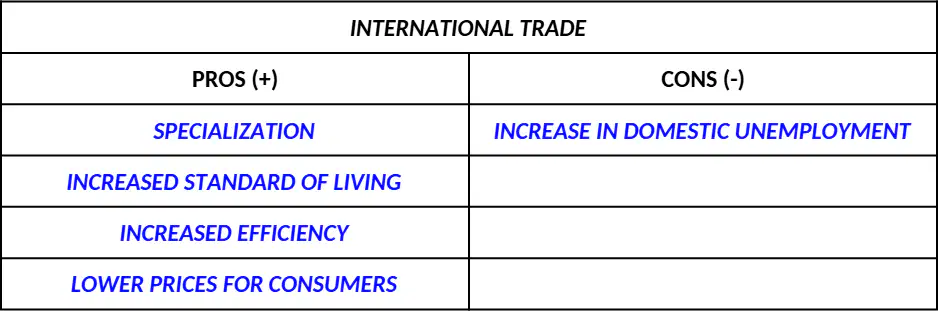
Which item is listed as a con of international trade in the INTERNATIONAL TRADE table?
Lower prices for consumers
Increased standard of living
Increase in domestic unemployment
Specialization
What are exports in international trade?
Goods and services bought from other countries
Goods and services sold to other countries
Money sent abroad as aid
Foreign investments made domestically
What are imports in international trade?
Goods and services sold to other countries
Goods and services bought from other countries
Taxes collected on foreign goods
Limits on the amount of goods traded
Why do countries trade goods, according to the worksheet?
To reduce the number of available resources
Because no country has all the resources necessary to efficiently produce everything its people need
To eliminate domestic jobs
Because imports always cost less than exports
Which inequality describes a trade surplus?
Imports > Exports
Exports > Imports
Imports = Exports
Exports + Imports = 0
Which inequality describes a trade deficit?
Exports > Imports
Imports > Exports
Imports = Exports
Exports − Imports = 0
Given U.S. exports 1.8 quadrillion and U.S. imports 2.8 quadrillion, what is the U.S. trade status?
Trade surplus
Balanced trade
Trade deficit
No trade
Trade barriers are described as government policies designed to do what?
Make trade between countries easier
Make trade between countries more difficult
Eliminate domestic taxes
Increase foreign investment

Which item is listed as a pro of trade barriers in the TRADE BARRIERS table?
Leads to higher prices
Less innovation
Protects domestic jobs
Political retaliation
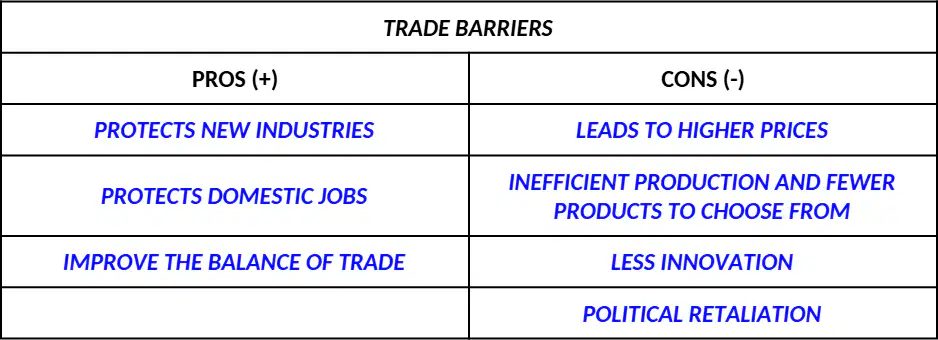
Which item is listed as a con of trade barriers in the TRADE BARRIERS table?
Protects new industries
Improve the balance of trade
Leads to higher prices
Protects domestic jobs
What is a tariff?
A tax on imported goods
A subsidy for domestic companies
A limit on the amount of a good that can be imported
A complete cutoff of trade with a nation
What is a primary price effect of tariffs on foreign products?
They become cheaper
Prices remain unchanged
They become more expensive
They become illegal
Tariffs are designed to protect which kind of domestic industries?
Export-competing
Import-competing
Service-only
Embargoed
Which statement about tariffs is noted as a possible downside?
Some domestic industries can be hurt by tariffs
Tariffs always lower consumer prices
Tariffs eliminate imports entirely
Tariffs increase innovation
What is an import quota?
A tax on imported goods
A limit on the amount of a good that can be imported
A policy to decrease the cost of production for domestic companies
A law that cuts off all trade with a nation
Which example illustrates a U.S. import quota from the worksheet?
A tariff on automobiles
The U.S. limits the amount of imported sugar
A subsidy to green energy companies
An embargo on North Korea
According to the worksheet, who benefits from a sugar import quota?
Domestic sugar producers
U.S. food companies such as Coca Cola
Foreign sugar exporters
Consumers of sugary drinks
According to the worksheet, who is hurt by the sugar import quota example?
Domestic sugar producers
U.S. food companies such as Coca Cola
Foreign sugar exporters only
Consumers of leafy greens
What is an embargo?
A limit on the quantity of imports
A tax on imported goods
Law(s) that cuts off all trade with a nation—no imports and no exports
A subsidy to reduce production costs
Which examples on the worksheet are embargoes? Select all that apply.
1985 embargo against South Africa helped end apartheid
Current embargo with North Korea
Domestic tariff on sugar
Energy production subsidy
What are domestic subsidies intended to do, according to the worksheet?
Increase the price of foreign goods
Decrease the cost of production for domestic companies
Cut off all trade with a nation
Limit the quantity of imports
Domestic subsidies are designed to protect which companies?
Export-competing companies
Import-competing companies
Foreign-owned companies
Only service-sector companies
Which amount is noted as energy production subsidies to fossil fuel (oil/natural gas/etc.) companies?
11.3 billion
2.8 billion
1.8 billion
2.8 quadrillion
Which amount is noted as subsidies to green energy (solar/wind/etc.) companies?
2.8 billion
11.3 billion
1.3 billion
28 billion
Business Cycle — Define the Business Cycle.
The long-run trend of economic growth over decades
The short-run fluctuation between economic recession and expansion
Government planning of production and prices
Seasonal changes in consumer spending
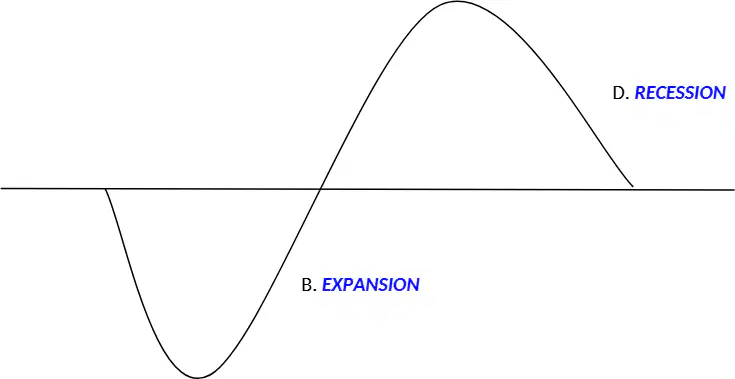
Business Cycle — Using the provided diagram of the business cycle, identify which phase is at the highest point of the curve.
Expansion
Peak
Recession
Trough
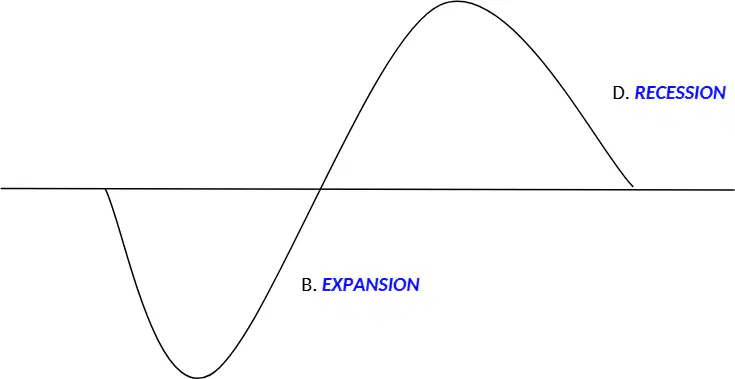
Business Cycle — Place the phases of the business cycle in the correct order starting at a trough.
Recession → Peak → Expansion → Trough
Expansion → Peak → Recession → Trough
Peak → Expansion → Recession → Trough
Expansion → Recession → Peak → Trough
Business Cycle — What happens during a recession (contraction)?
Upturn in the cycle
Downturn in the cycle
Prices stabilize at the peak
Government increases money supply automatically
Business Cycle — What happens during an expansion (recovery)?
Downturn in the cycle
Upturn in the cycle
Permanent peak in GDP
Automatic rise in unemployment
Business Cycle — Why is it important to control strong expansions?
To ensure prices will not rise out of control
To keep unemployment permanently high
To reduce government spending only
To eliminate recessions entirely
Business Cycle — Why is it important to control the severity of recessions?
So prices will rise quickly
So people have jobs and money to spend
So expansion phases are shorter
So inflation is always zero
Business Cycle — During an expansion, what typically happens to GDP?
GDP goes up
GDP goes down
GDP stays fixed at the trend line
GDP becomes unpredictable
Business Cycle — During an expansion, what typically happens to unemployment?
Unemployment goes up
Unemployment goes down
Unemployment is unchanged
Unemployment becomes highly volatile
Business Cycle — During an expansion, what typically happens to inflation?
Inflation goes down
Inflation goes up
Inflation stays at zero
Inflation is unrelated to the cycle
Business Cycle — During a recession, what typically happens to GDP?
GDP goes up
GDP goes down
GDP is unaffected
GDP doubles
Business Cycle — During a recession, what typically happens to unemployment?
Unemployment goes up
Unemployment goes down
Unemployment is unchanged
Unemployment disappears
Business Cycle — During a recession, what typically happens to inflation?
Inflation goes up
Inflation goes down
Inflation becomes infinite
Inflation is unrelated to GDP
Economic Indicators — Which description best defines Leading Indicators?
Metrics that change after the economy has already shifted
Measures that move at the same time as overall economic activity
Statistics that tend to change before the broader economy does
Historical averages that never change with the cycle
Economic Indicators — Which description best defines Coincident Indicators?
Measures that tend to change before the broader economy does
Metrics that change after the economy has already shifted
Measures that move at the same time as overall economic activity
Indicators that are unrelated to GDP, unemployment, or inflation
Economic Indicators — Which description best defines Lagging Indicators?
Measures that tend to change before the broader economy does
Metrics that change after the economy has already shifted
Indicators that move exactly with current conditions
Statistics that never change
Match each type of economic indicator to when it changes relative to the overall economy.
Leading indicator
Becomes weak before a recession and strong before an expansion
Coincident indicator
Changes at roughly the same time as the economy
Lagging indicator
Does not change until after the economy has already begun to enter a recession or an expansion
What does Gross Domestic Product (GDP) measure and why is it important?
The value of all final goods and services produced within a country, used to track the health and growth of the economy
Total sales of intermediate goods used in production processes
Daily changes in stock market prices as an indicator of national wealth
The amount of money in circulation regardless of production
Select all items that are excluded from the calculation of GDP.
Used goods
Financial assets such as stocks and bonds
Household production or subsistence farming
Underground markets
Goods and services produced within the country’s borders during the current period
Match each approach to calculating GDP with what it sums.
Production approach
Sales price minus the price of inputs
Income approach
Wages + Interest + Rent + Profit
Expenditure approach
Consumer Spending + Investment + Government Spending + Net Exports
Which combination of unemployment types is included in the Natural Rate of Unemployment (NRU)?
Frictional + Structural + Seasonal
Frictional + Cyclical
Structural + Cyclical + Seasonal
Frictional + Structural + Cyclical + Seasonal
Match each type of unemployment to its description.
Frictional
People who are fired, laid off, or quit
Structural
Too many laborers for a market (mismatch between workers’ skills and available jobs)
Cyclical
Fluctuation in the business cycle
Seasonal
Short-term job based on a season
Who is counted as employed for labor statistics?
Worked in the last week or were on vacation or sick, and are at least 16 years old
Worked less than an hour last week and were actively looking for work for four weeks
Are available for work but not actively seeking work and under 16 years old
Are serving in the military or are in an institution
Who is counted as unemployed for labor statistics?
Worked less than an hour last week, have been actively looking for work for four weeks, are available for work, and are not in the military or an institution
Worked full time last week but are looking for a second job
Are retired and not seeking employment
Are students not seeking work
What is the correct formula for the unemployment rate?
Unemployed workers ÷ (employed workers + unemployed workers)
Employed workers ÷ total population
Unemployed workers ÷ employed workers
(Employed workers + unemployed workers) ÷ unemployed workers
What is the “market basket,” and how is it used in relation to inflation (for example, the CPI)?
It consists of items the average family of four would purchase in a city; the percentage change in the CPI based on this basket is the inflation rate
It is a list of items for luxury households; its price level alone is the inflation rate
It is the set of goods purchased by businesses; the change in business spending defines inflation
It is a collection of government purchases; its change determines inflation
Which equation is used to calculate the inflation rate?
(New CPI − Old CPI) ÷ Old CPI × 100
(Old CPI − New CPI) ÷ New CPI × 100
New CPI ÷ Old CPI × 100
(New CPI − Old CPI) × 100
Select all causes of inflation listed.
Money supply increases, which raises demand and prices
Money demand decreases
Aggregate demand increases (demand-pull inflation)
Aggregate supply decreases (cost-push inflation)
Aggregate supply increases, reducing costs
Select all recognized costs of inflation listed.
Unexpected inflation can positively or negatively affect lenders and borrowers
Shoe-leather costs due to people avoiding holding money
Menu costs of changing prices, which occur more frequently with high inflation
Lower transaction costs resulting from inflation
Automatic reduction in interest rates
What is the optimal inflation rate, and what does the optimal rate avoid?
An inflation rate of 0%; it avoids any change in purchasing power
An inflation rate between 2% and 3%; it avoids the negative costs of inflation
An inflation rate between 5% and 6%; it avoids deflation
An inflation rate above 10%; it avoids unemployment
Which tools do lawmakers use for fiscal policy? Select all that apply.
Taxes
Government spending
Setting bank reserve requirements
Managing exchange rates
How can the fiscal policy tools be used to increase GDP and improve the economy?
Increase taxes and decrease government spending
Decrease taxes and increase government spending
Increase taxes and increase government spending
Decrease taxes and decrease government spending
How can the fiscal policy tools be used to slow down inflation and keep the economy from going into a recession?
Increase taxes and decrease government spending
Decrease taxes and increase government spending
Decrease taxes and decrease government spending
Increase taxes and increase government spending
How is aggregate demand affected by an expansionary fiscal policy?
Aggregate demand decreases because taxes are raised and government spending is cut
Aggregate demand increases because taxes are lowered and government spending rises, putting more money into individuals’ hands and boosting purchases, including social welfare programs
Aggregate demand is unchanged because fiscal policy only affects interest rates
Aggregate demand decreases because social welfare programs reduce consumer purchases

Match each tax structure to its typical example based on the table.
Proportional tax
“Flat” income tax
Progressive tax
U.S. income tax
Regressive tax
Sales taxes
Which of the following are ways the government can fix a budget deficit? Select all that apply.
Raise taxes
Lower government spending
Print money
Borrow money
Using the options for fixing a budget deficit, which choice is least politically harmful for lawmakers?
Raise taxes
Lower government spending
Print money
Borrow money
What does Keynesian Economics advocate?
Passive government with no intervention in the economy
Active policy responses by policymakers (monetary and fiscal policy) to stabilize the business cycle
Eliminating all taxes to maximize private investment
Strict price controls to eliminate inflation
During which periods of American history has Keynesian Economics been the primary economic model? Select all that apply.
Mid 1930s to mid 1970s
1980s to early 2000s
2008 to present
1870s to 1890s
Which are the two types of economic stabilizers used by Keynesian economists? Select all that apply.
Automatic stabilizers (built-in tax and transfer mechanisms)
Discretionary fiscal policy (deliberate government actions)
Supply-side tax credits
Wage and price controls
What is “the Fed”?
The central bank of the U.S.
A private banking consortium with no government oversight
The Department of the Treasury
A state-level banking authority
What created the Fed?
Federal Reserve Act of 1913
Glass–Steagall Act of 1933
Sherman Antitrust Act of 1890
Sarbanes–Oxley Act of 2002
How many Federal Reserve Bank districts are there in the U.S.?
10
12
8
15
Select the three main jobs of the Fed.
Make sure banks are sound and safe
Provide financial and payment services to banks
Promote a healthy economy using monetary policy
Set individual banks’ lending rates for each loan
Write federal tax law
What is the typical effect of an increase in the money supply on the economy?
It should boost the economy
It should slow inflation
It immediately causes a recession
It has no measurable impact
What is the typical effect of a decrease in the money supply on the economy?
It should slow inflation
It should boost the economy
It guarantees hyperinflation
It eliminates unemployment

Match each monetary policy tool with how it can help grow or slow the economy.
Buying/Selling government securities (bonds)
Buying bonds grows by putting more money into circulation; selling bonds slows by pulling money out
Increasing/Decreasing reserve requirement
Decreasing the reserve requirement grows by allowing more loans; increasing it slows by forcing banks to hold more
Increasing/Decreasing discount rate
Decreasing the discount rate grows by making borrowing cheaper; increasing it slows by making borrowing more expensive

Using the information above, identify the actions associated with expansionary fiscal and monetary policy. Select all that apply.
Business cycle: recession
Taxes: decrease
Government spending: increase
Money supply: increase
Government securities: buy
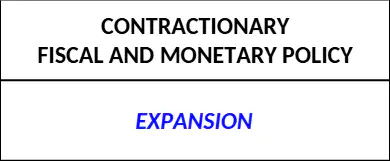
Using the information above, identify the actions associated with contractionary fiscal and monetary policy. Select all that apply.
Business cycle: expansion
Taxes: increase
Government spending: decrease
Money supply: decrease
Government securities: sell

Using the information above, which actions on banking requirements and rates are contractionary? Select all that apply.
Decrease the reserve requirement
Increase the reserve requirement
Decrease the discount rate
Increase the discount rate

