
 Worksheets
Ch. 11 Game
Total questions: 74
Worksheet time: 37mins
The new technology of the Industrial Revolution changed the way Americans lived by:
increasing factory jobs and urbanization
reducing the use of machines in daily life
making transportation slower and less efficient
decreasing the availability of manufactured goods
Fill in the blank: The ________ was a period in the 1700s when machines took the place of many hand tools and power began to be provided by water and steam engines.
Industrial Revolution
Renaissance
Great Depression
Age of Exploration
Fill in the blank: The ________ system is a method of manufacturing using machinery and division of labor.
factory system
cottage system
barter system
guild system
Fill in the blank: A ________ is a person who invests capital in a business to make a profit.
capitalist
employee
consumer
manager
Fill in the blank: ________ production is the manufacture of large quantities of standardized products, often using assembly lines or automation technology.
mass production
custom production
batch production
craft production
Fill in the blank: ________ parts are components that are made to such precise standards that they can be swapped with one another in manufacturing.
interchangeable parts
custom parts
prototype parts
obsolete parts
Fill in the blank: ________ Lowell was an important figure in the development of the factory system in America.
Francis Cabot
Eli Whitney
Samuel Slater
Robert Fulton
Checkpoint: The Industrial Revolution changed the way work was performed by:
introducing machines and factories that increased production efficiency
reducing the use of technology in workplaces
making all work dependent on manual labor
eliminating the need for organized labor
Critical Thinking: Identify Economic Benefits: The steam engine would have given a manufacturer what advantage over competitors who depended on water power to operate their machinery?
Ability to locate factories away from rivers and increase production efficiency
Reduced need for skilled workers in factories
Lower cost of raw materials for manufacturing
Guaranteed government contracts for steam-powered factories
Vocabulary Builder: What does the word 'invest' mean?
To supply money for a project in order to make a profit
To work in a factory
To build machines
To create steam power
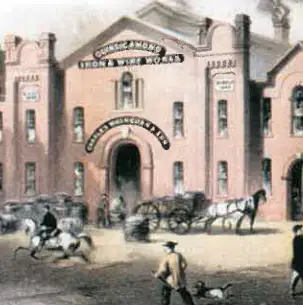
The presence of a factory might affect the surrounding communities in which of the following ways?
It may increase air and water pollution in the area.
It will guarantee cleaner air for the community.
It will reduce the population density nearby.
It will eliminate all local businesses.
Samuel Slater had to build his machines from memory because:
British laws forbade exporting machinery designs.
He wanted to improve the original designs.
He lost the original blueprints during travel.
He was inspired by American inventors.
Checkpoint: The Lowell factory system was different from the European factory system because:
it employed young, unmarried women as workers and provided supervised boardinghouses.
it used only child labor in factories.
it was based entirely on home-based production.
it did not allow any women to work in factories.
Technology's Impact: Technological innovations are changing people's lives today by:
Making communication faster and easier
Reducing access to information
Limiting job opportunities
Decreasing convenience in daily tasks
Fill in the blank: In the 1820s, the Industrial Revolution opened the way for new developments in ________, which changed the way people worked.
technology
agriculture
medicine
transportation
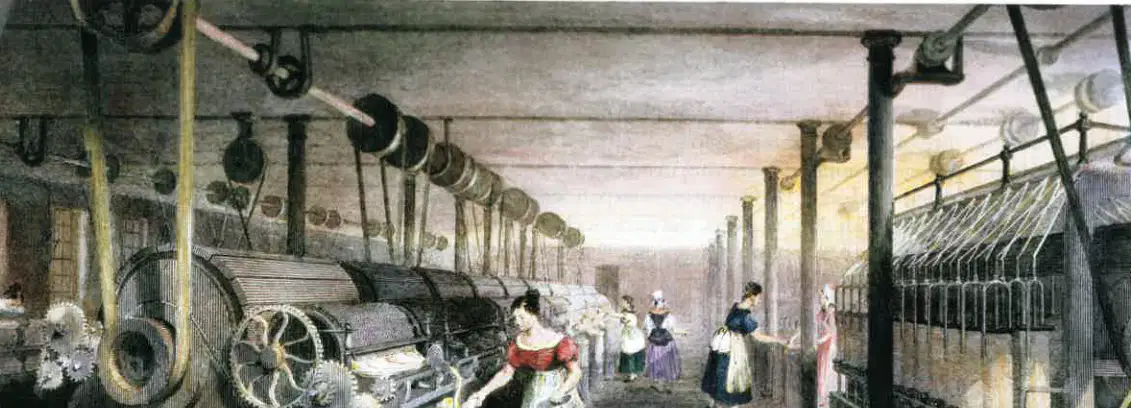
Some disadvantages for children who worked in early American factories included:
Long working hours and dangerous conditions
High wages and good education
Short workdays and plenty of breaks
Safe environments and supportive supervisors
The War of 1812 affected U.S. industry by:
leading to increased manufacturing and industrial growth in the United States.
causing the collapse of all American factories.
making the U.S. completely dependent on British goods.
ending all trade with European countries permanently.
Advances in industry occurred mainly in the North because:
the North had more rivers and resources for factories.
the South had more factories than the North.
the North focused mainly on agriculture.
the North had fewer workers than the South.
Comprehension and Critical Thinking
2. (a) Interchangeable parts are:
parts that are identical and can be easily replaced in manufacturing
unique parts made for each product
parts that cannot be replaced
parts that are only used once
The system of interchangeable parts affected employment in the United States by:
increasing the demand for unskilled workers in factories
eliminating the need for workers entirely
making all workers highly skilled craftsmen
reducing the number of available jobs
Based on this section, the impact of inventiveness during the early Industrial Revolution can be generalized as:
It led to significant technological advancements and economic growth.
It caused a decline in industrial productivity.
It resulted in the loss of all traditional jobs.
It had little to no effect on society.
Education was important for women and girls working in the mills because:
it provided opportunities for better jobs and improved their lives.
it was required by law for all mill workers.
it allowed them to work fewer hours in the mills.
it was only available to men and boys.
Working in a mill can be described as:
Physically demanding and often noisy, with long hours and repetitive tasks.
A relaxing environment with minimal supervision and flexible hours.
An outdoor job involving travel to different locations daily.
A creative workspace focused on artistic projects.
Urbanization, technology, and social change affected the North by:
increasing industrial growth and urban populations
reducing the number of factories and cities
causing widespread agricultural decline only
leading to isolation from other regions
American cities grew in the 1800s because:
industrialization created more jobs and opportunities.
people wanted to escape the countryside for adventure.
the government forced people to move to cities.
cities had better weather than rural areas.
List the new inventions and advances in agriculture and manufacturing during the early 1800s.
The cotton gin, mechanical reaper, and interchangeable parts
The steam engine, light bulb, and telephone
The printing press, spinning jenny, and telegraph
The assembly line, tractor, and airplane
Improvements in transportation during the early 1800s included which of the following?
The development of steamboats and canals
The invention of airplanes
The widespread use of automobiles
The construction of high-speed railways
The wave of immigration to the United States in the 1840s and 1850s was primarily characterized by:
A large influx of Irish and German immigrants fleeing famine and political unrest.
A significant arrival of Chinese immigrants seeking gold in California.
A surge of Italian and Russian immigrants escaping persecution.
A major movement of Mexican immigrants due to the Mexican-American War.
African Americans in the North during the 1800s faced which of the following problems?
Discrimination in jobs and housing
Equal voting rights
Complete social acceptance
No restrictions on education
Fill in the blank: The invention that allowed instant communication over long distances was the ________.
telegraph
steam engine
printing press
light bulb
Fill in the blank: The person known for inventing the telegraph was ________.
Samuel F.B. Morse
Alexander Graham Bell
Thomas Edison
Guglielmo Marconi
Fill in the blank: The movement of people from rural areas to cities is called ________.
urbanization
deforestation
industrialization
globalization
Fill in the blank: The shortage of food that leads to widespread hunger is called ________.
famine
drought
flood
earthquake
Fill in the blank: The policy of favoring native-born citizens over immigrants is called ________.
nativist
federalist
abolitionist
populist
Fill in the blank: Unfair treatment of people based on their race or other characteristics is called ________.
discrimination
cooperation
integration
celebration
Cities in the early 1800s faced which of the following problems?
Overcrowding and poor sanitation
Advanced public transportation
High-speed internet access
Modern skyscrapers
The link between industrialization and urban problems is that:
industrialization leads to rapid urban growth, causing issues like overcrowding and pollution.
industrialization reduces urban problems by improving infrastructure.
industrialization has no effect on urban areas.
industrialization only affects rural areas, not cities.
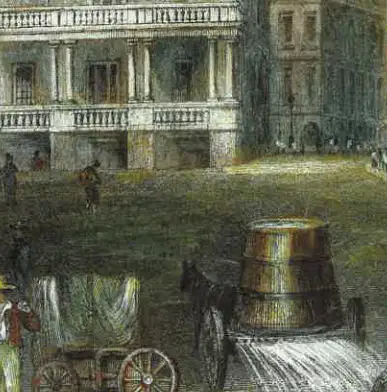
The rapid growth of cities posed which of the following problems for city dwellers?
Overcrowding and poor sanitation
Abundant green spaces
Decreased pollution
Improved housing for all
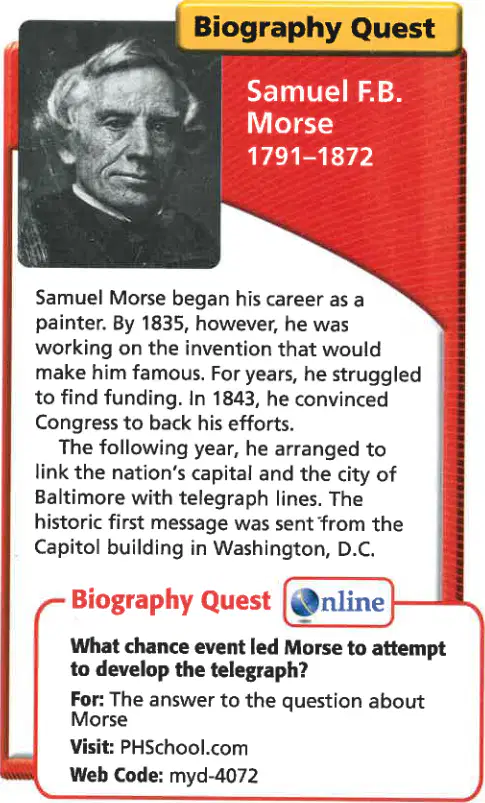
What chance event led Morse to attempt to develop the telegraph?
He learned about electromagnetism while on a ship voyage.
He received a letter about his wife's illness too late.
He met a famous inventor at a science exhibition.
He read a newspaper article about communication devices.
Checkpoint: New inventions that helped northern industry to grow included which of the following?
The telegraph and the sewing machine
The cotton gin and the spinning jenny
The steam engine and the plow
The reaper and the combine harvester
Railroads were a better means of transportation than steamboats because:
they could travel faster and reach more destinations.
they were powered by wind.
they only operated on rivers.
they were less expensive to build than steamboats.

The Clermont would not be suitable for ocean travel because:
it was not designed for rough ocean conditions.
it was too large to navigate rivers.
it was powered by sails only.
it was made entirely of metal.
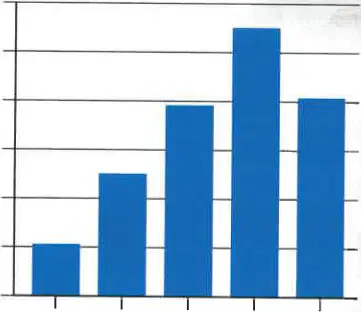
In which year did Irish immigration to the United States reach its peak between 1845 and 1853?
1851
1847
1850
1853
Checkpoint: Irish and German immigration to the United States increased in the 1840s because:
of famine and political unrest in their home countries.
they were seeking gold during the Gold Rush.
the United States offered free land to all immigrants.
they were escaping religious persecution in the United States.
Checkpoint: African Americans in the North faced which of the following obstacles?
Discrimination and limited job opportunities
Complete social equality
Unrestricted voting rights
No segregation in public places
1. (a) The growth of cities was primarily influenced by which of the following factors?
Industrialization and job opportunities
Decline in population
Decrease in trade
Reduction in transportation
Improved communication can help the growing economy by:
Facilitating faster business transactions
Increasing pollution levels
Reducing technological advancements
Limiting access to information
More than a million people died in a famine during the Great Hunger that started in Ireland in 1845.
True
False
Even though many African Americans living in the North were legally free, they still suffered from discrimination.
True
False
The growth of industry in the North was caused by several factors. Which of the following was NOT a cause of industrial growth in the North?
Abundant natural resources
Improved transportation systems
Large slave labor force
Technological innovations
Objective: The significance of cotton and the cotton gin to the South was that cotton was important to the Southern economy because:
it became the main cash crop and increased the demand for slave labor.
it was used primarily for food production in the South.
it led to the decline of plantation agriculture.
it reduced the need for labor on Southern farms.
Objective: Life for free and enslaved African Americans in the South differed in several ways. Which statement best describes how their experiences differed?
Free African Americans had some legal rights and could own property, while enslaved African Americans had no rights and were considered property.
Both free and enslaved African Americans had equal rights in the South.
Enslaved African Americans could vote, while free African Americans could not.
Free African Americans were required to work on plantations, while enslaved African Americans were not.
Cotton affected the social and economic life of the South by:
increasing dependence on slavery and boosting the economy
reducing the need for labor and decreasing wealth
eliminating agriculture as a main industry
leading to rapid industrialization
What is the cotton gin?
The cotton gin is a machine invented by Eli Whitney in 1793 that sped up the processing of cotton by using a spiked cylinder to remove seeds from cotton fibers.
The cotton gin is a type of fabric used in the production of clothing.
The cotton gin is a traditional Southern dance performed during harvest season.
The cotton gin is a law passed in 1793 to regulate cotton prices.
Who was Nat Turner?
Nat Turner was an enslaved African American who led a rebellion against slavery.
Nat Turner was a famous inventor during the Industrial Revolution.
Nat Turner was a leader of the women's suffrage movement.
Nat Turner was a Civil War general for the Union army.
The cotton gin made cotton growing more profitable and increased the demand for slave labor in the South.
True
False
The disagreements between supporters and critics of slavery can be explained as:
Supporters believed slavery was necessary for the economy, while critics saw it as morally wrong.
Supporters wanted to abolish slavery, while critics wanted to expand it.
Supporters and critics both agreed slavery should continue.
Supporters believed slavery was morally wrong, while critics supported it for economic reasons.
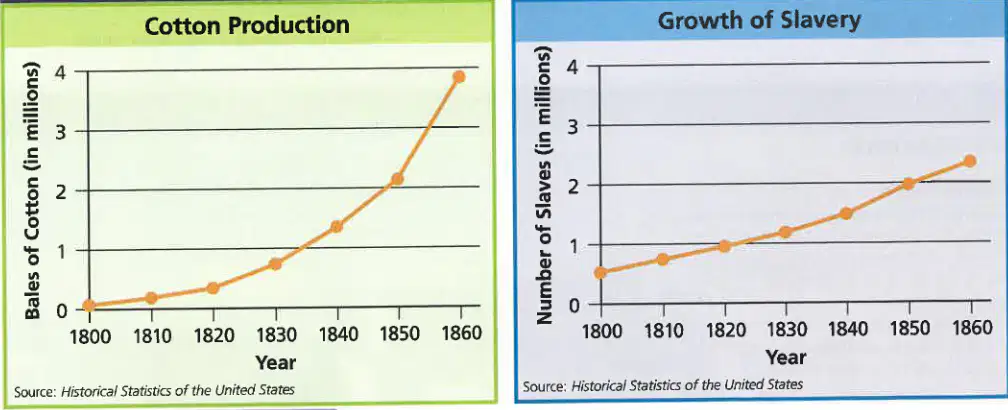
Read Graphs: How much did cotton production increase between 1800 and 1850? In what 10-year period did slavery grow the fastest? (Refer to the graphs 'Cotton Production' and 'Growth of Slavery')
Cotton production increased by 3 million bales, and slavery grew the fastest between 1820 and 1830.
Cotton production increased by 1 million bales, and slavery grew the fastest between 1800 and 1810.
Cotton production increased by 5 million bales, and slavery grew the fastest between 1840 and 1850.
Cotton production increased by 2 million bales, and slavery grew the fastest between 1810 and 1820.
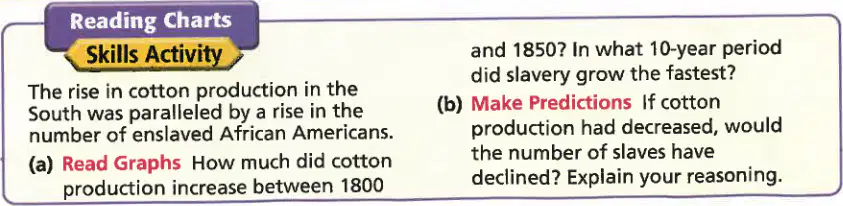
If cotton production had decreased, the number of slaves would have declined. Explain your reasoning.
Yes, because less cotton production would reduce the demand for slave labor.
No, because the number of slaves was not related to cotton production.
Yes, because slaves would have been used for other crops instead.
No, because cotton production would have increased regardless of the number of slaves.
Checkpoint: Slave ownership was widespread to what extent?
It was common among a small percentage of the population.
Nearly everyone owned slaves.
Only government officials owned slaves.
Slave ownership was extremely rare.
How did slave catchers contribute to the insecurity of African Americans in the South?
Slave catchers patrolled the streets looking for escapees and often kidnapped free African Americans and sold them into slavery.
Slave catchers helped African Americans escape to the North.
Slave catchers provided protection to African American communities.
Slave catchers advocated for the abolition of slavery.
Which African American inventor developed a seed-planting device that reduced the time a farmer spent sowing a crop?
Norbert Rillieux
Henry Blair
Eli Whitney
Frederick Douglass
What was the main purpose of slave codes according to the passage?
Slave codes controlled every aspect of enslaved people's lives and denied them rights.
Slave codes were designed to grant enslaved people more freedoms.
Slave codes encouraged enslaved people to learn to read and write.
Slave codes allowed enslaved people to own property.
What protection did enslaved African Americans have against mistreatment?
Enslaved African Americans had only one real protection against mistreatment: owners looked on them as valuable property that they needed to keep healthy and productive.
They could appeal to the Supreme Court for justice.
They were protected by the Bill of Rights.
They could form labor unions to negotiate better treatment.
Families of enslaved African Americans were often broken apart when slave owners sold one or more of their family members.
True
False
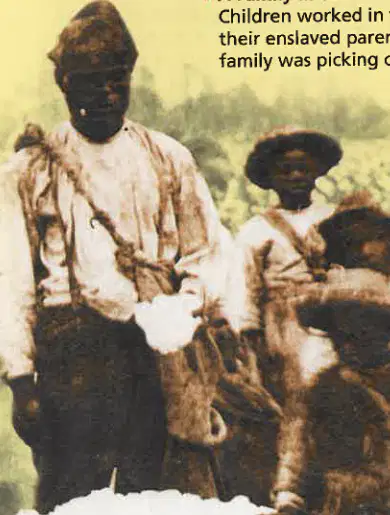
What type of labor did most enslaved African Americans do?
Most enslaved African Americans did heavy farm labor.
Most enslaved African Americans worked as ship captains.
Most enslaved African Americans were gold miners.
Most enslaved African Americans worked as teachers.
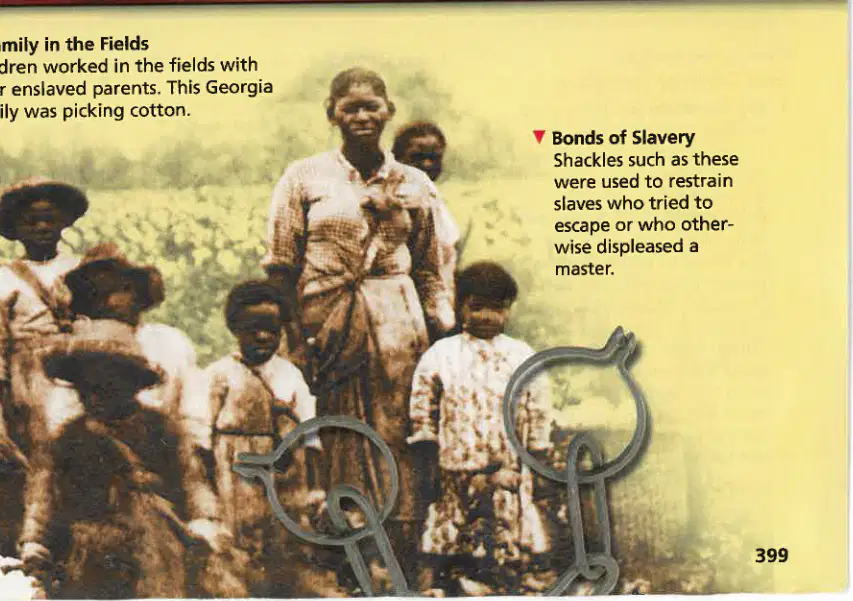
What was the purpose of shackles in slavery?
Shackles were used to restrain slaves who tried to escape or who displeased a master.
Shackles were used as a form of jewelry for slaves.
Shackles were used to reward slaves for good behavior.
Shackles were used to help slaves carry heavy loads more easily.
Checkpoint: Enslaved African Americans adapted to slavery and resisted it by:
Developing cultural traditions and subtle forms of resistance
Accepting their condition without protest
Relying solely on outside help for freedom
Avoiding all forms of community and family
Northern textile mills and southern cotton plantations were linked through the production and supply of cotton, and the key invention that deepened this connection was the cotton gin.
They were linked through the production and supply of cotton, and the cotton gin was the key invention.
They were linked by the trade of tobacco, and the steam engine was the key invention.
They were connected by the export of rice, and the spinning jenny was the key invention.
They were linked through sugar production, and the telegraph was the key invention.
A typical workday for an enslaved African American on a southern cotton plantation might involve:
Long hours of hard labor in the fields from sunrise to sunset
Attending school and learning to read and write
Managing the plantation as an overseer
Traveling freely to nearby towns
Enslaved people rebelled, even though the risk was so great and the likelihood of success so small, because:
they hoped for freedom and dignity despite the dangers.
they wanted to become famous among their peers.
they were forced by their owners to rebel.
they believed rebellion would guarantee immediate success.
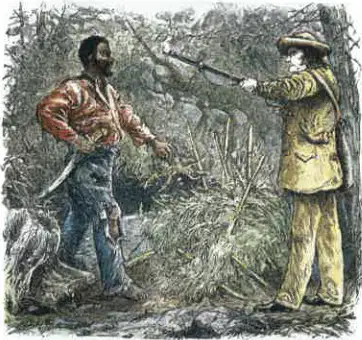
Vocabulary Builder: Fill in the blank. The word 'revolt' means ________.
uprising; rebellion
agreement; harmony
celebration; festival
discussion; debate
The cotton gin works by:
removing seeds from cotton fibers quickly and efficiently.
spinning cotton into thread.
dyeing cotton fabrics.
planting cotton seeds.
Slave codes controlled every aspect of the lives of enslaved African Americans by:
restricting their movements, education, and rights
granting them full citizenship
allowing them to vote and own property
encouraging them to form independent governments

