
 Worksheets
REVIEWER on Summative Test in Genetics 2025
Total questions: 30
Worksheet time: 15mins
Name
Class
Date
1.

1. An offspring will receive how many alleles from each parent to determine a specific trait?
a)
one
b)
two
c)
three
d)
five
2.

2. Which of the following is a phenotype?
a)
BB
b)
Bb
c)
bb
d)
Blue eyes
3.
3. Factors that control traits are called
a)
genes.
b)
purebreds.
c)
recessives.
d)
parents.
4.
4. What does the notation TT mean to geneticists?
a)
two dominant alleles
b)
two recessive alleles
c)
at least one dominant allele
d)
one dominant and one recessive allelle
5.
5. Having two of the same genes for the trait (sometimes called purebred)
a)
homozygous
b)
heterozygous
c)
protein
d)
chromosome
6.

6. Incomplete dominance means that the traits are
a)
expressed equally
b)
dominant
c)
recessive
d)
blended
7.

7. One form of a gene is called_______________
a)
a DNA
b)
a Phenotype
c)
a trait
d)
an allele
8.

8. If green is dominant over purple, then what is the genotype for this individual?
a)
Purple
b)
Green
c)
GG
d)
gg
9.
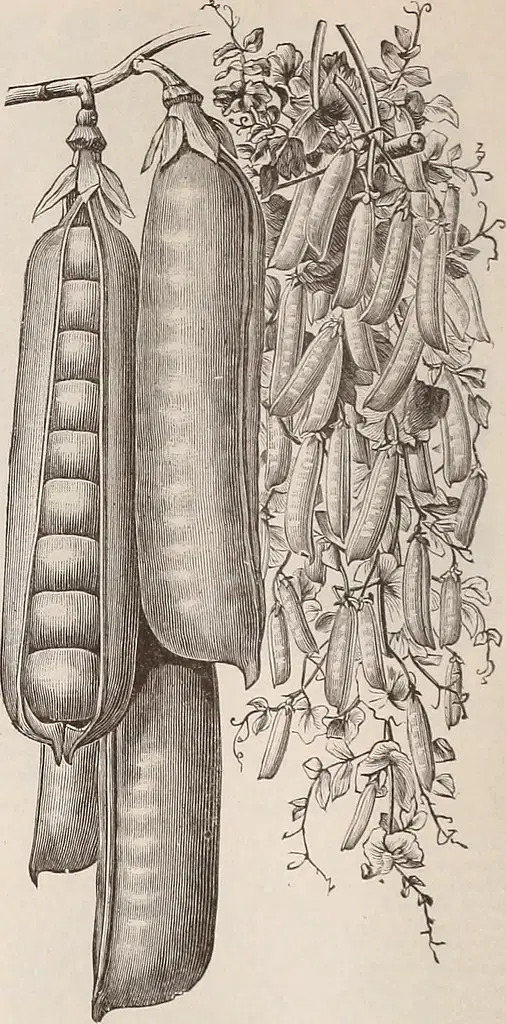
9. In pea plants, the tall allele is dominant to the short allele. What key would demonstrate this?
a)
Short = S ; Tall=T
b)
Short = t; Tall= t
c)
Short = T; Tall=TT
d)
Short = tt; Tall= TT
10.

10. A heterozygous long-tusked elephant is crossed with a homozygous recessive short-tusked elephant. What is the probability of the offspring having short tusks?
a)
0%
b)
25%
c)
50%
d)
75%
11.
11.What are the possible genotypes for this cross? Tt X Tt
a)
TT = 25% Tt= 50% tt=25%
b)
all tall
c)
TT= 75% tt = 25%
d)
Tt = 100%
12.
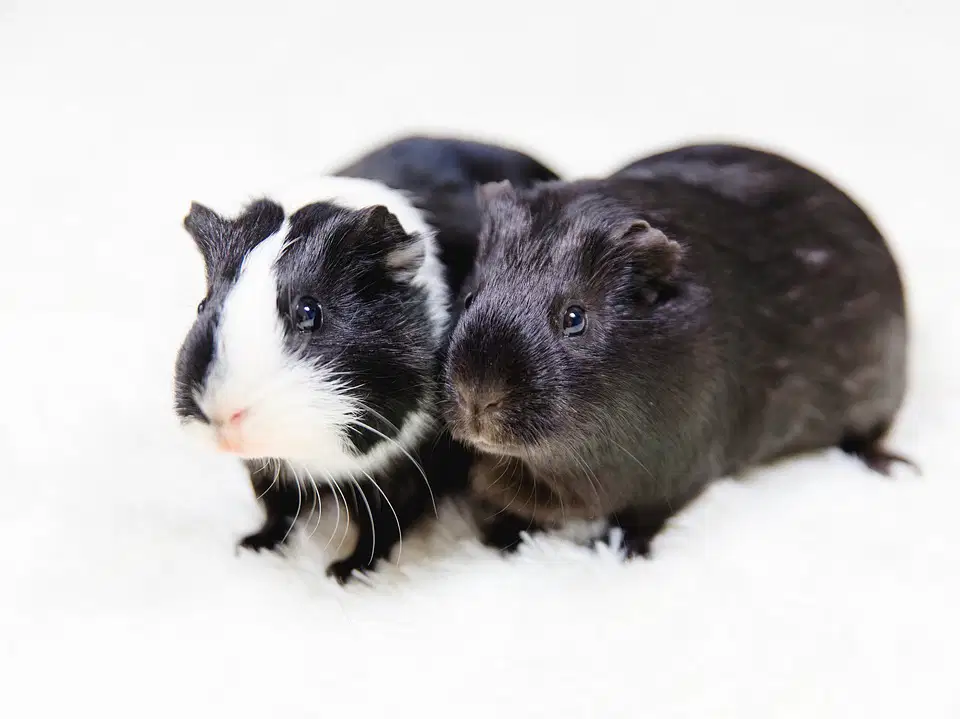
12. If you cross a black guinea pig with a white guinea pig and the offspring are gray, what type of dominant trait would that be.
a)
incomplete dominance
b)
codominance
c)
codependant
d)
cooperative
13.
13.B=Brown fur b=tan fur. What percent of the offspring would be tan when you cross BbxBb?
a)
75%
b)
25%
c)
50%
d)
100%
14.
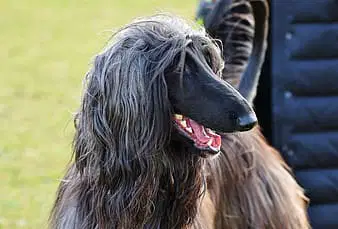
14. One dog carries homozygous, long-haired traits (SS), and its mate carries homozygous short-haired traits (ss). Use a Punnett square to determine the probability of one of their offspring having long hair.
a)
100%
b)
75%
c)
50%
d)
25%
15.

15. Sex-linked genes are genes on______________?
a)
the X chromosome only.
b)
the Y chromosome only.
c)
the X and Y chromosomes.
d)
all 23 pairs of chromosomes.
16.
16. A carrier is a person who has___________?
a)
one recessive and one dominant allele for a trait
b)
two recessive alleles for a trait.
c)
two dominant alleles for a trait.
d)
more than two alleles for a trait.
17.
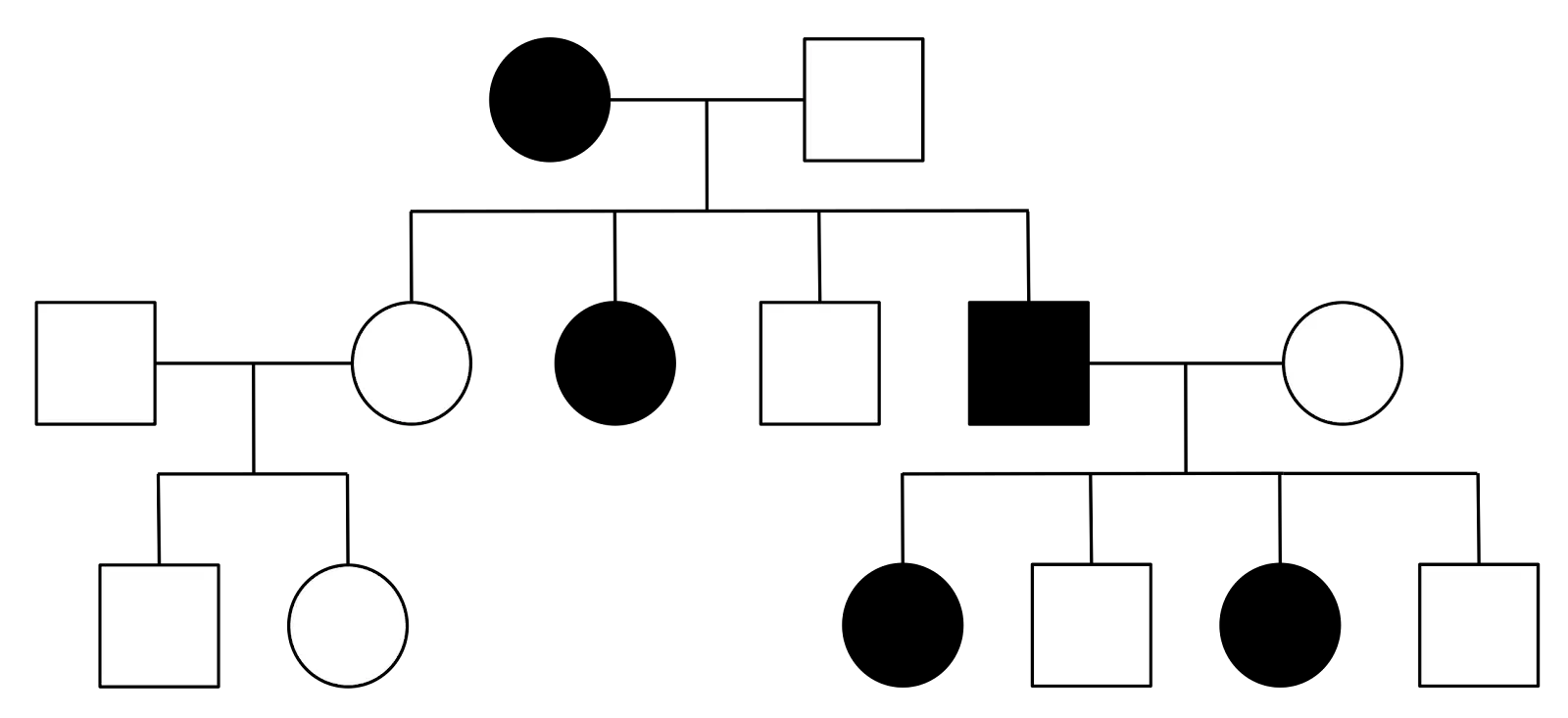
17. What is a Pedigree?
a)
a chart that tracks which members of a family have a particular trait
b)
a geneticist who studies the inheritance of traits in humans
c)
a picture of all of the chromosomes in a cell
d)
an allele passed from parent to child on a sex chromosome
18.
18. Why are sex-linked traits more common in males than in females?
a)
All alleles on the X chromosome are dominant.
b)
All alleles on the Y chromosome are recessive.
c)
A recessive allele on the X chromosome will always produce the trait in a male.
d)
Any allele on the Y chromosome will be codominant with the matching allele on the X chromosome.
19.

19. How does a geneticist use pedigrees?
a)
to create genetic crosses
b)
to replicate identical strings of DNA
c)
to prove that sex-linked traits are caused by codominant alleles
d)
to trace the inheritance of traits over generations of families
20.
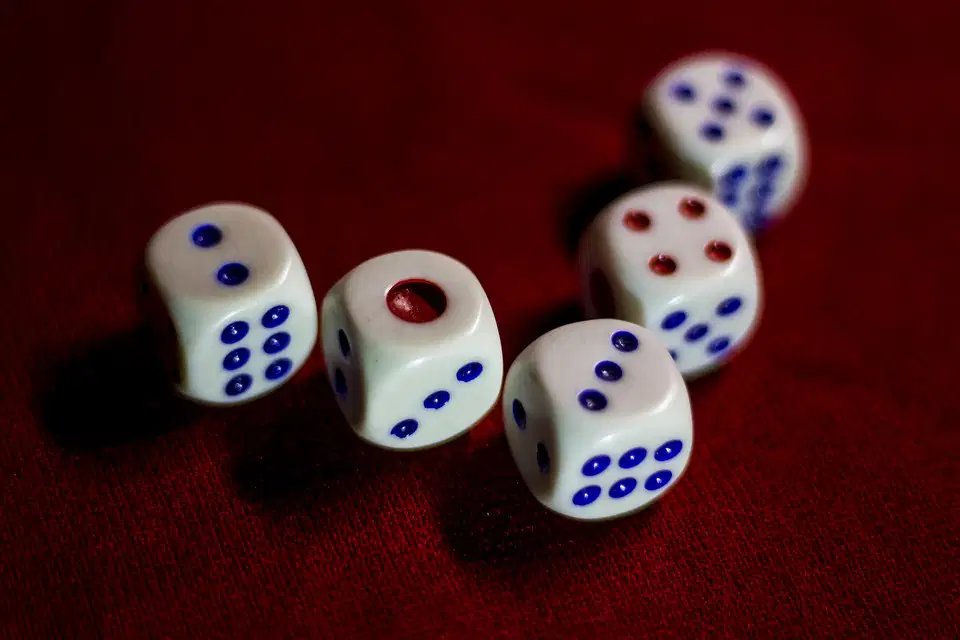
20.What is probability?
a)
the actual results from a series of events
b)
the likelihood that a particular event will occur
c)
the way the results of one event affect the next event
d)
the number of times a coin lands heads up
21.
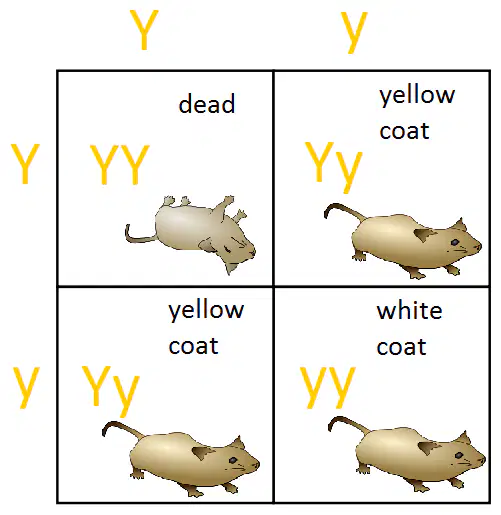
21. What does a Punnett square show?
a)
all the possible outcomes of a genetic cross
b)
only the dominant alleles in a genetic cross
c)
only the recessive alleles in a genetic cross
d)
all of Mendel’s discoveries about genetic crosses
22.
22. Some flowers are controlled by codominance. Red flowers (RR), blue flowers (BB) and Speckled flowers (RB). Cross a red flower with a speckled flower. What is the phenotypic ratio?
a)
2 red, 2 speckled
b)
2 red, 2 blue
c)
2 blue, 2 speckle
d)
4 speckled, 4 blue
23.
23. Which of the following describes a variation.
a)
A characteristic of an organism.
b)
A difference within a characteristic of an organism.
c)
Something that describes why people are the same.
d)
Something that describes why people are different.
24.

24. True or False. With the genetic disorder known as Down Syndrome, a person's cells have an extra copy of chromosome 21.
a)
True
b)
False
25.
25. Identify the homozygous dominant genotype:
a)
ff
b)
Mn
c)
tt
d)
DD
e)
Option 2
26.
26. If a mother has blood group O and father has blood group A, the child being type AB, which of the following is wrong?
a)
The mother may have IB allele that is passed to daughter
b)
The father of the child is someone else with AB blood type
c)
The child has IA allele and also IB allele
d)
This is an abnormal case
27.
27. An organism’s physical appearance is its
a)
genotype.
b)
phenotype.
c)
codominance.
d)
heterozygous.
28.
28.. An organism’s genotype is its
a)
genetic makeup
b)
feather color
c)
physical appearance
d)
stem height
29.
29.Which combination of sex chromosomes results in a male human being?
a)
XX
b)
YY
c)
XY
d)
either XX or YY
30.
30.What is a mutation?
a)
any change that is harmful to an organism
b)
any change in a gene or chromosome
c)
any change that is helpful to an organism
d)
any change in the phenotype of a cell
100 %

