
 Worksheets
Common Injuries, Management & Modalities
Total questions: 20
Worksheet time: 10mins
What is the primary goal of learning about "treatment for environmental conditions" in Standard 11? (DoK Level 2)
To understand how to prevent injuries in extreme environments
To identify the causes of environmental conditions
To apply appropriate treatment methods for conditions caused by environmental factors
To learn about the history of environmental medicine
Which of the following is NOT included in PPE?
Gloves
Mask
Eye protection
Shoes
What is the primary purpose of PPE?
To enhance comfort during work
To protect from airborne and droplet transmission of diseases
To improve visibility in low-light conditions
To reduce noise levels in the workplace

When is BSI applied in healthcare settings?
When PPE is used to protect individuals and others from infectious diseases and germs
When PPE is used to enhance physical performance
When PPE is used to improve communication between healthcare workers
When PPE is used to reduce environmental hazards
What are soft tissue injuries often called?
Wounds, strains, and sprains
Fractures, breaks, and tears
Cuts, bruises, and burns
Infections, inflammations, and swellings
Which of the following is an example of a soft tissue injury?
Blisters
Dislocations
Bone fractures
Torn ligaments
Which of the following is NOT a sign or symptom of an avulsion?
Skin torn away
Bleeding
Swelling
Bruising
Which of the following best describes the treatment process for an avulsion?
Immediate amputation of the affected area
Reattaching the skin or using a skin graft
Allowing the wound to heal naturally without intervention
Applying pressure to stop bleeding and leaving the wound open
Which of the following is NOT a common sign or symptom of a bite injury?
Pain
Tenderness
Swelling
Fever
What are blisters?
Small pockets of fluid that form in the upper layers of skin after damage.
Red, itchy patches on the skin caused by an allergic reaction.
Hard, raised bumps on the skin caused by clogged pores.
Discoloration of the skin due to bruising.
Where on the body are blisters most commonly found?
Hands and feet.
Arms and legs.
Face and neck.
Back and shoulders.
Which of the following is NOT a sign or symptom of a contusion?
Pain
Tenderness
Bruising
Bleeding
What is the primary action of an insect when it stings?
It bites the skin to cause irritation.
It uses a barbed stinger to pierce the skin and inject venom.
It scratches the skin to release toxins.
It secretes a chemical on the skin surface.
Which of the following is NOT a common sign or symptom of an insect sting?
Pain
Swelling
Redness
Numbness
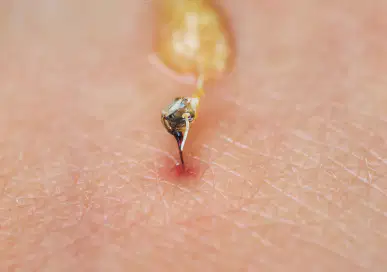
What is the first step in treating an insect sting?
Apply ice to the area.
Remove the stinger.
Clean the area with soap and water.
Elevate the affected area.
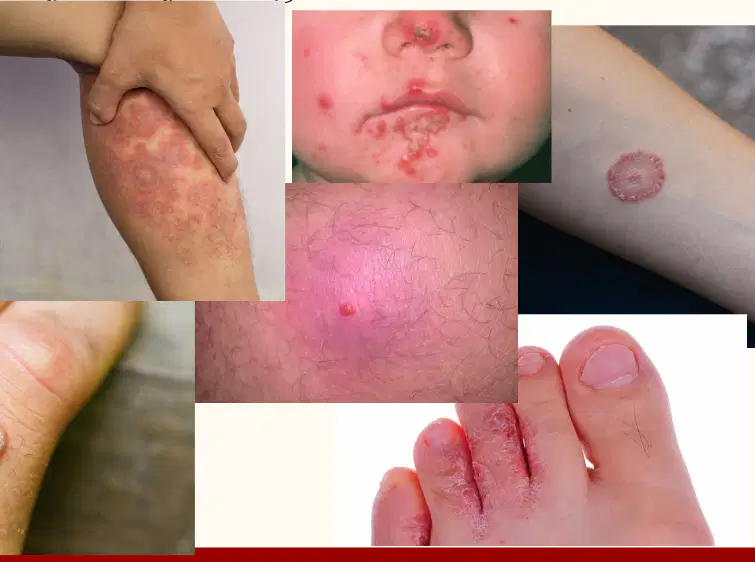
Which of the following is a type of soft tissue injury?
Ringworm
Fracture
Concussion
Sprain
What is a characteristic of skin conditions mentioned in the material?
They are always chronic.
They can be acute or chronic.
They only affect the bones.
They are caused by fractures.
What is the cause of ringworm?
Bacteria
Virus
Fungus
Parasite
Which area of the body is most commonly affected by jock itch?
Arms and legs
Scalp and face
Genitals, inner thighs, and buttocks
Hands and feet
Which age group is primarily affected by impetigo?
Adults
Infants and children
Elderly
Teenagers

