
 Worksheets
Chemistry Unit Test
Total questions: 20
Worksheet time: 10mins
Name
Class
Date
1.
Solubility is whether or not a substance can be ____________.
a)
smelled
b)
mixed
c)
dissolved
2.
Flammability is the ability of a chemical to ____________.
a)
burn or ignite
b)
dissolve
c)
sink or float
3.
Something made of one type of material throughout is a ____________.
a)
mixture
b)
substance
c)
chemical
4.

The image below represents a model of epsom salt. Which of the following statements is FALSE? (NOT TRUE)
a)
It is a compound
b)
It is an element.
c)
There are 4 atoms of oxygen in the molecule.
5.
Which of these would be considered a chemical property of matter?
a)
flammability
b)
density
c)
odor
6.
Sodium and chlorine combine to form sodium chloride, or table salt. Sodium and chlorine are:
a)
producers
b)
reactionaries
c)
reactants
7.
An unknown liquid has a volume of 40 mL and a mass of 30 grams. What is the density?
(SOLVE USING D = M/V)
a)
.82 g/ml
b)
.75 g/ml
c)
1.33 g/ml
8.
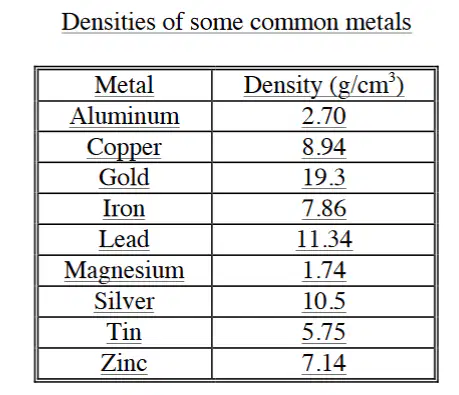
Your science teacher tells you that the labels on her collection of metals became unreadable. She asks you to identify one of the metals. You remember that you can identify the metal using its density. The mass of the metal is 157.5g and its volume is 15ml. Which metal do you have?
(SOLVE USING D = M/V TO FIND THE METAL)
a)
Lead
b)
Iron
c)
Silver
9.
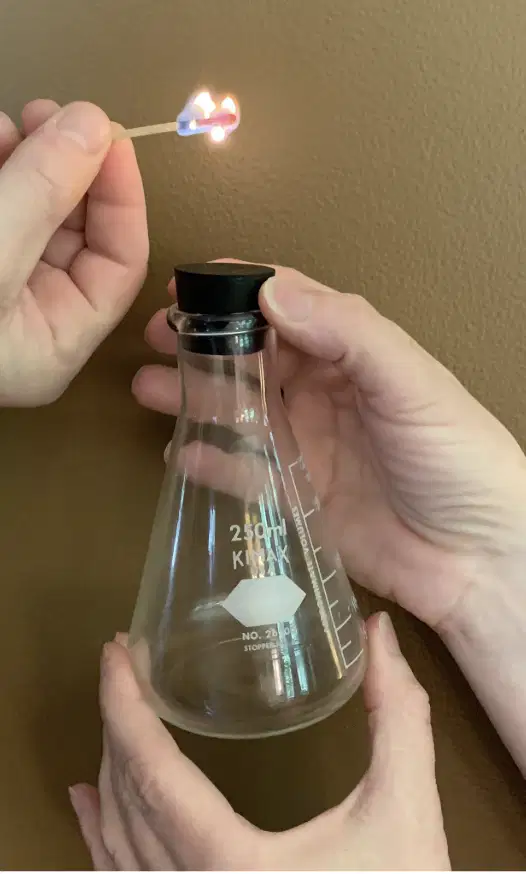
A test tube of a mystery gas is opened while a lit match is held above the test tube. The flame from the match extinguished (went out). What can you conclude about the gas in the test tube?
a)
It is soluble in water.
b)
It increases a flame.
c)
It is less dense than air
10.

Why does the reaction demonstrate the Law of Conservation of Mass?
a)
the number of atoms of each element are the same on both sides
b)
the same elements are used
c)
it doesn't demonstrate the Law of Conservation of Mass
11.
Which of the following is true of ALL chemical reactions?
a)
the mass will always remain the same (assuming it's a closed system)
b)
the number of atoms will always remain the same
c)
all of these answer choices are true
12.
Substances that form as a result of a chemical reaction
a)
reactants
b)
coefficients
c)
products
13.
In which set(s) of before and after pictures has a chemical reaction taken place? Choose all that apply. (THERE IS ONLY 2 ANSWERS)
a)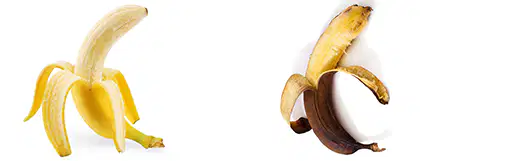
Option 1
b)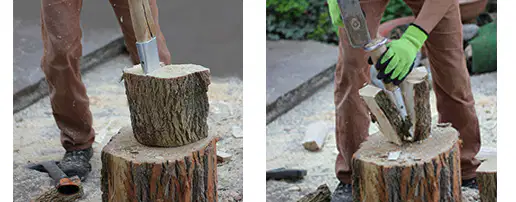
Option 2
c)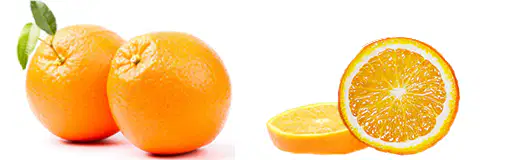
Option 3
d)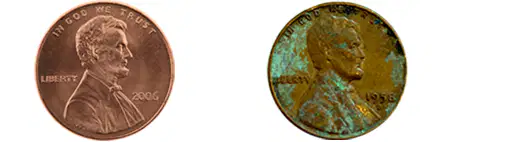
Option 4
14.
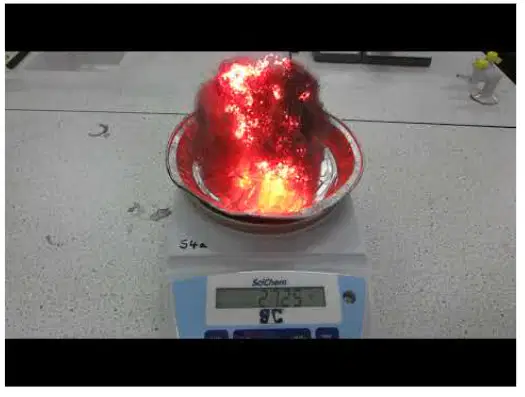
Marta conducted an experiment. She placed a sample of steel wool on a balance and found its mass. Then she lit the steel wool on fire. What she observed is pictured below.
Marta knows that combustion (the process of burning something) requires oxygen, so the steel wool must be in the presence of oxygen gas when it is lit on fire. Which image shows the correct structure for oxygen molecules, O2?
a)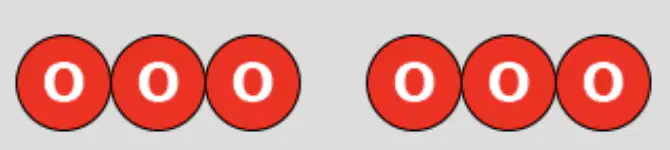
Option 1
b)
Option 2
c)
Option 3
15.

Observe the illustration below. Based on the before and after images, what observations suggest that a chemical change occurred when the substance in the beaker was added to the substance in the flask? (THERE ARE 2 ANSWERS FOR THIS - LOOK CAREFULLY AT THE AFTER PICTURE TO SEE WHAT CHANGED)
a)
Change in bubble formation
b)
Change in the shape of the fluid
c)
Change in temperature
d)
Change in color
16.
Explain the relationship between the number of atoms and total mass during a chemical reaction.
In a chemical reaction, the number of _____________ remains the same and the total mass _____________ changed.
a)
atoms, is
b)
atoms, is not
c)
molecules, is not
17.
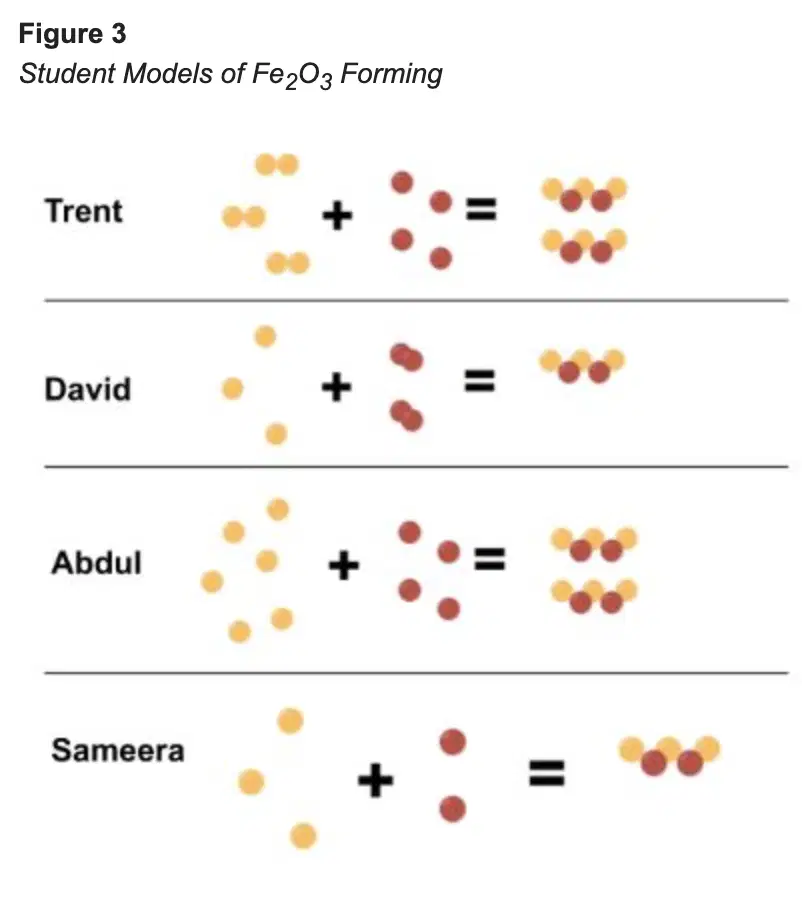
Which of the following students' models DOES NOT show the conservation of mass?
a)
Sameera
b)
David
c)
Trent
18.
Which answer choice best defines a synthetic material?
a)
Synthetic materials are man-made and can be created through chemical reactions.
b)
Synthetic materials are bad for the environment.
c)
Synthetic materials are made by the Earth naturally.
19.

Refer to the table below. It is a comparison of natural and synthetic fibers. Why might humans want to produce synthetic fabrics like rayon when natural fabrics already exist?
a)
Synthetic fabrics have the same properties as natural fabrics.
b)
Synthetic fabrics may cost less to produce than natural fabrics.
c)
Synthetic materials are made by the Earth naturally.
20.
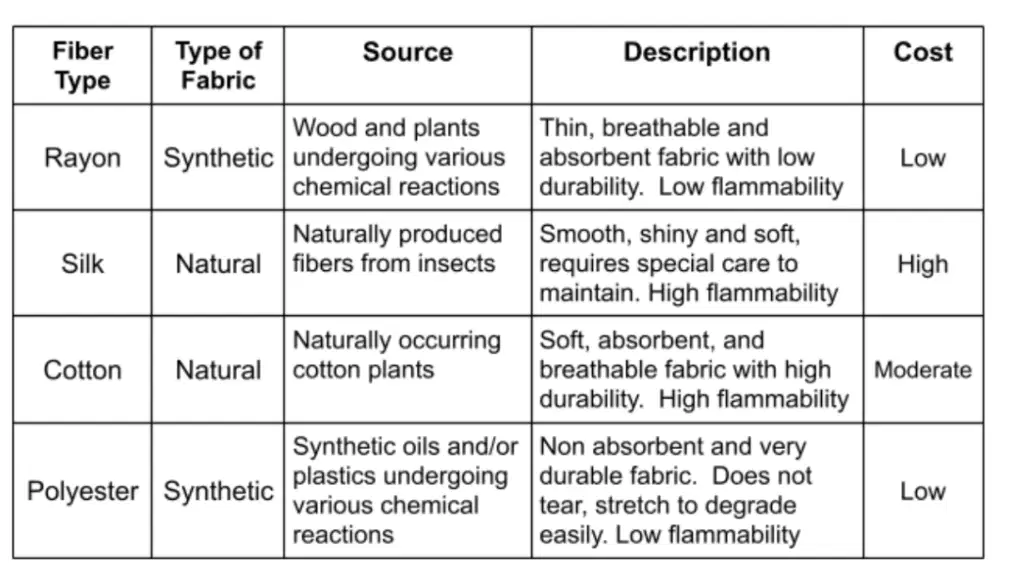
Think about it. A hotel owner needs to order new curtains for all the rooms in their hotel. Of the properties of all the fabrics listed in the table, which property would be the LEAST important to the hotel owner when choosing a fabric for curtains.
a)
How durable (long lasting) the fabric is
b)
How expensive the fabric is
c)
Whether the fabric is natural or synthetic
100 %

