
 Worksheets
Understanding Variables and Scientific Concepts
Total questions: 128
Worksheet time: 2hrs 21mins
During what season does Mrs. Hilby's dog Tucker eat the most doggie treats? Identify the independent and dependent variables.
Independent variable: Season; Dependent variable: Amount of doggie treats eaten.
Independent variable: Amount of doggie treats eaten; Dependent variable: Season.
Independent variable: Dog breed; Dependent variable: Amount of doggie treats eaten.
Independent variable: Time of day; Dependent variable: Season.
How does the number of hours a student spends studying impact their final exam score? Identify the independent and dependent variables.
Independent variable: Final exam score; Dependent variable: Number of hours spent studying.
Independent variable: Number of hours spent studying; Dependent variable: Final exam score.
Independent variable: Study method; Dependent variable: Final exam score.
Independent variable: Final exam score; Dependent variable: Study method.
How is a hypothesis different from a scientific theory?
A hypothesis is a well-tested explanation, while a scientific theory is a proposed explanation that has not yet been tested.
A hypothesis is a proposed explanation that can be tested, while a scientific theory is a well-tested explanation supported by evidence.
A hypothesis is a prediction, while a scientific theory is a guess.
A hypothesis is a proven fact, while a scientific theory is an unproven idea.
Which of the following questions can science answer?
Are ghosts real?
How does snow on the ground affect the air temperature?
Which dog is cuter: A pug or a Boston terrier?
What is the meaning of life?
Why did Mr. Trout include Group B in his study to investigate a new method of studying?
To compare the new method with the old method
To ensure both groups use the same method
To test the effectiveness of the new method only
To eliminate bias in the study
How is a monomer different from a polymer?
A monomer is a single unit, while a polymer is made of multiple monomers
A monomer is larger than a polymer
A monomer is a type of protein, while a polymer is a type of carbohydrate
A monomer is made of polymers
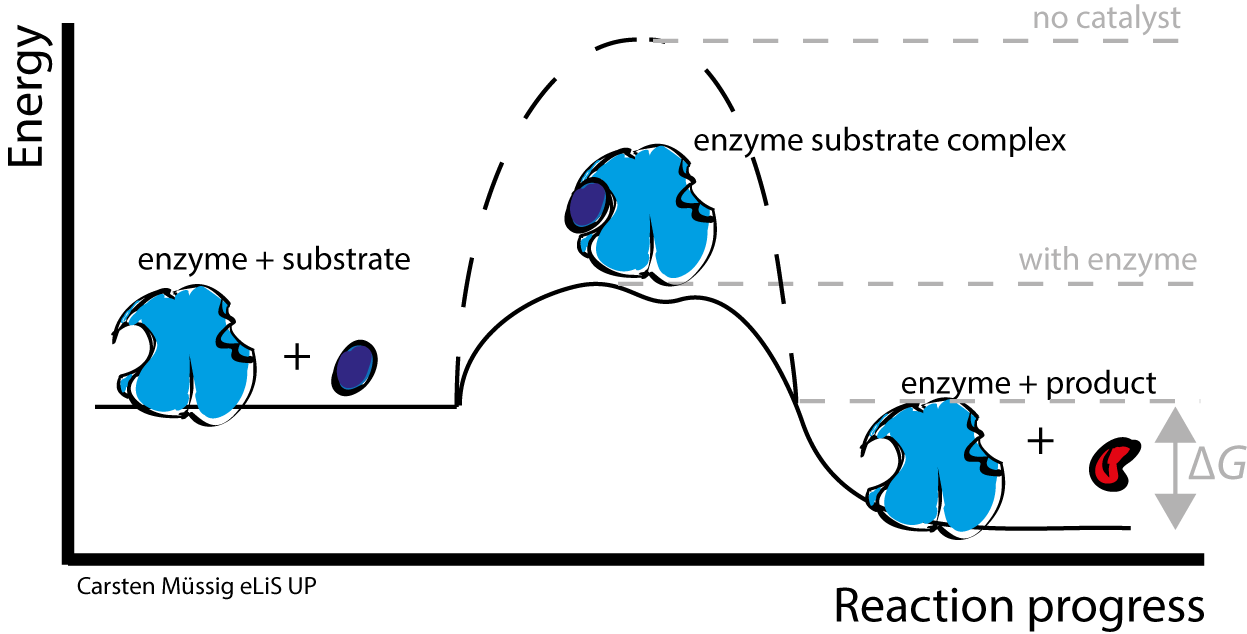
Why are enzymes so important to living organisms? What do they do?
They speed up chemical reactions in the body
They store energy for the body
They provide structural support to cells
They transport oxygen in the blood
In the lock-and-key model of enzymes and substrates, which one represents the lock?
Enzyme
Substrate
Protein
Nucleic acid
What happens to an enzyme when it is done working with its substrate(s)?
It is permanently destroyed.
It returns to its original state and can be reused.
It changes into a different enzyme.
It becomes inactive and cannot be reused.
Describe how dehydration synthesis can join monomers together. What needs to happen?
Water is added to the monomers.
Water is removed from the monomers.
Monomers are heated to high temperatures.
Monomers are cooled to low temperatures.
How is hydrolysis able to slice a polymer into smaller parts (monomers)?
By adding water to break the bonds.
By removing water to break the bonds.
By heating the polymer to high temperatures.
By cooling the polymer to low temperatures.
Which of the following is one of the 8 characteristics shared by all living things?
Made of cells.
Ability to fly.
Ability to photosynthesize.
Ability to swim.
How is weather different from climate?
Weather refers to long-term atmospheric conditions, while climate refers to short-term conditions.
Weather refers to short-term atmospheric conditions, while climate refers to long-term conditions.
Weather and climate are the same and interchangeable terms.
Weather refers to oceanic conditions, while climate refers to atmospheric conditions.
Which of the following statements refers to climate rather than weather?
It’s supposed to snow on New Year's Day.
Summers in Iowa are usually hot.
It is really cold today!
The temperature dropped suddenly this evening.
What is the difference between abiotic and biotic factors?
Abiotic factors are living, while biotic factors are non-living.
Abiotic factors are non-living, while biotic factors are living.
Abiotic factors are related to climate, while biotic factors are related to weather.
Abiotic factors are only found in deserts, while biotic factors are found in forests.
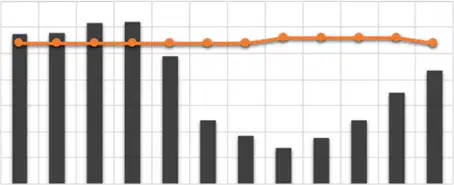
Look at this climate graph. It shows a tropical rainforest. Based on the graph, which biome characteristics can you infer about tropical rainforests?
Tropical rainforests are cold and dry.
Tropical rainforests are warm and wet.
Tropical rainforests are freezing and wet.
Tropical rainforests are cool and dry.
Place the following in order from simplest to most complex level of organization: Population, individual, biome, ecosystem, community, biosphere.
Individual, population, community, ecosystem, biome, biosphere.
Population, individual, community, ecosystem, biome, biosphere.
Individual, population, ecosystem, community, biome, biosphere.
Individual, community, population, biome, ecosystem, biosphere.
When something in a food chain gets eaten, only 10% of the energy moves up a trophic level. What happens to the other 90% of the energy?
It is destroyed.
It is stored in the organism's body.
It is lost as heat or used for metabolic processes.
It is transferred to the next trophic level.
Why are nutrient cycles important? What do they do with matter that does not happen with energy in a food chain/web?
Nutrient cycles recycle matter, while energy is lost as heat.
Nutrient cycles store energy, while matter is destroyed.
Nutrient cycles transfer energy, while matter is lost.
Nutrient cycles destroy matter, while energy is recycled.
Which level of an energy pyramid always contains the most useful energy?
Secondary consumers.
Primary consumers.
Producers.
Tertiary consumers.
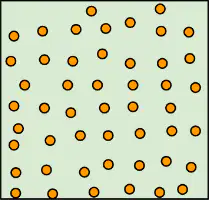
Which type of distribution is represented by a uniform arrangement of individuals?
Clumped distribution
Uniform distribution
Random distribution
Exponential distribution
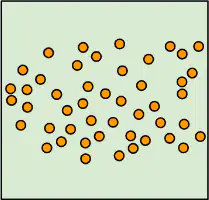
Which type of distribution occurs when individuals are spaced unpredictably in an area?
Clumped distribution
Uniform distribution
Random distribution
Exponential distribution
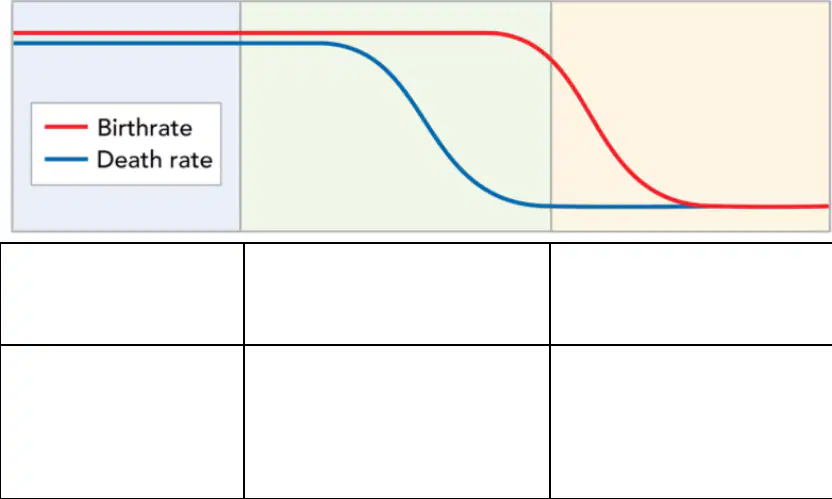
What does the "Demographic Transition Model" explain about human populations over time?
Changes in population density in urban areas.
Changes in birthrate, death rate, and overall population trends.
Changes in migration patterns between countries.
Changes in the genetic makeup of populations.
In parasitism, what is the nature of the relationship between the two species involved?
Both species benefit.
One species benefits while the other is harmed.
One species benefits while the other is unaffected.
Neither species benefits or is harmed.
Look at the examples below. Do they describe a density-dependent or density-independent factor?
Tornado - Density-independent; Food availability - Density-dependent; Lightning strike - Density-independent; Disease - Density-dependent.
Tornado - Density-dependent; Food availability - Density-independent; Lightning strike - Density-dependent; Disease - Density-independent.
Tornado - Density-dependent; Food availability - Density-dependent; Lightning strike - Density-independent; Disease - Density-independent.
Tornado - Density-independent; Food availability - Density-independent; Lightning strike - Density-dependent; Disease - Density-dependent.
What is an ecological footprint? How is it measured?
The amount of land required to grow food for a population
The total greenhouse gas emissions of a country
The impact of human activities on the environment, measured in land and resources used
The amount of water consumed by a population
Why does a greenhouse gas like carbon dioxide (CO₂) cause the atmosphere to warm up?
It blocks sunlight from entering the atmosphere
It traps heat radiating from the Earth's surface
It increases the Earth's rotation speed
It reduces oxygen levels in the atmosphere
List a human activity/action that is a leading cause of greenhouse gas emissions.
Planting trees
Burning fossil fuels
Recycling waste
Using solar panels
Which of the following best describes a climate characteristic?
It rained heavily last night.
Winters in Alaska are typically very cold.
The wind is strong this afternoon.
There was a thunderstorm yesterday.
What is the main function of an enzyme in a biological reaction?
To speed up chemical reactions
To destroy the reactants
To slow down chemical reactions
To permanently change the substrate
How do nutrient cycles differ from energy flow in ecosystems?
Nutrient cycles allow matter to be reused, while energy is lost as heat.
Nutrient cycles destroy matter, while energy is stored.
Nutrient cycles prevent matter from being recycled, while energy is reused.
Nutrient cycles transfer energy, while matter is lost.
Label the energy pyramid
Where do you have the MOST energy?
Listed in the Item Bank are some important labels for sections of the image below. Drag and drop each label to the corresponding area it identifies in the image
0.1%
1%
Producer
Consumer
100%
10%
Click on the apex predator. Also, click on the level with the most available energy.
Drag and drop the numbers into the table to show the energy available at each trophic level
What is the source of energy for the cricket?

A collection of living organisms that belong to different populations but all live in the same area and interact with one another is a...
Population
Ecosystem
Community
Ecosphere

Non-living factor that affects an ecosystem...
biotic factor
abiotic factor
food chain
biome

What are the biotic factors in this image?
sunlight, elephants, grasses
sunlight, water, air
elephants, plants, trees
elephants, clouds, grasses

Which of the following best describes a community?
sharks, groupers, anemones and shrimp on a coral reef
decorator crabs on the seafloor
loggerhead sea turtles in Atlantic
prairie grassland in Wyoming

What is a community?
One individual of a species
a group of individuals living together in an area
all the different populations living together in an area
different communities and their physical environment

What is an ecosystem?
One individual of a species
a group of individuals of a species that live in the same area
all the different species in an area
all the communities in an area and the physical environment

What is a biome?
one individual of a species
all the different populations of species that live together in an area
all the biological communities and their physical environment
a group of similar ecosystems that share similar climates and animals/plants

What level of ecological organization does the bird represent?
Organism
Population
Community
Ecosystem
All of the different BIOTIC organisms found in the same area.
Organism
Population
Community
Ecosystem
Which example best illustrates the difference between a community and a population?
All the people in a town would be a community; all the people in a country would be a population
The two terms are interchangeable, a population IS a community.
All the people in a town would be a community; all their cattle would be a population.
All the different animals in a national park would be a community; all of the brown bears in the park would be a population.
Which of the following is/are considered biotic factors?
Chicken
Water
Wind
Mushroom
Temperature
Which definition best fits the term ecosystem?
A group or organisms of the same species that live in the same area and interact with one another.
A group of many populations (of different species) that live and interact with one another
A group of populations of many different species that live and interact with both one another and all of the abiotic factors in their environment.
A set of different ecosystems that acer connected by similar geographic features and share the same or similar climate.
Anywhere on earth that life exists.
Where all life on Earth exists; encompassing all of Earth’s ecosystems
biosphere
biome
ecosystem
community

The flower is 8 cm tall.
qualitative data
quantitative data

The center of the flower is yellow and fuzzy.
qualitative data
quantitative data

The flower has 25 petals.
qualtitative data
quantitative data

The bearded iris smells sweet.
qualitative data
quantitative data
The clouds are grey and ground is wet.
qualitative
quantitative
The bug was 5cm long.
Qualitative
Quantitative

The mass of the chocolate cake is 250 g.
qualitative
quantitative
How are observations made?
Only with your eyes
By trying to explain what you see
Using your senses
Just making a good guess

The dog is muddy because it is probably raining outside
Qualitative Observation
Quantitative Observation
Inference
None of the Above
The baby is crying because she might be hungry.
Qualitative observation
Inference
Quantitative observation
Fact
There are 15 boys and 17 girls.
Qualitative
Quantitative
Inference
Opinion
If I increase the amount of fertilizer a bean plant receives, the plant will grow taller.
Hypothesis
Theory
Law
Species on earth have changed over time because some organisms are more likely to survive and to reproduce, passing favorable traits to their offspring.
hypothesis
theory
law
What does the prefix macro- mean?
large
small
medium
none of these
How many macromolecules are there?
There are too many to count
3
4
10
What is the prefix for 'one'?
mono
poly
tri
quad
What is the does the prefix 'poly-' mean?
one
two
many
none
What is another name for 'monomer'?
carbon
polymer
macromolecule
building block
Which of the following elements are found in all macromolecules? (Select all that apply).


Which macromolecule is used as our main source of energy?
Lipids/Fats
Nucleic Acids
Proteins
Carbohydrates
Which macromolecule stores energy?
Carbohydrates
Proteins
Lipids/Fats
Nucleic Acids
Nucleic acids make up which of the two molecules listed below?
FDA
RNA
DNA
FDR
Match the monomers and their macromolecule.
Monosaccharide
Carbohydrate
Fatty Acid + Glycerol
Lipid
Amino Acid
Protein
Match the monomers and polymers.
Monosaccharide
Polysaccharide
Fatty Acid + Glycerol
Triglyceride
Amino Acids
Polypeptide
What is the monomer of carbohydrates?
amino acids
fatty acids
triglyceride
What is the monomer of lipids?
amino acids
fatty acids
triglyceride
What is the monomer of proteins?
monosaccharides
triglycerides
polypeptides
Which of the following macromolecules give you short-term energy?
Which of the following macromolecules give you long-term energy?
In order to break apart a polymer ________ must be added.
carbon
water
oxygen
hydrogen

What type of reaction is shown?
Dehydration synthesis
Hydrolysis

Which type of reaction is shown?
Dehydration Synthesis
Hydrolysis

Concord, North Carolina has very warm summers.
Weather
Climate

Today is much colder than yesterday!
Weather
Climate

We got 3 inches of rain yesterday.
Weather
Climate

Antarctica always has frigid(very cold) temperatures.
Weather
Climate

Over the past 30 years, May has been the rainiest month.
Weather
Climate

The meteorlogist said that it will be hot and sunny this weekend.
Weather
Climate

It is overcast and dark today in Boston.
Weather
Climate

Chicago received more snow this decade(ten years) than in past decades(ten years).
Weather
Climate
What is weather?
Can change within a few minutes or hours!
Takes a very long time to change!
What is climate?
Can change within a few minutes or hours!
Takes a very long time to change!

A rock
Biotic (living)
Abiotic (non-living)

Zebra
Biotic (living)
Abiotic (non-living)

Lion
Abiotic (non-living)
Biotic (living)
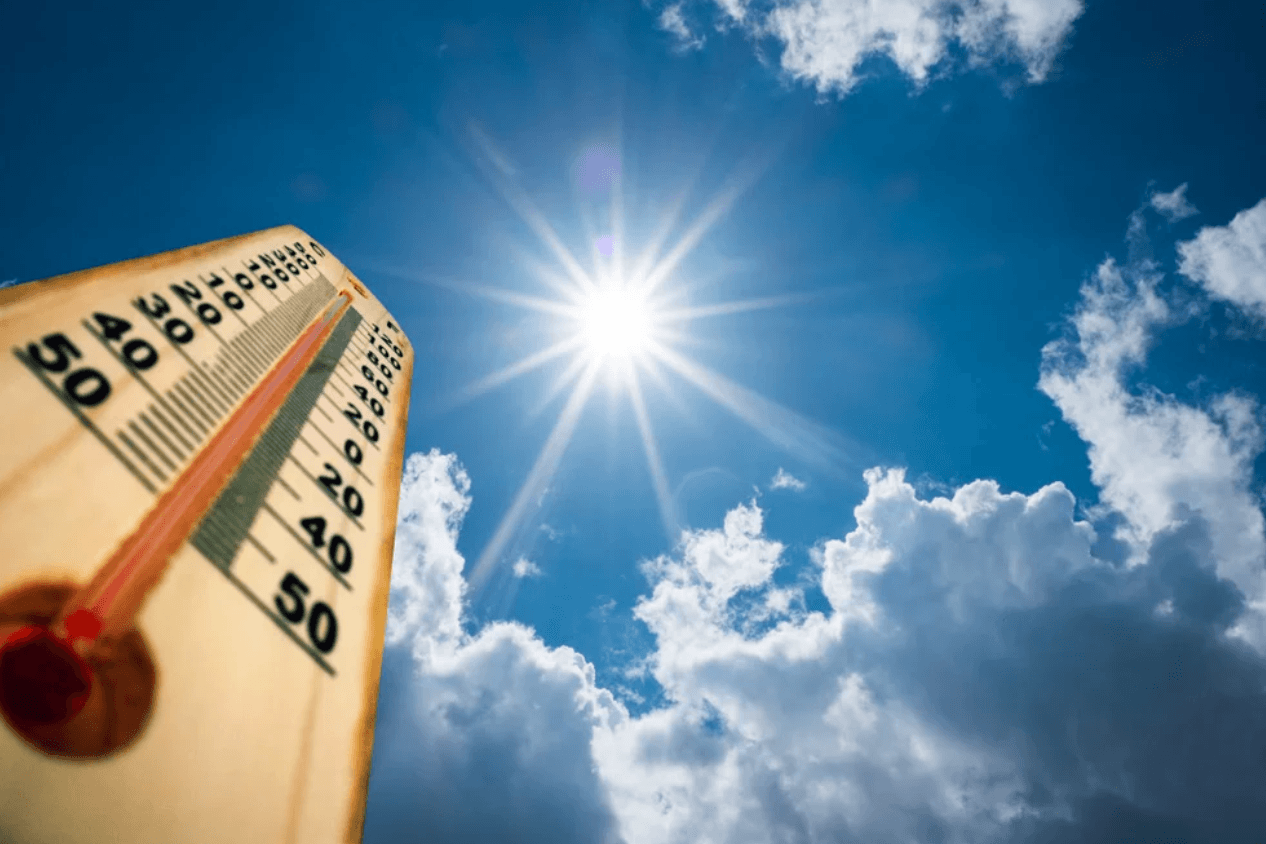
Temperature
Biotic (living)
Abiotic (non-Living)
Describe COHESION.
Water molecules attracted to other substances.
Water molecules climbing upwards against the force of gravity.
Water molecules dissolving many substances because of its polarity.
Water molecules attracted to other water molecules.

Water's ability to stick to glass is
adhesion
cohesion
surface tention
capillary action

Which would you expect to have the lowest albedo?
dark soil
white sand
ice and snow
deep sea water

