
Font size
 Worksheets
Pediatric comprehensive
Total questions: 85
Worksheet time: 2hrs 8mins
A previously healthy 3.5‑kg, 1‑month‑old infant with a strong family history of sickle cell anemia is brought to the emergency room with an incarcerated inguinal hernia. Which of the following should be carried out before surgery?
Hemoglobin electrophoresis
Peripheral smear
Hematology consultation
None of the above
In the premature newborn, the glottis is at which level relative to the cervical spine?
C3
C4
C5
C6
A 5‑month‑old infant is scheduled for an elective operative reduction of a right inguinal hernia. Spinal anesthesia is performed. The first sign of a high spinal block in this patient would be
Decrease in blood pressure
Increase in heart rate
Decrease in oxygen saturation
Asystole
What percentage of a term newborn’s total body weight consists of water?
45%
60%
75%
90%
Which of the following patients is LEAST likely to develop retinopathy of prematurity (ROP)?
A term infant, 46 weeks’ postmenstrual age (PMA), exposed to 100% oxygen for 6 hours
A premature infant, 29 weeks’ PMA, exposed to a Pao2 of 150 mm Hg for 1 hour
A premature infant, 28 weeks’ PMA, never exposed to supplemental oxygen
A cyanotic infant with tetralogy of Fallot, 34 weeks’ PMA, receiving supplemental oxygen
A 4‑week‑old male infant is brought to the emergency room with projectile vomiting. At the time of admission, the patient is lethargic, with a respiratory rate of 16 breaths/min and has had no urine output in the preceding 3 hours. A diagnosis of pyloric stenosis is made, and the infant is brought emergently to the operating room (OR) for pyloromyotomy. The MOST appropriate anesthetic management would be
Awake intubation after placing an oral gastric tube
Inhalation induction with sevoflurane with cricoid pressure after placing an oral gastric tube
Awake saphenous IV catheter or an intraosseous needle placement followed by a rapid‑sequence induction with ketamine, atropine, and rocuronium after placing an oral gastric tube
Postpone surgery
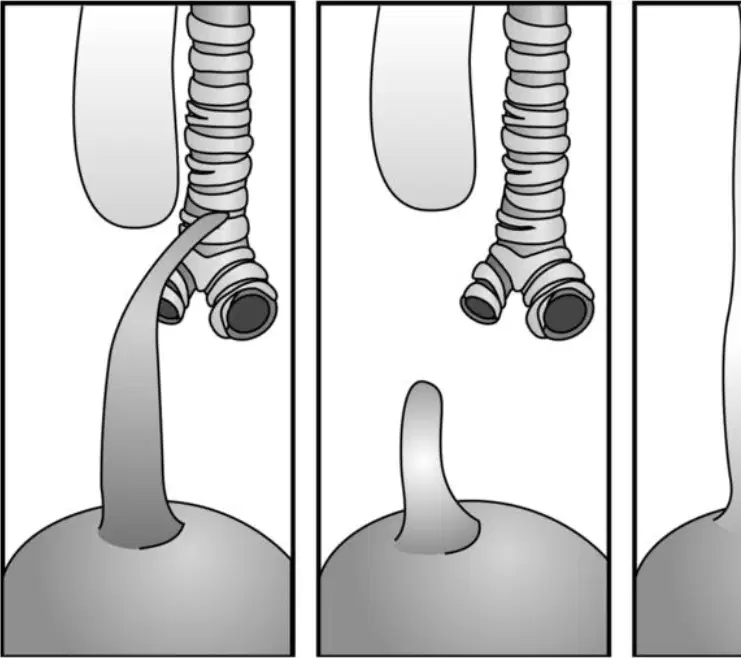
Which figure of esophageal atresia (EA) or tracheoesophageal fistula (TEF) is the MOST common?
Figure A
Figure B
Figure C
Figure D
The predicted blood volume in a 3‑kg term newborn is
100 mL
150 mL
250 mL
300 mL
An 11‑month‑old infant is to undergo a craniosynostosis repair. The surgeon and anesthesiologist agreed to start transfusing blood when the hemoglobin fell to 8 g/dL (hematocrit [Hct] of 24%). Using the transfusion threshold of a hemoglobin of 8, what is the maximum allowable blood loss (MABL) for this 10‑kg infant whose initial Hct is 32 and the minimal acceptable Hct is 24?
180 mL
200 mL
320 mL
Cannot be calculated without additional information
What volume of packed red blood cells (PRBCs) with an Hct of 60 is needed to raise the Hct from 18 to 24 in a 10‑kg 11‑month‑old?
40 mL
80 mL
120 mL
Cannot be calculated without additional information
Reasons for selecting a cuffed endotracheal tube (ETT) over an uncuffed ETT include all of the following EXCEPT
Fewer intubations and ETTs are needed
Less chance for airway fires
An otherwise healthy 4-year-old male patient is undergoing elective tonsillectomy. Before induction of general anesthesia, the patient is breathing at a rate of 20 breaths/min. An inhalation induction is begun with 8% sevoflurane, 50% nitrous oxide, and oxygen. Sixty seconds later, the patient is noted to breathe at a rate of 40 breaths/min, and the heart rate is 160. This rapid respiratory rate with tachycardia most likely represents
Severe hypoxia
Hypercarbia and early development of malignant hyperthermia (MH)
The excitement stage of anesthesia
Aspiration of gastric contents
A healthy 3‑kg, 1‑month‑old neonate is anesthetized for an inguinal hernia repair. An inhalation induction with sevoflurane is carried out, and the patient is intubated. Before the surgical incision, the systolic blood pressure is noted to be 65 mm Hg and the heart rate is 150 beats/min. The most appropriate intervention for this patient’s blood pressure would be
Administration of ephedrine
Administration of phenylephrine
50‑mL fluid bolus
None of the above
A 5‑year‑old boy is anesthetized for elective repair of an umbilical hernia. General anesthesia is induced and maintained with sevoflurane, nitrous oxide, and oxygen via an anesthesia mask. At the conclusion of the operation, the patient is taken to the recovery room and subsequently discharged to the outpatient ward. Before discharge, the patient’s mother notes that the urine appears dark brown (cola‑colored). The most appropriate action at this time would be
Discharge the patient with instructions to return if urine color does not normalize
Discharge the patient in 3 hours if no other signs or symptoms are manifested
Obtain serum creatinine and blood urea nitrogen (BUN) levels and discharge the patient if they are normal
Evaluate the patient for MH
At what maximum inspiratory pressure should a cuffed ETT leak be present in a child (leak test)?
5 to 15 cm H2O
15 to 25 cm H2O
25 to 35 cm H2O
A premature newborn delivered at 32 weeks of gestation is brought to the OR 5 days after delivery for repair of a left‑sided congenital diaphragmatic hernia (CDH). The newborn has a nasogastric tube in place, is intubated, and is stable with mechanical ventilation at peak airway pressures < 25 cm H2O. Thirty minutes after induction of general anesthesia, the anesthesiologist notes significant difficulty with adequate ventilation. The SaO2 subsequently falls to 65%, and the heart rate decreases to 50 beats/min. What would be the most appropriate step to take at this time?
Pull the ETT from the right mainstem bronchus
Ventilate with positive end‑expiratory pressure (PEEP) and administer furosemide
Place a chest tube on the right side after confirming a tension pneumothorax
Pull out the ETT, mask ventilate, and reintubate the patient
An 8‑year‑old boy, who weighs 30 kg, was found at the site of a motor vehicle accident (MVA). He has arrived in the OR for exploratory laparotomy. He has not received any sedation or pain medication because he appeared “confused and lethargic.” He has a normal blood pressure, is tachycardic with thready distal pulses, and has cold extremities. In spite of a 20 mL/kg fluid bolus, the patient has produced only 5 mL of urine. What is the approximate percentage of blood volume loss in this patient?
< 20%
25%
40%
Cannot determine
In a 6‑year‑old child, the distance an oral ETT should be placed (from the gums to the midtrachea) most often is
10 cm
13 cm
15 cm
20 cm
Which of the following is the most suitable intraoperative replacement fluid for a 3‑year‑old, 14‑kg child who has been NPO for 10 hours and will be undergoing repair of clubfeet?
D5 W
D5 in 0.2 NaCl
D5 in 0.45 NaCl
Lactated Ringer solution
An otherwise healthy 14‑day‑old neonate is transported to the OR well hydrated for surgery for a bowel obstruction. A rapid‑sequence induction is planned. Compared with the adult dose, the intravenous (IV) dose of succinylcholine administered to this patient should be
Diminished because of the immature nervous system
The same as the adult dose
Decreased because of decreased acetylcholine receptors
Increased because of a greater volume of distribution
You receive a call from the preoperative nurse stating that the child you will be caring for with type 1 diabetes mellitus has a preoperative blood glucose value of 300 mg/dL. He has been NPO for the morning and has not had any rapid‑onset or short‑acting insulin. The child typically uses a total of 30 units of insulin a day. How much rapid‑onset or short‑acting insulin should you give the child to reduce the blood sugar to 150 mg/dL?
1 unit
3 units
5 units
10 units
A 10‑week‑old infant born at 31 weeks’ gestation is anesthetized for repair of an inguinal hernia. General anesthesia is induced by mask with sevoflurane, an ETT is placed, and anesthesia is maintained with sevoflurane and oxygen. What is the best postoperative pain management for this patient?
Caudal block with 0.25% bupivacaine, 1 mL/kg, and admitted to a pediatric ward for overnight observation
Caudal block with 0.25% bupivacaine, 2 mL/kg, and admitted to a pediatric ward for overnight observation
Oral pain medication (acetaminophen) and discharged home
Fentanyl (1 mL = 50 µg IV), and admitted to a pediatric ward for overnight observation
A 6‑year‑old, 20‑kg girl develops pulseless ventricular tachycardia (pVT) after induction of general anesthesia for a tonsillectomy. The anesthesiologist intubates the child, administers 100% oxygen, and starts chest compressions. When the biphasic defibrillator quickly arrives in the OR and is attached to the child, the defibrillator should be charged to what energy level for the initial shock?
10–20 joules (J)
20–30 joules (J)
40–80 joules (J)
120–200 joules (J)
The spinal cord of newborns extends to the
L1 vertebra
L2–L3 vertebrae
L4–L5 vertebrae
S1 vertebra
The most common initial symptom of esophageal atresia (EA) or tracheoesophageal fistula (TEF) is
Respiratory distress at delivery (e.g., retractions, tachypnea)
Projectile vomiting
Hypoxia
Coughing and regurgitation during first feeding
A 4.5‑kg, 3‑hour‑old newborn with Beckwith‑Wiedemann syndrome is scheduled for surgical repair of an omphalocele. Which of the following is NOT part of this syndrome?
Large fontanelles
Macroglossia
Polycythemia
Hyperglycemia
Which of the following is the LEAST appropriate technique for induction of general anesthesia in a newborn for surgical repair of a TEF?
Awake tracheal intubation
Sedated tracheal intubation (e.g., fentanyl)
Inhalation induction with spontaneous ventilation and tracheal intubation
Inhalation induction with cisatracurium as a muscle relaxant and positive‑pressure bag and mask ventilation and tracheal intubation
A 3‑year‑old with cough, sore throat, and temperature of 102° F, is scheduled for hydrocele repair. Physical examination reveals wheezing and rhonchi. Chest x‑ray reveals small left lower lobe (LLL) infiltrate. The best course of action would be
Administer IV steroids and proceed
Administer acetaminophen and if the temperature goes below 100° F, proceed
Postpone surgery for at least 4 weeks
Proceed, because the temperature will return to normal during anesthesia
Which of the following statements regarding teeth is INCORRECT?
Primary teeth start to erupt around 6 to 9 months of age
There are 20 primary teeth, and all are usually present by 3 years of age
Permanent teeth start to erupt at 4 years of age
There are 32 permanent teeth, and most are present by 12 years of age, except for the third molars, which erupt at 15 to 25 years of age
The pulmonary vascular resistance (PVR) in newborns decreases to that of adults by age
1 to 2 days
1 to 2 weeks
1 to 2 months
1 year
A 10‑month‑old infant is undergoing elective repair of a left testicular hydrocele under general anesthesia with isoflurane, nitrous oxide, oxygen, and fentanyl. All of the following are effective and reasonable means of preventing hypothermia in this patient EXCEPT
Placement of an infrared heater over the operating table and prewarming the OR
Covering the OR table with a heating blanket
Wrapping the extremities with sheet wadding and covering the head with a cloth cap
Ventilating the patient with a Mapleson D circuit at low gas flows (e.g., 50 mL/kg/min)
Postoperative mechanical ventilation is common after repair of the following lesions. Which of the following is MOST likely to result in central postoperative depression of spontaneous ventilation in a term newborn?
Gastroschisis
Omphalocele
TEF
Pyloric stenosis
A premature male neonate born at 36 weeks of gestation is scheduled to undergo repair of a left‑sided diaphragmatic hernia. Which of the following vessels could be cannulated for preductal arterial blood sampling?
Femoral artery
Umbilical artery
Right radial artery
Left radial artery
In which of the following patients would the minimum alveolar concentration (MAC) for isoflurane be the greatest?
A premature infant 30 weeks’ postconceptual age (PCA)
Full‑term neonate
3‑month‑old infant
13‑year‑old adolescent
A 40‑kg, 10‑year‑old child sustains a thermal injury to his legs, buttocks, and back. The estimated area involved is 50%. Using only crystalloid fluids, how much fluid should be administered during the first 24 hours after the burn?
2.5 L
5.5 L
8.0 L
10.0 L
An otherwise healthy 3-month-old black female infant who had a hemoglobin value of 19 mg/dL at birth presents for elective repair of an inguinal hernia. Her preoperative hemoglobin is 10 mg/dL . Her father has a history of polycystic kidney disease. The most likely explanation for this patient’s anemia is
Sickle cell anemia
Iron deficiency
Undiagnosed polycystic kidney disease
It is a normal finding
The anesthesiologist is called to the emergency room by the pediatrician to help manage a 3-year-old boy with a high fever and upper airway obstruction. His mother stated that earlier that afternoon, he complained of a sore throat and hoarseness. The patient is sitting erect and leaning forward; has inspiratory stridor, tachypnea, and sternal retractions; and is drooling. Which of the following is the MOST appropriate management of airway obstruction in this patient?
Aerosolized racemic epinephrine
Awake tracheal intubation in the emergency room or the OR if time permits
Transfer to the OR, inhalation induction, and tracheal intubation
Transfer to the OR, IV induction, paralysis with succinylcholine, and tracheal intubation
A 2-year-old child with cerebral palsy (CP) and known severe gastroesophageal reflux (with frequent nightly aspiration) and a seizure disorder is scheduled to undergo iliopsoas release under general anesthesia. Which of the following would be the preferred technique for inducing general anesthesia in this patient?
Inhalation induction with sevoflurane followed by tracheal intubation
IV induction with propofol followed by laryngeal mask airway placement
IV induction with etomidate and vecuronium followed by tracheal intubation
Rapid-sequence induction with propofol and succinylcholine followed by tracheal intubation
A 7-week-old male infant is admitted to the pediatric intensive care unit (ICU) with a bowel obstruction. His laboratory values are sodium 120 mEq/L , chloride 85 mEq/L , glucose 85 mg/dL , and potassium 2.0 mEq/L . Respiratory rate is 40 breaths/min, heart rate is 220 beats/minute, and blood pressure is 50/32. According to the patient’s mother, urine output has been zero for the last 4 hours. The most appropriate initial fluid for resuscitation of this patient would be
D2.5W with 0.45 sodium chloride and 20 mEq/L potassium chloride
0.45% sodium chloride
0.9% sodium chloride with 30 mEq/L potassium chloride
0.9% sodium chloride
A 24-hour-old, 1200-g neonate, 30 weeks’ estimated gestational age (EGA), is noted in the ICU to begin making twitching movements. Blood pressure is 45/30, heart rate is 160, oxygen saturation is 88%, blood glucose is 50 mg/dL , total calcium level is 4 mg/dL , and urine output is 5 mL/hr . The MOST appropriate course of action to take at this point would be
Administer calcium gluconate (1 mL of 10% solution) over 5 to 10 minutes
Administer glucose 200 mg/kg ( D10W ) IV over 5 minutes
Hyperventilate with 100% O2
Administer a 10-mL/kg bolus of 5% albumin
A Eutectic Mixture of Local Anesthetics (EMLA) cream is a mixture of which local anesthetics?
Lidocaine 2.5% and prilocaine 2.5%
Lidocaine 2.5% and benzocaine 2.5%
Prilocaine 2% and benzocaine 2%
Lidocaine 4%
Advantages of catheterization of the umbilical artery versus the umbilical vein in a newborn include all of the following EXCEPT
It allows assessment of oxygenation
Hepatic damage from hypertonic infusion is avoided
It permits assessment of systemic blood pressure
It is easier to cannulate
The TRUE statement concerning thermoregulation in neonates is which of the following?
A significant proportion of their heat loss can be accounted for by their small surface area– to–weight ratio
They compensate for hypothermia by shivering
The principal method of heat production is metabolism of brown fat
Heat loss through conduction can be reduced by humidification of inspired gases
A 10-year-old child was climbing a tree and fell, sustaining a lower cervical neck injury. He is unable to move his legs but can move his arms somewhat and is scheduled for an MRI scan. All of the following are signs of neurogenic shock EXCEPT
Hypotension
Narrow pulse pressure
Hypothermia
Normal heart rate
A 5-year-old child undergoing strabismus surgery under general anesthesia suddenly develops sinus bradycardia and intermittent ventricular escape beats but is hemodynamically stable. Which initial therapy is appropriate for treating this arrhythmia?
Tell the surgeon to stop pulling on the eye muscle
Tell the surgeon to do a retrobulbar block
Decrease the depth of the volatile anesthetic
Administer atropine
Which of the following respiratory indices is increased in healthy neonates compared with healthy adults?
Tidal volume (mL/kg)
Minute ventilation (mL/kg/min)
Functional residual capacity (mL/kg)
PaCO 2
A 16-year-old girl with neurofibromatosis is anesthetized for resection of an acoustic neuroma. Each of the following may potentially complicate the anesthetic management of this patient EXCEPT
Presence of a pheochromocytoma
Upper airway obstruction from a laryngeal neurofibroma
Intracranial hypertension
Increased risk for MH
With which of the following congenital anomalies is right-to-left intracardiac shunting of blood from pulmonary hypertension MOST likely and difficult to treat?
Tracheoesophageal fistula (TEF)
Gastroschisis
Omphalocele
Congenital diaphragmatic hernia (CDH)
Which of the following is NOT CONSISTENT with an infant who suffers from severe dehydration?
15% weight loss
Normal respirations
Urine output < 0.5 mL/kg/hr
Tachycardia
Postoperative bleeding following tonsillectomy occurs most commonly
By the first 6 hours
6 to 24 hours after surgery
On the third postoperative day
On the seventh postoperative day
A 9-year-old undergoing sinus surgery is treated with an unmeasured amount of 0.5% phenylephrine by the surgeon, and the patient develops a blood pressure of 250/150. The most appropriate treatment for this would be
Administer verapamil
Administer esmolol
Administer labetalol
Administer phentolamine
A 5-kg, 3-month-old male infant undergoes a left inguinal herniorrhaphy with a spinal anesthetic. Typically, how long would 1 mL of a 0.5% bupivacaine (5 mg) isobaric solution last?
Less than 30 minutes
30 to 60 minutes
60 to 80 minutes
90 to 100 minutes
Which of the following combination of drug and dose used alone is INCORRECT for preoperative sedation for an anxious child?
Midazolam 0.1 mg/kg orally
Clonidine 2 to 5 μg/kg orally
Dexmedetomidine 1 to 2 μg/kg nasally
Ketamine 3 to 7 mg/kg intramuscular (IM)
Which of the following statements regarding resuscitation of the infant by health care providers is NOT correct?
Mouth-to-mouth or mouth-to-nose ventilation at a rate of 12 to 20 breaths/min is performed when breathing is inadequate but an adequate pulse is present
Start chest compressions when the pulse is less than 60 beats/min and there are signs of poor tissue perfusion
Chest compression depth is 1/5 the anteroposterior diameter of the chest (about 1 cm)
Compression-to-ventilation ratio is 30:2 for one-person and 15:2 for two-person cardiopulmonary resuscitation (CPR)
All of the following are true statements concerning the physiology of newborns compared with that of adults EXCEPT
Newborns have a greater percentage of total body water compared with adults
Newborns have a higher glomerular filtration rate (GFR) than adults
Newborns’ hearts are relatively noncompliant compared with adults’ hearts
Newborns’ diaphragms have a lower proportion of type I muscle fibers (i.e., fatigue-resistant, highly oxidative fibers)
Which of the following statements concerning the anatomy of the infant and the adult airway is INCORRECT?
The larynx is in a more cephalic position in infants than in adults
The infant’s epiglottis is narrower and “omega” shaped, whereas the adult epiglottis is flat and broad
The vocal cords are in a more perpendicular position to the trachea in infants and in a more diagonal position to the larynx and trachea in adults
The narrowest part of the infant and adult larynx is at the level of the cricoid cartilage
Which of the following operations would be associated with the LEAST incidence of postoperative nausea and vomiting (PONV) in a 5-year-old boy?
Tonsillectomy
Strabismus surgery
Myringotomy tube placement
Orchiopexy
Anomalies and features associated with Down syndrome include which of the following?
Smaller tracheas
Atlanto-occipital instability
Thyroid hypofunction
All of the above
Congenital syndromes frequently associated with cardiac abnormalities include all of the following EXCEPT
Tracheoesophageal fistula (TEF)
Meningomyelocele
Omphalocele
Gastroschisis
Appropriate management of a neonate born with congenital diaphragmatic hernia (CDH) should include
Insertion of an orogastric or nasogastric tube
Expansion of the hypoplastic lung with positive-pressure ventilation
Hyperventilation to keep the PaCO 2 below 40 and the pH greater than 7.40
Rapid transport to the OR for surgical correction
Select the TRUE statement regarding complex regional pain syndrome (CRPS) in children
More common in males than females
Upper extremity is more frequently involved than the lower extremity
Best treated with sympathetic blocks
Often associated with depression and anxiety
Which of the following statements regarding perioperative cardiac arrest in children is NOT correct?
Cardiac arrest is more common in neonates than in infants or older children
“Equipment related” causes occur in more than 25% of cardiac arrests
Resuscitation is more often successful if the cause is anesthesia related rather than nonanesthesia related
Emergency surgery is associated with greater than four times the chance of a cardiac arrest
Which of the following represents the greatest risk for postoperative apnea in an infant?
PCA of 60 weeks
Hemoglobin 10 g/dL
Recovery in the postanesthesia care unit (PACU) after pyloric stenosis repair
20th weight percentile on growth chart
Which of the following statements regarding the Mapleson D breathing circuit is FALSE?
It has a proximal fresh gas inflow and a distal overflow valve
With an inspiratory-to-expiratory (I:E) breathing ratio of 1:2, rebreathing is eliminated with spontaneous ventilation when the fresh gas flow is three times the minute ventilation
The Mapleson D circuit requires lower fresh gas flows with spontaneous ventilation compared with controlled ventilation
The Bain circuit is a modification of the Mapleson D circuit
Which of the following is LEAST likely to reduce the incidence of postoperative apnea in preterm infants undergoing surgery for inguinal hernia repair?
Delaying operation until 60 weeks’ PCA
Preoperative correction of anemia
Caffeine administration
Spinal anesthetic with ketamine sedation
A 32-week-EGA, 2-kg newborn born a few hours ago is to undergo a repair of his gastroschisis under general anesthesia. Which of the following sizes of uncuffed ETTs should you use, and how far should it be positioned to most likely be properly placed in the trachea (gums to midtrachea distance)?
2.0-internal diameter (ID) ETT placed at 6 cm
2.5-internal diameter (ID) ETT placed at 8 cm
3.0-internal diameter (ID) ETT placed at 10 cm
3.5-internal diameter (ID) ETT placed at 12 cm
Induction of general anesthesia for an elective operation should be delayed how many hours after breastfeeding?
2 hours
4 hours
6 hours
No fasting needed because breast milk is OK
In the infant, hypothermia would LEAST likely manifest as
Metabolic acidosis
Prolonged duration of action of nondepolarizing muscle relaxants
Hyperglycemia
Impaired coagulation
Necrotizing enterocolitis (NEC) has all of the following characteristics EXCEPT
Most have thrombocytopenia (< 70,000/mm3) and a prolonged prothrombin time (PT) and activated partial thromboplastin time (aPTT)
Commonly associated with decreased cardiac output in the presence of fetal asphyxia or postnatal respiratory complications
Umbilical artery catheters are useful to assess acid-base status
Occurs in 10% to 20% of newborns weighing less than 1500 g
Which of the following statements concerning codeine is INCORRECT?
Codeine is a weak opioid and is used for the treatment of mild to moderate pain
Peak blood level after oral or IM administration is about 30 minutes
Codeine is metabolized to morphine
Codeine is the postoperative analgesic of choice, after acetaminophen, for the treatment of pain after tonsillectomy in children < 12 years of age
Which of the following drugs is LEAST likely to be used for a 4-year-old receiving proton beam radiation treatment for his medulloblastoma?
EMLA cream
Propofol
Rocuronium
Dexmedetomidine
A 5-year-old girl with hemolytic-uremic syndrome (HUS) is brought to the OR for placement of a dialysis catheter. Medical issues typical for this disease include
Thrombocytopenia
Increased intracranial pressure
Pancreatitis
All of the above
A 3-year-old child status post resection of Wilms tumor at age 2 years is receiving doxorubicin (Adriamycin) and cyclophosphamide for metastatic disease. The patient is scheduled for placement of a Hickman catheter for continued chemotherapy. Anesthetic concerns related to this patient’s chemotherapeutic treatment include each of the following EXCEPT
Thrombocytopenia
Inhibition of plasma cholinesterase
Cardiac depression
Pulmonary toxicity
Hypotension in children is characterized by a systolic blood pressure
Less than 60 mm Hg for the term neonate (0-28 days old)
Less than 70 mm Hg for infants 1 to 12 months old
Less than 70 mm Hg + (2 × age in years) mm Hg for children 1 to 10 years old
All of the above
What percent of the adult’s glomerular filtration rate, or GFR, does a 1-year-old old possess?
30%
50%
75%
100%
Each of the following results in a reduction of the incidence of postoperative vomiting (POV) in children undergoing strabismus surgery EXCEPT
IV hydration of 30 mL/kg/hr
Dexamethasone 0.15-0.5 mg/kg IV
Ondansetron 50 to 200 µg/kg IV
Anticholinergics (atropine 10-20 µg/kg or glycopyrrolate 10 µg/kg)
According to the “1500 rule” for insulin correction, if a child’s total daily insulin dose is 30 units, approximately how much will 1 unit of regular insulin lower the blood glucose level?
25 mg/dL
30 mg/dL
50 mg/dL
75 mg/dL
Postoperative apnea risk in former premature infants is inversely related to postconceptual age. For an infant born at 31 weeks’ gestation who is now 10 weeks old (41 weeks’ postconceptual age) after general anesthesia, what is the most appropriate disposition?
Discharge home from the PACU if feeding well
Admit with cardiorespiratory monitoring and observe for at least 12 apnea‑free hours before discharge
Discharge with outpatient caffeine therapy only
Send home with a portable apnea monitor and no inpatient observation
For a 20‑kg child with documented ventricular fibrillation, what initial defibrillation energy is recommended when using a manual defibrillator?
20 J
40–80 J
100–200 J
4–10 J total regardless of weight
In neonates, which spinal interspace is commonly selected for spinal puncture to minimize the risk of cord injury?
L2–L3
L3–L4
L4–L5
L1–L2
In a newborn with suspected esophageal atresia with tracheoesophageal fistula shortly after birth, what immediate management is recommended to reduce aspiration risk while awaiting definitive care?
Place supine and feed small amounts to test swallowing
Place head‑up and continuously suction the proximal esophageal pouch while decompressing the stomach with a tube
Place prone and avoid any suctioning
Insert a nasogastric tube and advance it into the stomach for enteral feeds
Which statement about omphalocele is most accurate?
It is a lateral abdominal wall defect and rarely associated with other anomalies
It is located at the umbilical cord and may contain liver; associated chromosomal or syndromic anomalies are common
It never affects airway management
It is less common than gastroschisis and occurs in fewer than 1 in 50,000 births
During anesthetic management for repair of tracheoesophageal fistula in a vigorous newborn, which airway strategy is preferred before the endotracheal tube is properly positioned?
Use positive‑pressure mask ventilation to maintain oxygenation
Induce anesthesia while maintaining spontaneous ventilation and avoid paralysis; minimize or avoid mask positive pressure
Perform rapid‑sequence induction with immediate paralysis and cricoid pressure
Insert a laryngeal mask airway and ventilate throughout the case
A child with an acute lower respiratory infection (pneumonia with a left lower lobe infiltrate) is scheduled for elective surgery. What is the recommended timing for postponement?
Proceed as scheduled if afebrile on the day of surgery
Delay for 48 to 72 hours
Delay for at least 4 weeks
Reschedule only after a normal chest x‑ray
Which statement about primary (deciduous) teeth is correct?
They are called permanent teeth and are labeled by numbers
They are called primary (milk or baby) teeth and are usually labeled by letters of the alphabet
There are more than 32 primary teeth
They first erupt at 3 to 4 months of age with the canines

