
Font size
 Worksheets
Biodiversity Worksheet (Translated Extraction)
Total questions: 53
Worksheet time: 27mins
Choose the plant that forms an embryo, lives on dry land, and is anchored by rhizoids.
Замаг
Хаг
Мөөг
Ойм
Select the immobile organism with indeterminate apical growth, heterotrophic nutrition, chitin cell walls, and glycogen storage.
Мөөг
Хаг
Замаг
Ойм
Choose a unique feature of a monocot plant.
Leaves with parallel venation; vascular bundles are scattered and not arranged in a ring; stem lacks secondary growth
Leaves with netted venation; vascular bundles form a ring
Leaves with netted venation; vascular bundles are scattered
Leaves with parallel venation; stem shows secondary thickening, usually dicot
Choose a unique feature of a dicot plant.
Leaves with parallel venation; vascular bundles scattered
Leaves with netted venation; vascular bundles form a ring; usually 2 cotyledons
Leaves with netted venation; vascular bundles scattered
Leaves with parallel venation; vascular bundles in a ring
Identify the correct general characteristics of the arthropod groups listed.
Гархиет хорхой – does not change exoskeleton; Дугаарт хорхой – body segmented by transverse grooves; Хавтгай хорхой – body consists of many segments with parapodia
Гархиет хорхой – sheds exoskeleton; Дугаарт хорхой – has a dorsal nerve cord; Хавтгай хорхой – body has parapodia
Гархиет хорхой – lacks a chitinous exoskeleton; Дугаарт хорхой – nervous system on the back; Хавтгай хорхой – body made of many units
Гархиет хорхой – sheds the cuticle; Дугаарт хорхой – ventral nerve cord; Хавтгай хорхой – body flattened without parapodia
Identify the plant with parallel venation.
Monocot plant
Dicot plant
How many kingdoms are recognized for living organisms?
Ургамал, амьтан, монера
Ургамал, амьтан, мөөг
Амьтан мен протиста
Ургамал, амьтан, мөөг, монера, протиста
Choose the correct family for the animal group Mustelidae.
Mustelidae
Canidae
Panthera
Felidae
Into how many major groups are plants classified?
Higher and lower plants
Flowering and nonflowering plants
Plants with and without organs
One- and many-celled plants
Which of the following belongs to lower plants?
Хөвд, ойм
Хаг, замаг
Ойм ба дээд ургэн
Замаг ба ойм
Which insect order includes the following animals?
Голын хавч
Шоргоолж
Тоонылжт аалз
Адууны чулуу хорхой
The science that distinguishes and names living organisms based on shared characteristics is called what?
Аймаг
Таксономи
Хүрээ
Дэд аймаг
Plants are divided into higher and lower groups. Select the lower plant from the list.
Замаг
Нүцгэн үртэн
Далд үртэн
Ойм хэлбэртэн
Since 1969, organisms that obtain food and have distinctive life forms and structures are placed in a specific kingdom. What kingdom is this?
Протиста
Монера
Мөөг
Замаг
Choose the correct descending taxonomic sequence from most inclusive to most specific.
Овог, хүрээ, анги, аймаг, баг, зүйл, төрөл
Аймаг, хүрээ, анги, баг, овог, төрөл, зүйл
Зүйл, төрөл, овог, баг, анги, хүрээ, аймаг
Хүрээ, аймаг, баг, анги, овог, зүйл, төрөл
Which plant group lacks true conducting tissues and vascular bundles?
Нүцгэн үртэн
Ойм
Далд үртэн
Хөвд
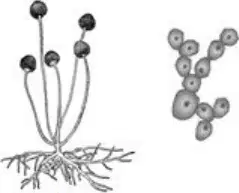
Select the fungus used in bread making and beer production based on the provided drawings.
Хөрөнгө мөөг
Хөгц мөөг
Талын цагаан мөөг
Үр мөөг
Which is a characteristic feature of the class Insecta?
Body divided into head, thorax, and abdomen; 3 pairs of legs; breathes through tracheae
Body divided into head, thorax, and abdomen; 4 pairs of legs; breathes with lungs
Body divided into head, thorax, and abdomen; 2 pairs of legs; breathes through gills
Body divided into head, thorax, and abdomen; 5 pairs of legs; breathes through tracheae
Identify the class described: skin with scales, breathes with lungs, three-chambered heart, poikilothermic vertebrate.
Mammalia
Reptilia
Amphibia
Aves
What is a coccus in bacterial shape terminology?
Bacillus
Coccus
Spirillum
Vibrio
Which of the following is a cartilaginous fish?
Шумуул
Эрвээхэй
Зэгий
Царцда
Name the animal with a muscular, multi-chambered stomach.
Загас
Шувуу
Мэлхий
Могой
Identify the feature that does not apply to gymnosperms.
Leaves present
Roots present
Flowers present
Vascular tissues present
From the following crustaceans, select the representative with five pairs of legs.
Хачиг
Жоом
Циклоп
Соно
Which animal has only an internal skeleton?
Гүлмэр
Мэлхий
Яст мэлхий
Шурхай
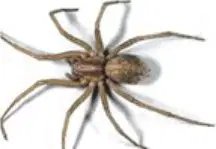
Select only the characteristics that belong to Arachnida.
1, 3, 5, 9, 10
1, 2, 5, 8, 10
1, 5, 7, 8, 11
3, 6, 7, 10, 11
Name the scientist who developed the principle of binomial nomenclature.
К. Линней
Л. Пастер
Ч. Дарвин
Ж. Б. Ламарк
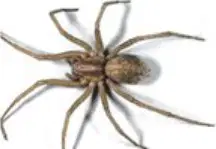
Identify the animal in the picture using the dichotomous key provided. Choose the correct letter outcome.
A
B
C
D
The same species of insect occupies different habitats in different environments. Which criterion does this illustrate?
Ecological criterion
Geographical criterion
Physiological criterion
Morphological criterion
Choose the plant organ absent in mosses.
Stem
Root
Leaf
Rhizoid
Match the science correctly: What does Lichenology study?
Algae
Fungi
Lichens
Mosses
Match the science correctly: What does Mycology study?
Algae
Fungi
Lichens
Mosses
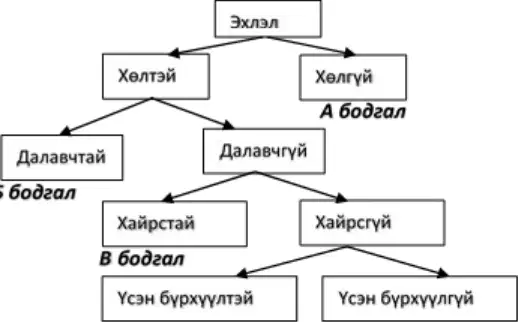
Using the identification chart of the five vertebrate classes, determine the correct assignment of letters A, B, C, D, E to classes.
A–Fish, B–Amphibians, C–Reptiles, D–Mammals, E–Birds
A–Fish, B–Reptiles, C–Amphibians, D–Birds, E–Mammals
A–Birds, B–Amphibians, C–Reptiles, D–Mammals, E–Fish
A–Mammals, B–Fish, C–Reptiles, D–Birds, E–Amphibians
The scientific name shown is Mustela nivalis. Choose the genus name of the animal shown in the photograph.
Mammalia
Urban weasel
nivalis
Mustela
Why is a bat classified in the class Mammalia? Select the correct pair of statements that justify this classification: A. Body is covered with hair. B. Young are fed with milk. C. Body temperature is constant. D. Heart has four chambers.
A and D
B and C
A and B
C and D
A salamander is an amphibian and a lizard is a reptile; both have tails. Which distinguishing feature helps tell them apart?
Both have internal skeletons
Amphibians have moist, scaleless skin
Both are cold-blooded
Both have a three-chambered heart
Select the correct set of major classes belonging to the phylum Platyhelminthes (flatworms).
Ascaris, pinworm, leech
Pig tapeworm, liver fluke, white planaria
Beef tapeworm, Ascaris, leech
Pig tapeworm, earthworm, liver fluke
Which phylum does the animal shown in the image belong to?
Mollusca (soft-bodied animals)
Cnidaria (hollow-bodied animals)
Porifera (sponges)
Echinodermata
Which feature applies to all arthropods?
Jointed legs and a thorax
Jointed legs and a segmented body
A thorax and wings
Segmented body and wings
Choose the group that consists of cold-blooded animals.
Fish and reptiles (including snakes)
Rabbits and foxes
Oysters, snails, and pearls
Spiders, beetles, and birds
Which kingdom contains multicellular organisms without cell walls or plastids?
Animalia
Plantae
Monera
Protista
An organism that synthesizes food from inorganic substances using sunlight belongs to which group?
Birds
Fungi
Angiosperms (flowering plants)
Monera
Gymnosperms belong to which major plant group?
Angiosperms
Higher plants
Lower plants
Gymnosperms
Choose the correct characteristic of amphibians.
Warm-blooded
Fertilization usually internal
Body covering is scaly
Metabolic rate is slow
Among these invertebrate phyla, which has the greatest number of species?
Arthropoda
Cnidaria
Echinodermata
Nematoda
From the following list, select the gymnosperms (choose two).
shiversen
pine
juniper
Which of the following is the slowest-growing organism?
Pine
Fern
Lichen
Wild rose
Select the higher plant that reproduces by spores rather than seeds.
Fungus
Alga
Lichen
Fern
Mustela nivalis Linnaeus 1766 is provided. Using this binomial, identify the genus of the animal.
Mustela
Linnaeus
Mustela nivalis Linnaeus 1766 is provided. Identify the scientist who described this species.
Linnaeus
Darwin
Mustela nivalis Linnaeus 1766 is provided. Identify the species epithet of this animal.
nivalis
mustela
Mustela nivalis Linnaeus 1766 is provided. Identify the year in which this species was described.
1766
1758
Match the plant groups and statements. Which statement correctly describes lichens?
A Spore-bearing higher plants with vascular tissue
B Lacking true roots, with rhizoid-like structures

