
 Worksheets
Rules of the road 2
Total questions: 23
Worksheet time: 12mins
Which vehicles are most likely to take an unusual course at a roundabout?
Estate car
Taxi
Long Vehicle
Delivery van
When can you stop in a clearway area?
When it's busy
When there is heavy traffic
Never
Only when it's daylight hours
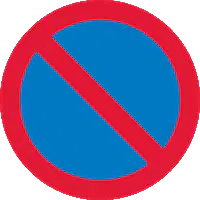
What is the meaning of this sign?
Clearway
Give Way
Waiting restrictions
End of carriageway
You are looking for somewhere to park at night.
When may you park on the right-hand side of the road?
When you have your sidelights on
When you are on a one way street
When you are parked under a streetlight
When you are more than 10 metres from a junction
When should you use the right - hand lane of a three lane motorway?
When you are overtaking
When you are using cruise control
When you are tuning right
When you are driving fast.
You are approaching a busy junction. What should you do when at the last moment, you realise your'e in the wrong lane?
Continue in that lane
Force your way into the lane you need
Stop until the area is clear
Use arm signals to help you change lanes
Where can you overtake on a one-way street?
Only on the left-hand side
Overtaking is not allowed.
Only on the right hand side.
On the right hand side or the left.
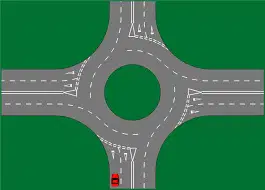
You are going straight ahead on a roundabout, what signal should you give?
You don't need to signal at all
Signal right, at the first junction then signal left to leave the second exit
Enter the roundabout in the left lane, indicate left to leave the roundabout after passing the first exit.
Enter the roundabout cross the left lane, into the right lane, then signal left to leave the roundabout
When can you enter a yellow box junction?
If there is less than two vehicles in the box
If the traffic light is on green
If the box is clear
If the road you are exiting is clear
Whhich reasons best describe when you are allowed to stop on a yellow box junction?
If the traffic lights turn red and your front wheels are already n the yellow box.
When there is a que and you were in the yellow box before the signal turned red.
When you are waiting for a gap in oncoming traffic to turn right into a clear road
Your exit road is clear, but you are prevented from completing the turn by oncoming traffic or other vehicles also waiting to turn right
Who has authority to signal you to stop?
A traffic warden
A Police Officer
A Pedestrian
A Judge

What best describes the action you shoud take if you see pedestriand waiting at a zebra crossing?
Move slowly forward incase they step into the road
Be ready to slow down or stop and let them cross
Ignore them because they are still on the pavement
Carry out the emergency stop procedure to stop the car before the crossing.
You are waiting at a pelican crossing and the light changes fom Red to Flashing Amber.
What does this mean?
Give way to pedestrians on the crossing
Move off slowly after the first amber light flash
Wait until the green light appears before moving off
Get ready to go, move off as soom as the amber light shows continuously
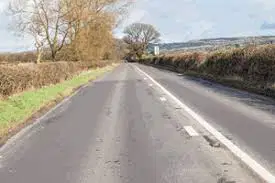
You are driving down this road, when are you allowed to park on the left?
If the line on your side is broken
If there are no yellow lines
Only to pick up and let down a passeneger
During daylight hors only
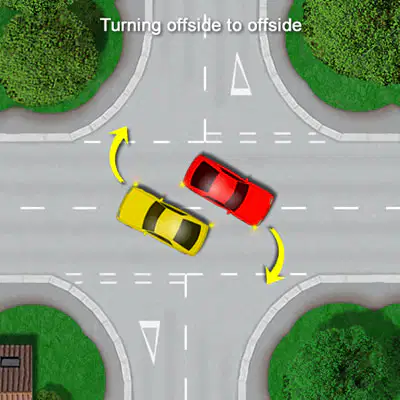
When you're turning right at a crossroads and the oncoming driver is also turning right.
What is the advantage of trurning right behind the oncoming vehicle?
You have more room to turn
You can turn without stopping
You will have a clearer view of oncoming traffic
You have more time to turn
You are travelling down a road and there is an obstruction on your side of the road.
What action should you take?
Carry on as you have prioroty
Give way to oncoming traffic
Wave oncoming traffic to come through
Accelerate around the obstruction
When would you use the right hand lane on a two lane dual carriageway?
When you are turning left and overtaking
When you are turning tright
When you are overtaking
When you are turnign right and overtaking
What is the nearest you can park to a junction?
10 metres
12 metres
15 metres
20 metres
If you are waiting at a level crossing.
What must you do if a train passes but the lights keep flashing?
Phone the signal operator
Move slowly forward an check if a train is coming
Continue waiting
Park and walk to check if the track is clear
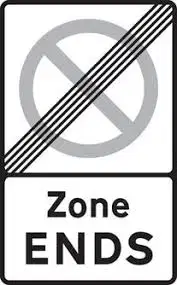
What does this sign indicate?
End of clearway
End of National speed limit
No through road
End of controlled parking zone.
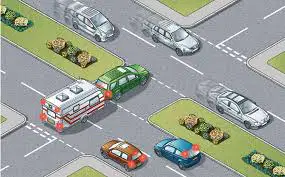
You are turning right onto a dual carriageway and the central researvation is not wide enough for your vehicle. What action should you take?
Put on your hazard warning lights and move forward slowly.
Wait until the troad is clear both ways
Move to the central reservation area and wait
Move the the central reservation area and move forward slowly until the traffic stops.
What should you do when parking at night on a road which has a 40mph speed limit?
Park facing the traffic
Leave the parking lights on
Leave the hazard lights flashing
Never park on a road that has 40 mph speed limit

When would you see these signs?
Countdown markers for a motorway
Countdown markers for a concealled level crossing
Countdown markers for a concealled junction
Countdown markers for a 30mph speed limit

