
 Worksheets
Units 7-8 World History
Total questions: 87
Worksheet time: 44mins
Which statement best defines the Industrial Revolution?
A period of agricultural decline leading to rural isolation
A century of global warfare dominated by imperial conflicts
A brief political movement focused on democratic reforms
An era of rapid technological change in Europe and North America
Identify the correct time frames for the two main phases of the Industrial Revolution.
Phase 1: 1800s–1850s; Phase 2: 1900s–1950s
Phase 1: 1750s–1780s; Phase 2: 1780s–1820s
Phase 1: 1700s–1760s; Phase 2: 1820s–1850s
Phase 1: 1760s–1850s; Phase 2: 1850s–1910s
Which characteristics are typical of the Industrial Revolution?
New inventions
New ways of living
Return to small-scale cottage industry
New styles of production
Which region first experienced the Industrial Revolution?
Ottoman Empire
Great Britain
Italy
Russia
Select the factors of production that helped Great Britain lead industrialization.
Access to colonial markets
Abundant money and capital
Inventive minds and culture
Large, educated working class
Frequent regime changes and instability
Which statement best explains Great Britain’s political context during early industrialization?
Feudal monarchs blocked urban development
Military rule prioritized conquest over industry
Revolutionary turmoil disrupted factories and trade
Modern, stable government supported economic growth
What broader changes did industrialization bring to Europe?
Reduced technological innovation in everyday life
Transformed economic structures and social culture
Eliminated urbanization and expanded rural isolation
Restored traditional guild systems across cities
After beginning in Britain, where did industrialization spread next?
To the rest of Europe and the United States
Primarily to East Asia and South America
Exclusively to Scandinavia and the Arctic
Only to British colonies in Africa
During the Second Industrial Revolution, which period saw intensified advances?
1700s–1760s
1850s–1910s
1760s–1850s
1910s–1950s
Which statement best defines capitalism as an economic system?
Religious leaders manage markets for moral outcomes
Community councils plan production for shared needs
Private owners control trade and industry for profit
State controls trade and industry for equality
Which features typically characterize capitalism? Select all that apply.
Limited government involvement in economic activity
Extensive government control of markets
Personal profit as a key motive
Private ownership of trade and industry
In capitalism, who primarily controls trade and industry?
National government ministries
Local community assemblies
Private owners and firms
International organizations
Which outcome is most closely associated with capitalist markets?
Guaranteed equal incomes for all citizens
Production determined by religious doctrine
Incentives for personal profit and competition
Prices set solely by government planners
Adam Smith held an academic position in which fields at the University of Glasgow?
Mathematics and astronomy
Logic and philosophy
Law and political science
Physics and chemistry
Which major work by Adam Smith is considered the first major work of modern economics?
Common Sense
The Wealth of Nations
The Spirit of Laws
Principles of Political Economy
What was a central target of Adam Smith’s criticism in 1776?
Feudal land tenure
Mercantilist system
Socialist planning
Monastic trade guilds
Which pair correctly matches the year 1776 with Adam Smith’s contributions?
Publication of The Spirit of Laws and defense of mercantilism
Publication of Common Sense and critique of capitalism
Publication of Das Kapital and support for state control
Publication of The Wealth of Nations and attack on mercantilism
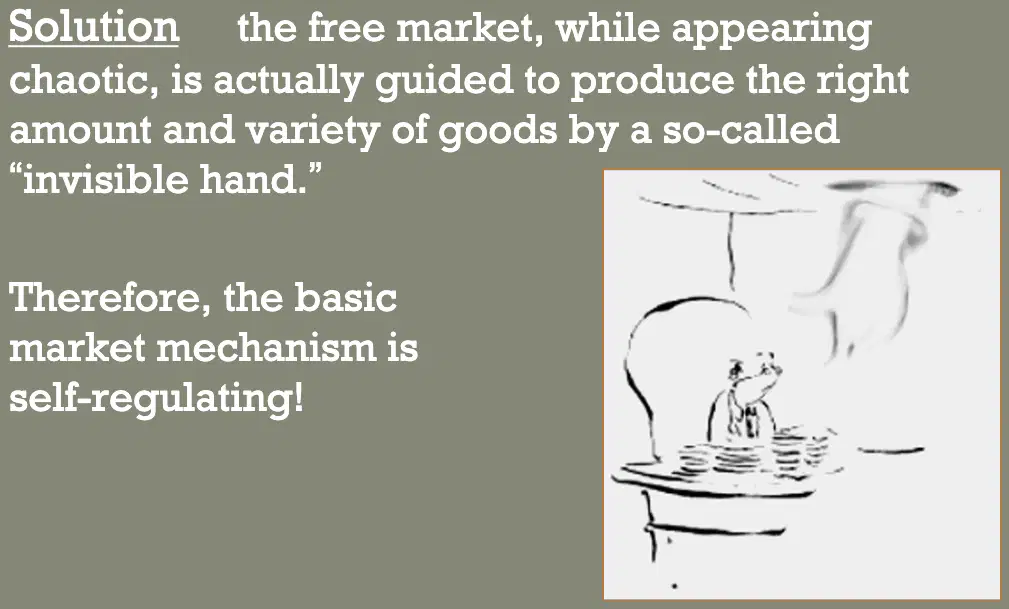
Which statement best describes the market's 'invisible hand'?
Self-interest and prices guide production efficiently
Random choices by consumers create constant shortages
Government planners set production targets precisely
Charities coordinate firms to meet community needs
What does a self-regulating market imply for everyday economic activity?
Central authorities forecast and control all production
Prices and profits adjust to balance supply and demand
Unions and laws alone determine worker pay and hours
Monopolies permanently fix prices without competition
Select the issues commonly identified as drawbacks of capitalism.
Stable growth with no recessions
Abuse of workers and poor conditions
Social and international inequality
Corporate corruption and monopolies
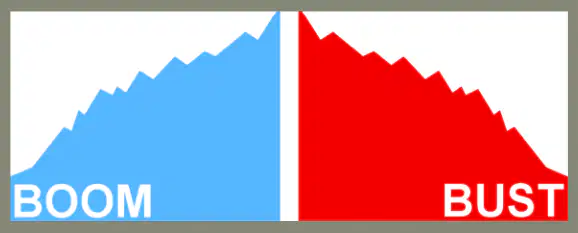
Which scenario best illustrates a 'boom and bust' cycle?
Immediate equilibrium after a small policy change
Rapid expansion followed by sharp contraction
Constant prices regardless of demand shifts
Steady growth in wages over many decades
A monopoly most likely leads to which outcome in a capitalist economy?
Consumers gaining unlimited product choices
Single firm power enabling price manipulation
Greater competition driving prices downward
Many small firms sharing market equally
Why might worker abuse emerge under capitalism?
Prices are fixed by government decree
Workers reject contracts regardless of pay
Technology removes all need for human labor
Profit incentives can pressure wages and conditions
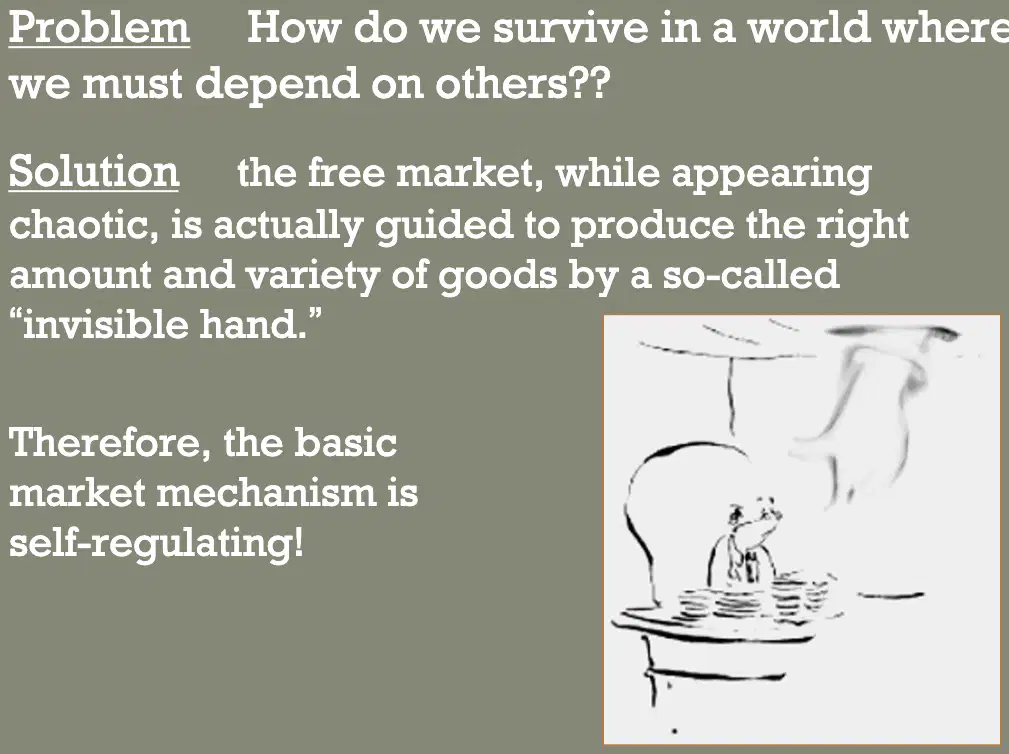
What problem does the 'invisible hand' concept attempt to solve?
How societies allocate goods among dependent individuals
How governments raise taxes during wartime
Why cultures develop different moral systems
Whether barter is superior to money
Which combination best captures both a principle and a drawback of capitalism?
Self-regulating markets and guaranteed equality
Invisible hand guidance and boom–bust volatility
Worker-owned firms and permanent stable prices
Central planning efficiency and rising wages
Which best describes the Industrial Reform Movement during the Industrial Revolution?
A religious revival focused on spiritual factory discipline
A government agency enforcing tariffs on imported machinery
A group of activists aiming to fix harmful industrial effects
A loose trend among factory owners seeking higher profits
What was the main goal of the Industrial Reform Movement?
Protect wealthy investors from market instability
Make society better for the poor and working classes
Promote colonial expansion to access cheap resources
Replace Enlightenment ideas with traditional authority
Which factor most influenced reformers’ ideas in this movement?
Medieval feudal obligations and serf duties
Enlightenment emphasis on rights and reason
Romantic nationalism and cultural folklore
Mercantilist restrictions on guild production

Which problems would reformers most likely target as “bad” effects of the Industrial Revolution? Select all that apply.
Decline of aristocratic land ownership
Long working hours with little regulation
Unsafe factory conditions for laborers
Polluted urban environments near mills
What did reformers mean by suffrage in the Universal Suffrage Movements?
Universal jury service rights
Equal property ownership rights
Voting rights for citizens
Freedom of press protections
In early 1800s Britain, why did many men push for expanded voting rights?
To avoid military conscription
To gain more say in national direction
To expand church membership
To secure colonial positions
Which group resisted expanded voting rights in Britain around 1800?
Colonial governors
Elites from the class system
Rural farmers
Industrial workers
Which principle best captures utilitarianism in public policy?
Advance profit regardless of harm
Maximize liberty for elites only
Do the most good for the most people
Prioritize tradition over outcomes
Which thinkers are associated with utilitarianism?
Adam Smith
Jeremy Bentham
John Stuart Mill
Karl Marx
According to utilitarian ideas, how should government be involved?
Rule only through military power
Total absence from economic policy
Little involvement while promoting general welfare
Heavy control over all industries
Which policy stance aligns with utilitarian reformers’ view on personal freedom?
Citizens must follow guild restrictions
Workers should live on state compounds
People should be free to pursue their interests
Only nobles may start enterprises
Which statement reflects utilitarian views on profits and wealth?
Profits should be untaxed entirely
Wealth must be confiscated from all
Only foreign profits should be limited
Profits should be equally regulated
How did Universal Suffrage Movements change the electorate in Britain?
Only landowners could vote
More male voters gained the franchise
Fewer men qualified to vote
Only clergy could cast ballots
Which thinker is associated with promoting socialist ideas during this reform era?
Robert Owen advanced socialist factory reforms
Karl Marx led early French utopian socialism
Charles Fourier advocated government economic control
John Stuart Mill supported laissez-faire capitalism
Socialists of this era argued that government should control certain factors of the economy. Which set best matches those factors?
Farms, local markets, and small shops
Mining claims, shipping ports, and tariffs
Factories, mills, and major railroads
Banks, stock exchanges, global trade routes
What goal did socialists claim government ownership would achieve for society?
Privatize public services for efficiency
Strengthen monarchies and aristocratic power
Help workers and curb greedy business owners
Increase corporate competition and profits
Which reform leader pushed for ending the international slave trade during this era?
Granville Sharp supported colonial expansion
Toussaint Louverture opposed European colonizers
William Wilberforce campaigned for abolition
Frederick Douglass wrote American narratives
The abolition movement’s immediate policy focus in this period is best described as:
Emancipation of all enslaved people globally
Abolishment of the international slave trade
Regulation of plantation labor conditions
Creation of segregated colonial settlements
Which reforms, beyond socialism and abolition, were part of broader change efforts of the era?
Military conscription growth
Public education expansion
Women’s rights advocacy
Prison system reforms
Protective tariffs increase
Compare the core aims of socialism and abolition in this era. Which pairing correctly links each movement to its central aim?
Socialism—end slave trade; Abolition—control industry
Socialism—control key industries; Abolition—end slave trade
Socialism—expand colonies; Abolition—strengthen monarchy
Socialism—privatize services; Abolition—limit worker unions
Which economic sectors were highlighted by socialists as suitable for public ownership to benefit workers?
Heavy industry plants
Local craft workshops
Factories and textile mills
Railroads and transport lines
Small family farms
Which statement best captures how these reform movements sought to change society?
They prioritized unrestricted private capital growth
They avoided legal and policy interventions
They promoted government-led protections and rights
They defended traditional hierarchies of wealth
Which statement best describes Judaism as presented here?
Polytheistic tradition with many gods
Monotheistic religion worshiping one God
Philosophy without sacred scriptures
Cultural identity without religious beliefs
Which sacred text is central to Jewish belief and law?
New Testament of Christianity
Qur'an of Islam
Vedas of Hinduism
Old Testament, also called the Torah
Which biblical figures are closely associated with Judaism’s foundations?
Paul
Muhammad
Moses
Abraham
Which feature distinguishes monotheistic religions like Judaism?
Belief in ancestral spirits
Worship of one God
Use of multiple holy books
Focus on nature deities
What term describes deep hatred, fear, or discrimination against Jews?
Secularism
Anti-Semitism
Ecumenism
Zionism
When did the term anti-Semitism first come into common use?
Ancient Roman era
Mid-1800s in Europe
Early Middle Ages
Late 20th century
Why is identifying the single root cause of anti-Semitism challenging?
It has a single historical event
It stems only from theology
It is purely economic in origin
It involves religious, social, and political factors
Which description best characterizes Zionism in its early phase?
A medieval religious revival
A Jewish political movement in Europe
A modern economic reform program
A cultural art movement in Palestine
Which goals are associated with Zionism’s early vision?
Eliminating all religious practices
Establishing a homeland in Palestine
Spiritual renewal of the Jewish people
Political renewal of the Jewish people
Which strategy did Zionist leaders pursue to advance their aims?
Alliance only with non-European empires
Courting support from friendly European powers
Military conquest of Europe
Isolation from all foreign powers
Who is commonly linked to the early leadership of Zionism during the 19th–20th centuries?
Theodore Herzl, active in 1860–1904
A Roman emperor from antiquity
A medieval rabbi from Germany
Unspecified poet from Spain

Match each term to its best description.
Judaism
Zionism
Anti-Semitism
Who developed the foundational ideas that became known as communism?
Karl Marx
Adam Smith
Max Weber
John Locke
Which description best matches Karl Marx’s background?
German-born author and philosopher
French-born military leader
British industrial factory owner
Russian czar during the 1800s
Which statement explains why Marx formulated Marxism during the Industrial Revolution?
He opposed harsh worker conditions
He supported laissez-faire capitalism
He admired factory owners’ profits
He believed feudalism should return
What is the relationship between Marxism and communism as presented here?
Communism is a branch of feudal law
Marxism is commonly known as communism
Communism is a military strategy
Marxism is a religion practiced by czars
Who co-authored The Communist Manifesto with Marx?
Vladimir Lenin
Friedrich Engels
Herbert Spencer
Rosa Luxemburg
In what year was The Communist Manifesto published?
1848
1917
1818
1883
Which statements about The Communist Manifesto are correct? Select all that apply.
It was considered Marx and Engels’ greatest work
It was not widely read in Europe until after 1883
It is sometimes called the Marxist "Bible"
It was first published in 1917
Which timeline places key dates in the correct order?
1818 birth, 1848 publication, 1883 death
1848 publication, 1883 wider readership
1917 revolution, 1848 publication, 1883 death
1883 wider readership, 1848 publication
Which role best describes Benito Juarez’s leadership in Mexico?
Conservative monarch supporting elites
Industrial tycoon expanding railroads
Reformer president promoting citizenship
Foreign military governor from France
Which background detail is accurate about Benito Juarez?
Born into a poor Indigenous family
Immigrant merchant from Spain
Educated as a priest and theologian
Born into a wealthy hacendado family
What professional path did Benito Juarez follow before national leadership?
General and admiral
Journalist and poet
Lawyer and judge
Engineer and banker
Which goal guided Benito Juarez’s reforms?
Create politics serving all citizens
Strengthen military rule over provinces
Expand privileges for the wealthy class
Restore colonial ties with Europe
Which statement best describes Porfirio Diaz’s early public image?
Former military hero turned politician
Philosopher advocating pacifism
Merchant organizing labor unions
Clergy leading religious revival
Porfirio Diaz’s support base primarily included which groups?
Foreign settlers and miners
Peasantry and rural cowhands
Military and wealthy classes
Teachers and civil servants
With whom did Porfirio Diaz serve during conflict with the French?
Miguel Hidalgo
Emiliano Zapata
Benito Juarez
Victoriano Huerta
Which description matches Francisco “Pancho” Villa’s rise to influence?
Urban industrialist funding reform
Cowhand turned revolutionary leader
Diplomat negotiating with Europe
Naval officer commanding coastal fleets
Against whose forces did Francisco Villa lead his men?
Diaz’s regime and loyal troops
United States federal cavalry
Juarez’s constitutional army
French occupation remaining forces
Where did Villa’s campaigns commonly take place?
Southern jungles near Guatemala
Central plateau around Mexico City
Yucatan Peninsula coastal towns
Along the Mexican border with the US
What was the Division del Norte associated with Villa?
His cavalry and northern fighting force
A civilian peace committee
A political party of industrial elites
A foreign legion of European volunteers
Which broader movement is most connected to Francisco Villa’s fame?
War of Independence against Spain
Mexican reform under Juarez
Mexican Revolution challenging Diaz
Cristero War of the late 1920s
Which statement best describes Germany prior to the 19th century as shown in the map?
Loosely allied states in a confederation
Unified nation-state under one constitution
Direct colonies ruled by foreign empires
Independent kingdoms without any alliances
In the early 1800s within the German Confederation, which powers were the most influential?
Austria-Hungary and Prussia
France and the Netherlands
Bavaria and Saxony
Russia and Italy
What was a key political characteristic of German lands before unification?
Strong central German government
Federal republic with elected parliament
No central German state existed
Rule by the French emperor
Which outcome of the Congress of Vienna affected German territories?
Creation of the German Confederation
Annexation by the Ottoman Empire
Formation of the United Kingdom
Partition into French departments
Select all developments associated with the Congress of Vienna era and German lands.
Establishing buffer states against French expansion
Imposing war reparations on defeated France
Recognizing Prussia as a leading German power
Uniting all Germans into a single nation-state
Why did European leaders favor buffer states around France after the Napoleonic Wars?
To promote French cultural exchange
To contain future French military aggression
To expand Austrian rule over Italy
To dissolve the German Confederation entirely
Which statement distinguishes the German Confederation from a unified nation-state?
Direct rule from a central capital
Uniform legal code across all provinces
Loose association of sovereign states
Single national army and tax system
During the period shown, which rivalry shaped politics within the German lands?
Sweden versus Denmark
France versus the Netherlands
Spain versus Portugal
Austria-Hungary versus Prussia

