
 Worksheets
sinh
Total questions: 57
Worksheet time: 30mins
Biện pháp nào được khuyên nghị để bảo vệ thận?
Sử dụng nhiều loại thuốc.
Ăn thực phẩm giàu muối và dầu mỡ.
Uống nhiều rượu, bia.
Uống đủ nước hàng ngày.
Động vật nào sau đây có hệ tuần hoàn đơn?
Lưỡng cư.
Chim.
Cá.
Thú.

Hình 8.2 mô tả ngắn gọn về quá trình tiêu hóa thức ăn của Thủy tức (Hydra). Khi nói về quá trình này, phát biểu nào sau đây đúng?
Thức ăn được tiêu hóa ngoại bào bên ngoài tế bào.
Thức ăn được tiêu hóa nội bào trong lòng túi.
Miệng là nơi lấy thức ăn, chất thải được thải qua hậu môn.
Thức ăn được tiêu hóa ngoại bào và nội bào nhờ các enzyme.
Động vật nào sau đây có hệ tuần hoàn hở?
Rắn hổ mang.
Chim bồ câu.
Châu chấu.
Cá chép.
Các động vật thuộc ngành Thân lỗ có hình thức tiêu hoá
ngoại bào.
trong cơ thể.
ngoài cơ thể.
nội bào.
Động vật nào sau đây có quá trình trao đổi khí giữa cơ thể với môi trường diễn ra ở mang?
Giun tròn.
Cá chép.
Chim bồ câu.
Thỏ.
Suy thận mãn tính là khi chức năng thận bị suy giảm đến mức không thể phục hồi, lúc này bệnh nhân phải thay thận hoặc chạy thận nhân tạo như hình bên. Khi nói về quá trình chạy thận nhân tạo, có bao nhiêu phát biểu sau đây đúng?
(1)Máy chạy thận được kết nối trực tiếp vào vòng tuần hoàn của cơ
(2)Bộ lọc có vai trò thay thế chức năng thận.
(3)Chạy thận nhân tạo giúp hỗ trợ loại bỏ các chất độc, muối và nước dư thừa ra khỏi cơ thê; giúp điêu hòa áp suất thâm thâu và pH máu.
(4)Chạy thận nhân tạo là quá trình lọc máu ngoài cơ thê theo một quy trình nghiêm ngặt
1
4
3
2
Trong thực tiễn sản xuất nông nghiệp, để kích thích sự nảy mầm của hạt lúa, người nộng dân thường ngâm lúa giống trước khi gieo trồng. Đây là ví dụ về ảnh hưởng của yếu tố môi trường nào đến hô hấp ở thực vật?
Nồng độ CO2
Hàm lượng nước
Nguyên tố khoáng
Độ pH
Phân đạm là "thức ăn" chính của cây, giúp cho chồi, cành lá phát triển; lá có kích thước to sẽ tăng khả năng quang hợp từ đó tăng năng suất cây trồng. Bón thiếu phân đạm, cây sẽ còi cọc, lá thường chuyên vàng, toàn bộ quá trình sinh trưởng của cây sẽ bị trì trệ do thiêu chất hình thành tê bào, các quá trình sinh hóa cũng bị ngừng trệ
Bón thừa phân đạm, cây trông sẽ lớn nhanh, đẻ nhánh nhiều, dễ bị đô ngã, chậm ra hoa và khó đậu quả. Mặt khác, thừa đạm làm tăng mức độ lây nhiễm sâu bệnh do cây thiếu sức đề kháng, lá mềm, màu sắc xanh đậm của lá thu hút các loại côn trùng và nấm bệnh gây hại. Một số nông dân cho rằng khi bón phân đạm quá mức cần thiết thì đạm là chất độc.
(Trích nguồn: http://www.giatieu.com/phan-dam-nhung-dieu-can-biet/6381)
Khi bón thiếu phân đạm cây sẽ còi cọc, lá thường có màu vàng
Nguyên tố khoáng chủ yếu trong phân đạm là N nên phân đạm ảnh hưởng mạnh mẽ tới các quá trình sinh lý, sinh hóa trong cây
Với cây lúa, bón thừa phân đạm cây thường dễ bị sâu bệnh, dễ bị gãy đổ
Giai đoạn cây ra hoa tạo quả, tăng cường bón phân đạm cho cây cùng với các loại phân hóa học khác để tăng năng suất cây trồng
Loài động vật nào sau đây chưa có cơ quan tiêu hoá?
Sứa
Bọt biển
Giun đũa
Cá sấu
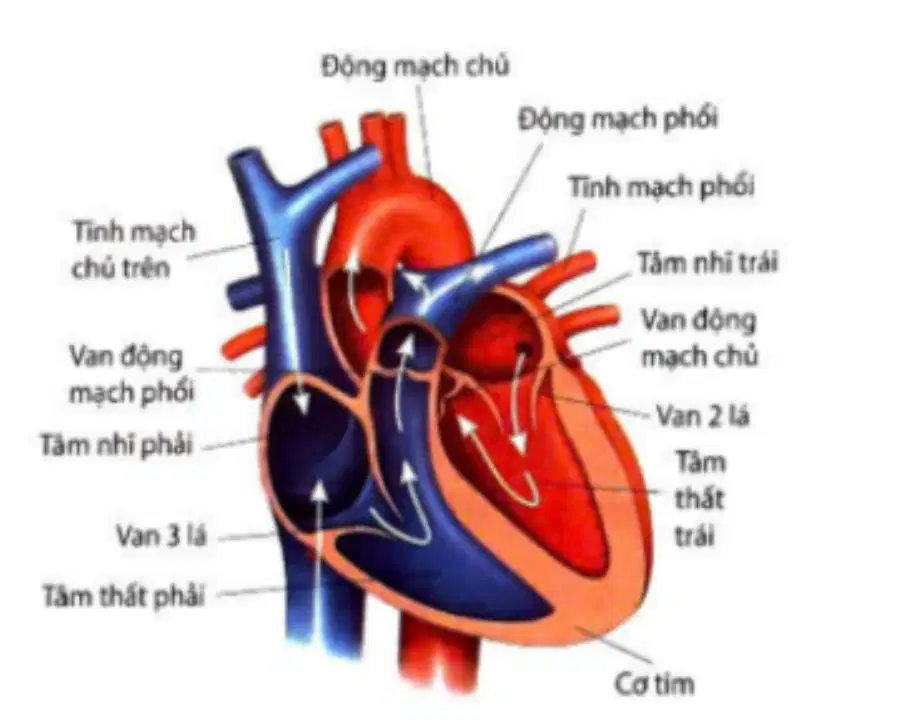
Hình dưới đây mô tá cấu tạo tim người. Dựa vào những hiều biết về tim người, hãy cho biết mỗi nhận đây sau đây là đúng hay sai?
Tim người có 4 ngăn: 2 tâm nhĩ và 2 tâm thất
Tim người có 3 van: van ba lá, van hai lá và van động mạch chủ
Các van tim giúp máu chảy một chiều từ tâm nhĩ xuống tâm thất và từ tâm thất vào động mạch
Máu từ tâm thất phải chảy vào động mạch phổi, máu từ tâm thất trái cháy vào động mạch chủ
Ở người, cơ quan nào sau đây có vai trò bài tiết nước tiểu?
Gan
Phổi
Thận
Gan
Nguyên liệu của quá trình quang hợp ở thực vật gồm:
Glucose và nước
Khí carbon dioxide, glucose.
Khí carbon dioxide và nước
Khí oxygen và glucose.
Thực vật ngập mặn thải lượng muối thừa qua các mô tiết ở á, động vật thải nước tiêu, phân ra khỏi cơ thê qua cơ quan tiêu hóa.Đây là ví dụ vê dâu hiệu đặc trưng nào của trao đôi chât và chuyên hóa năng lượng?
Điều hoà trao đổi chất
Thải các chất ra môi trường
Biến đổi các chất và chuyển hoá năng lượng
Thu nhận và vận chuyển các chất trong cơ thể
Tim của người gồm mấy ngăn?
3.
4.
1.
2.
Based on the knowledge of blood pressure and the chart below about the change in blood pressure in the human circulatory system, indicate which of the following statements is correct or incorrect.
In the blood vessels, blood pressure gradually decreases from the aorta to the veins.
The normal value of systolic blood pressure in adults is 110 – 120 mmHg.
Systolic pressure (minimum blood pressure)
Corresponds to the time when the heart relaxes.
In the human circulatory system, which of the following structures belongs to the conduction system of the heart?
Sinoatrial node.
Atrioventricular node.
Vein.
Artery.
What is photosynthesis?
The process of converting organic substances other than light.
The process of absorbing sunlight to synthesize organic substances.
The process of absorbing sunlight to synthesize organic substances from CO2 and H2O.
The process of absorbing sunlight to convert complex organic substances into simple ones.
In animals with a digestive system, food passes through the digestive tract and is:
Mechanically and chemically transformed into simple nutrients and absorbed into the blood.
Mechanically transformed into simple nutrients and absorbed into the blood.
Mechanically and chemically transformed into simple nutrients and absorbed into the blood.
Chemically transformed into simple nutrients and absorbed into the blood.
When talking about respiration in animals, which statement below is correct?
In all mammals, the process of gas exchange between the body and the environment always occurs in the lungs.
In all non-living animals, the process of gas exchange between the body and the environment always occurs in the airways.
In all aquatic animals, the process of gas exchange between the body and the environment always occurs in the gills.
In all terrestrial plants, the process of gas exchange between the body and the environment always occurs in the lungs.
What is the overall equation for respiration in plants?
H2O; O2; Q (ATP and heat).
C6H12O6; O2; Q.
CO2; H2O; Q (ATP + heat).
CO2; O2; Q (ATP + heat).
The diagram below describes the mechanism of pathogen destruction by macrophages. Observe the diagram and indicate whether each statement below is true or false.
A. The phagocytosis process occurs when the pathogen (such as bacteria, viruses) attaches to the surface of the macrophage membrane.
B. This is a specific immune response, only occurring when the body has previously encountered the same type of pathogen.
C. The fusion of lysosomes and phagosomes does not play a role in providing digestive enzymes to break down the pathogen into smaller components.
D. To enhance the effectiveness of this process, humans need to use antibiotics at high doses to help white blood cells destroy pathogens faster.
The main purpose of soaking seeds before sowing is
to maintain a stable temperature suitable for respiration.
to reduce CO2 concentration in cells to stimulate respiration.
to increase water content in cells to stimulate respiration.
to increase O2 concentration in cells to stimulate respiration.
Where does photosynthesis occur in the chloroplast?
Outer membrane.
Inner membrane.
Stroma.
Grana.
Where does the dark phase occur in the chloroplast?
Outer membrane.
Inner membrane.
Stroma.
Granum.
The optimal temperature for respiration is in the range
30°C - 35°C.
25°C - 30°C.
20°C - 25°C.
35°C - 40°C.
Which part of the circulatory system has the function of pumping and pushing blood in the vessels?
Artery.
Heart.
Vein.
Capillary.
Which statement is NOT correct about immunity in animals and humans?
Specific immunity includes humoral and cellular immunity (immunity through antibodies and cells).
Specific immunity is also called innate immunity.
Immunity is divided into specific and non-specific immunity.
Immunity is the ability to resist pathogens, ensuring the body stays healthy and does not get sick.
Under normal conditions, in adults, the duration of one cardiac cycle is about
0.8s.
0.4s.
0.3s.
0.1s.
In earthworms, the process of gas exchange between the body and the environment is carried out in which way?
Gas exchange through the lungs.
Gas exchange through the body surface.
Gas exchange through the respiratory system.
Gas exchange through the gills.
Thói quen nào sau đây có lợi cho sức khỏe của thận?
Ăn thật nhiều nước.
Ăn nhiều đồ mặn.
Nhịn tiểu lâu.
Tập thể dục thường xuyên.
Dựa vào hình ảnh, Giun đất trao đổi khí bằng hình thức nào?
Qua bề mặt cơ thể.
Qua mang.
Qua hệ thống ống khí.
Qua phổi.
Quá trình dinh dưỡng gồm 5 giai đoạn là?
Đồng hóa → Tiêu hóa thức ăn → Lấy thức ăn → Hấp thu → Thải chất cặn bã.
Tiêu hóa thức ăn → Lấy thức ăn → Hấp thu → Đồng hóa → Thải chất cặn bã.
Lấy thức ăn → Hấp thu → Đồng hóa → Tiêu hóa thức ăn → Thải chất cặn bã.
Lấy thức ăn → Tiêu hóa thức ăn → Hấp thu → Đồng hóa → Thải chất cặn bã.
The table below records blood pressure in the left atrium, left ventricle, and aorta at different time points during a cardiac cycle in an animal.
At time 0.2 seconds, the blood pressure in the left ventricle is highest.
Blood pressure in the aorta affects the opening and closing of heart valves.
At time 0.3 seconds, blood is pumped from the left ventricle into the aorta.
Adrenaline stimulates the heart, making it beat faster and stronger, increasing blood pressure in the aorta.
The raw material for the process of respiration in plants is:
CO2 and H2O
CO2 and C6H12O6
CO2 and ATP
O2 and C6H12O6
In animals with single or double-layered cells, cells exchange substances directly with the environment or body cavity. However, in larger animals, cells are not in direct contact with the environment, so a transport system is needed. According to theory, which of the following statements is correct?
The circulatory system (blood circulation) mainly transports nutrients, O2, CO2, and waste products to and from cells.
In insects, the circulatory system does not transport gases, as gas exchange occurs directly through the tracheal system to each cell.
The heart of mammals has 4 complete chambers, allowing blood to nourish the body with fresh, unmixed blood, ensuring enough oxygen for cellular activities.
To ensure rapid exchange of substances between blood and cells, blood flow in capillaries is fastest in the circulatory system.
Grasshoppers breathe:
by the tracheal system.
by gills.
through the body surface.
Châu chấu hô hấp:
bằng hệ thống ống khí.
bằng mang.
qua bề mặt cơ thể.
bằng phổi.
Cho các bệnh sau đây, có bao nhiêu bệnh liên quan đến hệ tiêu hóa?
3.
5.
6.
4.
Quá trình biến đổi các chất dinh dưỡng có kích thước lớn, cấu tạo phức tạp thành các phân tử nhỏ, đơn giản mà cơ thể hấp thụ được gọi là:
tiêu hóa thức ăn.
hấp thụ.
thải chất cặn bã.
lấy thức ăn.
Để có thể xâm nhiễm và gây bệnh trên người, trước hết tác nhân gây bệnh cần phải vượt qua các hàng rào bảo vệ của miễn dịch không đặc hiệu, đó là hàng rào bề mặt cơ thể và hàng rào bên trong cơ thể. Hàng rào nào sau đây là hàng rào bên trong cơ thể?
Da.
Các chất tiết.
Tế bào bạch cầu.
Niêm mạc.
Khi nói đến tiêu hóa động vật ăn thực vật nhai lại, có bao nhiêu phát biểu sau đây đúng?
2.
1.
3.
4.
Khi nói đến tiêu hóa động vật ăn thực vật nhai lại, có bao nhiêu phát biểu sau đây đúng?
2
1
3
4
Động vật nào sau đây không có ống tiêu hoá?
A. Thỏ.
B. Trâu.
C. Thủy tức.
D. Sư tử.
Các sản phẩm chính của pha sáng trong quang hợp ở thực vật gồm:
carbohydrate, H2O, O2.
ADP, NADPH, O2.
carbohydrate, ATP, NADPH, O2.
ATP, NADPH, O2.
Vị trí xảy ra pha sáng trong quang hợp ở thực vật là:
màng thylakoid.
bào tương.
màng trong ti thể.
chất nền lục lạp.
Động vật nào sau đây tiêu hóa thức ăn bằng hình thức tiêu hóa nội bào?
Bò.
Mèo.
Bọt biển.
Ngựa.
Các dấu hiệu đặc trưng của trao đổi chất và chuyển hóa năng lượng ở sinh vật là:
Tiếp nhận các chất từ môi trường và vận chuyển các chất □ Biến đổi các chất kèm theo chuyển hóa năng lượng ở tế bào □ Thải các chất vào môi trường □ Điều hòa
Tiếp nhận các chất từ môi trường và vận chuyển các chất □ Biến đổi các chất kèm theo chuyển hóa năng lượng ở tế bào □ Giữ lại tất cả các chất □ Điều hòa
Tiếp nhận các chất từ con người và vận chuyển các chất □ Biến đổi các chất kèm theo chuyển hóa năng lượng ở tế bào □ Thải các chất vào môi trường □ Điều hòa
Tiếp nhận các chất từ môi trường và vận chuyển các chất □ Biến đổi các chất kèm theo chuyển hóa năng lượng ở tế bào □
What are the characteristic signs of metabolism and energy transformation in living organisms?
Receiving substances from the environment and transporting substances. Transforming substances according to energy metabolism in cells. Excreting substances into the environment. Regulation.
Receiving substances from the environment and transporting substances. Transforming substances according to energy metabolism in cells. Retaining all substances. Regulation.
Receiving substances from humans and transporting substances. Transforming substances according to energy metabolism in cells. Excreting substances into the environment. Regulation.
Receiving substances from the environment and transporting substances. Transforming substances according to energy metabolism in the body. Excreting substances into the environment. Regulation.
Which organ participates in regulating the balance of salt and water in the body?
Heart
Liver
Kidney
Lung
Influenza is an acute respiratory infection caused by the influenza virus, which spreads quickly in the community and usually appears in winter and spring. After an influenza outbreak, some students in class 11A have prolonged fever and cough. Some recover quickly, while others recover slowly due to lack of exercise, poor nutrition, and not being vaccinated. The school cooperates with the local health station to promote vaccination and maintain hygiene. Based on the above, determine whether the following statements are True or False:
Influenza virus is an external pathogen that can cause disease in humans.
Students who recover quickly have a better immune system than those who recover slowly.
Non-specific immunity only works after the body has previously been infected by the virus.
Vaccination alone is enough to prevent disease, without attention to nutrition, exercise, or hygiene.
What type of immunity occurs when an antigen invades the body?
Innate immunity
Natural immunity
Specific immunity
Non-specific immunity
Match the following preventive measures with their corresponding actions:
Prevent infection by bacteria and viruses.
Wash hands regularly.
Prevent respiratory diseases.
Maintain nasal hygiene with saline solution.
Prevent nutritional deficiencies.
Vaccinate against some respiratory diseases.
Prevent respiratory diseases.
Supplement with adequate nutrition for the body.
Cho các biện pháp sau: (1) Rửa tay thường xuyên. (2) Vệ sinh mũi họng bằng dung dịch sát khuẩn phù hợp theo chỉ dẫn của bác sĩ. (3) Tiêm vaccine phòng một số bệnh hô hấp. (4) Bổ sung đầy đủ chất dinh dưỡng cho cơ thể. Có bao nhiêu biện pháp có thể phòng tránh bệnh về hô hấp?
4.
1.
2.
3.
Một người làm vườn chuẩn bị dung dịch thủy canh để trồng rau xà lách. Ông pha chế các loại muối khoáng vào nước theo công thức dinh dưỡng và sục khí oxygen liên tục vào thùng chứa dung dịch. Nhận định sau đây đúng hay sai?
Nước và khoáng từ dung dịch thủy canh được hấp thụ chủ yếu ở rễ.
Cây hấp thụ nitrogen từ dung dịch thủy canh chủ yếu dưới dạng NH4+ và NO3-.
Việc sục khí vào dung dịch là nhằm cung cấp O2 cho quá trình hô hấp của hệ rễ.
Nếu độ pH của dung dịch thủy canh bị biến động mạnh (quá chua hoặc quá kiềm), người làm vườn cần điều chỉnh lại ngay vì pH ảnh hưởng đến độ tan và khả năng hấp thụ khoáng của rễ.
Dựa trên hình mô tả hệ tuần hoàn và kiến thức đã học, nhận định sau đúng hay sai?
Hệ tuần hoàn của động vật được cấu tạo gồm: tim, hệ mạch, dịch tuần hoàn.
Hình 1 là hệ tuần hoàn hở.
Hình 1: Máu được tim bơm đi lưu thông liên tục trong mạch kín, từ động mạch qua mao mạch, tĩnh mạch và sau đó về tim. Máu trao đổi chất với tế bào qua thành mao mạch.
Hình 2: Máu được tim bơm vào động mạch và sau đó tràn vào khoang cơ thể. Ở đây máu được trộn lẫn với dịch mô tạo thành hỗn hợp máu - dịch mô. Máu tiếp xúc và trao đổi chất trực tiếp với các tế bào, sau đó trở về tim.
Cho các bệnh sau đây:
1. Viêm loét dạ dày.
2. Ung thư trực tràng.
3. Nhồi máu cơ tim.
4. Sâu răng.
5. Viêm gan
6. Suy thận mãn tính.
Hãy viết liền các số tương ứng với các bệnh liên quan đến hệ tiêu hóa theo thứ tự từ nhỏ đến lớn.
(a)

