
 Worksheets
Operating System Quiz
Total questions: 92
Worksheet time: 46mins
Which of the following best describes the primary function of an operating system?
Acts as an interface between a user and a computer
Only stores files on the hard disk
Only manages computer memory
Only interprets binary code
Which of the following is NOT listed as a popular operating system in the material?
Linux
UNIX
Microsoft Word
Apple Mac
What does the operating system manage in a computer?
Only the keyboard
Computer hardware and system resources
Only the monitor
Only the printer
How does the operating system help the CPU interpret user commands?
By converting commands to binary code
By printing the commands
By storing commands in memory
By deleting commands
The operating system is considered the base on which application software is developed because:
It manages hardware and resources, allowing applications to interact with the computer efficiently
It only stores files
It deletes files automatically
It only interprets binary code
Which of the following best describes process management in an operating system?
Allocating memory to processes
Dividing the CPU time among different processes
Managing file operations
Controlling input/output devices
What is the main function of memory management in an operating system?
To execute input/output operations
To allocate available memory to processes
To manage file naming
To divide CPU time
Which device is used as a temporary storage when the main memory is limited?
Printer
Hard disk
Keyboard
Mouse
What is the role of the operating system in input/output (I/O) operations?
It executes programs
It enables communication between peripherals and the CPU
It allocates memory to processes
It manages file operations
Which of the following is NOT a file operation managed by an operating system?
Creating a file
Naming a file
Printing a file
Reading a file
What is a single-user system?
A system that can be used by multiple users at the same time
A system that can only be used by one person at a time
A system that does not require an operating system
A system that only manages files
Which operating system is given as an example of a single-user operating system?
Windows
Linux
MS DOS
MacOS
What is the main difference between a single-user system and a multiuser system?
Multiuser systems cannot run multiple processes
Single-user systems share hardware resources
Multiuser systems allow more than one user to work simultaneously
Single-user systems are more user-friendly
Why has the personal computer (PC) become very popular?
High hardware requirements
Limited software availability
Low cost of hardware and wide range of available software
Only supports multiuser systems
A command-line interface (CLI) is described as:
Displaying text and images
Only text-based and displays data character by character
More user-friendly than GUI
Slower than GUI-based software
Which of the following is a feature essential for a multiuser system?
Multiprogramming
Single-tasking
Limited storage
No communication lines
What is the main difference between a smart terminal and a dumb terminal in a multiuser system?
A smart terminal has its own CPU and peripherals, while a dumb terminal does not.
A dumb terminal can store data independently, while a smart terminal cannot.
A smart terminal only acts as an interface, while a dumb terminal processes all requirements.
A dumb terminal can run any operating system, while a smart terminal cannot.
Which operating systems are examples of multiuser operating systems?
Linux, UNIX, Windows NT
Windows 95, DOS, Mac OS
Android, iOS, Chrome OS
Windows XP, Windows 7, Windows 8
What year was UNIX licensed to universities for educational purposes and made commercially available?
1974
1969
1984
1995
Why does Windows 95 not qualify as a multiuser operating system?
It does not allow multiple users to connect to it at a given time.
It cannot run multiple tasks simultaneously.
It is not compatible with UNIX.
It does not support graphical user interfaces.
Multitasking in a multiuser system is achieved by which of the following methods?
By dividing time into smaller units and performing different tasks in each unit, similar to drinking coffee, reading a book, and talking on the phone at different times.
By using only one resource at a time and ignoring other tasks.
By connecting multiple computers to a single printer.
By storing all data on a hard disk for future use.
Who developed the original UNIX operating system in 1969?
Ken Thompson and Dennis Ritchie
Richard Stallman and Steve Jobs
Bill Gates and Paul Allen
Linus Torvalds and Mark Shuttleworth
What was the main goal of Richard Stallman’s Free Software Foundation (FSF) project started in 1984?
To create a free version of the UNIX operating system
To develop a new hardware platform
To license UNIX for commercial use
To create a new programming language
Who developed the Linux kernel in 1991?
Linus Torvalds
Richard Stallman
Bill Gates
Steve Jobs
Which of the following is NOT a distributor of Linux listed in the material?
Ubuntu
Red Hat
Caldera
Mandrake
What is the official mascot of Linux?
Tux the penguin
Larry the cow
Duke the Java mascot
The Windows flag
What is the main function of the Linux kernel?
Controls resources and allocates them to different users and tasks
Displays graphical user interfaces
Manages web browsers
Handles only application programs
Which combination forms the GNU/Linux operating system?
GNU system and Linux kernel
Windows and Linux kernel
Mac OS and GNU system
UNIX and Windows
What is the role of the shell in the Linux operating system?
Initiates a separate, interactive program for each user
Manages hardware directly
Allocates resources to users
Runs only application programs
Why is the open development model important for Linux?
It allows users to study, modify, and suggest changes to the source code.
It restricts access to the source code.
It only allows paid users to modify the code.
It prevents users from reporting bugs.
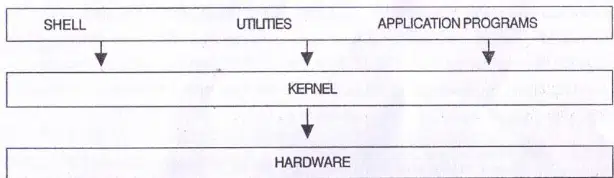
Which of the following best describes the architecture of the Linux operating system?
It consists of a kernel, shell, utilities, and application programs.
It consists only of a kernel and hardware.
It consists of a browser and application programs.
It consists of utilities and hardware only.
What is a major reason for the success of Linux according to the material?
Strict quality control and merging of new code into the kernel
Closed source development model
Limited user access to modifications
No bug reporting system
How does the kernel interact with the hardware in the Linux operating system?
Directly, making programs easy to write and portable across platforms
Indirectly, through the shell only
Only through application programs
It does not interact with hardware
Which of the following shells is commonly used in Linux?
bash
Bourne
Korn
C shell
What is the main difference between Linux and UNIX according to the provided material?
Linux is free of cost, while UNIX involves expensive licensing.
Linux is only used for web servers, while UNIX is used for databases.
Linux does not support multitasking, while UNIX does.
Linux is not compatible with scripting languages, while UNIX is.
Which feature allows several programs to be executed simultaneously by different users in Linux?
Multiprogramming
Time-sharing
Virtual memory
Samba
What is the purpose of time-sharing in the Linux operating system?
To share CPU time among programs for a specific period before replacing them in the queue.
To allow multiple users to access the same file simultaneously.
To enable the use of virtual memory.
To execute only one program at a time.
Which of the following is NOT a scripting language mentioned as free of cost in Linux?
Java
Perl
Python
awk
What is the function of the kernel in Linux multitasking?
Scheduling tasks
Managing user accounts
Providing shell interface
Handling file transfers
How does Linux handle the execution of large applications when physical memory is insufficient?
By using a logical portion of the hard disk as artificial or virtual memory
By terminating the application
By restricting the number of users
By disabling multitasking
What is Samba used for in Linux?
To share files and printers between Linux and Windows systems
To manage virtual memory
To execute multiple programs simultaneously
To provide shell access to users
Which of the following is a variant of Linux?
Red Hat
AT & T
BSD
Sun Solaris
Based on the comparison table, which shell is NOT available in Linux?
Bourne
bash
zsh
ash
Which of the following is a scheduler program in Linux used to run commands, scripts, or programs at scheduled times?
Cron Scheduler
Web Server
Bash Shell
Licensing
Under which license is Linux distributed, allowing users to make copies, distribute, or charge a price for it?
GNU General Public License
Apache License
MIT License
BSD License
What is the primary function of a web server in Linux?
To enable users to access resources published on web pages
To schedule commands and scripts
To provide a programming interface for shell commands
To restrict user access to the operating system
Which shell was developed at AT&T and named after its developer Stephen R. Bourne?
Bourne Shell
Korn Shell
C Shell
Bash Shell
What is the executable file name for the Bourne Shell in UNIX systems?
sh
bash
csh
ksh
Which shell combines features of both the Bourne and C shells and has the executable file name 'ksh'?
Korn Shell
Bash Shell
Restricted Shell
Tsch Shell
What is the main purpose of the restricted shell in Linux?
To provide limited access to the operating system for users
To enhance the Bourne shell with additional features
To emulate the Bourne shell for computers with limited memory
To provide a programming interface similar to the C language
Which shell is the default for most Linux systems and stores all commands used in a session?
Bash Shell
C Shell
A Shell
Korn Shell
Which shell is an enhancement of the C shell and is also known as the TC shell?
Tsch Shell
Bash Shell
Korn Shell
A Shell
Which shell emulates the Bourne shell and is suitable for computers with limited memory?
A Shell
Bash Shell
Korn Shell
Restricted Shell
Who developed the C shell and at which university?
William Joy at University of California at Berkeley
Stephen R. Bourne at AT&T
David Korn at AT&T
Kenneth Almquist at University of Berkeley
Which shell is distributed with all UNIX systems and stored in the /bin directory?
Bourne Shell
Korn Shell
Bash Shell
A Shell
What is the main advantage of using the restricted shell for guest users?
It limits rights and permissions for users
It provides web server access
It enhances the Bourne shell
It schedules commands and scripts
Which shell was developed by Kenneth Almquist and is suitable for computers with limited memory?
A Shell
Bash Shell
Korn Shell
C Shell
Which shell offers the features of Tcsh and Korn shells and provides a large number of utilities and extensive documentation?
Bash shell
Z shell
C shell
Fish shell
What is the executable file name for the Z shell in Linux?
zshell
zsh
zshl
zsh.exe
Which command is used to connect to a Linux server using the telnet program?
connect
ssh
telnet
login
When connecting to a Linux server, what information must you enter at the login prompt?
Only your password
Only your user name
Your user name and password
Your IP address
Where is information about users, such as user names and passwords, stored in Linux?
/home directory
shadow and passwd files in the etc directory
/bin directory
/usr directory
Why does Linux display "Login incorrect" when the login information does not match the shadow and passwd files?
To allow guest access
To ensure only authorized users access the system
To reset the password
To create a new user
At the shell prompt, what does the part before the "$" symbol represent?
The current directory name
The logon name of the user
The password
The IP address
What is the default directory assigned to a user when a new logon account is created in Linux?
/bin
/etc
The home directory
/usr
Why is it important to note that the logon name and password in Linux are case-sensitive?
Because Linux ignores case
Because "tom" is not the same as "Tom"
Because passwords are always lowercase
Because user names must be uppercase
How does Linux verify if the user is authorized during the logon process?
By checking the user name only
By checking the password only
By checking both the user name and password
By checking the IP address
Why are passwords not displayed on the screen while they are entered in Linux?
To make it easier to type
To prevent unauthorized viewing
To save screen space
To allow password recovery
Which shell offers the features of Tcsh and Korn shells and provides extensive documentation in Linux?
Z Shell
Bash Shell
C Shell
Fish Shell
What is the executable file name for the Z shell in Linux?
zsh
zshell
zshl
zsh.exe
Which command is used to connect to a Linux server using the telnet program?
telnet
connect
ssh
login
When connecting to a Linux server, what information must you enter at the login prompt?
Your logon name and password
Your IP address and password
Your shell type and password
Your home directory and password
Where are user names and passwords stored in Linux?
In the shadow and passwd files in the /etc directory
In the home directory
In the /bin directory
In the /usr directory
Why does Linux display an error message "Login incorrect"?
If the login information does not match the shadow and passwd files
If the user enters the wrong shell
If the user enters the wrong home directory
If the user enters the wrong IP address
What does the shell prompt display when a valid user name is entered in Linux?
[user_name@localhost current_directory_name]$
[user_name@server home_directory]$
[user_name@linux shell_type]$
[user_name@root password]$
What is the default directory for a user when they log on to Linux?
Home directory
Root directory
Bin directory
Etc directory
Why is it important to note that logon names and passwords in Linux are case-sensitive?
Because "tom" is not the same as "Tom"
Because passwords are always in uppercase
Because usernames must be in lowercase
Because Linux ignores case sensitivity
How does Linux verify if a user is authorized during the logon process?
By checking both the user name and password
By checking only the user name
By checking only the password
By checking the IP address

What does the shell prompt look like after a user named "tom" logs in to a Linux server?
[tom@localhost tom]$
[tom@server home]$
[tom@linux shell]$
[tom@root password]$
What is the purpose of the telnet program in the context of Linux operating systems?
To connect to a computer running the Linux operating system remotely
To install Linux on a computer
To update the Linux kernel
To create user accounts in Linux
Which files are checked by Linux to verify the user name and password during login?
shadow and passwd
home and root
bin and usr
etc and var
What additional measure does Linux provide to ensure security during the logon process?
Specifying a password associated with the logon name
Using only the logon name
Using only the password
Allowing anonymous login
Which command is used to obtain information about the various options of the passwd command in Linux?
man passwd
info passwd
help passwd
options passwd
What is the purpose of the exit or logout command in Linux?
To start a new session
To end the current Linux session
To change the user password
To install new software
Which shell is NOT mentioned as a commonly available shell in Linux?
Bash shell
Fish shell
Bourne shell
Korn shell
What does the su command allow a user to do in Linux?
Switch to another user account
End the current session
List all files in a directory
Install new applications
Why is it important to end your Linux session after use?
To keep the files secure
To update the system
To install new software
To increase system speed
Which of the following is an example of a multiuser operating system?
MS-DOS
Linux
Windows 95
Mac OS Classic
What is the function of the telnet command in Linux?
To connect to a computer running Linux from another computer
To change the password of the user
To end the current session
To install new applications
Which user has permissions to control, modify, and configure resources on the Linux system?
Guest user
Root user
Normal user
Admin user
Linux architecture consists of which main components?
Kernel, shell, utilities, and application programs
Hardware, software, and firmware
Processor, memory, and storage
User interface, database, and network
Which feature is NOT listed as part of Linux architecture?
Multiprogramming
Virtual memory
Web server
Voice recognition

