
NEW
Font size
 Worksheets
Performance Outcome 2: Introduction and Attachment Theories
Total questions: 70
Worksheet time: 35mins
Which plan best meets every child’s attachment needs and EYFS requirements?
Use only senior leaders for attachment support
Let families choose any staff at drop-off daily
Allocate one consistent key person to each child
Assign a rotating staff group to all children weekly
A toddler is upset during transitions at a new setting. Based on attachment theory and the key person approach, which action best helps reduce stress and build security?
Increase group activities during arrival
Change key persons often
Give regular contact with the child’s key person
Have longer separations from caregivers
Which scenario best shows a long-term effect of disrupted early attachment, according to Bowlby’s theory?
Improved self-regulation by middle childhood
Greater risk of behavioural and emotional difficulties
Stable peer relationships across adolescence
Enhanced vocabulary in late childhood
At what age should consistent caregiver bonds be introduced to support children's attachment and development?
Rotate primary caregivers monthly from birth
Focus solely on peer interactions before age two
Delay assigning key persons until school age
Introduce consistent caregiver bonds around 7–9 months
Which evidence-based method best distinguishes secure from insecure attachment patterns?
Count toys used during play
Observe proximity seeking and caregiver response
Test gross motor skills each session
Measure height and weight regularly
Which strategy best supports self-regulation through a key person relationship?
Avoid adult support during distress to build independence
Use unpredictable transitions and novel routines
Model calm co-regulation during emotional episodes
Increase punitive consequences for tantrums
Which plan best supports relationships and development during frequent staff and child transitions?
Move children quickly between rooms each week
Change caregivers suddenly
Hide transitions from children
Tell children about changes early and transition gradually
Which behaviour best describes a securely attached preschooler starting a new activity with a trusted adult nearby?
Displays aggressive outbursts toward peers
Shows extreme clinginess without recovery
Avoids all exploration and hides repeatedly
Explores confidently and seeks brief reassurance
Which behaviour shows Olivia has a secure attachment with the childminder?
Continuing play after separation, seeking comfort
Ignoring the childminder and hiding alone
Crying when left then refusing to play
Immediately clinging to any nearby adult
Which action by Olivia shows she has a secure attachment with her father?
Smiling at his return and staying engaged
Avoiding eye contact and staying silent
Running away toward peers
Becoming withdrawn and refusing to play
Which plan best uses evidence from Olivia's settling-in behaviours to decide if she is ready for the childminder?
Delay start because she looked at the door once
Start immediately without any further checks
Switch childminders to remove all anxiety
Begin with short sessions and monitor comfort seeking
Which signs show secure attachment in toddlers during short separations?
Indifference to caregivers, no preference
Brief protest, quick recovery with trusted adult
Prolonged distress, refusal to be soothed
Consistent aggression toward familiar adults
Which response shows secure base use typical of secure attachment when a child bumps Olivia?
Hiding under a table for the whole session
Seeking a cuddle, then resuming exploration
Leaving the room to avoid all children
Pushing the child and refusing guidance
Which approach best reduces distress and supports autonomy during transitions?
Ignore feelings and rush into activities
Predict no anxiety and avoid planning
Offer comfort, then invite a simple play choice
Keep the child in one room all day
The room will be crowded at lunch. What is a good way to help with anxiety?
Move lunch earlier without telling anyone
Warn the child, prepare a quiet corner
Let anxiety build to teach resilience
Do nothing and observe later
Which response supports a child who refuses to leave an activity room?
Force movement without explanation
Recognise reluctance and reassure
Ignore and walk away
Threaten punishment
Which option best shows evidence-based support for a distressed child new to a setting?
Talk calmly, distract, reassure with parent info
Speak loudly, demand eye contact, remove toys
No comfort, more demands, longer session
Only use stickers for compliance
Why are secure attachments important in early childhood?
They ensure children never feel anxiety
They replace the need for friends
They give emotional security for exploration
They prevent all future behavior problems
A four-year-old keeps shouting during library time. Which response best helps the child learn self-control and keeps the library calm?
Sing a loud song to release energy
Ignore and let the shouting continue
Explain the quiet rule and show how to whisper
Send the child home for quiet
A toddler grabs toys and cries when asked to wait. Which approach best helps build self-control?
Set boundaries and help with waiting
Give the toy every time
Allow grabbing as self-expression
Punish by taking away all toys
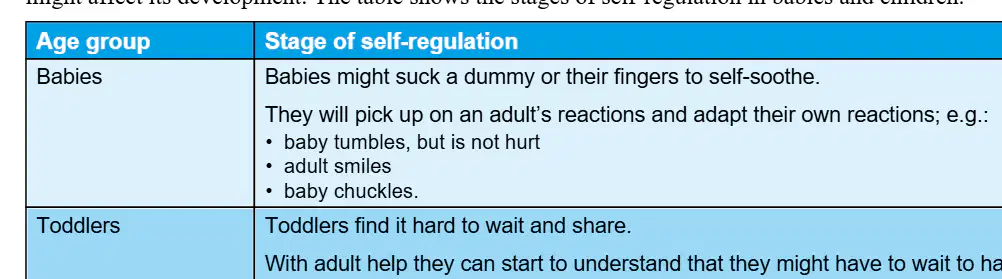
Match each age group to its self-regulation stage.
School-aged: manage wants and needs
Pre-school: recognise context rules
Babies: adapt reactions to adult cues
Toddlers: hard to wait and share
A child gets upset during a puzzle and knocks pieces off the table. What should an adult do first to manage this behaviour?
Check for reasons like tiredness
Ignore the frustration
Threaten a consequence
Remove all puzzles
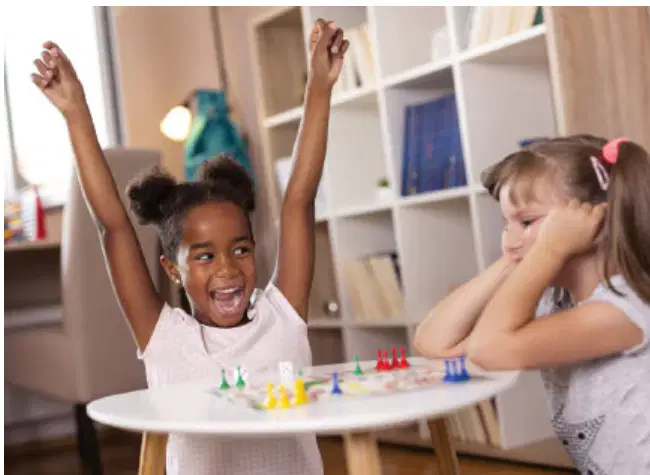
Why might two children the same age react differently to losing a game?
Identical brain maturity in all children
Prior experiences with stress and soothing
Equal parenting styles across families
Uniform communication skills by age
At a busy birthday event, some children get over-stimulated. Which strategy helps them self-regulate?
Ignore signs of tiredness and hunger
Add more noisy games
Keep activities going without breaks
Schedule quiet moments and breaks
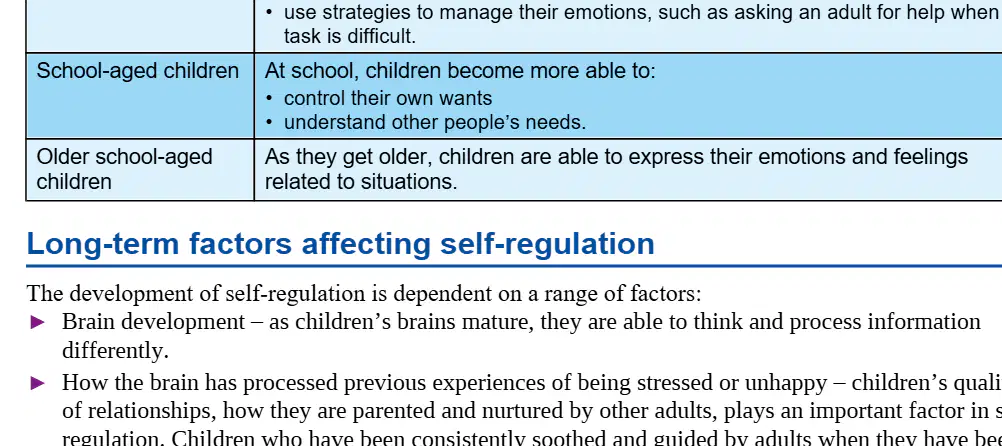
Which example shows school-aged children’s self-regulation?
Relying on adults for every decision
Crying uncontrollably when tired
Using strategies to manage emotions
Immediate impulse to grab a toy
Which adult response best reduces attention-seeking and encourages positive engagement?
Offer sugary snacks as a reward
Give intense attention to the behaviour
Scold loudly to stop immediately
Ignore the behaviour and invite a task
A child’s self-regulation changes from day to day. Which short-term factor is most likely the cause?
Language delay always resolves daily
Over-stimulation from busy activities
Long-term parenting style shifting
Brain maturity changing overnight

Which practice best helps young children feel less anxious and more self-regulated?
Random rewards for calm behaviour
No routines to promote independence
Clear, predictable daily routines
Flexible routines changing hourly
A child with language delay struggles to self-regulate. Which support helps with self-regulation?
Use only nonverbal cues
Do not talk about feelings
Coach emotion language and self-talk
Expect self-regulation to develop alone
Which outcome is most linked to stronger self-regulation in early education?
Lower confidence with setbacks
More distractions
Better concentration and perseverance
Less ability to follow instructions
Which change in the nursery environment can help reduce aggressive outbursts in a child with self‑regulation difficulties?
Use bright displays and loud music
Offer calm spaces with fewer distractions
Change staff often for novelty
Have more group competitions
Kyle, age three, has started hitting peers after his parents separated and his key person went on holiday. Which explanation best connects these changes?
Language mastery eliminating frustration
Peer modelling encouraging prosocial choices
Improved independence reducing peer empathy
Stress from changes disrupting emotional regulation
A child laughs at serious times and misreads peers’ faces. What is the most likely difficulty?
Advanced vocabulary but low curiosity
Delayed understanding of facial expressions
Excess energy from high fitness levels
Overexposure to screen‑based stories
Which plan best helps a child who feels unheard and frustrated because of weak communication skills?
Give more worksheets
Add more rules and punishments
Use emotion words and ask for stories
Limit peer interactions
Parents say their toddler talks less when tired or sick. Which biological reason explains this?
High sociability in temperament
Temporary hearing loss from blocked ears
Overstimulation by quiet rooms
Attachment being too strong
Two infants start using words at different speeds. One is happier and gets more positive feedback. Which best explains how temperament affects language?
Temperament has no effect on language
Sociable babies avoid adult attention
Happy babies gain more responsive interactions
Happy babies receive fewer opportunities
A child with visual impairment has slow language growth. What is the main effect on communication?
Reduced access to cues for interaction
More energy leads to more talking
Better memory fully compensates
No impact because hearing replaces vision
Which parental practice best helps early language learning?
Strict silence
Only TV exposure
Occasional conversations
Frequent talk and play
Which resource best helps toddlers talk more?
Timed drills
Headphones for listening alone
Interactive toys and activities
No toys or decorations
Which feature is essential for a language-rich corner for toddlers?
One poster with complex grammar
Only silent reading without talk
Crowded layout with constant noise
Adults who listen and allow response
Early speech development mainly focuses on which ability?
Translating between two languages
Producing sounds before words
Reading picture books independently
Mastering grammar and syntax
A bilingual toddler links each language to a different caregiver. What is the most likely short-term effect?
Permanent delay in both languages
Loss of attachment to both caregivers
Normal learning without delay for most
Confusion prevents any progress
Which scenario shows poor communication affecting peer relationships?
Feeling heard and making friends
Misunderstanding cues and feeling isolated
Knowing what to expect and asking for help
Clearly expressing needs and working together
A practitioner wants to help children express emotions to self-regulate. Which adult action supports this?
Ignore emotion words
Share stories about feelings
Reward silence during conflicts
Use extra physical activity instead of talking
A five-year-old says, “I’m good at reading but my friend can read any book.” What developmental shift does this show?
Dependence on adult approval
Fixed intelligence beliefs
Awareness of peer comparisons
Concrete self-descriptions only
A caregiver always smiles and greets children warmly. What is the most likely outcome?
Children ignore adults
Children feel liked
Children obey rules out of fear
Children feel anxious
Amel likes wheeled toys and dislikes when a girl refuses to go shopping. Which home pattern best explains his views using social learning?
Father’s ideas lead when parents are together
Sibling enforces role-play routines
Grandparents choose toys during visits
Mother drives and sets shopping plans
Which scenario shows children making conclusions by comparing themselves to others?
A child hears praise for laying the table
A child often comes bottom in spelling tests
An adult smiles during greetings
A toddler prefers stereotyped toys
At 5–6 years, children understand gender stability. Which option shows correct reasoning?
Toy preference defines someone’s gender
Haircut can change gender identity
Gender remains the same despite hairstyle
Clothes determine whether someone is a boy
Which classroom practice best raises students' self-concept?
Fast-paced lessons without help
Ignoring mistakes
Encouraging students in reading and writing
Ranking test scores publicly
Which adult comment most helps a child feel capable by reasoning about expectations?
“Sofia can lay the table well.”
“You’re bad at sport.” repeated
No comment during tasks
“You are so kind.” said once
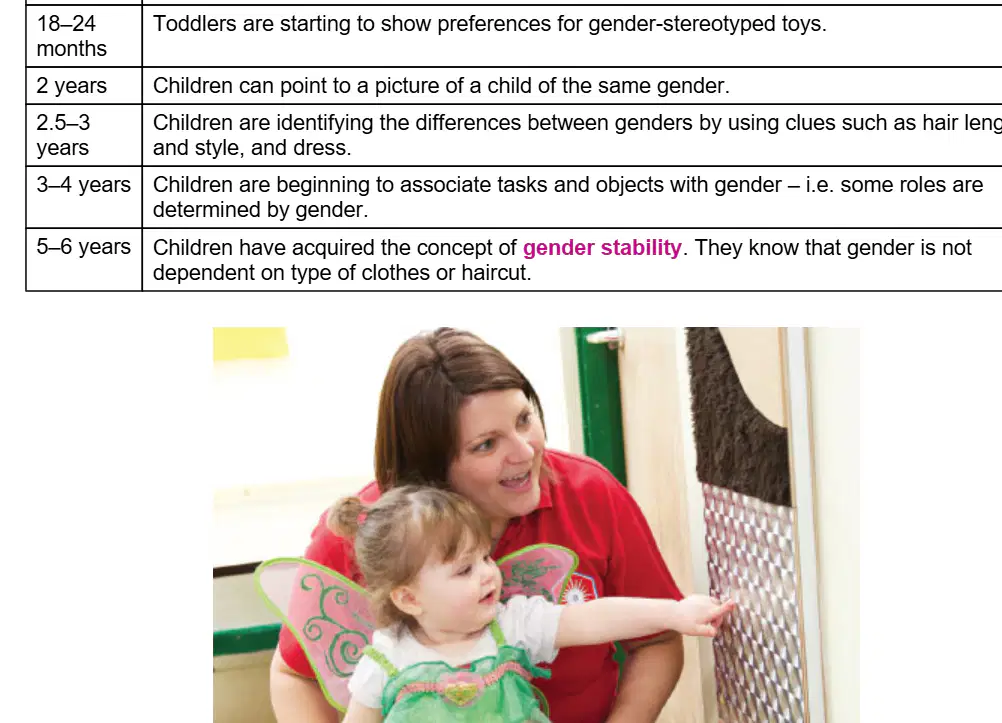
Which timeline matches age with early gender development milestones?
2.5–3 years: associate tasks with gender
18–24 months: point to same-gender child
2 years: prefer gender-stereotyped toys
3–4 years: use dress and hair length cues
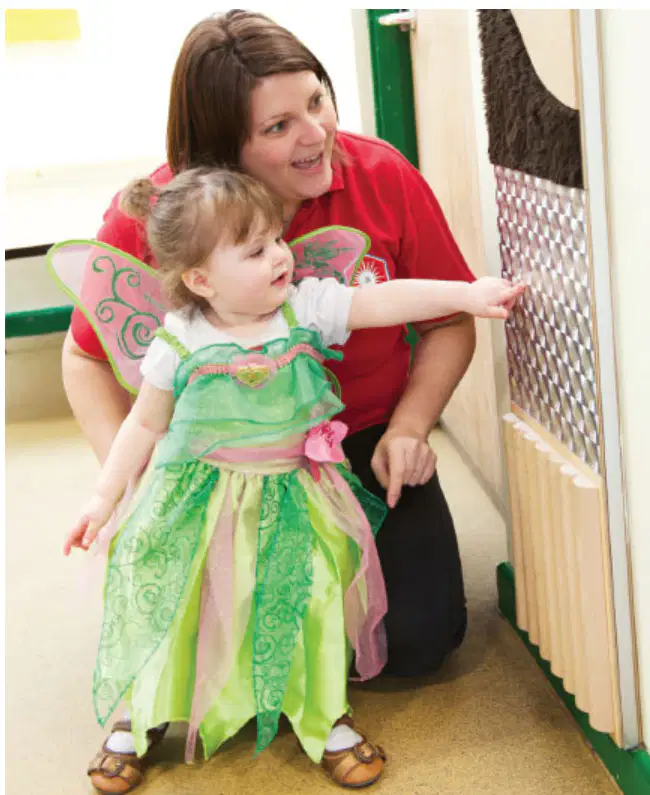
How can clothing choices affect how young children see themselves? Use the image of a child in costume to help explain.
Hair length alone determines gender
Only adult speech changes perceptions
Clothing never affects self-concept
Costumes provide role cues that shape identity
Which long-term effect of childhood abuse on self-concept is most supported by evidence?
Better relationship skills
No effect after early childhood
Lower self-esteem and depression
Greater resilience and confidence
A 12-year-old compares herself to influencers and feels she must be glamorous to be accepted. Which outcome best shows how media can affect self-concept in teens?
Higher self-esteem from diverse role models online
More realistic self-expectations and resilience
Lower self-concept when ideals seem unreachable
Stable self-concept not changed by social comparison
If a family celebrates boys’ achievements more than girls’, how might a girl’s self-concept change over time?
Improves because comparison motivates effort
Declines as she feels less valued and capable
Neutral because culture rarely affects children
Consistently positive due to equal opportunities
A counselor plans an intervention for students from low-income families. Which approach best supports self-concept and addresses socio-economic pressures?
Ban social media to stop comparisons
Offer inclusive activities that reduce status gaps
Encourage competition to highlight top performers
Give luxury rewards to mimic wealthier peers
Which statement best describes self-efficacy in child development?
Belief in one’s ability to learn and act competently
Preference for adult-led activities
Belief that outcomes depend only on luck
Awareness of social class differences
How can a caregiver help a toddler build self-efficacy through choice?
Choose toys for the child
Let the child pick items during play
Limit choices to reduce stress
Make the child eat all food offered
Which strategy best builds self-efficacy for older children in a youth program?
Offer age-appropriate choices
Set rigid goals without feedback
Avoid challenging tasks
Compare children to peers
How can a practitioner best support a child’s self-efficacy during free play with a mechanical toy over a week?
Explain each step daily and fix errors quickly
Give hands-on help for quick success
Observe and offer brief tips when needed
Ask the child to report progress every five minutes
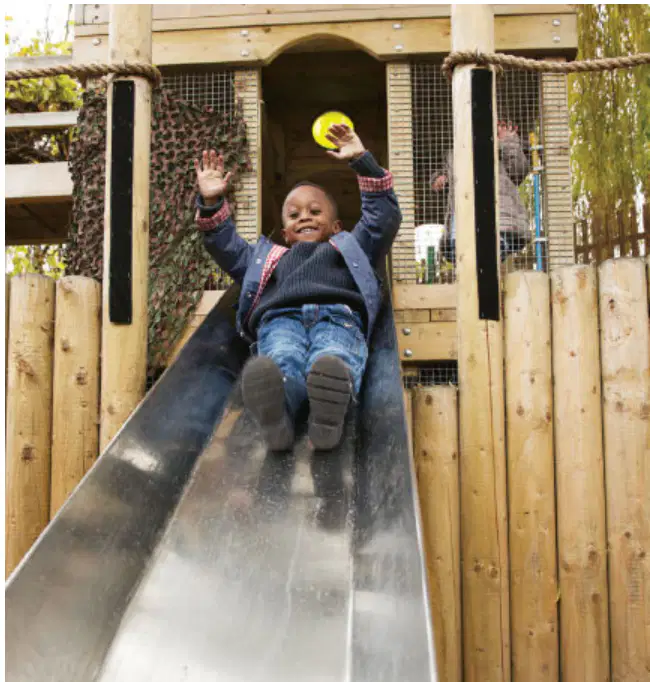
When a child hesitates but keeps trying on a slide, which adult response best encourages perseverance and independence?
Ask questions during the attempt
Suggest an easier activity
Praise effort and remind the child that practice helps
Show and guide each step
Which goal sequence for dressing skills is most realistic and attainable?
Master coat zipping by tomorrow without prompts
Practice holding zip ends, then start the zip together
Allow attempts only after full mastery has been shown
Skip zips and focus only on buttons for quick wins
What is the best way for adults to support children's independence while they focus on a task?
Avoid interrupting; respond after the child finishes
Ask frequent questions to show attention
Correct mistakes immediately
Give detailed instructions during the task
A child is frustrated while building with blocks. Which tip helps them keep trying and stay in control?
Build the structure for the child
Suggest a break and stop for today
Offer a hint like sort by size before stacking
Switch to a different, easier activity
An adult sees a task is too hard for a child. Which strategy helps the child learn to do it alone?
Remove the task
Break the task into parts and teach each
Show all steps and repeat once
Wait until the child does it alone
Which choice best explains how Ava’s mother helped her learn to zip her coat?
She gave space, offered small help, praised effort
She replaced the coat with Velcro
She rushed Ava to finish quickly
She required silence and no help
An aunt suggests giving Ava a Velcro coat to make zipping easier. Which choice best shows perseverance and setting achievable goals?
Decline Velcro; give minimal help and let Ava practice
Switch to buttons to avoid the challenge
Reject all help and let Ava fail repeatedly
Accept Velcro for immediate success
Which feedback statement best focuses on effort and progress instead of results?
You did it perfectly with my help
You finished first, so you’re the best
You won the game, that’s all that matters
You kept trying and improved each attempt
Which pair of adult behaviours best models positive behaviour that supports children's self-efficacy?
Speaking for children and avoiding challenging tasks
Correcting errors sternly and finishing tasks for them
Comparing children publicly and rewarding speed
Solving problems calmly and praising persistence

