
 Worksheets
Unit 2 Lab: Medical Terminology
Total questions: 50
Worksheet time: 25mins
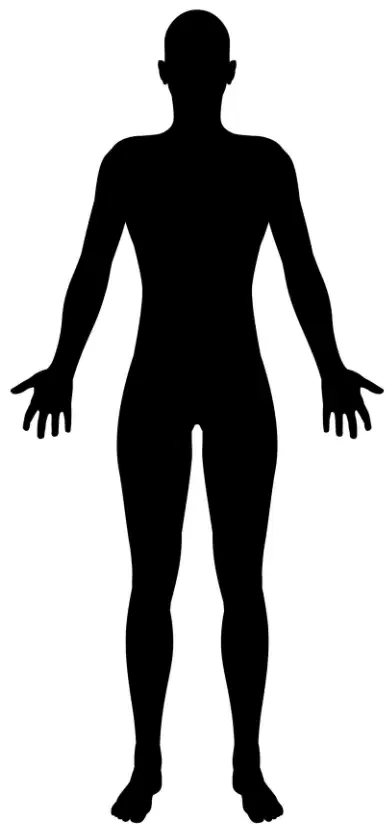
In the anatomical position, how is the person positioned?
Standing upright, facing forward, with palms facing forward
Sitting, looking downward, with palms facing backward
Standing upright, facing sideways, with arms raised
Lying down, facing upward, with palms facing up
What is the primary purpose of the anatomical position in human anatomy?
It is the standard reference used to communicate planes, directions, positions, and locations on the body
It is used only to position patients for surgery
It is a relaxed posture for comfort during examinations
It describes emotional states during clinical interviews
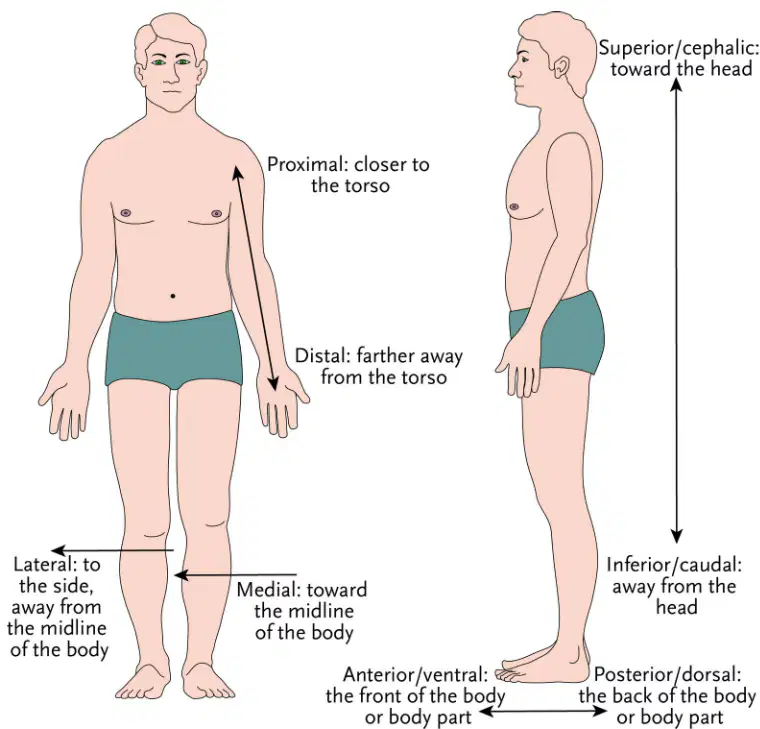
Which directional term refers to being closer to the torso, as shown in the figure?
Proximal
Distal
Lateral
Posterior/dorsal
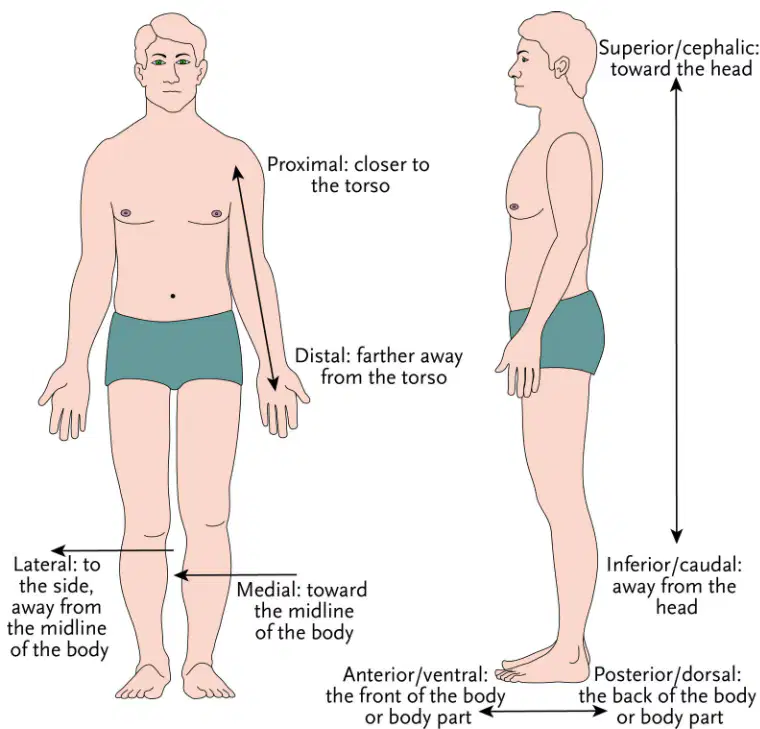
Which directional term refers to being farther away from the torso, as shown in the figure?
Distal
Proximal
Medial
Anterior/ventral
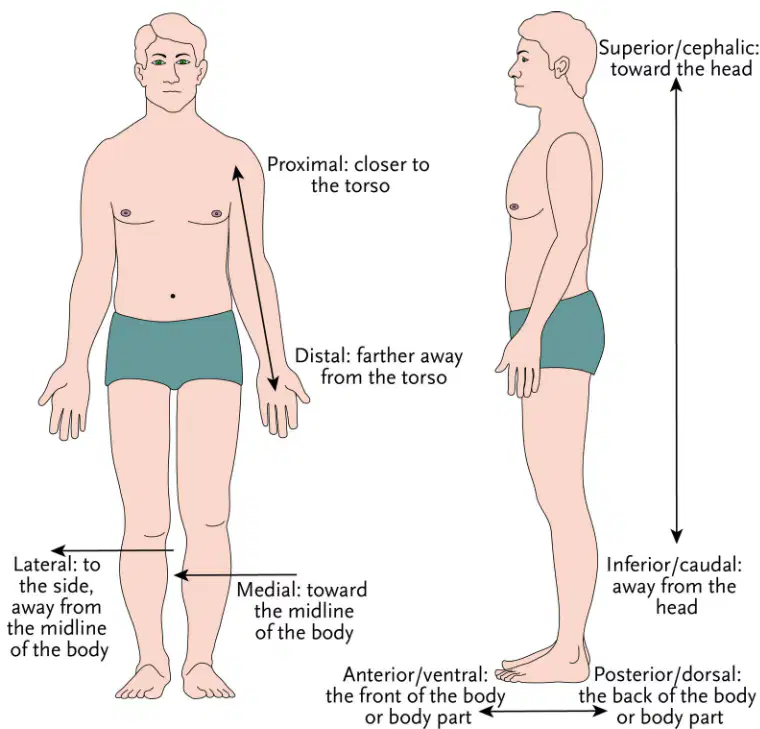
Which directional term means to the side, away from the midline of the body?
Lateral
Medial
Inferior/caudal
Superior/cephalic
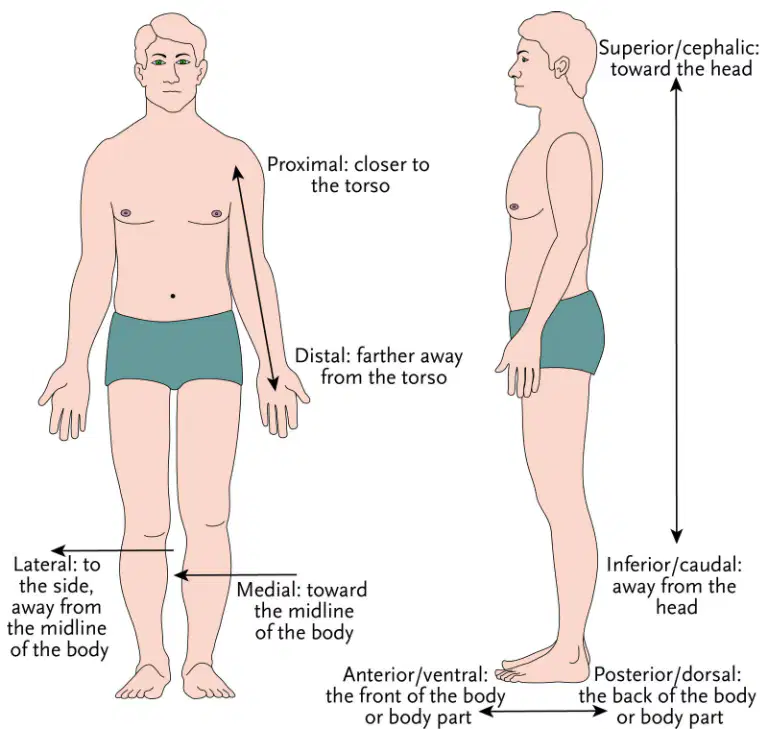
Which directional term means toward the midline of the body?
Medial
Lateral
Posterior/dorsal
Anterior/ventral
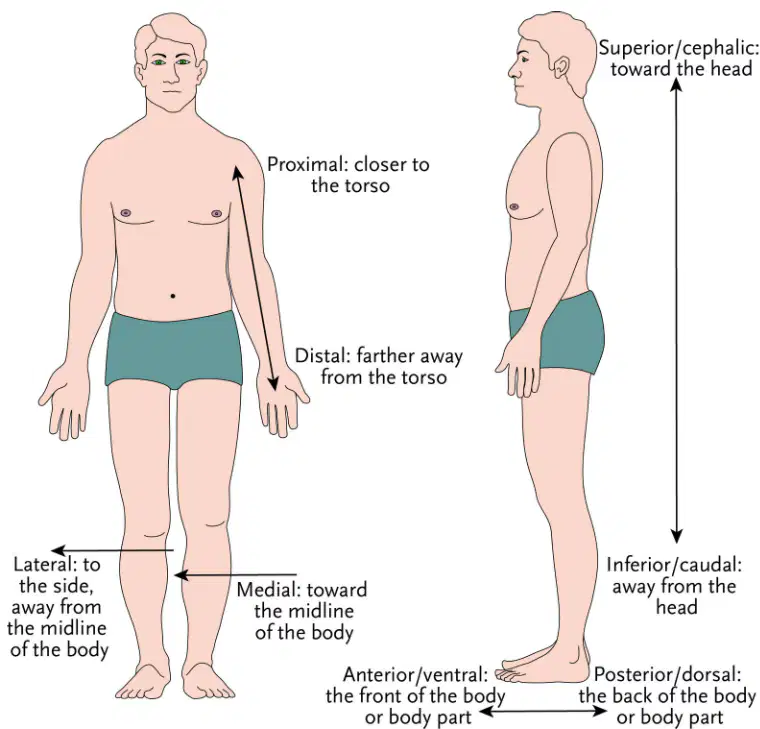
Which directional term refers to the front of the body or body part?
Anterior/ventral
Posterior/dorsal
Superior/cephalic
Inferior/caudal
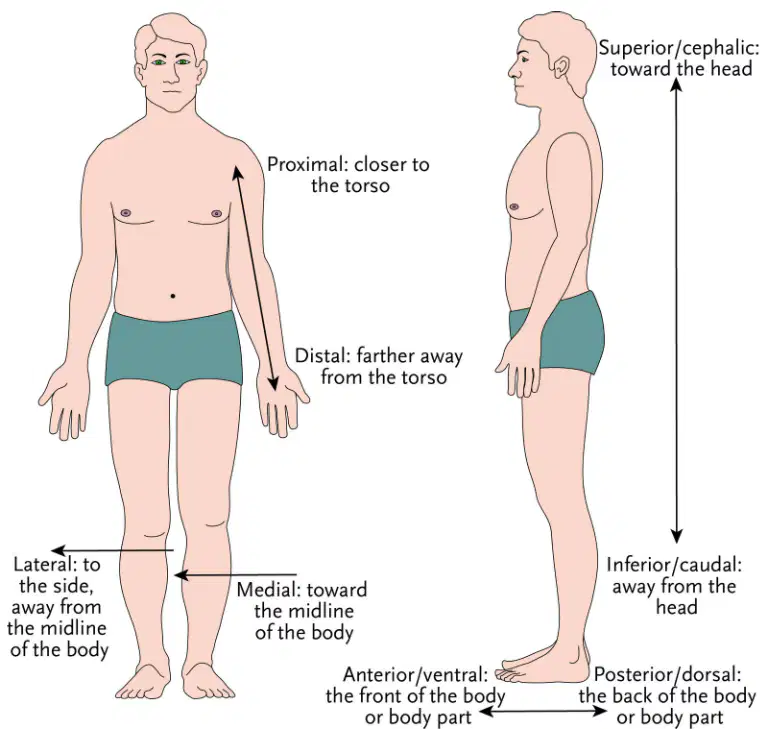
Which directional term refers to the back of the body or body part?
Posterior/dorsal
Anterior/ventral
Medial
Lateral
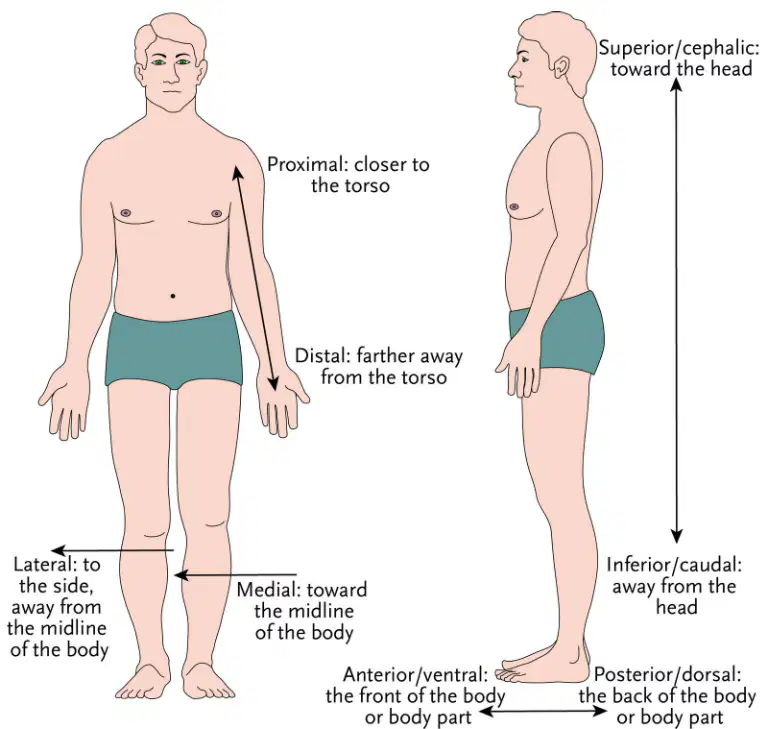
Which directional term means toward the head?
Superior/cephalic
Inferior/caudal
Proximal
Distal
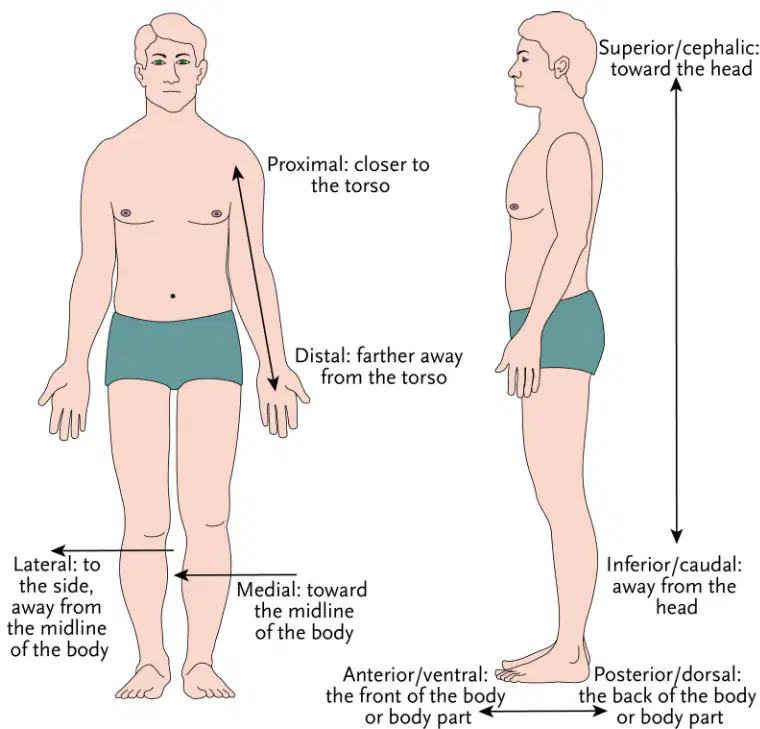
Which directional term means away from the head?
Inferior/caudal
Superior/cephalic
Anterior/ventral
Posterior/dorsal
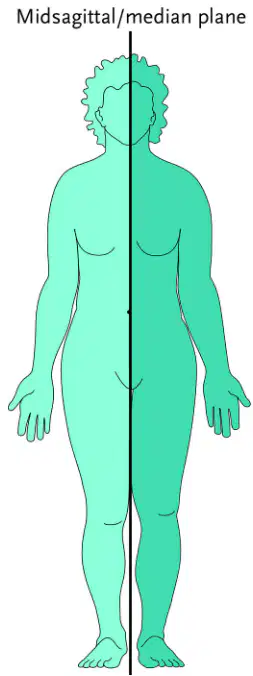
Which body plane divides the body into equal left and right halves?
Midsagittal/median plane
Coronal/frontal plane
Transverse/axial plane
Oblique plane
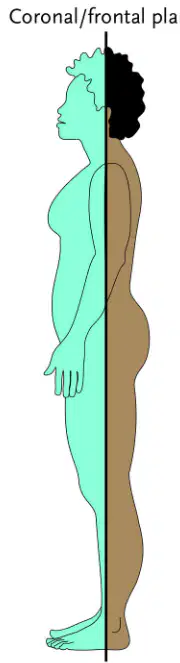
Which body plane divides the body into anterior and posterior sections (front and back)?
Coronal/frontal plane
Transverse/axial plane
Midsagittal/median plane
Sagittal plane
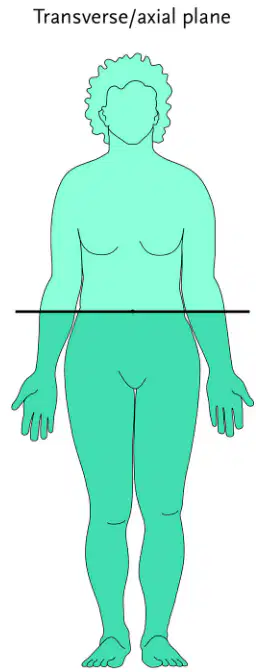
Which body plane divides the body into superior and inferior sections (upper and lower)?
Transverse/axial plane
Midsagittal/median plane
Coronal/frontal plane
Parasagittal plane
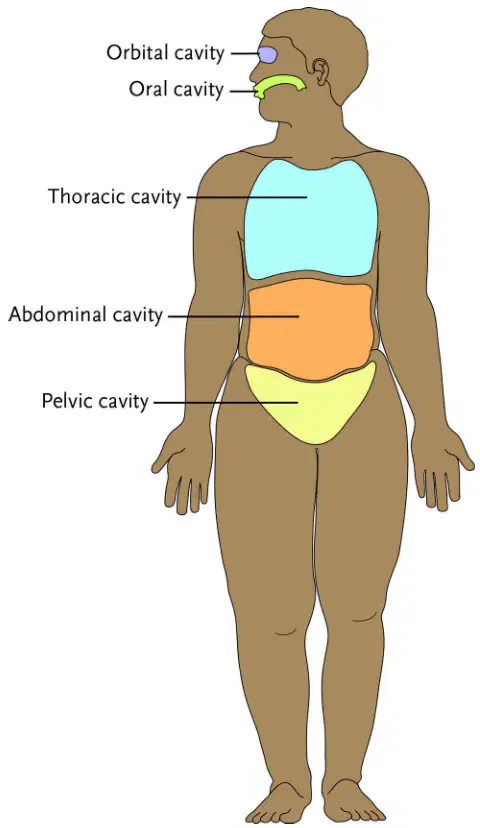
Which organ or body part is located in the orbital cavity?
Eye
Tongue
Lung
Stomach
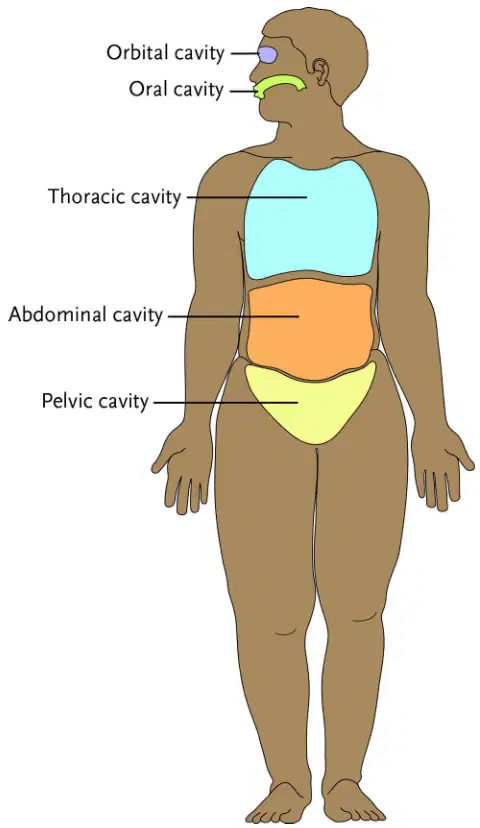
Which organ or body part is located in the oral cavity?
Tongue
Eye
Heart
Kidney
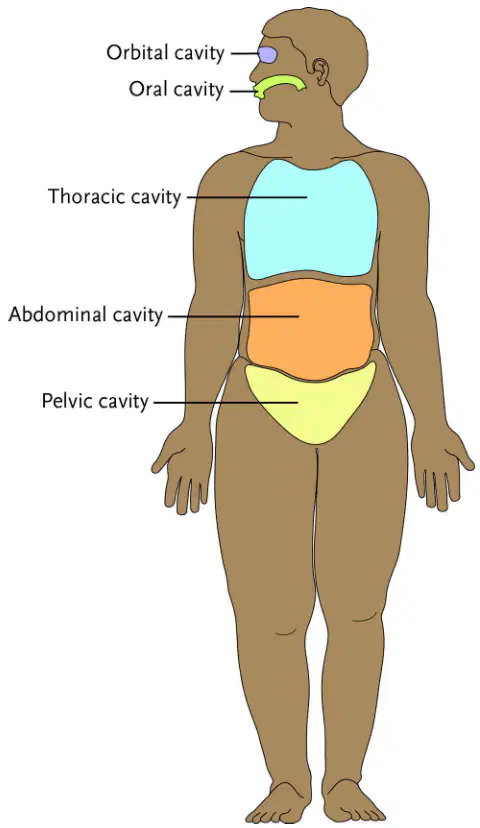
Which organ is located in the thoracic cavity?
Lung
Stomach
Urinary bladder
Liver
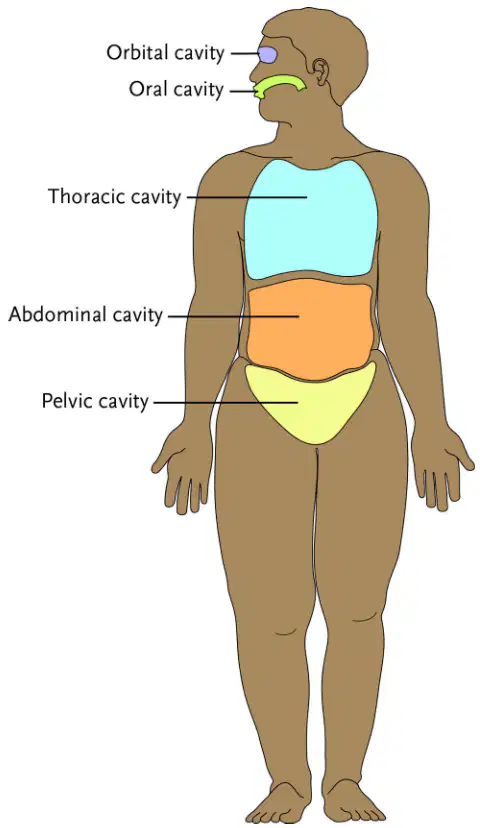
Which organ is located in the abdominal cavity?
Stomach
Heart
Brain
Spinal cord
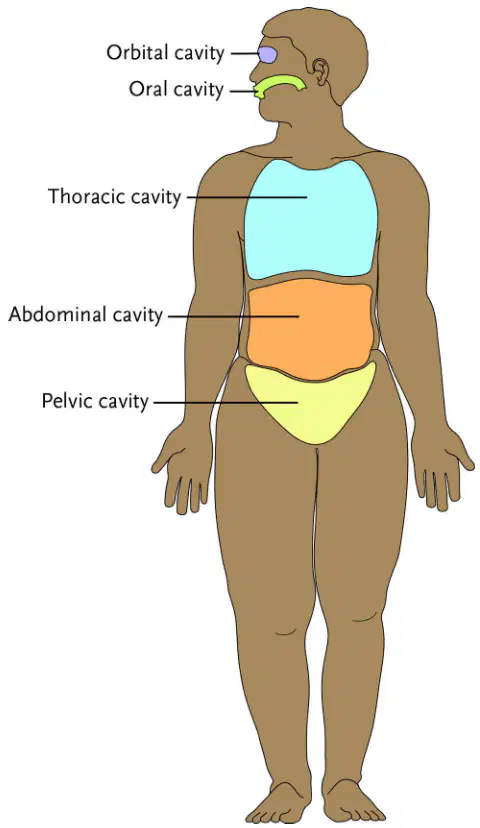
Which organ is located in the pelvic cavity?
Urinary bladder
Lung
Stomach
Brain
Which organ is housed in the cranial cavity?
Brain
Heart
Liver
Kidneys
Which structure is housed in the spinal cavity?
Spinal cord
Trachea
Small intestine
Pancreas
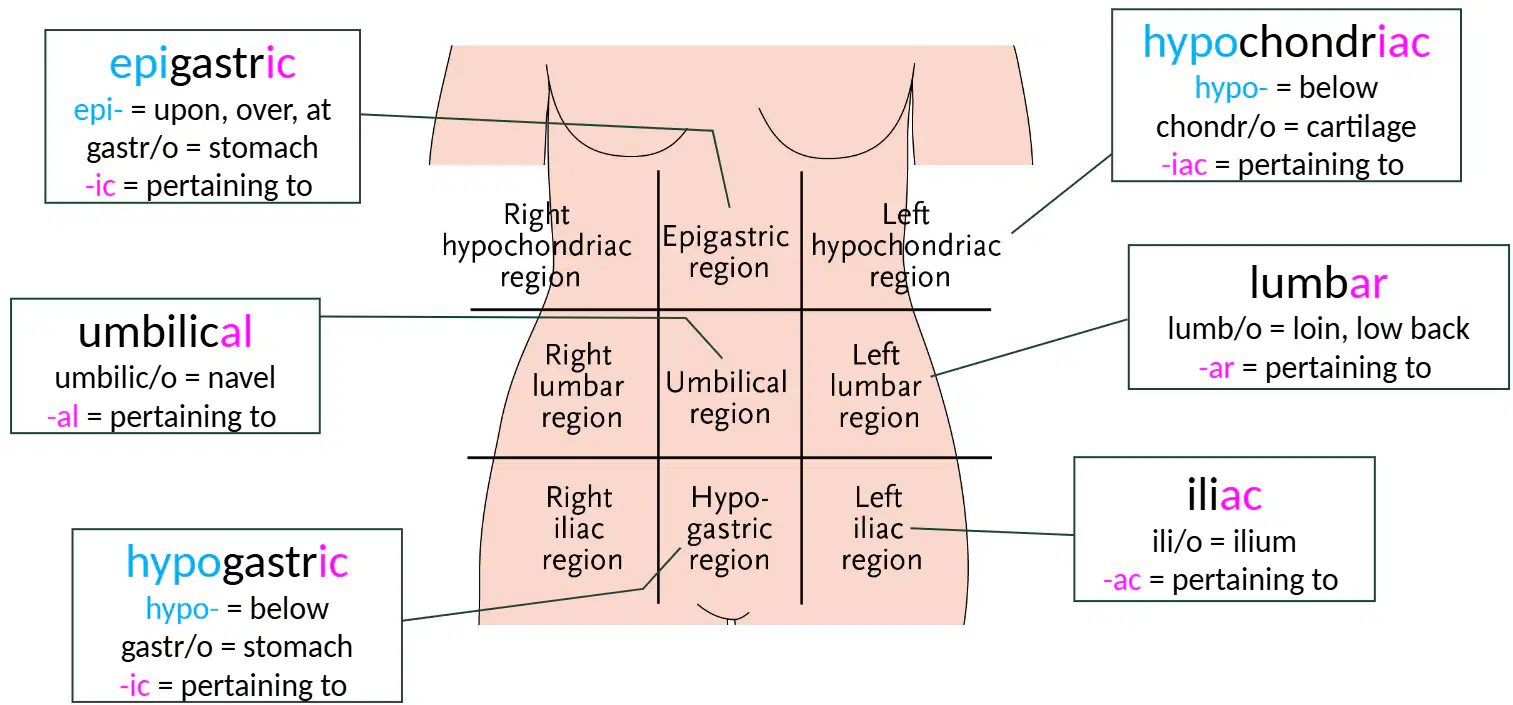
Using the nine abdominal regions diagram of the torso, identify the region centered around the navel.
Umbilical region
Epigastric region
Hypogastric region
Left iliac region
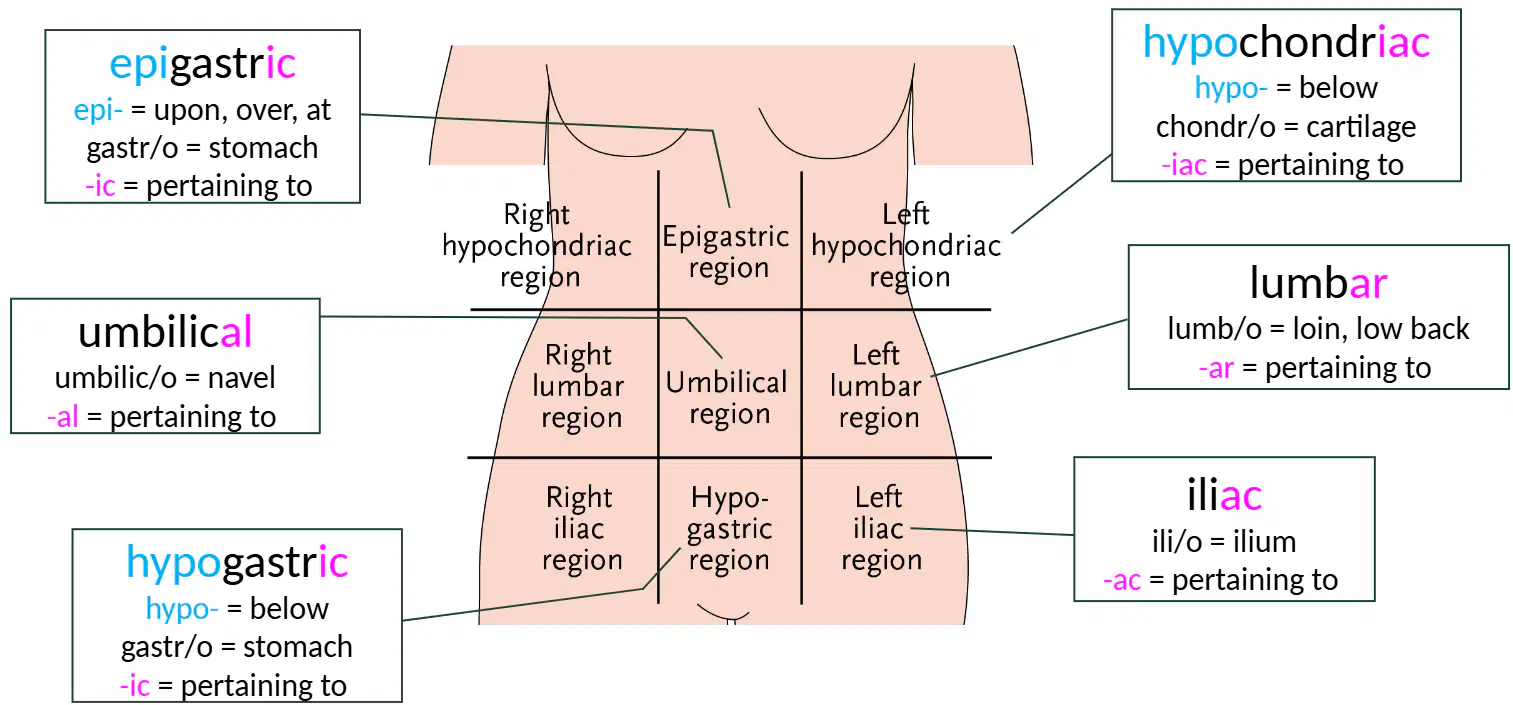
Using the nine abdominal regions diagram of the torso, which region is located above the stomach?
Epigastric region
Hypogastric region
Right lumbar region
Left iliac region

Using the nine abdominal regions diagram of the torso, which region is located below the stomach?
Hypogastric region
Epigastric region
Left hypochondriac region
Umbilical region
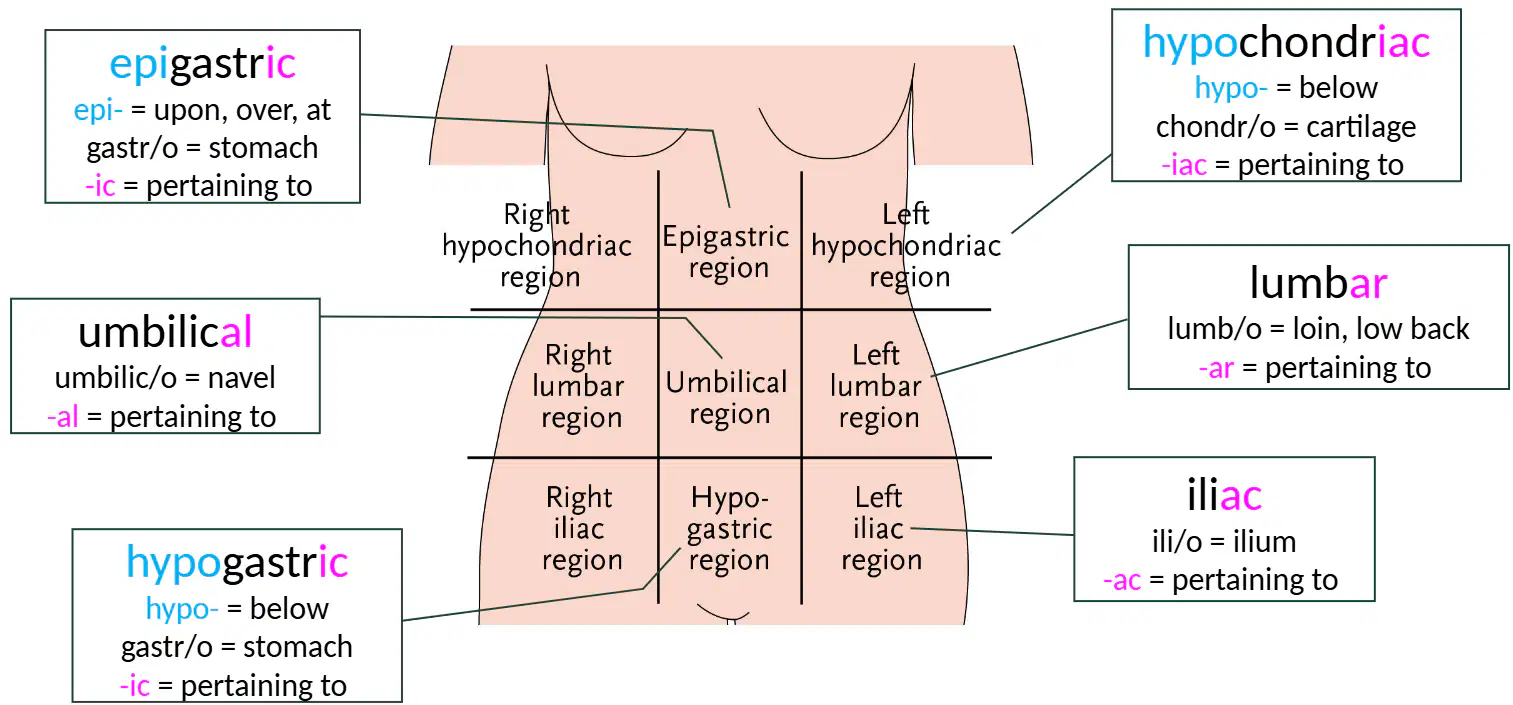
Using the nine abdominal regions diagram of the torso, which regions lie lateral to the umbilical region? Select all that apply.
Right lumbar region
Left lumbar region
Right hypochondriac region
Left iliac region
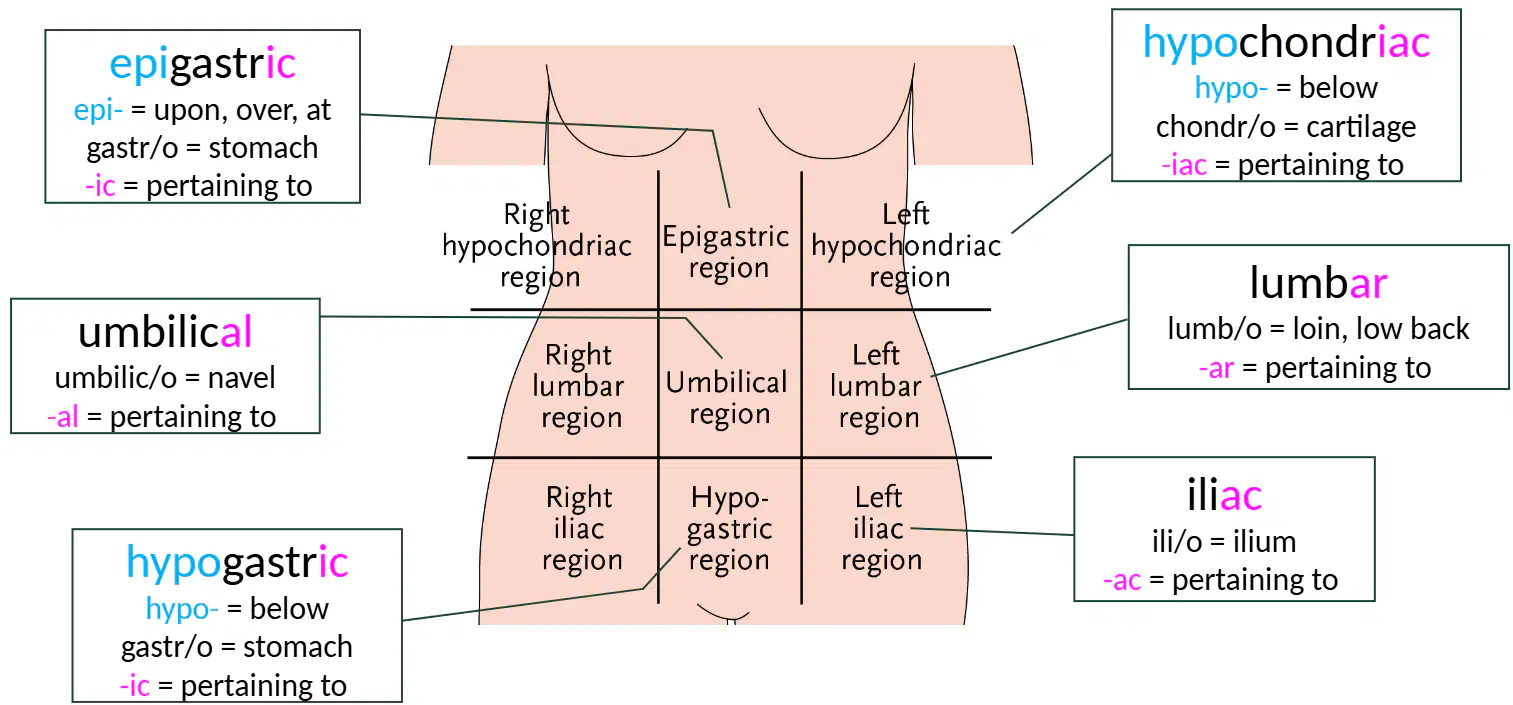
Using the nine abdominal regions diagram of the torso, which regions occupy the upper right and upper left corners? Select all that apply.
Right hypochondriac region
Left hypochondriac region
Right iliac region
Left lumbar region
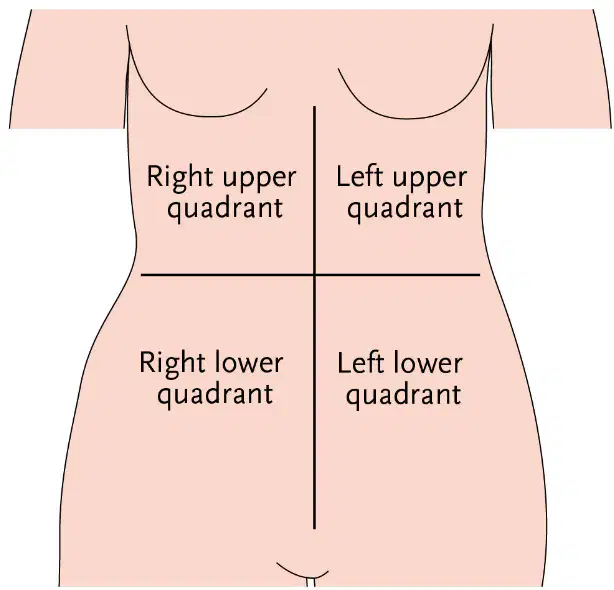
Refer to the quadrant diagram of the abdomen. Which organ is predominantly located in the right upper quadrant?
Right lobe of the liver
Spleen
Appendix
Sigmoid colon
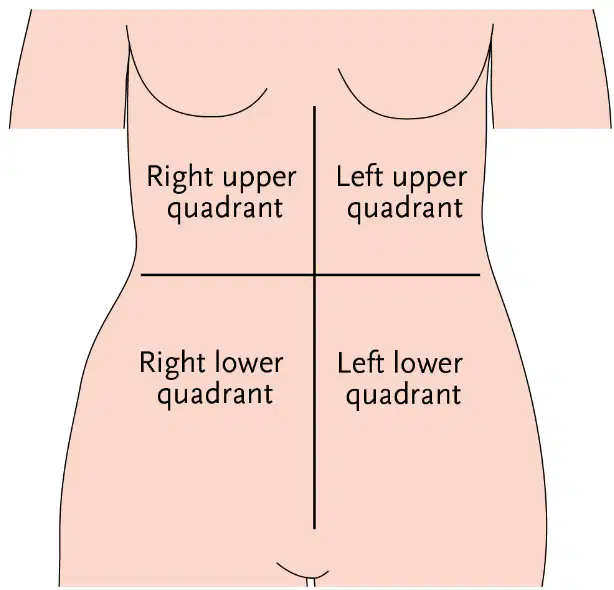
Refer to the quadrant diagram of the abdomen. Which organ is predominantly located in the left upper quadrant?
Spleen
Appendix
Cecum
Gallbladder
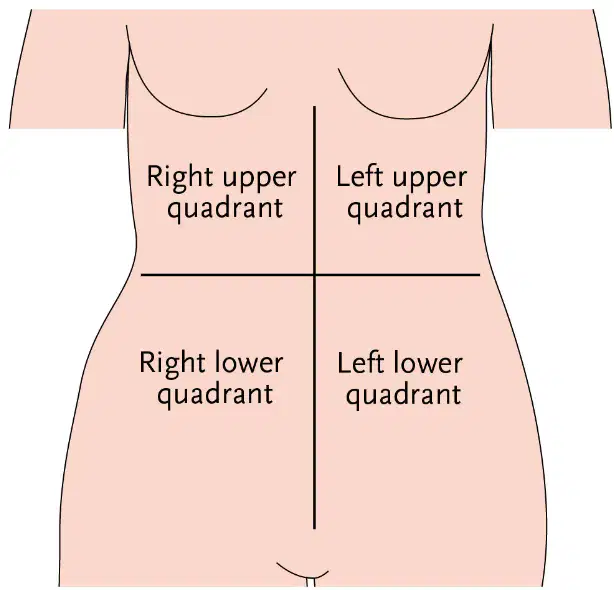
Refer to the quadrant diagram of the abdomen. Which organ is classically associated with the right lower quadrant?
Appendix
Spleen
Stomach body
Left kidney
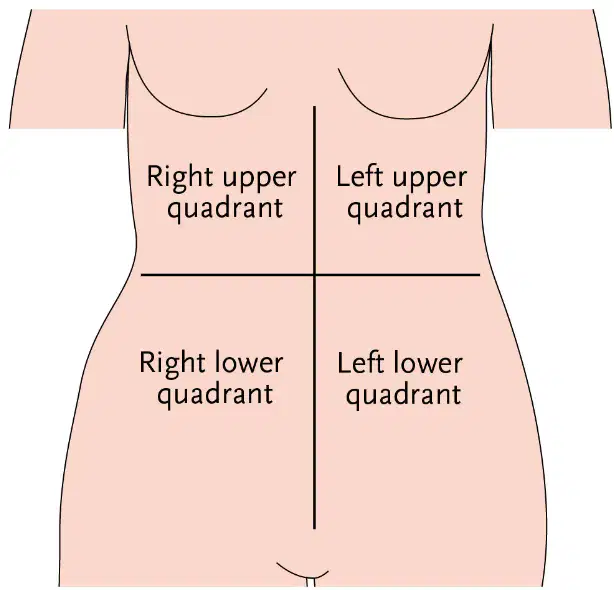
Refer to the quadrant diagram of the abdomen. Which structure is typically found in the left lower quadrant?
Sigmoid colon
Gallbladder
Head of pancreas
Appendix
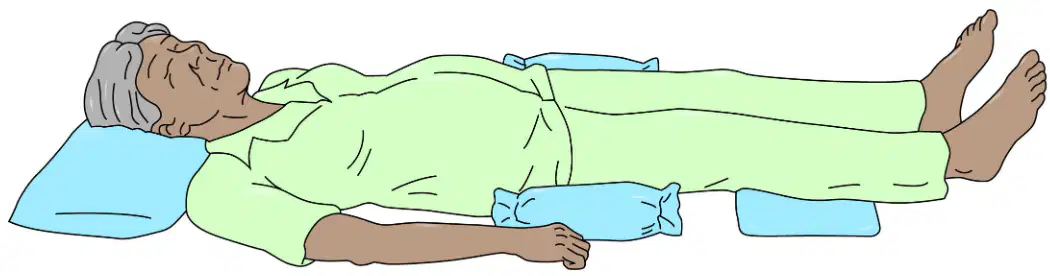
Based on the illustration and bullet points, which statement correctly describes the supine position?
Patient lies flat on the back with pillows under the head and shoulders
Patient lies on the stomach with the head turned to one side
Patient lies on either side with the upper knee flexed
Patient sits upright in a chair with feet flat on the floor
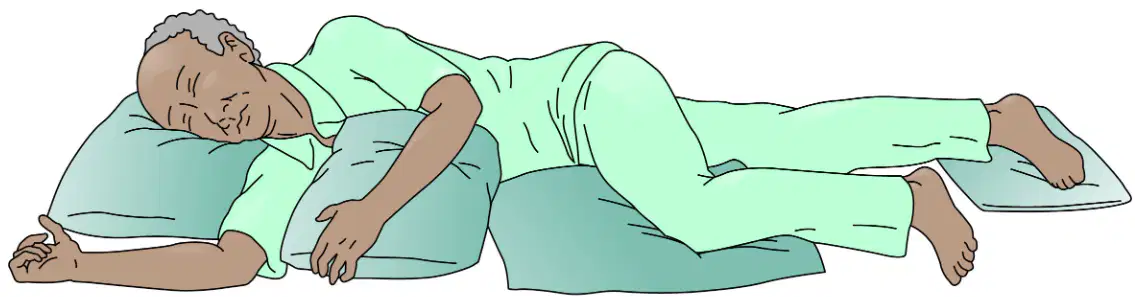
Based on the illustration and bullet points, which statements describe the lateral position? Select all that apply.
Patient is lying on either side
Ideally, the knee on the upper side of the body is flexed
Pillows are only under the head and shoulders
Patient is lying on the stomach/front side of the body
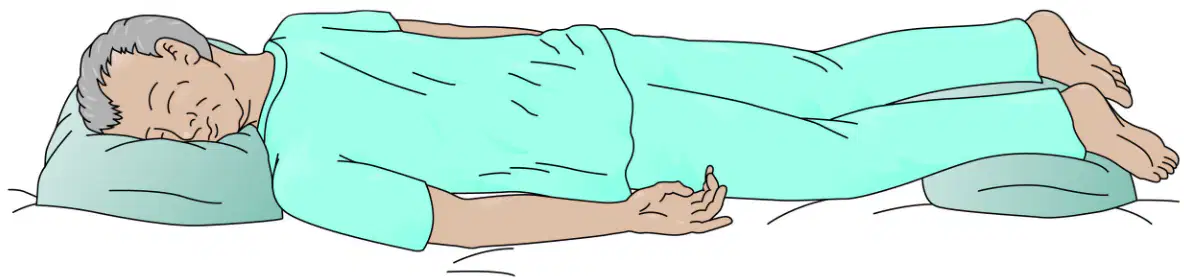
Based on the illustration and bullet points, which statement correctly describes the prone position?
Patient lies on the stomach/front side of the body with the head turned to one side
Patient lies flat on the back with pillows under the head and shoulders
Patient lies on either side with the upper knee flexed
Patient sits upright with back supported
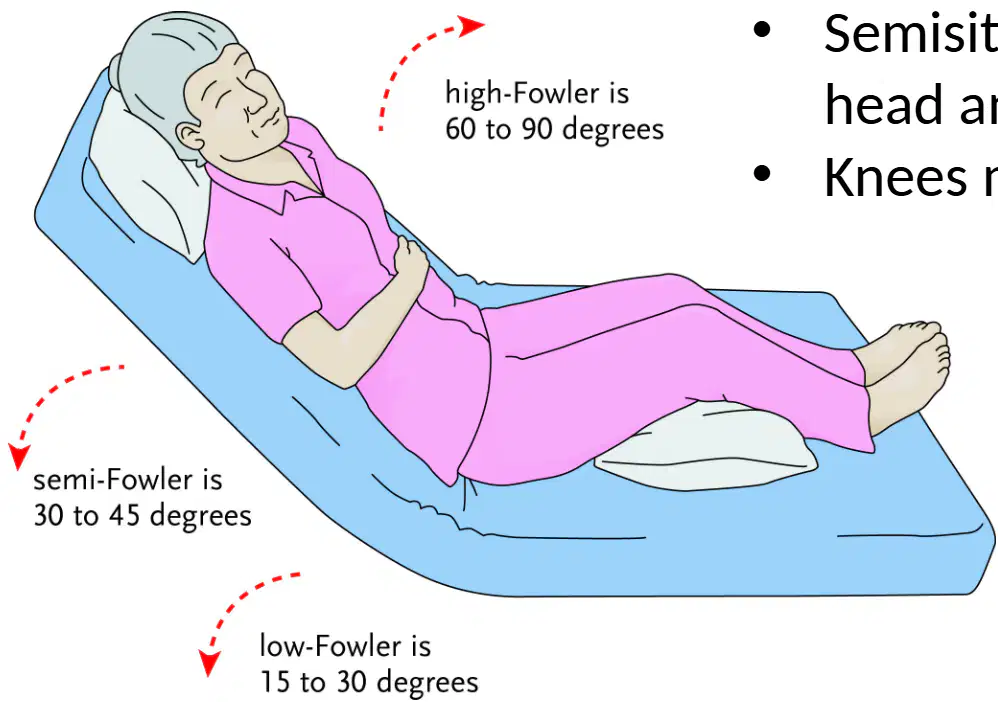
Using the illustration of a person reclining on a hospital bed, identify the defining description of the Fowler position. The diagram shows head and shoulders elevated and labels for high-Fowler, semi-Fowler, and low-Fowler angles.
Semisitting position with the head and shoulders elevated; knees may be flexed and elevated
Side-lying position with the lower arm behind the back and the upper knee flexed toward the chest
Flat supine position with legs straight and head level with the mattress
Prone position with the face down and arms at the sides
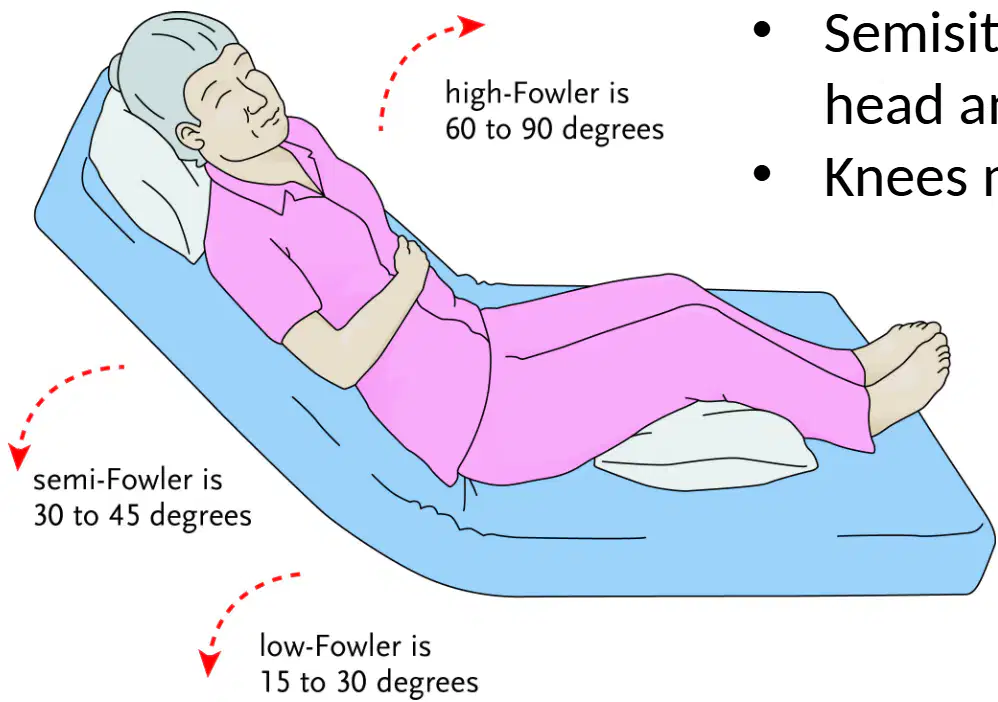
According to the diagram of Fowler position angles, what degree range defines high-Fowler?
15–30 degrees
30–45 degrees
45–60 degrees
60–90 degrees
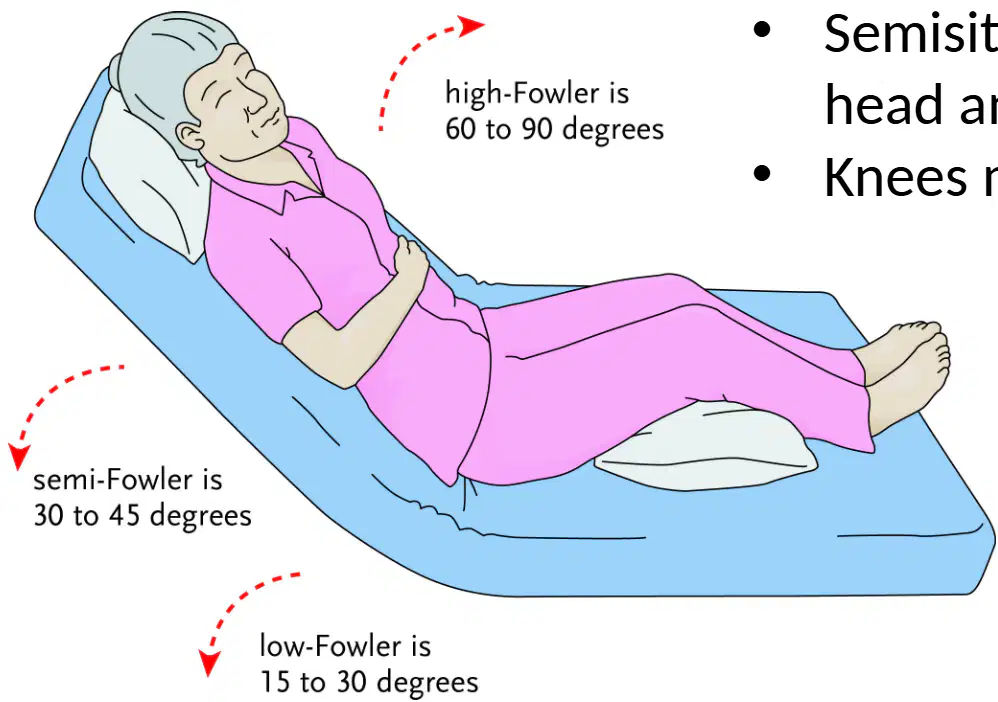
According to the diagram of Fowler position angles, what degree range defines semi-Fowler?
15–30 degrees
30–45 degrees
45–60 degrees
60–90 degrees
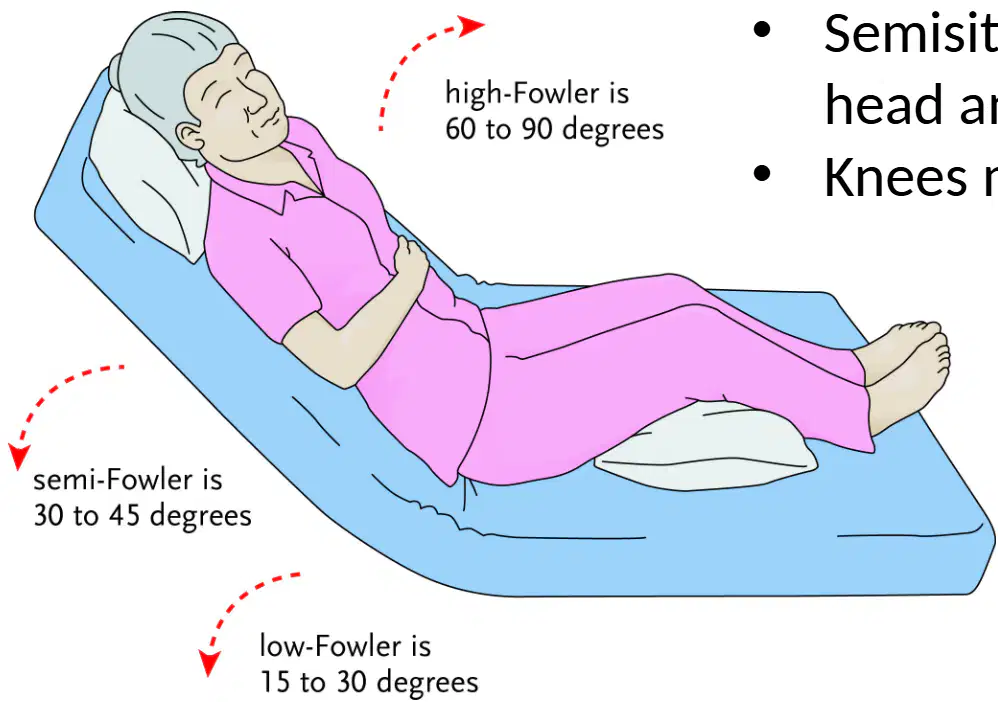
According to the diagram of Fowler position angles, what degree range defines low-Fowler?
15–30 degrees
30–45 degrees
45–60 degrees
60–90 degrees
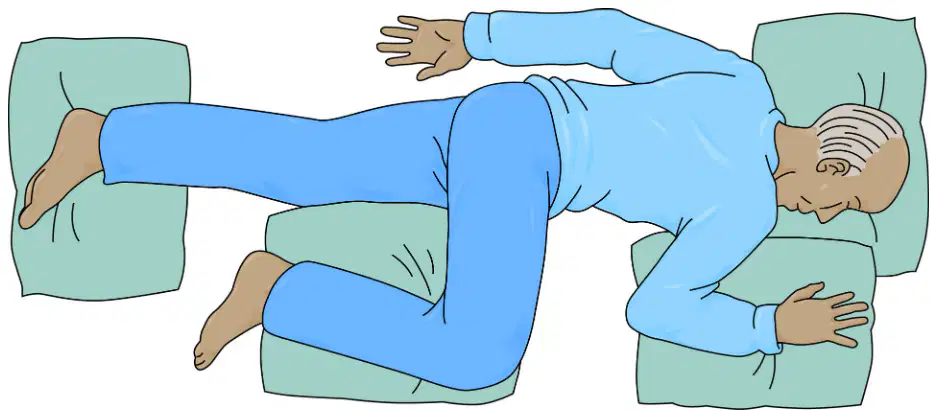
Based on the illustration and bullet points, select all statements that accurately describe the Sims position.
Side-lying variation on lateral position
Lower arm is behind the back and upper knee is flexed and raised toward the chest
Supine with legs straight and arms at the sides
Head and shoulders elevated in a semisitting posture
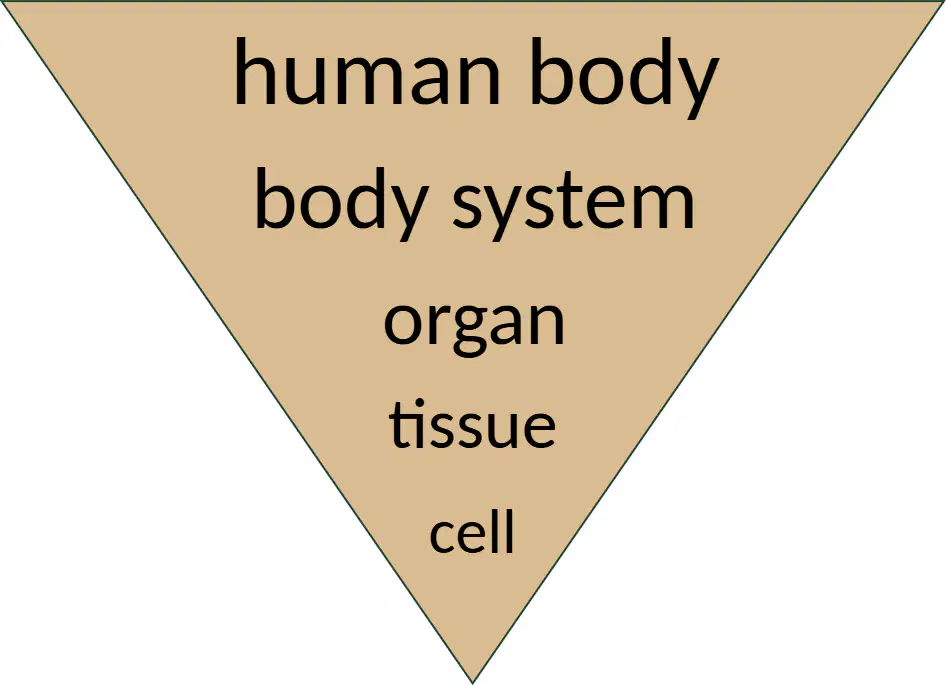
From the inverted triangle diagram listing cell, tissue, organ, body system, and human body, which is the smallest unit shown?
Tissue
Organ
Cell
Body system
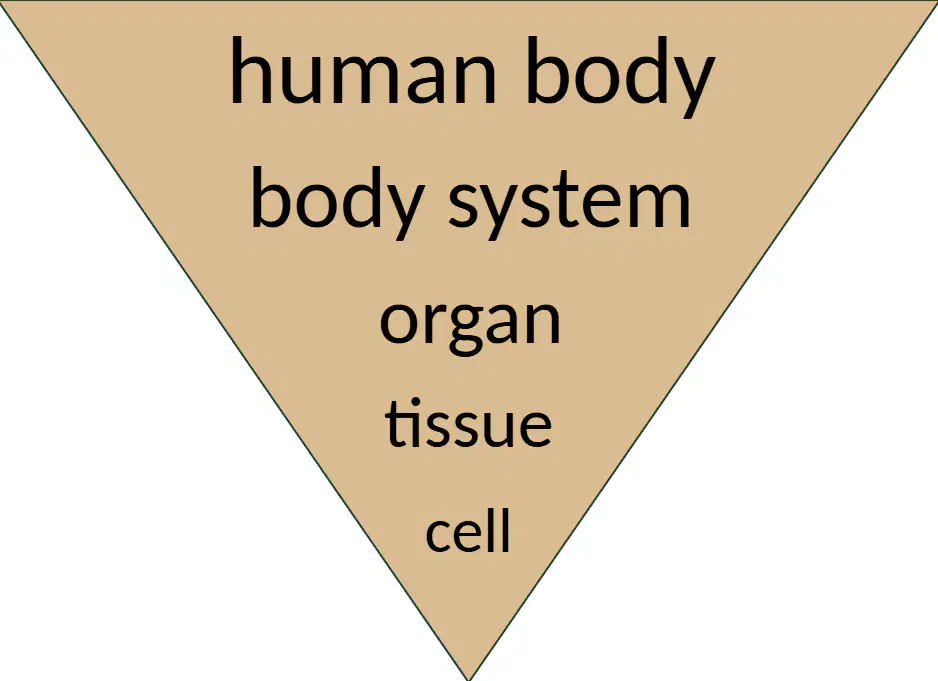
In the inverted triangle diagram of organization, which term appears immediately above tissue?
Cell
Organ
Body system
Human body
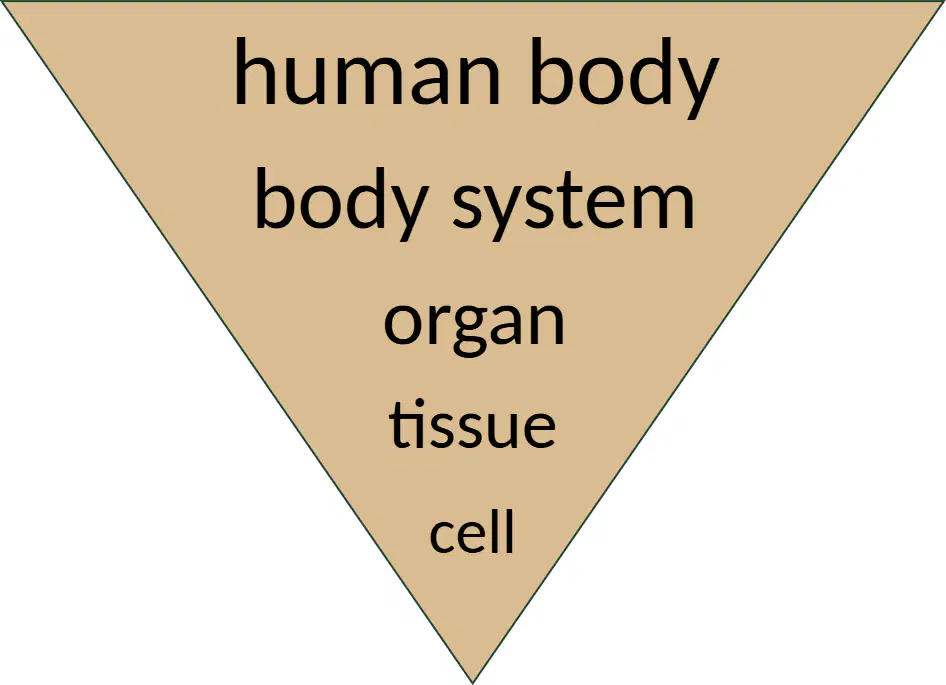
According to the diagram of levels of organization, which term represents the entire organism?
Organ
Body system
Human body
Tissue
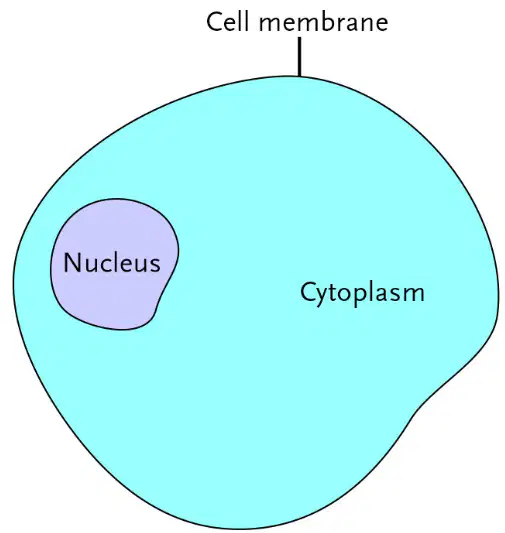
According to the cell diagram and bullet points, what are the basic units of the body?
Organs
Tissues
Cells
Body systems
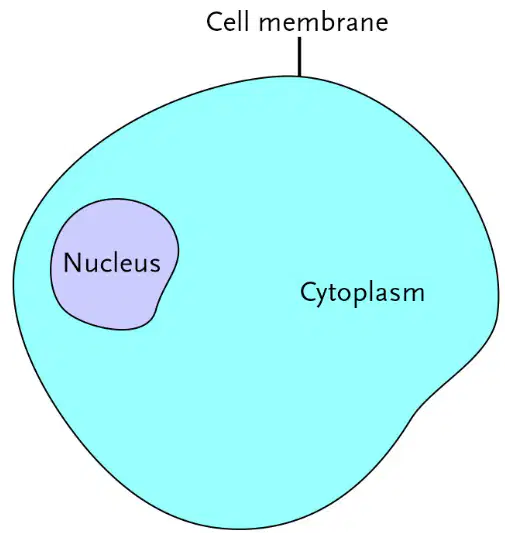
According to the description, how many chromosomes does the nucleus contain?
23
32
46
48

Which statement correctly describes the location and covering of the nucleus in a cell, according to the diagram and text?
The nucleus floats outside the cell membrane
The nucleus is surrounded by cytoplasm and covered by a cell membrane
The nucleus is embedded in the cell membrane and exposed to the outside
The nucleus is contained only within tissues, not individual cells
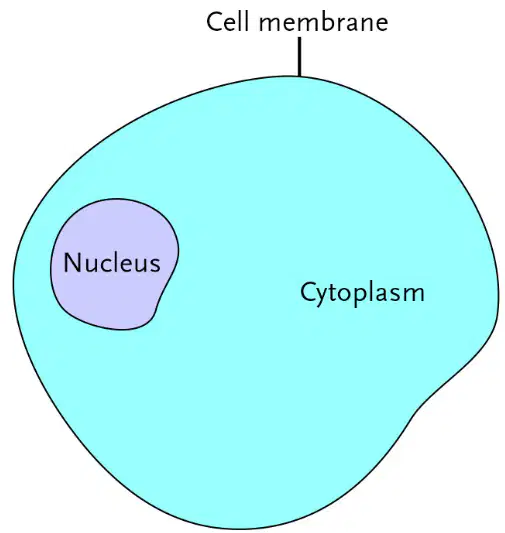
According to the description, what does the cytoplasm contain?
Genetic material that determines inherited traits
Organelles that perform the work of the cells
Fibers that form body systems
Proteins that only make up the cell membrane
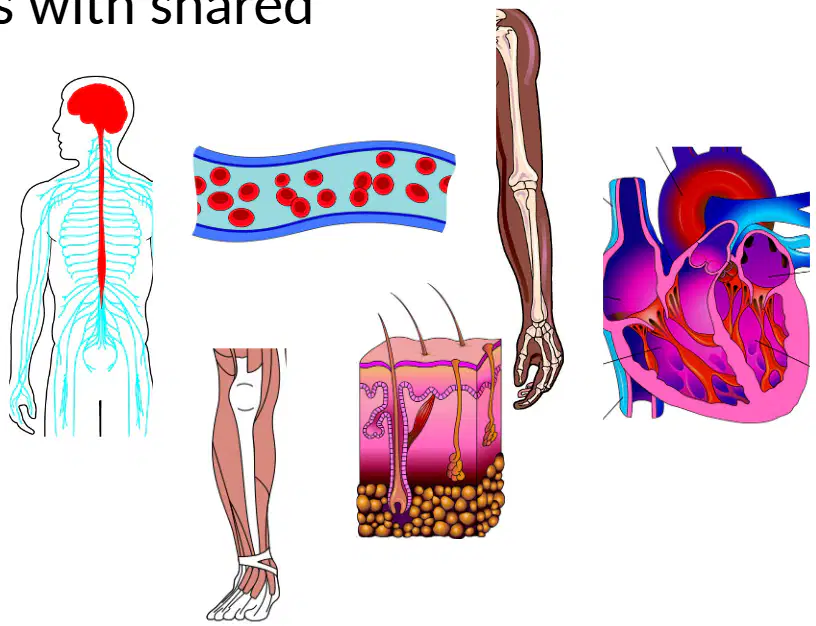
From the slide listing tissue types, select all that are identified as types of tissue.
Epithelial
Nerve
Muscle
Connective
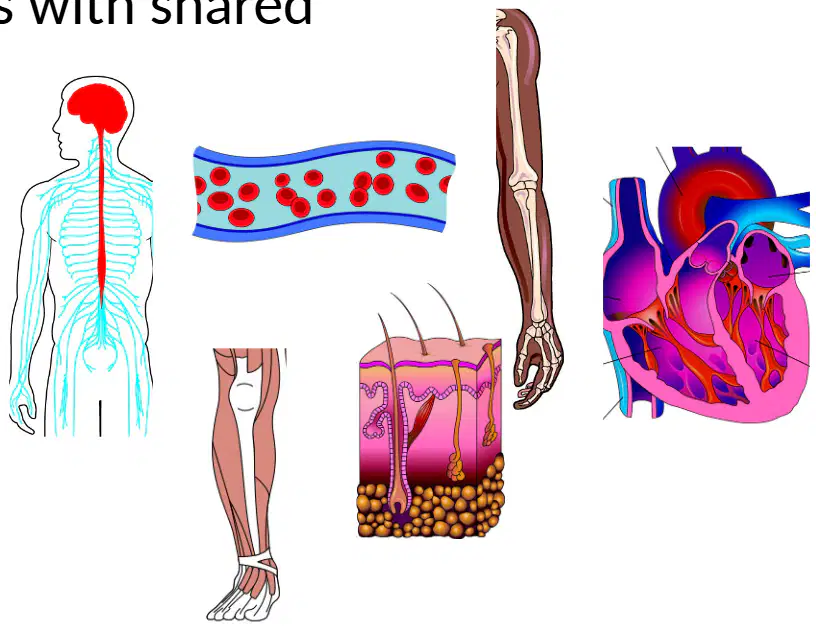
According to the description, tissues are made of similar cells with what shared characteristic?
Shared function
Shared ancestry only
Identical size
Ability to divide only during growth
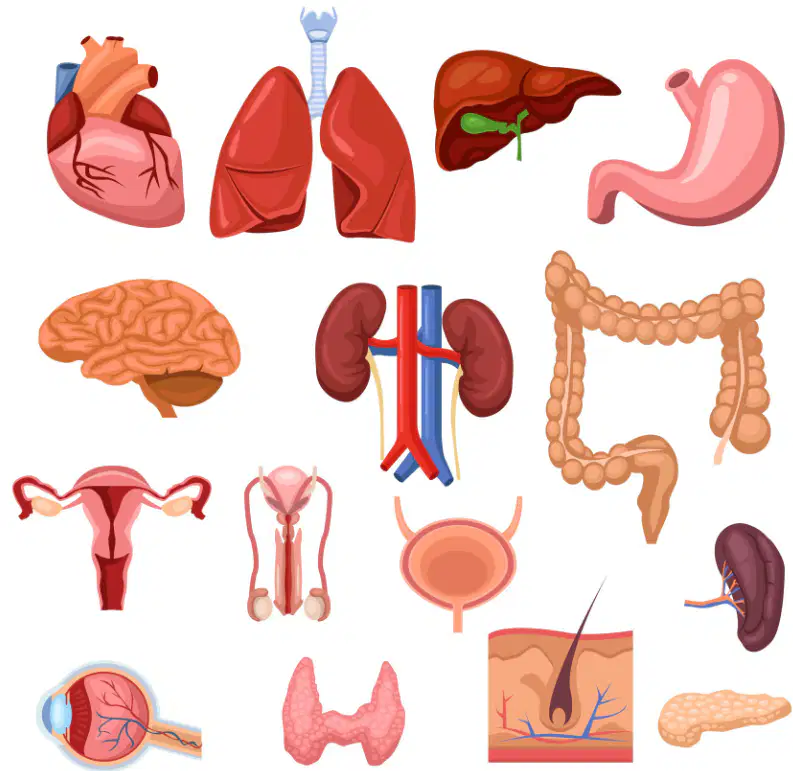
Refer to the illustrated organ icons. Which statements about organs are accurate? Select all that apply.
Made up of tissue
Each has a unique role
Composed only of bones
Do not belong to any body system
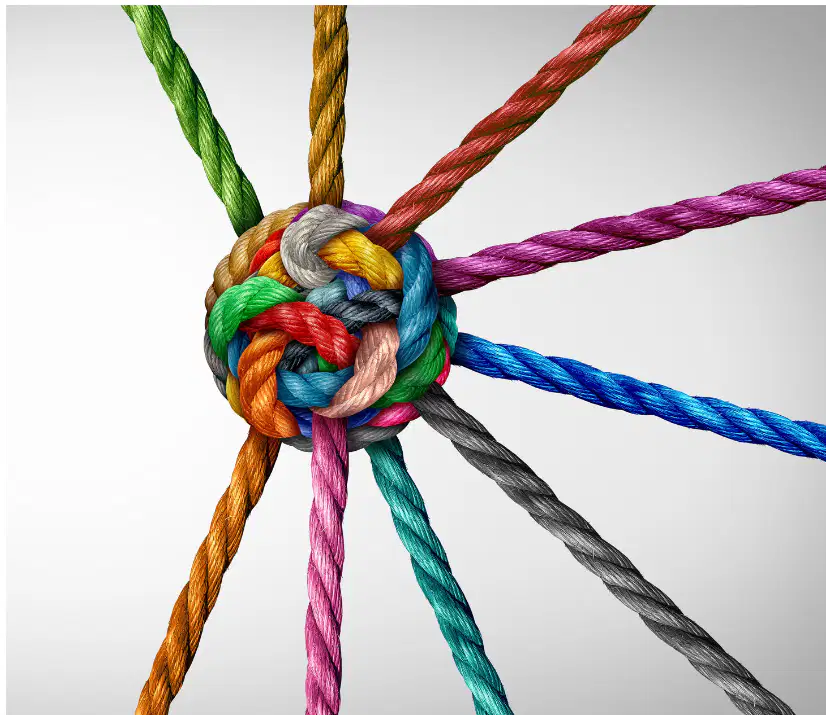
Using the description and image of intertwined ropes, what characterizes body systems? Select all that apply.
Made up of organs
Interdependent and depend on each other to function
Work together to maintain homeostasis
Operate in isolation without interaction
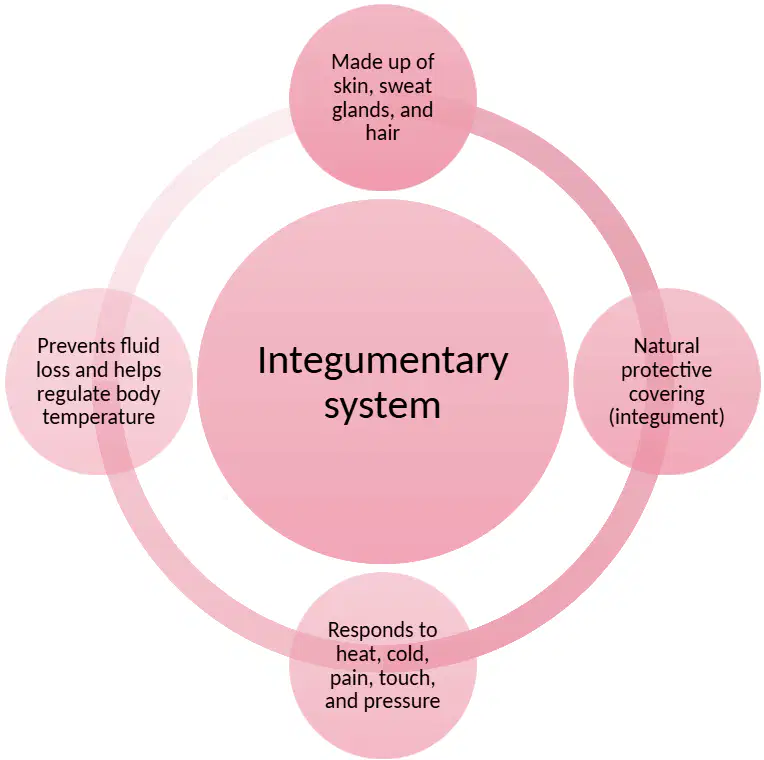
Based on the diagram, which statements correctly describe the integumentary system? Select all that apply.
Made up of skin, sweat glands, and hair
Natural protective covering (integument)
Prevents fluid loss and helps regulate body temperature
Primarily responsible for producing red blood cells
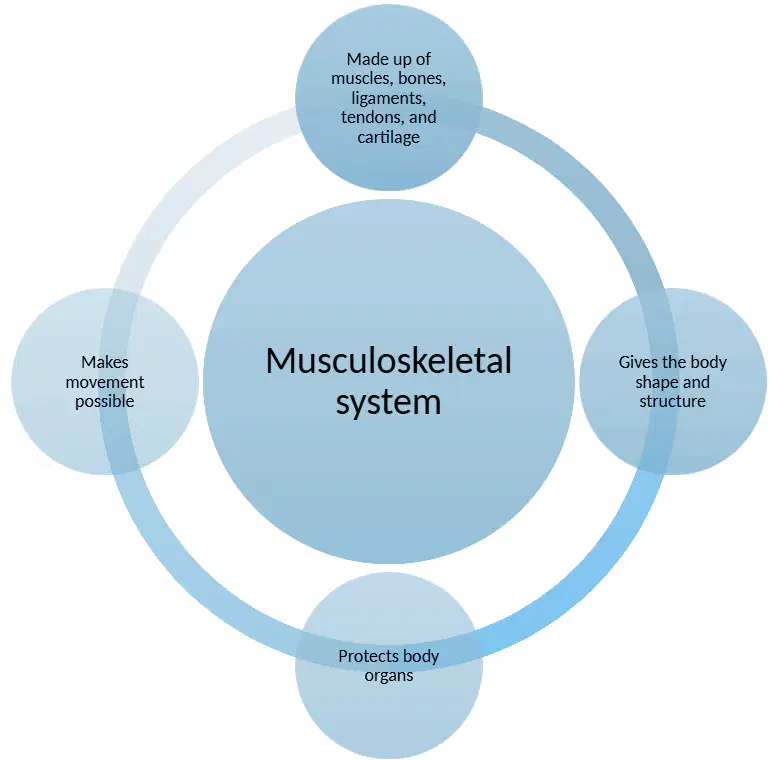
From the diagram, which statements correctly describe the musculoskeletal system? Select all that apply.
Made up of muscles, bones, ligaments, tendons, and cartilage
Makes movement possible
Gives the body shape and structure
Controls hormone secretion throughout the body

