
NEW
Font size
 Worksheets
Introduction and Input Devices
Total questions: 30
Worksheet time: 15mins
Which device lets you enter letters and numbers into a computer?
Keyboard
Speaker
Printer
Monitor
Which statement best explains how an optical mouse works?
It types words on the screen
It uses light to detect movement
It stores files on a hard disk
It uses a roller ball to move
A joystick is MOST similar to which device in how it moves a pointer?
Computer mouse
Laser printer
External speaker
Computer monitor
You want to copy a drawing on paper into the computer for editing. Which input device should you choose?
Scanner
Printer
Touch screen
Joystick

Which statement best describes a hard copy?
Printout on paper
Text heard aloud
Picture on screen
File saved digitally

Which monitor type is thinnest and uses less electricity than CRT?
LCD flat screen
Overhead projector
CRT box monitor
Plasma television
A school needs quiet, high-quality prints for many pages. Which printer is the best choice?
Dot-matrix printer
Laser printer
Plotter drawing
3D printer
Which part of the CPU does math and logic operations like addition and comparing numbers?
Control Unit manages instructions flow
Arithmetic Logic Unit does calculations
Memory Unit stores results temporarily
Input Unit sends data to the computer
A school computer needs to keep programs and data ready while it works. Which CPU part mainly holds this working data?
Printer holds working data
ALU holds working data
Memory Unit holds working data
Control Unit holds working data
Put these from smallest to largest: bit, byte, kilobyte, megabyte.
bit, kilobyte, byte, megabyte
kilobyte, bit, byte, megabyte
bit, byte, kilobyte, megabyte
byte, bit, kilobyte, megabyte
Which statement best describes RAM in a computer?
It is used only to start the computer one time
It is found only in external storage devices
It keeps data permanently even when power is off
It stores programs temporarily while the computer works
What is the main difference between volatile and non-volatile memory?
Volatile loses data when power is off; non-volatile keeps data
Volatile keeps data forever; non-volatile loses data quickly
Volatile is outside the computer; non-volatile is inside
Volatile is only for games; non-volatile is only for photos
A computer will not start correctly without instructions stored in ROM. What important program does ROM usually contain?
BIOS that helps start the computer hardware
Movie player that runs videos and songs
Drawing tool used for making pictures
Web browser that opens internet pages
Which device stores data on spinning discs called platters with tracks and sectors?
Blu‑ray disc with blue laser
Hard disk drive with platters and tracks
Compact disc using laser light
Flash drive with memory chips
A CD‑RW lets you do what with data on the disc?
Store over twenty five GB
Only read saved data
Write only one single time
Erase and write many times
Which storage is small, plugs into a USB port, and has no moving parts?
USB flash drive device
Portable hard disk
DVD optical disc
Mini CD audio disc
You need to share homework files with a friend without a disc drive. Which option is the most suitable choice?
Burn to a write‑once CD‑R
Upload to online data storage
Copy to a Blu‑ray movie
Save on internal platters

Which use of computers is an example of multimedia in everyday life?
Listening to a single audio recording
Typing only plain words in a document
A web page with text, images, and video
Watching silent pictures without captions
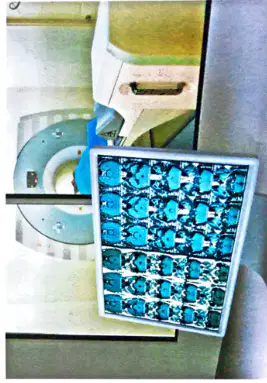
A doctor uses a computer to keep patient records and view scan images. Which statement best explains why this is helpful?
It stores and shows medical data clearly
It replaces all doctors completely
It works without any human help
It cures patients without medicine

If wrong data is entered into a computer, what is the most likely result?
The computer will fix it itself
The output will also be wrong
Nothing will happen to results
The output will be always correct
What does ALU stand for in a computer?
Advanced Logic Utility
Automatic Link Utility
Arithmetic Listing Unit
Arithmetic Logic Unit
Which device shows the result of information processed by the computer?
Monitor and speakers
Keyboard and mouse
Scanner and webcam
Touchpad and joystick
Which device is known as the brain of a computer?
Main memory unit
Visual display unit
Central processing unit
Monitor unit of the system
Which statement best describes RAM?
It stores data on discs
It prints the output
It is volatile in nature
It is permanent in nature
ALU stands for which full form?
Arithmetic logic unit
Alternate link unit
Automatic learning unit
Advanced logical utility
Which one is an output device that generates sound waves?
Plotter for large drawings
Speaker for audio output
Scanner for pictures
Joystick for gaming
Which storage would fit Paul’s 1 GB family album if a CD cannot hold it?
RAM with temporary storage
DVD with larger capacity
Floppy disk with small size
Cache with tiny capacity
Which pair shows a correct similarity and difference between DVD and Blu‑ray?
Both are optical discs; Blu‑ray stores more
Both are magnetic discs; DVD stores more
Both are flash memory; same capacity
Both are paper media; Blu‑ray is cheaper
Which option correctly matches device type to function?
Scanner — output device
Speaker — storage device
Mouse — pointing device
Printer — input device
Which memory type stores BIOS and starts the operating system?
DVD with external data
Cache with user files
ROM with permanent data
RAM with volatile data

