
Font size
 Worksheets
Midterm Review
Total questions: 136
Worksheet time: 16hrs 23mins
Which statement best describes metabolism in living things?
All chemical reactions inside cells
Movement of blood through vessels
Only digestion of food in stomach
Exchange of gases in the lungs
Homeostasis is the ability of an organism to maintain what?
Constant external environment
Stable internal conditions
Rapid growth and development
High energy production always
Which is an example of responding to a stimulus?
Digesting food after eating
Growing taller over years
Evolving over many generations
Sweating when it is hot
Failure to maintain homeostasis most likely leads to what outcome?
Permanent cold body
Unlimited reproduction
Disease or death
Immediate evolution
Which statement about insulin is accurate in regulating blood sugar?
Insulin makes plants open stomata
Insulin starts muscle contractions
Insulin raises body temperature
Insulin lowers high blood sugar
Which characteristic is shared by all living things?
Do not use any energy
Made of one or more cells
Never change over time
Always multicellular organisms
Plant stomata opening and closing helps maintain homeostasis by regulating what?
Gas and water exchange
Body temperature in humans
Blood sugar in animals
Growth rate in bacteria
Which pair correctly matches stimulus type with example?
External stimulus: blood glucose level
Internal stimulus: sunlight intensity
External stimulus: temperature change
Internal stimulus: wind speed
Which option lists the levels of biological organization from smallest to largest?
Cell → Organelle → Molecule → Atom → Organism
Atom → Molecule → Cell → Tissue → Organ
Organ → Tissue → Cell → Molecule → Atom
Molecule → Atom → Cell → Organism
What is an organelle?
A group of similar cells working together for one function
A specialized structure inside a cell that performs a function
Two or more atoms chemically bonded together forming compounds
An individual living thing that performs all life processes
Which statement best defines a tissue?
An individual living thing able to carry out life processes
The basic unit of structure and function in living things
A group of similar cells working together to perform a function
A structure made of different tissues working together
Which level is the basic unit of life?
Organism
Cell
Molecule
Organ
Which example shows the correct relationship of levels building up complexity?
Tissues combine to form organs, then organ systems
Cells combine to form organelles, then molecules
Molecules combine to form atoms, then organelles
Organs combine to form tissues, then cells
What defines a molecule?
The smallest unit of matter with element properties
A group of organs working together for a major function
Two or more atoms chemically bonded together
A specialized structure inside a cell like mitochondria
Which level comes directly after organ in the hierarchy?
Tissue
Organism
Organ system
Cell
Which description correctly defines an organism?
A specialized structure inside a cell that performs a specific function
A group of organs working together to perform a major body function
A structure made of different tissues working together to do a function
An individual living thing that can carry out all life processes
Which statement is part of the cell theory?
All organisms contain many tissues
All living things are made of cells
Cells are larger than organelles always
New cells form from simple molecules
A key idea of the cell theory explains where new cells come from. Which choice states it correctly?
New cells come from pre-existing cells
New cells form inside mitochondria
New cells appear from nonliving matter
New cells grow from cell walls only
Which feature distinguishes prokaryotes from eukaryotes?
Prokaryotes have only animal cells
Prokaryotes lack a nucleus
Prokaryotes make ATP without ribosomes
Prokaryotes have many chloroplasts
Which organelle controls cell activities and houses DNA?
Nucleus
Chloroplast
Ribosome
Mitochondria
Which organelle primarily produces ATP, the cell’s energy?
Mitochondria
Cell wall
Cell membrane
Ribosome
Which structure controls what enters and exits the cell?
Cell membrane
Nucleus membrane
Cell wall
Ribosome layer
In plant cells, which structure provides rigid support?
Cell wall
Cell membrane
Nucleus
Mitochondria
Which organelle carries out photosynthesis in plant cells?
Ribosome
Chloroplast
Golgi body
Mitochondria
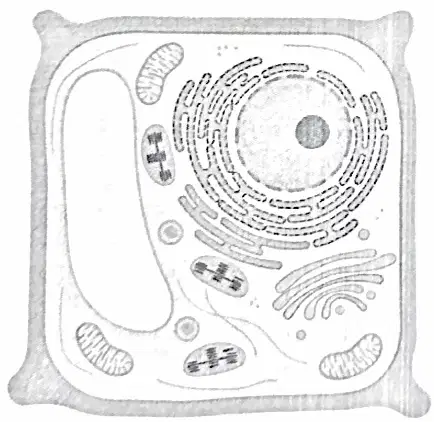
Looking at the diagram labels Plant Cell vs Animal Cell, which feature is found only in the plant cell image?
Absent nucleus region
Large central vacuole region
Circular overall cell shape
Multiple small vesicle dots
Which statement best describes a selectively permeable cell membrane?
It lets all molecules pass freely at any time
It only allows large molecules to pass through
It blocks every molecule from entering or leaving
It allows some substances through while blocking others
Which process moves particles from high concentration to low concentration without using energy?
Active transport
Diffusion
Endocytosis
Exocytosis
What is osmosis?
Movement of nutrients against the gradient
Diffusion of water across a membrane
Transport that requires ATP energy
Random bouncing of sugar molecules
Active transport differs from passive transport because it
moves substances with the gradient using no energy
only occurs with water molecules
moves substances against the gradient using ATP
spreads molecules evenly by random motion
A cell placed in a hypertonic solution will most likely
gain water and swell
lose water and shrink
stay the same size
burst due to intake
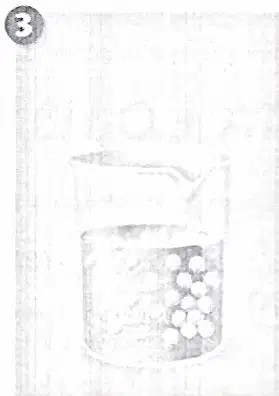
In the sugar-beaker sequence, which event explains diffusion?
Sugar molecules remain tightly packed together
Sugar molecules move randomly and spread out
Water molecules push sugar to the bottom
Sugar molecules require ATP to move
Which substances are commonly allowed into cells to support homeostasis?
Only ions and charged macromolecules
Only proteins and large starches
Carbon dioxide, toxins, and viruses
Water, oxygen, and nutrients
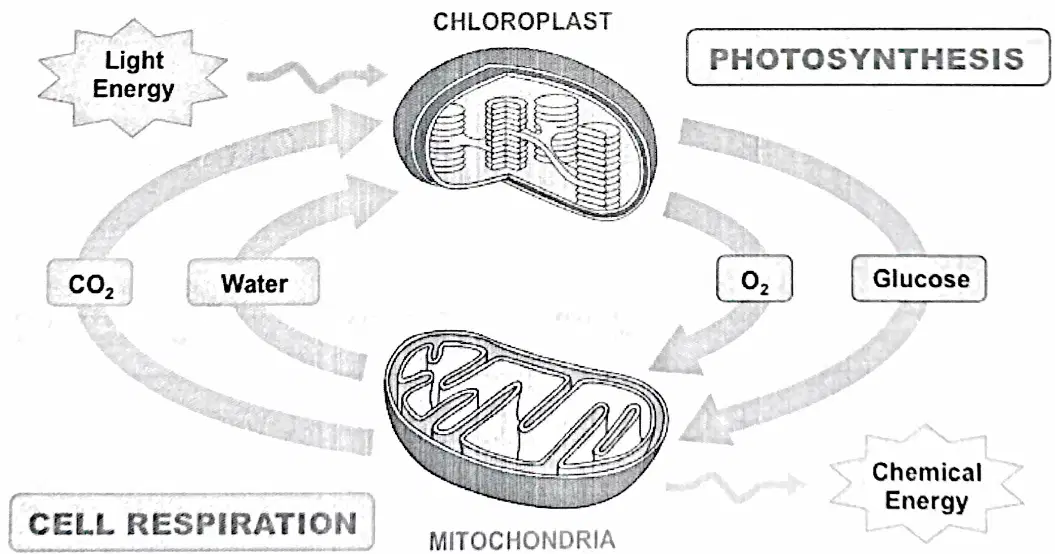
Which organelle is the site of photosynthesis shown in the diagram?
Ribosome in all cells
Nucleus in plant cells
Chloroplast in plant cells
Mitochondria in animal cells
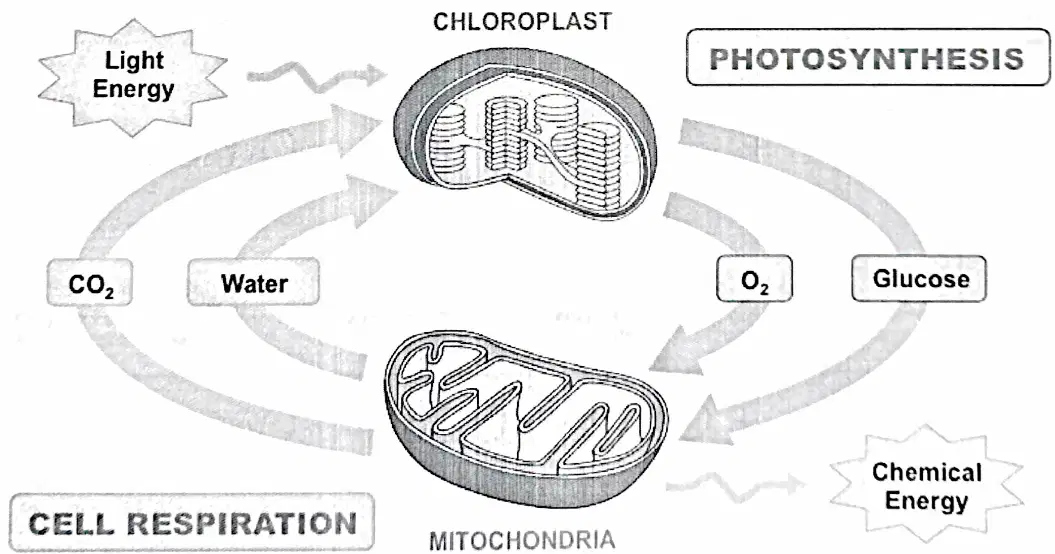
What is the main purpose of photosynthesis illustrated here?
Release ATP energy quickly
Store energy in glucose molecules
Break down proteins for energy
Convert chemical energy into heat
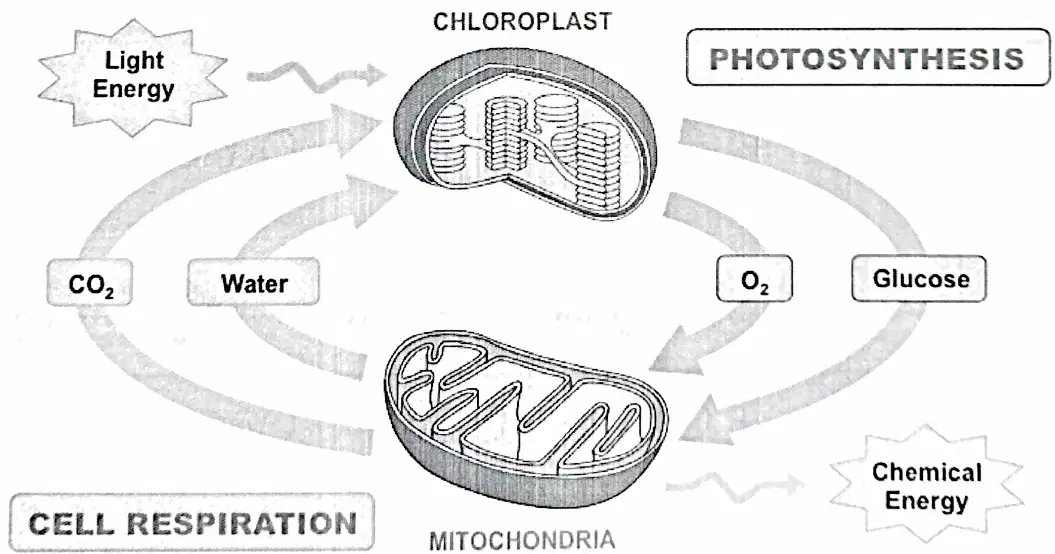
Which balanced equation represents photosynthesis?
6O2 + ATP → C6H12O6 + CO2 + H2O
6CO2 + 6H2O + light → C6H12O6 + 6O2
C6H12O6 + 6O2 → 6CO2 + 6H2O + ATP
CO2 + O2 + light → glucose + water
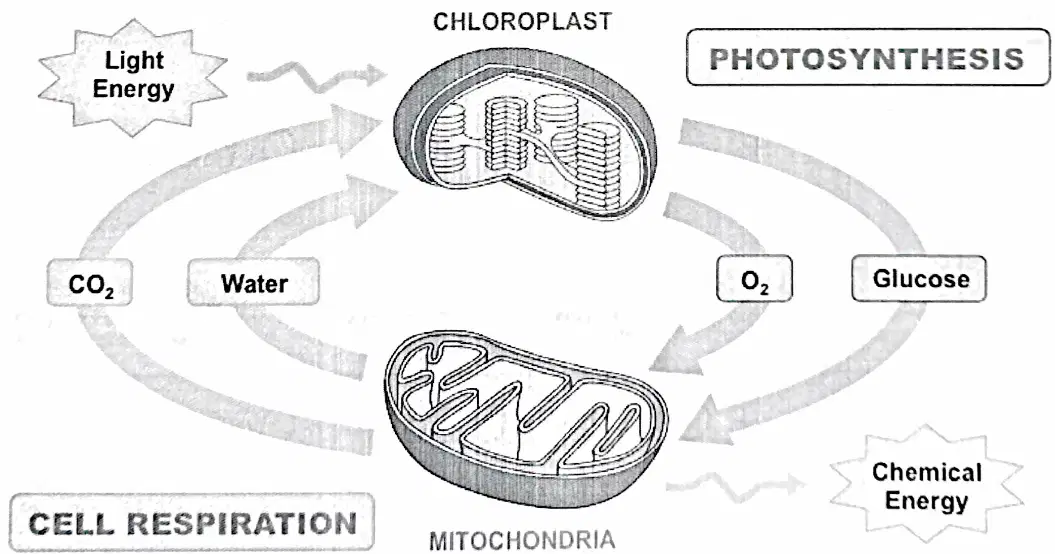
Where does cellular respiration primarily occur as shown?
In chloroplasts of plant cells
In mitochondria of cells
In vacuoles of plant cells
In cytoplasm only
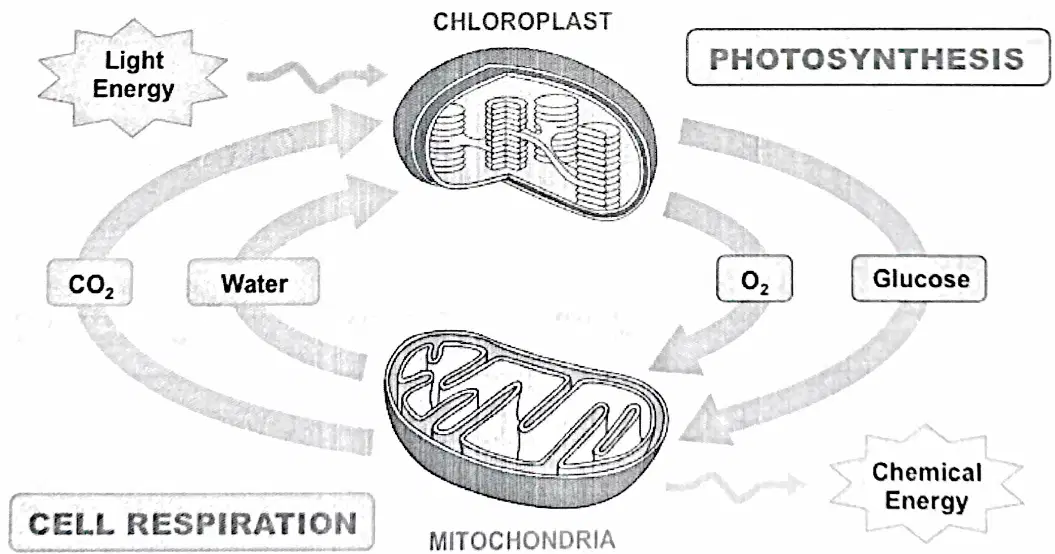
What is the immediate energy source produced by cellular respiration?
Water released from reactions
Oxygen made during photosynthesis
ATP used for cell activities
Glucose stored in chloroplasts
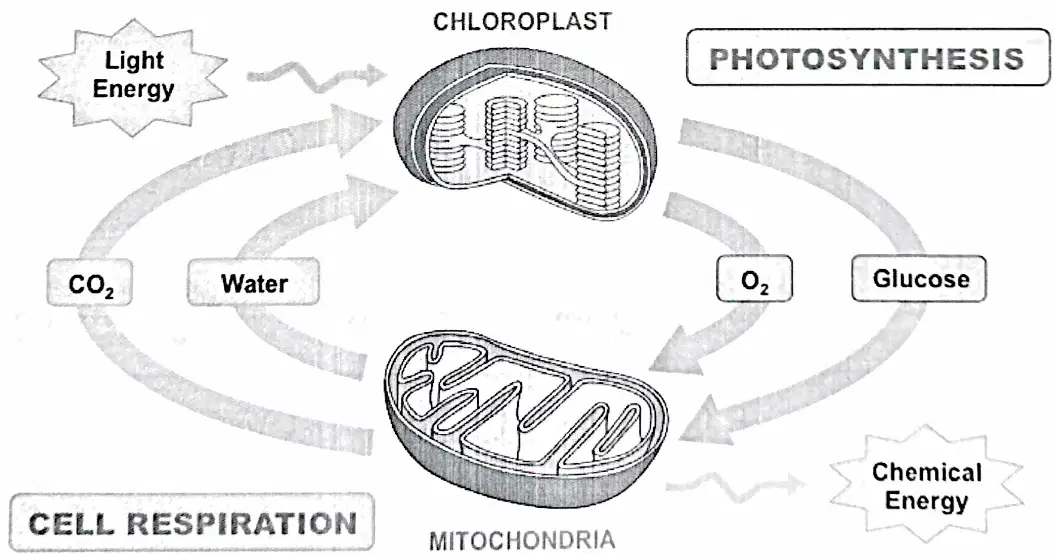
Which equation correctly shows cellular respiration?
C6H12O6 + 6O2 → 6CO2 + 6H2O + ATP
6CO2 + 6H2O + light → C6H12O6 + 6O2
Glucose + light → carbon dioxide + oxygen
C6H12O6 + CO2 → 6O2 + water + ATP
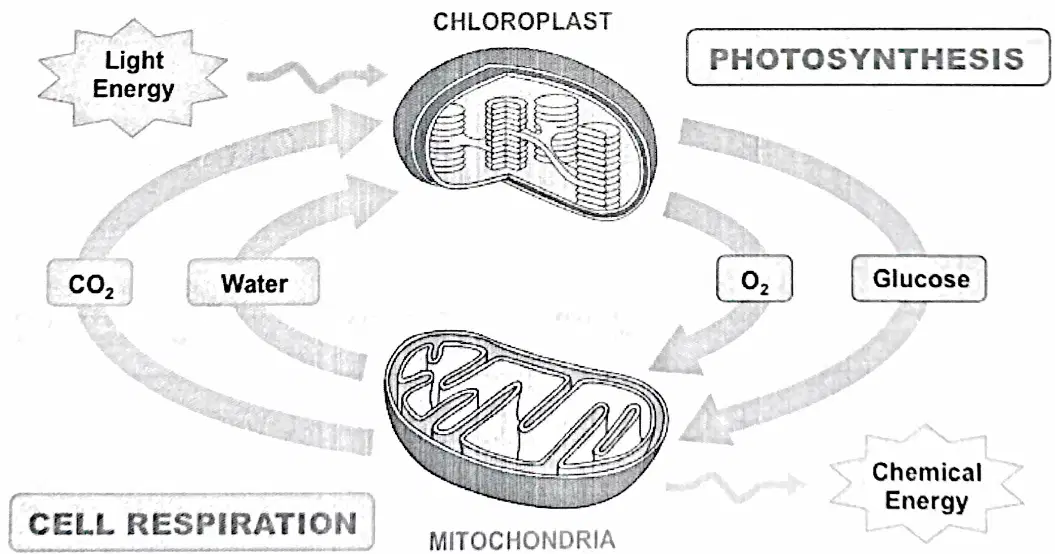
How are photosynthesis and respiration related according to the diagram?
They use identical reactants and products
Products of photosynthesis are reactants of respiration
They occur in the same organelle and time
Respiration supplies light energy for photosynthesis
Which macromolecule mainly provides quick energy for cells?
Nucleic acids for genetic info
Carbohydrates for rapid energy
Lipids for long-term energy
Proteins for structure and enzymes
Which is a correct pairing of macromolecule and primary function?
Nucleic acids — store genetic information
Lipids — quick energy supply
Proteins — long-term energy storage
Carbohydrates — genetic information
Which example correctly matches its macromolecule category?
Glucose — lipid group
Fats — nucleic acid group
Hemoglobin — protein group
DNA — carbohydrate group
What is the best description of an enzyme?
A nucleic acid that is reusable
A lipid that forms DNA strands
A carbohydrate that stores genes
A protein that speeds reactions
How do enzymes affect the activation energy of reactions?
They remove activation energy
They ignore activation energy
They lower activation energy
They raise activation energy
What does enzyme specificity mean?
Each enzyme fits only one substrate
One enzyme fits many substrates
All enzymes share the same active site
Substrates change any enzyme shape
What happens to an enzyme when it denatures due to extreme heat?
It changes shape and stops working
It gains extra active sites
It permanently binds all substrates
It becomes a carbohydrate molecule
Which condition can also alter enzyme shape and function besides heat?
pH changes in the environment
Salt crystals forming
Oxygen levels shifting
Light intensity increasing
Why are enzymes considered reusable catalysts?
They dissolve into substrates
They are not used up in reactions
They are consumed during reactions
They become products after reactions
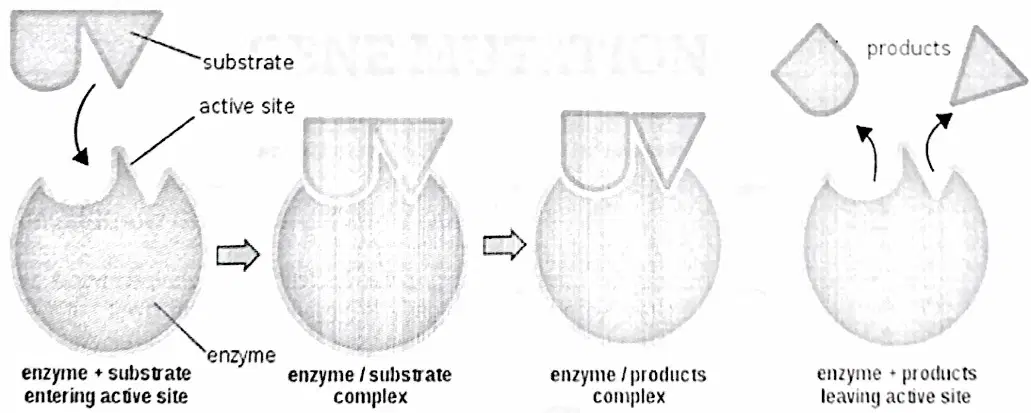
According to the lock-and-key model shown, what occurs at the active site?
The products bind to substrates
The substrate binds to the enzyme
The enzyme breaks into products
The enzyme changes to nucleic acid
Where is DNA located in eukaryotic cells?
On the cell membrane surface
Within the mitochondria only
In the cytoplasm outside ribosomes
Inside the nucleus of the cell
Which set lists the four nitrogenous bases found in DNA?
Adenine, Uracil, Thymine, Guanine
Thymine, Uracil, Cytosine, Guanine
Adenine, Thymine, Cytosine, Guanine
Adenine, Cytosine, Uracil, Guanine
What is a gene?
An mRNA molecule that carries instructions
A whole chromosome containing many traits
A segment of DNA that codes for a protein
A ribosome that builds polypeptides
Which statement best describes transcription during protein synthesis?
DNA is copied into mRNA inside the nucleus
tRNA is converted into DNA inside mitochondria
mRNA is translated into a protein at ribosomes
Proteins are folded into active shapes in Golgi
Which process happens at the ribosome during protein synthesis?
Transcription of DNA into mRNA
Mutation repair by special enzymes
Translation of mRNA into a protein
Replication of DNA into two strands
Proteins are important because they primarily determine which features?
Diet preferences and learned behaviors
Cell division timing and lifespan
Eye color, enzyme function, cell structure
Blood pressure and breathing rate
Which change qualifies as a mutation?
A temporary shortage of ribosomes
A shift in protein folding environment
An increase in available amino acids
A change in the DNA nucleotide sequence
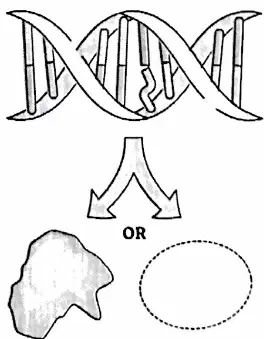
Which outcome can result from a gene mutation, as shown in the diagram?
Faster transcription but same protein
Normal protein produced every time
Abnormal protein or no protein produced
Extra chromosomes produced in nucleus
Which statement about mutation effects is accurate?
All mutations are harmful to organisms
Mutations are always neutral in impact
Some mutations are neutral, harmful, or beneficial
Beneficial mutations never occur in nature
Environmental factors can influence mutations by primarily doing what?
Decreasing cell size during growth
Replacing cytosine with uracil in DNA
Increasing the rate of DNA mutations
Eliminating all ribosomes from cells

In the DNA diagram, what forms the sides of the ladder-like structure?
Sugar-phosphate backbone strands
Nitrogen bases linked together
Proteins wrapped around histones
Ribosomal RNA helices
Which pairing correctly matches location with process?
Transcription at ribosome; translation in nucleus
Translation at ribosome; transcription in nucleus
Both transcription and translation in nucleus
Both transcription and translation at ribosome
Which statement best describes evolution in a population over time?
Mutations always make organisms stronger
Species stop changing once adapted fully
Populations change as traits become more common
Individuals change because they need traits
What is the main role of natural selection in evolution?
Creating new species instantly
Explaining how traits spread
Stopping mutations completely
Making all individuals identical
Which source most directly creates genetic variation in a population?
Diet and exercise routines
Seasonal climate changes
Mutations and sexual reproduction
Learned behaviors from parents
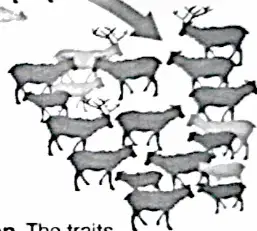
In the deer diagram, which step shows that more young are produced than can survive?
Adaptation stage with common traits
Selection stage with survivors
Variation stage with differences
Overproduction stage at the start
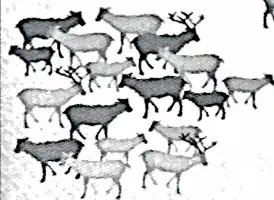
Why do some deer survive and reproduce more than others in the selection step?
They have advantageous traits
They change traits when needed
They receive equal resources
They learn survival skills fast
What happens to traits that increase survival and reproduction in a population?
They gradually become rarer
They become more common
They stay unchanged forever
They disappear after one generation
Which statement about organisms and trait changes is accurate?
Needs directly cause genetic mutations every time
Organisms do not evolve traits because they need them
Traits appear when environments demand them
Organisms evolve traits because they need them
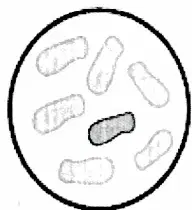
In the antibiotic resistance sequence, why do drug‑resistant bacteria take over after treatment?
Antibiotics create new resistant genes immediately
Resistant bacteria survive and then multiply
All bacteria die and stay dead forever
Healthy bacteria block resistant ones from growth
Which body system transports materials like oxygen and nutrients throughout the body?
Respiratory system moves gases in lungs
Circulatory system carries blood in vessels
Digestive system absorbs food molecules
Excretory system filters wastes for removal
Which structure pair is most directly involved in gas exchange?
Stomach and pancreas
Kidneys and ureters
Lungs and alveoli
Heart and arteries
What is the main function of the endocrine system?
Remove water and salt wastes
Transport oxygen and nutrients
Break down and absorb nutrients
Regulate hormones using glands
Which system includes the stomach, intestines, liver, and pancreas?
Excretory system
Respiratory system
Digestive system
Immune system
Where do most nutrients enter the bloodstream after digestion?
Large intestine stores wastes
Small intestine absorbs nutrients
Stomach churns food
Pancreas secretes hormones
Which system’s other information notes maintaining water and salt balance?
Excretory system balances fluids
Circulatory system regulates gases
Immune system creates antibodies
Respiratory system exchanges CO₂
Which set lists key structures of the circulatory system?
White cells, antibodies
Lungs, bronchi, alveoli
Heart, blood, vessels
Kidneys, bladder, ureters
What best describes the respiratory system’s function?
Nutrient absorption in intestines
Hormone regulation through glands
Gas exchange, oxygen in
Defense against pathogens
Hormones travel primarily through which medium to reach target organs?
Urine passing through ureters
Digestive fluids in stomach
Air moving in alveoli
Blood flowing in vessels
Vaccines help the immune system by mainly doing what?
Teaching immune memory
Balancing water and salts
Speeding digestive enzymes
Increasing lung capacity
Which combination correctly matches a system with one of its structures?
Respiratory—kidneys
Endocrine—pancreas
Excretory—alveoli
Immune—antibodies
If blood did not deliver oxygen effectively, which system’s function would be directly failing?
Circulatory transport of materials
Immune defense against pathogens
Endocrine regulation of hormones
Digestive breakdown of nutrients
Which statement best describes the main function of the immune system?
Keeps the body healthy by fighting pathogens
Breaks down food into usable nutrients
Controls movement using muscles and bones
Produces hormones to regulate body functions
What is a pathogen?
A white blood cell type
A protein that marks invaders
A harmless body cell part
An organism that causes disease
Which molecules on a pathogen trigger an immune response?
Enzymes made in stomach
Hormones released by glands
Antibodies inside blood
Antigens on pathogen surfaces
Which cells make antibodies to fight specific pathogens?
B cells within lymphocytes
Phagocytes in blood
Red blood cells
Platelets in plasma
What is the role of T cells in immunity?
Digest food in the intestines
Carry oxygen to all body tissues
Produce mucus to trap pathogens
Attack infected cells or coordinate response
Which statement about antibodies is correct?
Proteins from B cells that bind antigens
Sugars from the liver that energize cells
Lipids that store energy in fat
Acids that dissolve harmful pathogens
What do phagocytes do during an immune response?
Make antibodies to bind antigens
Carry carbon dioxide to lungs
Engulf and destroy marked pathogens
Release insulin to control sugar
Why can the immune system target different pathogens?
Antibodies never change
Each antigen is specific
Phagocytes memorize shapes
All pathogens look identical
What is the correct first step of the immune response?
B cells make antibodies
A pathogen enters the body
Memory cells form for later
Phagocytes engulf the invader
During the immune response, when do phagocytes act?
Only when vaccines are given
At the exact same time as B cells
Before antigens are recognized
After antibodies mark pathogens
What happens after B cells produce antibodies?
Antibodies attach to antigens
T cells turn into red cells
Antibodies digest glucose
Pathogens make more antigens
What is created to allow a faster response if a pathogen enters again?
Memory cells made after infection
Additional bones in marrow
Extra red blood cells
New hormones from glands
Which statement about vaccines is accurate?
Train immunity using weakened or dead pathogens
Directly kill all living viruses in blood
Cause disease to build stronger muscles
Are the same drugs as antibiotics
What does the body produce after vaccination that gives future protection?
Antibodies and memory cells
Extra digestive enzymes
More sweat and oil
Stronger cartilage cells
Which tip is correct about antibiotics?
Are proteins made by B lymphocytes
Bind antigens to mark invaders
Prevent disease by training memory cells
Treat bacterial infections, not viruses
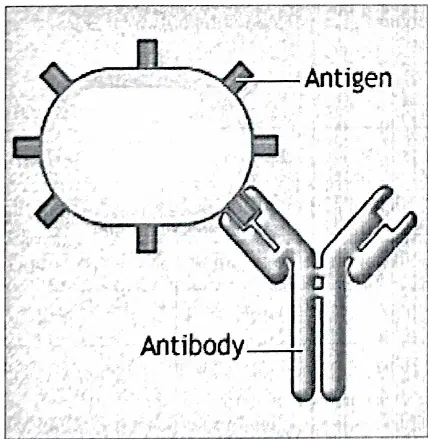
In the diagram showing an antibody and antigen, what is labeled as binding to the antigen?
A nerve cell dendrite
An antibody protein molecule
A phagocyte pseudopod
A red blood cell membrane
Which white blood cells include B cells and T cells?
Lymphocytes in the immune system
Platelets forming blood clots
Erythrocytes carrying oxygen
Phagocytes that engulf invaders
Which best explains why memory cells are important?
They enable quicker defense upon re-exposure
They produce insulin for sugar control
They break down food for rapid energy
They carry antibodies to the lungs
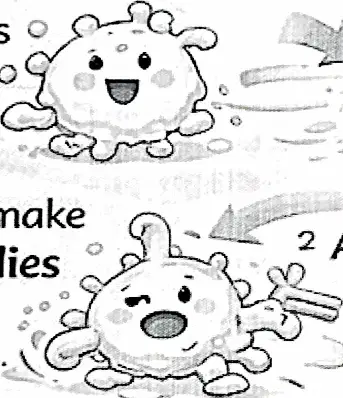
During step 2 in the illustrated sequence, what do WBCs detect?
Intruders by recognizing antigens
Oxygen levels in the blood
Nutrients absorbed in intestine
Signals from the nervous system
Which pairing is correct according to the summary table?
Antibody is a hormone that stores energy
Vaccine introduces antigens to train immunity
Antigen is a vitamin used for growth
Pathogen is a harmless body molecule
Which statement best describes a negative feedback loop in the body?
It amplifies a change to finish a process
It reverses a change to maintain stability
It creates new changes to start reactions
It ignores changes to keep energy low
What is the main goal of negative feedback?
Increase hormone levels steadily
Maintain homeostasis by restoring normal
Keep body variables fluctuating widely
Drive a process to completion quickly
Which example shows negative feedback controlling blood sugar?
Platelets attract more platelets to clot
Prostaglandins strengthen uterine contractions
Insulin lowers high blood sugar levels
Oxytocin increases contractions in labor
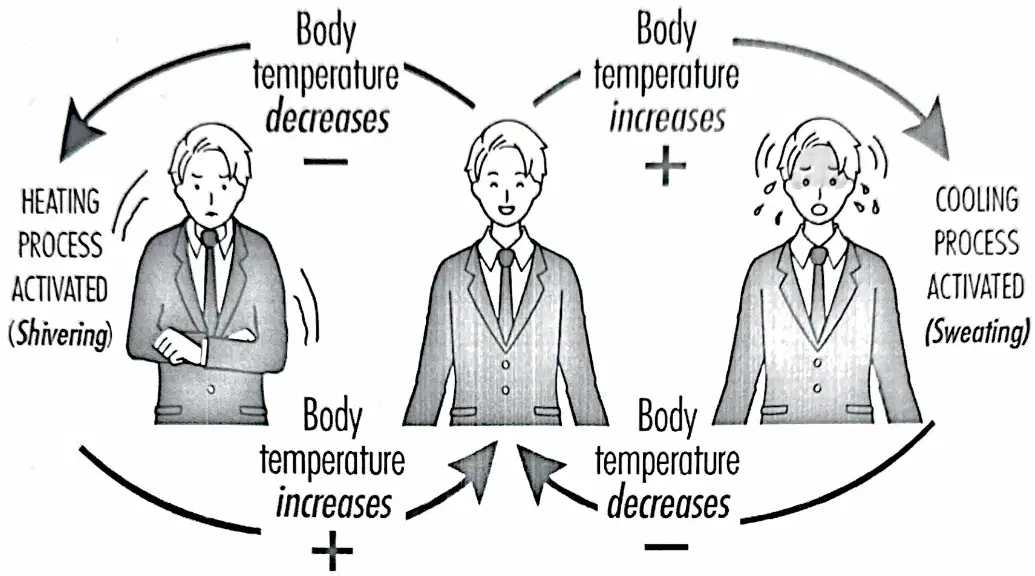
In thermoregulation, which response occurs when body temperature is too high?
Blood pressure rises to cool skin
Insulin release raises temperature
Sweating starts to remove heat
Shivering begins to produce heat
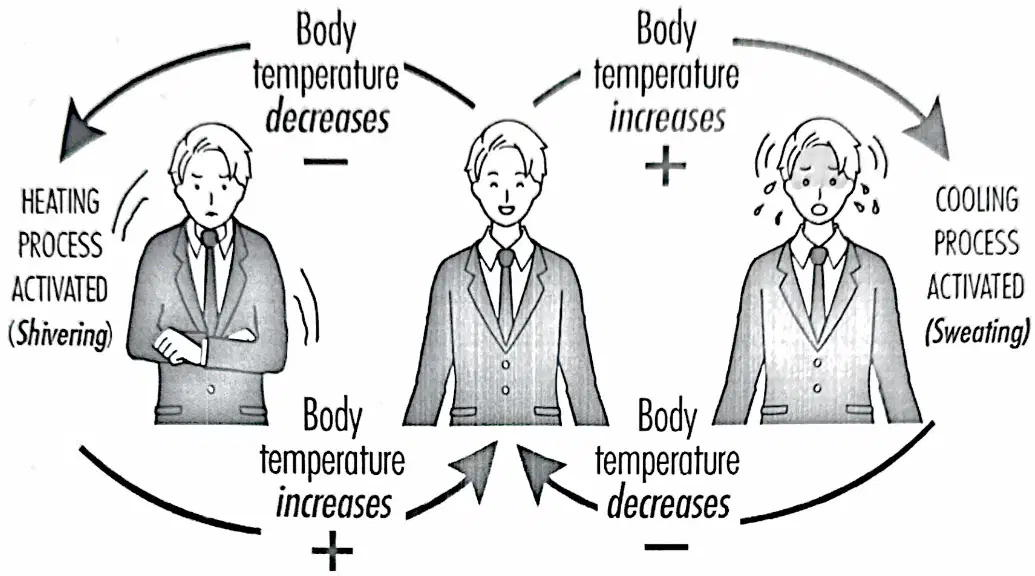
According to the temperature loop diagram, shivering is triggered when
Sweat glands become overactive at rest
Blood sugar drops after a meal
Body temperature decreases below normal
Body temperature increases above normal
Which statement about positive feedback is accurate?
It reduces hormone release during stress
It commonly regulates most body systems
It amplifies changes until a process ends
It stabilizes variables near a set point
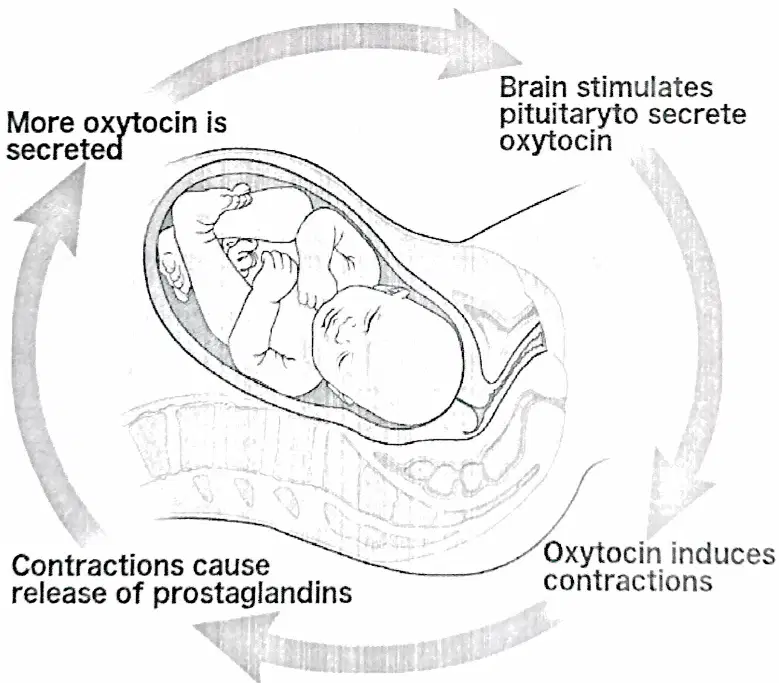
Which scenario illustrates positive feedback during childbirth?
Sweating cools the body during exercise
Oxytocin causes stronger contractions
Insulin lowers blood sugar after eating
Hormones stabilize blood pressure
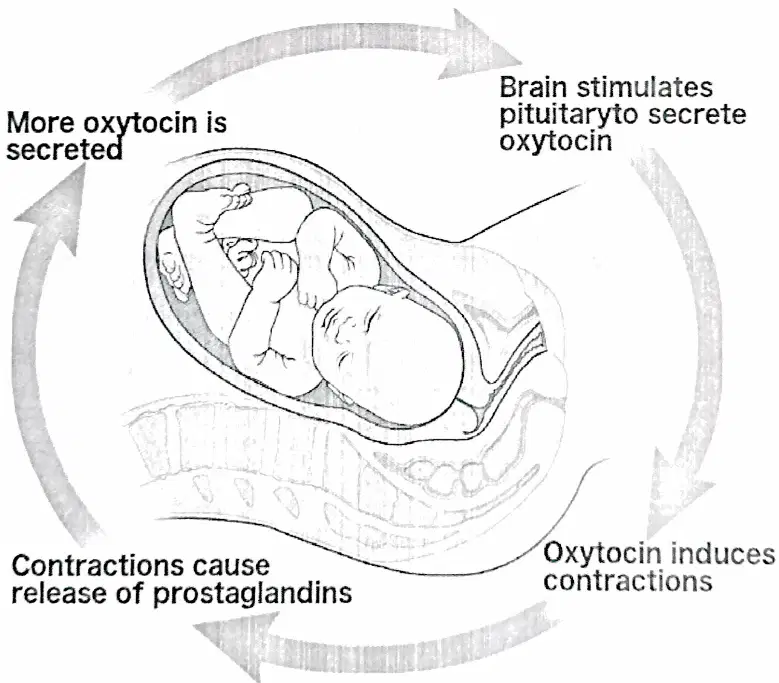
In the childbirth diagram, what happens after contractions strengthen?
Glucagon raises blood sugar
Platelets begin forming a clot
More oxytocin is secreted
Oxytocin levels fall to stop labor
Which example from the notes shows positive feedback in the circulatory system?
Platelets release chemicals to attract more platelets
Blood pressure hormones reduce heart rate
Shivering warms the body in cold weather
Insulin lowers glucose after a meal
Which feature distinguishes negative from positive feedback?
Negative feedback is rare and rapid
Negative feedback drives completion
Negative feedback counteracts change
Negative feedback amplifies responses
Most homeostasis in the body is controlled by which type of feedback?
Positive feedback loops
Random feedback loops
Negative feedback loops
Mixed feedback loops
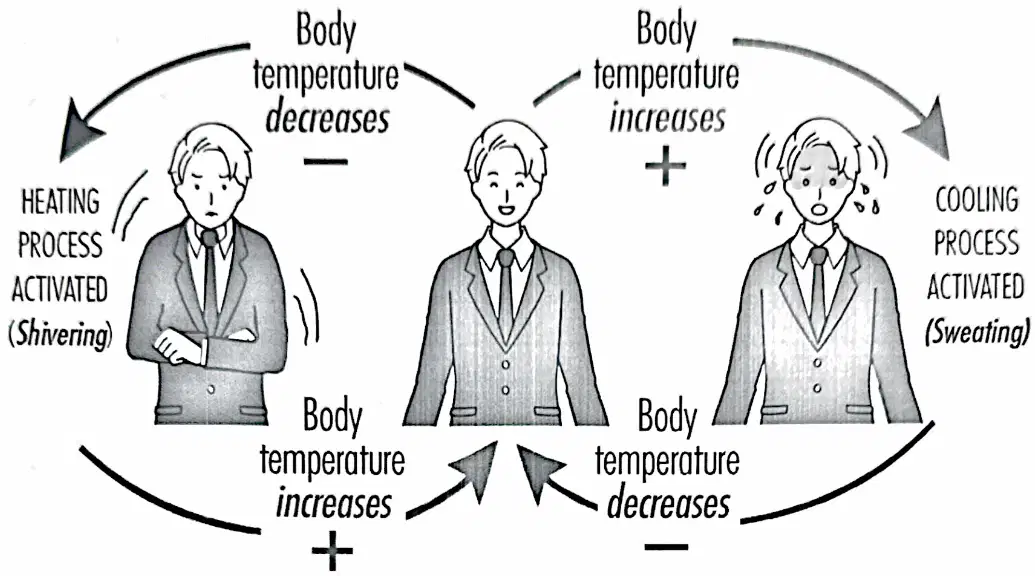
When body temperature decreases, what is the next step in the loop?
Cooling process activated—sweating
Insulin release from the pancreas
Heating process activated—shivering
Blood vessels dilate in the skin
Which statement best defines muscle fatigue?
Permanent damage to muscle tissue
Temporary inability to contract efficiently
Complete loss of all muscle ATP forever
Immediate tearing of muscle fibers
Which is a direct cause of muscle fatigue during intense activity?
Increased oxygen delivery to muscles
Depletion of ATP in muscle cells
Growth of new muscle fibers rapidly
Rising body temperature slightly
During anaerobic respiration in muscles, which waste product forms?
Carbon dioxide and water
Lactic acid
Methane gas
Ammonia and urea
When are muscles most likely to produce lactic acid?
During intense exercise with limited oxygen
During rest after sleeping
During digestion after eating
During gentle stretching with full oxygen
How does lactic acid accumulation affect muscle cells?
Increases oxygen binding in hemoglobin
Raises pH and speeds contractions
Lowers pH and contributes to soreness
Neutralizes acids and prevents fatigue
Which feature correctly compares aerobic and anaerobic respiration?
Aerobic is short-term; anaerobic long-term
Aerobic requires oxygen; anaerobic does not
Aerobic produces lactic acid; anaerobic water
Aerobic gives 2 ATP; anaerobic gives 36
Approximately how many ATP are produced per glucose in aerobic respiration?
Eight per glucose molecule
One hundred per glucose molecule
Two per glucose molecule
Thirty-six per glucose molecule
Which statement about energy duration is accurate?
Anaerobic supports marathon pacing
Aerobic provides long-term energy
Anaerobic gives sustained hours of energy
Aerobic is only for brief sprints

Which microscope part controls how much light passes through the slide to improve contrast?
Arm controls light amount
Diaphragm controls light amount
Eyepiece controls light amount
Stage clips adjust light amount
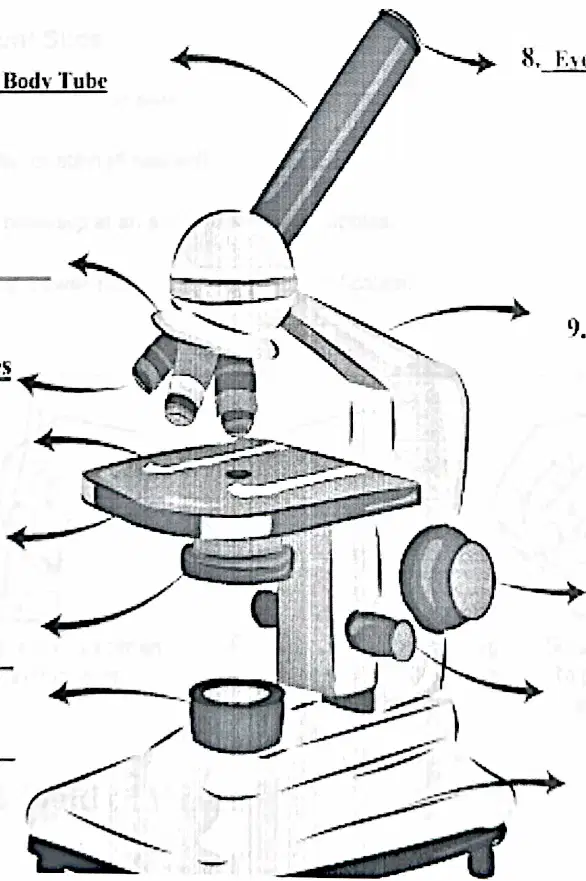
What is the main function of the coarse adjustment knob?
Hold the slide in position
Sharpen fine details at high power
Bring specimen into general focus
Illuminate the specimen evenly
A microscope has a 10x eyepiece and a 40x objective lens. What is the total magnification?
10x total magnification
40x total magnification
100x total magnification
400x total magnification
Which step should you do FIRST when using a microscope to find a specimen?
Begin with lowest power lens
Close diaphragm fully
Use fine adjustment immediately
Start with highest power objective
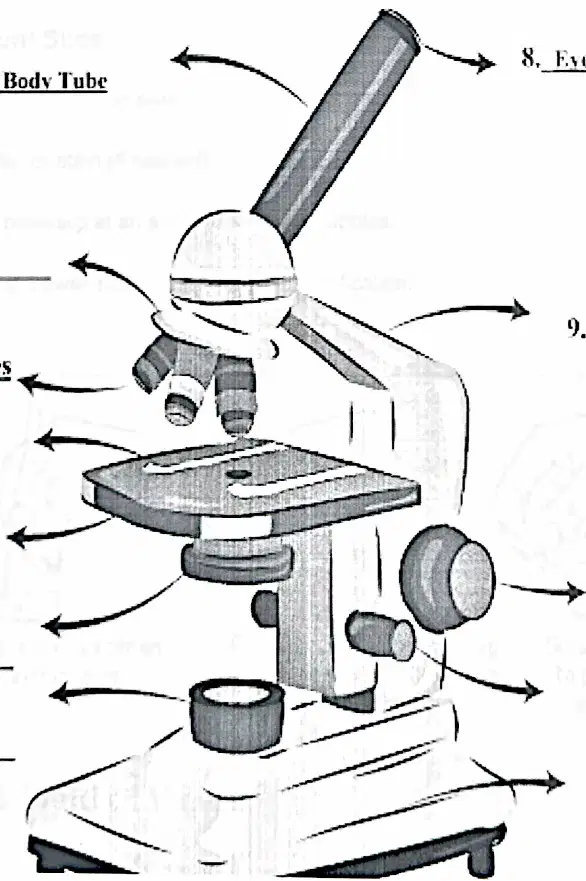
Which part is the platform that holds the slide?
Nosepiece platform
Stage platform
Base platform
Arm platform
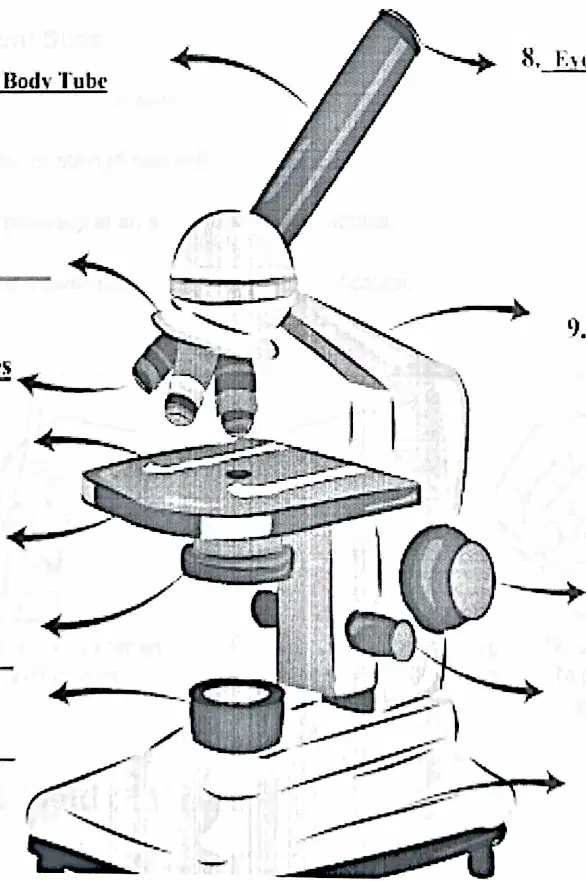
Stage clips are used to do which task?
Control light intensity
Carry the microscope
Move the objective lenses
Hold the slide in place
What is the correct order for focusing on low power?
Diaphragm then coarse knob
Coarse knob then fine knob
Eyepiece then switch objectives
Fine knob then coarse knob
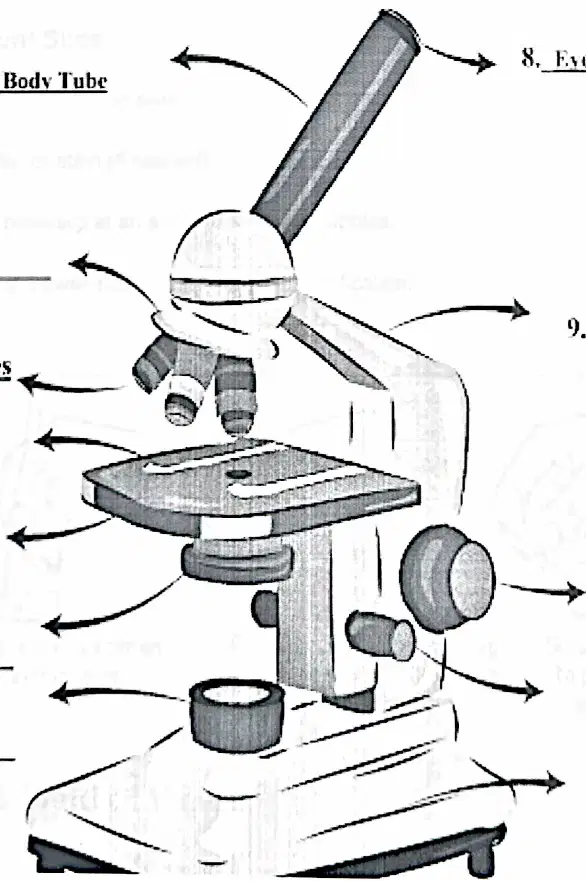
Which part provides additional magnification of 4x, 10x, or 40x?
Diaphragm provides 4x–40x
Eyepiece provides 4x–40x
Illuminator provides 4x–40x
Objective lenses provide 4x–40x
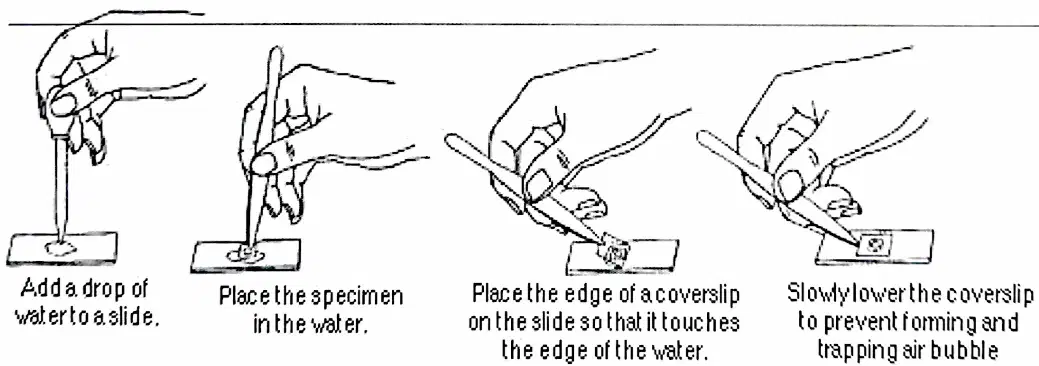
Why place a coverslip at an angle during wet mount preparation?
To keep slide from moving
To increase magnification
To avoid forming air bubbles
To trap more air bubbles
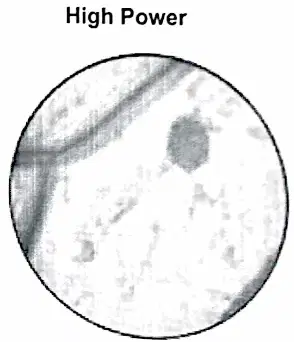
Higher magnification affects the field of view in what way?
Larger field of view
Smaller field of view
Field of view becomes brighter
Unchanged field of view
When carrying a microscope safely, where should your hands be?
One hand on eyepiece only
Both hands on the base
One hand on arm, one on base
Both hands on objective lenses
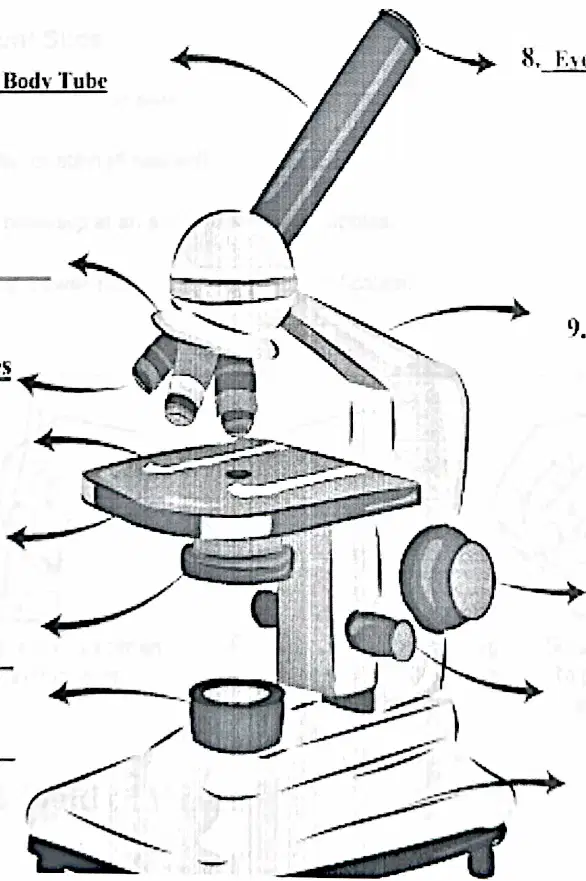
Which lens is typically 10x and is looked through by the user?
Mirror lens viewed by user
Diaphragm lens viewed by user
Objective lens viewed by user
Ocular lens viewed by user
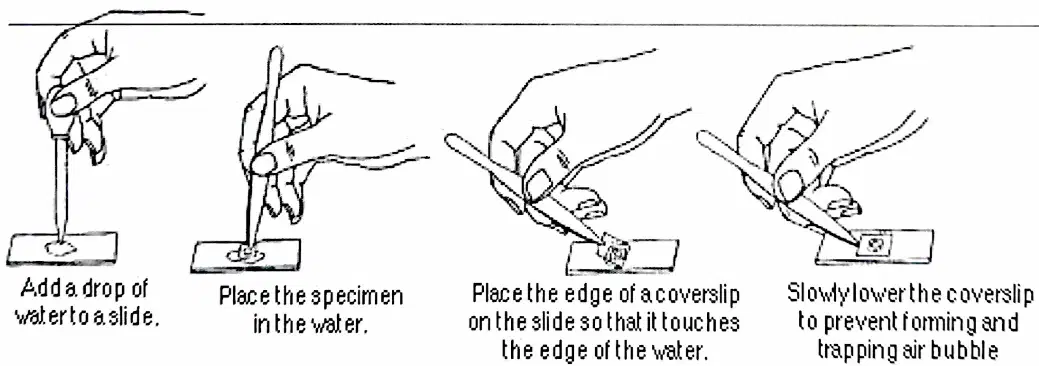
During slide preparation, what should be done if the specimen is dry?
Add a drop of water or stain
Close the diaphragm fully
Skip the coverslip entirely
Increase objective immediately
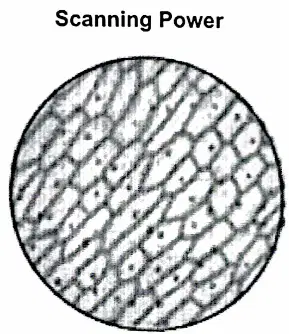
Which power is called scanning and uses a 4x objective with a 10x eyepiece?
Scanning power equals 40x total
Medium power equals 10x total
Low power equals 100x total
High power equals 400x total
If the image is bright but lacks contrast, which adjustment should you try?
Rotate the nosepiece only
Open the diaphragm fully
Adjust the diaphragm partially
Tighten the stage clips

