
Font size
 Worksheets
Unidad 2: Entre amigos — Worksheet Questions (Grade 12)
Total questions: 150
Worksheet time: 1hrs 15mins
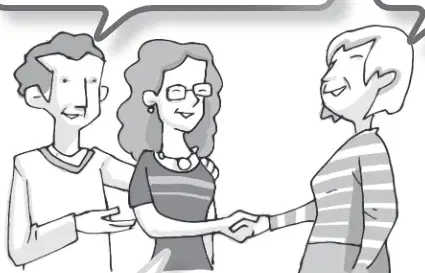
Presentaciones. Choose the expression that correctly completes the speech bubble: “Hola, Eva. Mira, ___.” Options come from the prompt labels.
Encantada de conocerte
Me llamo Daniel
Mucho gusto, Eva
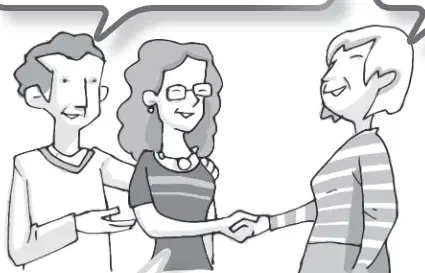
Presentaciones. Choose the expression that correctly completes the speech bubble: “¡Ah, hola! ____, Carmen.” Options come from the prompt labels.
Encantada de conocerte
Mucho gusto, Eva
Presentaciones. Choose the expression that correctly completes the speech bubble: “Buenos días. ____, y soy el nuevo profesor de Español.” Options come from the prompt labels.
Me llamo Daniel
Mucho gusto, Eva
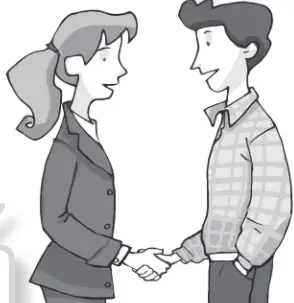
Presentaciones. Choose the expression that correctly completes the speech bubble after a handshake: “____.” Options come from the prompt labels.
Encantada de conocerte
Mucho gusto, Eva
Aficiones. Match by choosing the best completion: escuchar ___
música
un paseo
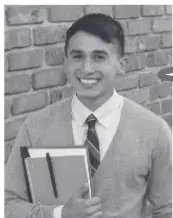
Me gusta… Complete the text with a word from the box [cantar, los lunes, el cine]: “Hola, me llamo José. Me gusta mucho ___ y ___.”
cantar
el cine
Reacciones. Choose the most appropriate reaction to the statement: “¡Gané un viaje a Costa Rica!”
¡Qué suerte!
¡Qué lindo!
¿Cómo eres? Choose the response that best completes the test item: “Si un(a) amigo(a) te miente, ¿lo perdonas y vuelves a confiar en él/ella o rompes la amistad?”
Rompo la amistad.
Lo perdono si se disculpa.
Crucigrama. Choose the word that fits the VERTICAL clue: “El ___ de una madre es lo más bonito del mundo.”
amor
beso
Pronombres de objeto. Choose the correct replacement with object pronouns: “Tengo problemas y no sé cómo resolver los problemas.” →
resolverlos
resuélvelos
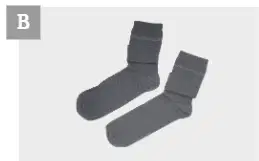
Match each dialogue to the correct photograph of the gift. Dialogue: «Les traigo un regalo. —¿A ver? ¡Qué bonitos! —¿Se los pondrán? —Sí, sí, seguro que se los ponen.» Which photograph shows the gift described?
A: a bouquet of flowers in a vase on a table
B: a pair of knit socks placed side by side
C: a wristwatch resting on a folded shirt
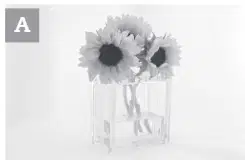
Match each dialogue to the correct photograph of the gift. Dialogue: «—¿Dónde las compraste? Son muy bonitas. —Las compré en el centro comercial. —¿Y cuándo se las vas a dar? —Se las voy a dar mañana. ¿Le gustarán?» Which photograph shows the gift described?
A: a bouquet of flowers in a vase on a table
B: a pair of knit socks placed side by side
C: a wristwatch resting on a folded shirt
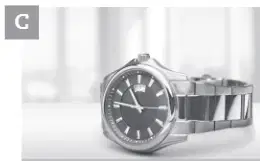
Match each dialogue to the correct photograph of the gift. Dialogue: «—Toma, te compré este regalo. —¿Es para mí? ¡Qué bonito! Me lo voy a poner ahora mismo.» Which photograph shows the gift described?
A: a bouquet of flowers in a vase on a table
B: a pair of knit socks placed side by side
C: a wristwatch resting on a folded shirt
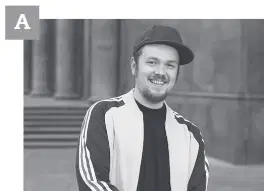
Which gift corresponds to the person in photograph A? Choose the correct gift photo label.
A: bouquet of flowers
B: knit socks
C: wristwatch
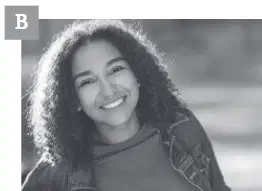
Which gift corresponds to the person in photograph B? Choose the correct gift photo label.
A: bouquet of flowers
B: knit socks
C: wristwatch
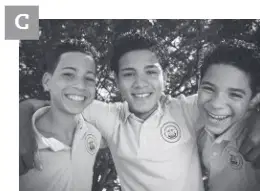
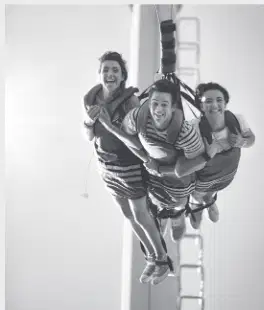
Which gift corresponds to the people in photograph C? Choose the correct gift photo label.
A: bouquet of flowers
B: knit socks
C: wristwatch
Complete the dialogue with the missing pronouns. Select all pronouns that correctly appear in the completed conversation between Sara and Eva about Juan.
lo
me
te
se
la
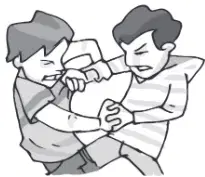
Match each sentence to the correct drawing. Sentence: «Pedro y Pablo se pelean por todo.» Which drawing shows this?
A: two students scuffling and grabbing each other
B: two students working together at a desk
C: two students sitting and talking on a bench
D: two students turned away from each other with angry expressions
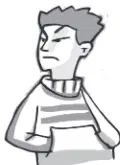
Match each sentence to the correct drawing. Sentence: «Pedro y Carlos se odian y no se hablan nunca.» Which drawing shows this?
A: two students scuffling and grabbing each other
B: two students working together at a desk
C: two students sitting and talking on a bench
D: two students turned away from each other with angry expressions
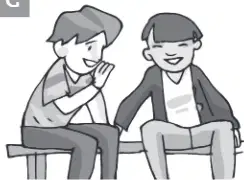
Match each sentence to the correct drawing. Sentence: «Pedro y Mario se quieren mucho y se cuentan todo.» Which drawing shows this?
A: two students scuffling and grabbing each other
B: two students working together at a desk
C: two students sitting and talking on a bench
D: two students turned away from each other with angry expressions
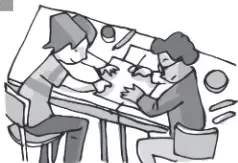
Match each sentence to the correct drawing. Sentence: «Pedro y Eduardo se entienden muy bien y se ayudan mucho en clase.» Which drawing shows this?
A: two students scuffling and grabbing each other
B: two students working together at a desk
C: two students sitting and talking on a bench
D: two students turned away from each other with angry expressions
Choose the verb that best describes the relationship. «Sherlock Holmes y el Doctor Watson ______.»
se pelean
se odian
se ayudan
se quieren
Choose the verb that best describes the relationship. «Harry Potter y Voldemort ______.»
se quieren
se odian
se ayudan
se hablan
Choose the verb that best describes the relationship. «Romeo y Julieta ______.»
se odian
se pelean
se quieren
se ayudan
Choose the verb that best describes the relationship. «Robin Hood y el sheriff de Nottingham ______.»
se pelean
se quieren
se ayudan
se conocen
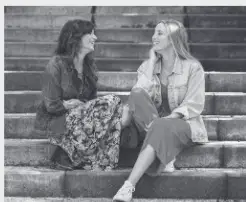
Fill the blank in the text with the correct verb from the box. «Se ______ hace diez años.»
conocieron
reconciliaron
apoyan
quieren
Fill the blank in the text with the correct verb from the box. «Se ______ muy bien desde el principio.»
cuentan
entendieron
pelean
pelearon
Fill the blank in the text with the correct verb from the box. «y por eso se ______ todos sus problemas y secretos.»
quieren
apoyan
cuentan
reconciliaron
Fill the blank in the text with the correct verb from the box. «Cuando están tristes, se ______ la una en la otra.»
apoyan
pelean
quieren
conocieron
Fill the blank in the text with the correct verb from the box. «Nunca se ______.»
cuentan
pelean
quieren
apoyan
Fill the blank in the text with the correct verb from the box. «Bueno, sí, una vez se ______.»
quieren
apoyan
pelearon
reconciliaron
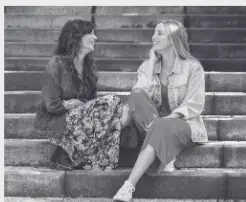
Fill the blank in the text with the correct verb from the box. «pero enseguida se ______.»
cuentan
conocieron
reconciliaron
entendieron
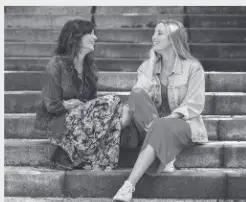
Fill the blank in the text with the correct verb from the box. «Se ______ mucho.»
pelean
quieren
apoyan
cuentan
Select the sequence that correctly reflects the routine order shown. First to last:
levantarse → ducharse → vestirse → lavarse los dientes
ducharse → vestirse → levantarse → lavarse los dientes
vestirse → levantarse → ducharse → lavarse los dientes
lavarse los dientes → levantarse → ducharse → vestirse
In the friendship test, what is the best response when a friend experiences something very good?
ignorar la noticia
me alegro mucho y lo felicito
decir que no me importa
criticarlo por presumir
In the friendship test, what is the best response when you argued with a friend and you are wrong?
le pido perdón por mi equivocación
lo ignoro por unos días
le cuento su secreto a otros
le pido dinero
In the friendship test, what is the best response when a friend tells you a problem or a secret?
lo ayudo y no cuento su secreto a nadie
lo critico y comparto su historia
me río de él
le digo que no me interesa
In the friendship test, what is the best response when a friend lies to you and later apologizes?
lo perdono
lo humillo
rompo la amistad sin hablar
exijo regalos
In the friendship test, what is the best response when a friend is sad and needs you, but you already have plans?
lo llamo y hablo con él un rato
lo evito y me voy
le digo que no puedo nunca
le mando un mensaje ofensivo
Choose the verb that best completes the modeled sentence. «Mi hermana y yo nos ______ por la ropa.»
conocimos
ayudamos
peleamos
odiamos
Choose the verb that best completes the modeled sentence. «Mi mejor amiga y yo nos ______ en la escuela.»
conocimos
peleamos
odiamos
ponemos celosos
Choose the verb that best completes the modeled sentence. «Mis compañeros de clase y yo nos ______.»
ayudamos
odiamos
peleamos
conocimos
Choose the verb that best completes the modeled sentence. «Mi perro y mi gato se ______.»
ayudan
conocen
odian
se ponen celosos
Choose the verb that best completes the modeled sentence. «Mi mejor amigo se ______ si no lo llamo.»
pone celoso
conoce
ayuda
pelea

Choose the word that best completes the dedication sentence. «Nos ______ un día triste y lluvioso.»
conocimos
reconciliamos
peleamos
quisimos

Choose the word that best completes the dedication sentence. «Ese día me ______ de ti.»
dolor
enamoré
abrazo
amistad

Choose the word that best completes the dedication sentence. «Nos ______ mucho al principio, nos peleamos después, te odié mucho tiempo, pero nos ______ después.»
conocimos / abrazamos
quisimos / reconciliamos
amamos / peleamos
apoyamos / contamos

Choose the word that best completes the card dialogue. «Un día el ______ le preguntó a la ______: ‘¿Para qué existes tú si estoy yo?’»
dolor / abrazo
amor / amistad
amistad / amor
abrazo / dolor

Choose the words that best complete the line. «Para dejar un ______ donde tú dejaste ______.»
dolor / amor
abrazo / dolor
amor / abrazo
amistad / dolor
Choose the best closing line for a Valentine’s Day card based on the model provided.
¡Feliz día del amor y de la amistad!
No me llames nunca.
Odio las celebraciones.
No me interesan las tarjetas.
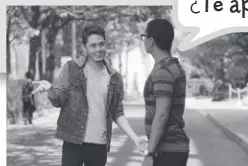
Presentations. Number the sentences to order this conversation. Which sentence should be first in the conversation?
“Buenas noches, señor López. Quiero presentarle al señor Garcia, el anfitrión de la fiesta.”
“Encantado de conocerlo, señor García.”
Presentations. Number the sentences to order this conversation. Which sentence should be second in the conversation?
“Encantado de conocerlo, señor García.”
“Mucho gusto.”
Creative excuses. Complete these invitations with the correct word from the list: invito, apetece, vamos, planes. What word correctly completes “¿Tienes ______ para esta tarde?”
invito
apetece
A tight Saturday. Look at Raúl’s schedule and complete the sentences with the words: tarde, temprano, tiempo. Which word correctly completes “Si salgo de casa a las 8, llegaré muy ______ al partido.”
tarde
temprano
In the family. Complete the dialogues by choosing the correct verb form (infinitive or present subjunctive) indicated in parentheses. Adela: “Quiero (ir) ______ a la fiesta de Ana.”
ir
vaya
Pequeños accidentes. Complete what happened to Isabel by choosing the correct verb that fits the sentence from this list: abrirse, cerrarse, caerse, romperse, dormirse, despertarse, calentarse, mancharse, quedarse. Sentence: Yesterday I was sleeping and, suddenly, the window of my room ____.
opened
closed
fell
broke
Pequeños accidentes. Choose the correct verb from the list: abrirse, cerrarse, caerse, romperse, dormirse, despertarse, calentarse, mancharse, quedarse. Sentence: The door ____ because of the wind.
opened
closed
broke
fell
Pequeños accidentes. Choose the correct verb from the list: abrirse, cerrarse, caerse, romperse, dormirse, despertarse, calentarse, mancharse, quedarse. Sentence: The mirror ____ and _____.
fell and broke
opened and closed
broke and fell
stained and opened
Pequeños accidentes. Choose the correct verb from the list: abrirse, cerrarse, caerse, romperse, dormirse, despertarse, calentarse, mancharse, quedarse. Sentence: I was so scared that I ____ until five in the morning.
fell asleep
woke up
stayed at home
heated up
Pequeños accidentes. Choose the correct verb from the list: abrirse, cerrarse, caerse, romperse, dormirse, despertarse, calentarse, mancharse, quedarse. Sentence: While I was showering, I put coffee in the microwave. I left it so long that it ____ too much and spilled out of the cup, and my blouse and skirt ____.
heated up; got stained
opened; broke
closed; fell
woke up; stayed home
Pequeños accidentes. Choose the correct verb from the list: abrirse, cerrarse, caerse, romperse, dormirse, despertarse, calentarse, mancharse, quedarse. Sentence: Some days it’s better to ____ at home.
stay
wake up
fall
open
Family habits. Choose the verb that correctly completes the question: (to remember) Do you always remember your friends’ birthdays?
to remember
to forget
to worry
to seem like
Family habits. Choose the verb that correctly completes the question: (to forget) Do you ____ the things your parents tell you?
forget
remember
cheer up
eat
Family habits. Choose the verb that correctly completes the question: (to eat) Do you ____ all the food on your plate?
eat
remember
worry
resemble
Family habits. Choose the verb that correctly completes the question: (to worry) Do you ____ about the Spanish exam grade?
worry
cheer up
forget
wake up
Family habits. Choose the verb that correctly completes the question: (to cheer up) What song ____ your day?
cheers up
worries
resembles
forgets
Family habits. Choose the verb that correctly completes the question: (to resemble) Which family member do you want to ____?
resemble
forget
cheer up
eat
Jaime’s preferences. Decide which items describe what Jaime likes. Select all that apply. Options: Argentine cinema; birthday parties; meeting up with friends; arriving early to places; waking up with music; not raining on Saturday; passing the driving test; learning Spanish; my mother daring to fly in an airplane; Pilar going out with me.
Argentine cinema
Birthday parties
Meeting up with friends
Arriving early to places
Waking up with music
Jaime’s wishes. Decide which items describe Jaime’s desires. Select all that apply. Options: not raining on Saturday; passing the driving test; my mother daring to fly in an airplane; learning Spanish; Pilar going out with me; Argentine cinema.
Not raining on Saturday
Passing the driving test
My mother daring to fly in an airplane
Learning Spanish
Pilar going out with me
Making plans. Which line starts the conversation between two friends who are making plans? Options are the speech balloons shown: “Hi, Arturo! Do you feel like coming to my house this afternoon?”, “No, I don’t feel like it much. I prefer to go out for a bit. Shall we go to the movies?”, “Yes, why not? What movie do you feel like seeing?”, “I feel like seeing the latest by Bardem.”
Hi, Arturo! Do you feel like coming to my house this afternoon?
No, I don’t feel like it much. I prefer to go out for a bit. Shall we go to the movies?
Yes, why not? What movie do you feel like seeing?
I feel like seeing the latest by Bardem.
Making plans. After “No, I don’t feel like it much. I prefer to go out for a bit. Shall we go to the movies?”, which reply comes next in the conversation? Options: “Yes, why not? What movie do you feel like seeing?”; “I feel like seeing the latest by Bardem.”; “Okay, me too. And then I’ll treat you to something to eat. Do you feel like it?”; “Thanks a lot, but I can’t. My grandparents are coming for dinner and I have to get back home soon.”
Yes, why not? What movie do you feel like seeing?
I feel like seeing the latest by Bardem.
Okay, me too. And then I’ll treat you to something to eat. Do you feel like it?
Thanks a lot, but I can’t. My grandparents are coming for dinner and I have to get back home soon.
Do you feel like…? Your friend asks: “Do you feel like riding a bicycle tomorrow morning?” Choose the response that rejects the proposal according to the indication.
Sorry, but I have a Science exam.
Sure. I love Mexican food.
Okay, but I have to go to my grandmother’s birthday party.
Great idea; let’s see the latest by Bardem.
Do you feel like…? Your friend asks: “I forgot about the Science exam. How about Mexican food?” Choose the response that accepts the proposal according to the indication.
Okay. I love Mexican food.
Sorry, I can’t. My uncle is in the hospital.
No, I’m very tired because I stayed up studying.
Let’s leave a message in the voice mailbox.
Do you feel like…? Your friend asks: “After eating, I have to go to my grandmother’s 90th birthday party. Do you want to come?” Choose the response that rejects the proposal according to the indication.
Thanks, but I can’t. My uncle is in the hospital.
Okay. I love Mexican food.
I’m very tired because I stayed up late studying.
Call back later.
Do you feel like…? Your friend asks: “If we go to the movies at night?” Choose the response that rejects the proposal according to the indication due to being exhausted after studying until four in the morning.
No, I’m very tired because I stayed up studying until four in the morning.
Sure, I feel like seeing the latest by Bardem.
Okay, me too.
Yes, what movie do you feel like seeing?
An invitation. In the sample invitation, which line provides the date and location of the event? Options: “I invite you to the celebration of my birthday.”; “The 16th of Carlos”; “On Sunday, June 10, at 3:00 p.m. in Parque Colón.”; “There will be food, music, and dancing. Don’t miss it!”
I invite you to the celebration of my birthday.
The 16th of Carlos.
On Sunday, June 10, at 3:00 p.m. in Parque Colón.
There will be food, music, and dancing. Don’t miss it!
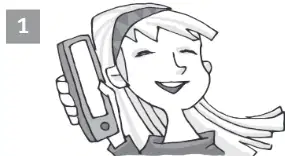
Phone actions. Identify the action represented by the drawing labeled 1. Options: to answer the phone; to hang up the phone; to dial the number; to send a text message.
to answer the phone
to hang up the phone
to dial the number
to send a text message
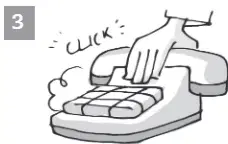
Phone actions. Identify the action represented by the drawing labeled 3. Options: to answer the phone; to hang up the phone; to dial the number; to run out of battery.
to answer the phone
to hang up the phone
to dial the number
to run out of battery
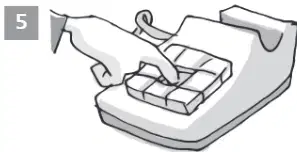
Phone actions. Identify the action represented by the drawing labeled 5. Options: to dial the number; to leave a message; to call back; to run out of minutes.
to dial the number
to leave a message
to call back
to run out of minutes
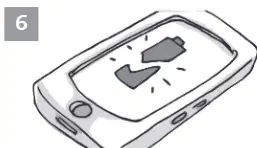
Phone actions. Identify the action represented by the drawing labeled 6. Options: to run out of battery; to pick up the phone; to send a text message; to answer the phone.
to run out of battery
to pick up the phone
to send a text message
to answer the phone
Telephone calls. Choose the correct option: If you play on your cell phone a lot, you _____.
dial a number
run out of battery
Telephone calls. Choose the correct option: When you don’t answer your cell phone, you _____.
have a missed call
have to hang up the phone
Telephone calls. Choose the correct option: If someone leaves you a message, you have to _____.
listen to the voice mailbox
call back
Telephone calls. Choose the correct option: If you can’t make a call, it’s because you _____.
ran out of minutes
hung up the phone
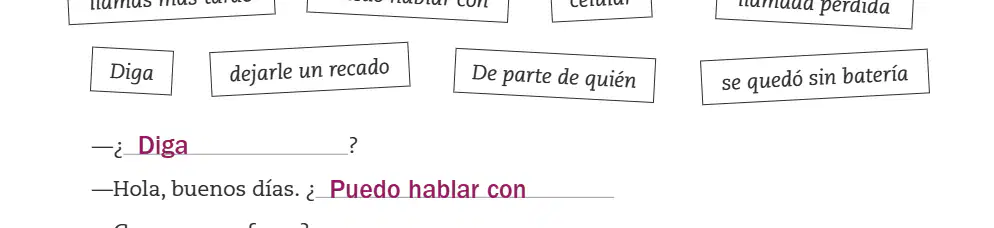
Unsuccessful call. Complete the dialogue by choosing the phrase that fits the blank. Opening line: —____? Options: Hello?; May I speak with…; Who’s calling?; cell phone; leave a message; missed call; ran out of battery; call later.
Hello?
May I speak with…
Who’s calling?
cell phone
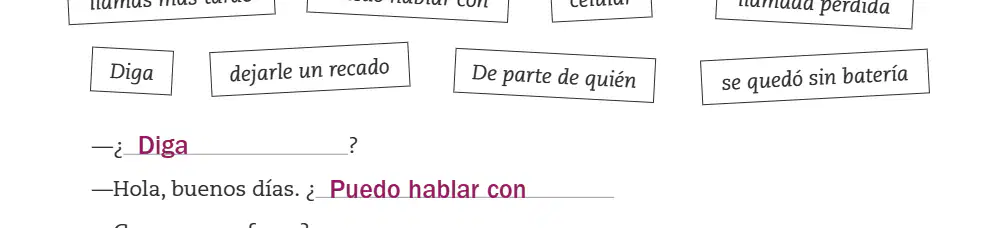
Unsuccessful call. Complete the dialogue: —Hello, good morning. ____ Carmen, please? Options: Hello?; May I speak with…; Who’s calling?; cell phone.
Hello?
May I speak with…
Who’s calling?
cell phone
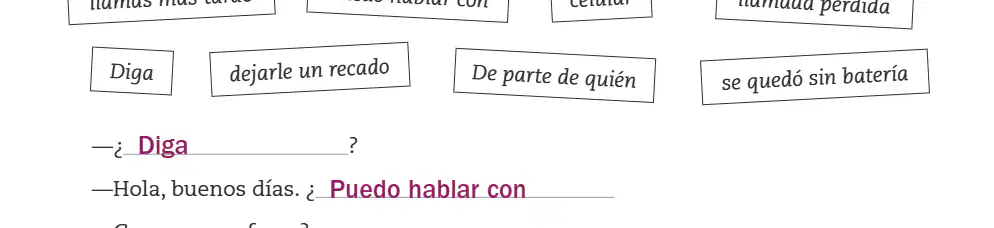
Unsuccessful call. Complete the dialogue: —I’m sorry, she’s not home right now. —____? Options: Who’s calling?; May I speak with…; leave a message; ran out of battery.
Who’s calling?
May I speak with…
leave a message
ran out of battery
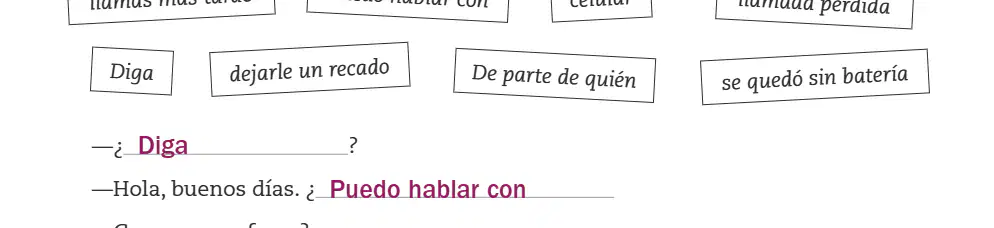
Unsuccessful call. Complete the dialogue: —Oh, hi, Marcos. Do you want to ____? Options: leave a message; cell phone; missed call; call later.
leave a message
cell phone
missed call
call later
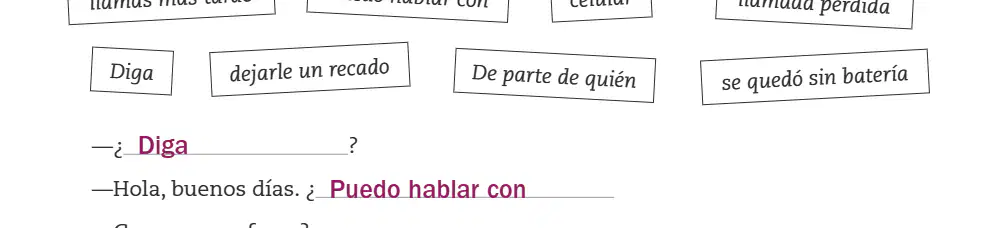
Unsuccessful call. Complete the dialogue: —I prefer to call her on her _____. Options: cell phone; leave a message; missed call; ran out of battery.
cell phone
leave a message
missed call
ran out of battery
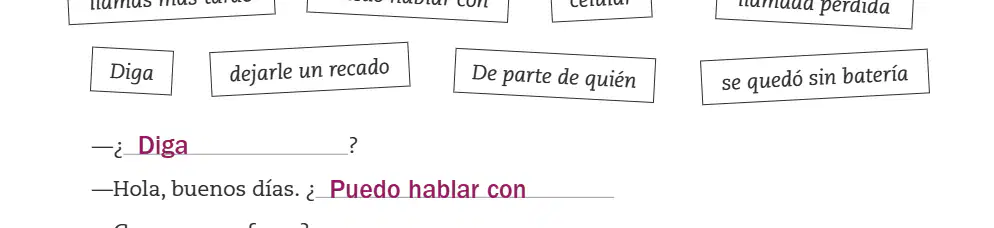
Unsuccessful call. Complete the dialogue: —I think she _____. Options: ran out of battery; call later; Hello?; dial the number.
ran out of battery
call later
Hello?
dial the number
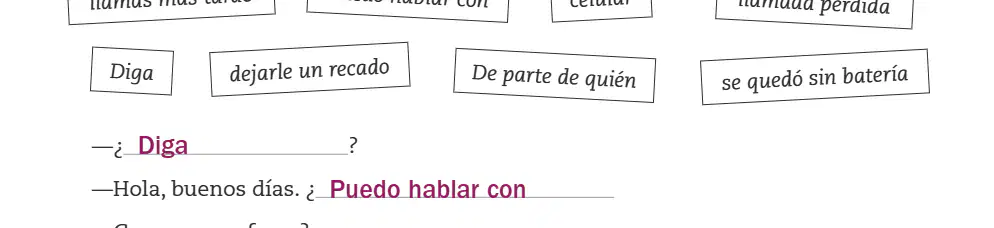
Unsuccessful call. Complete the dialogue: —Why don’t you ____? Options: call later; leave a message; missed call; answer the phone.
call later
leave a message
missed call
answer the phone
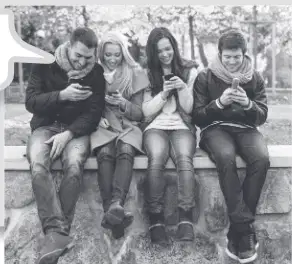
Match to make a meaningful class rule: Choose the clause that best completes “Antes de entrar en clase,”.
deben dejar sus mesas recogidas.
debemos cuidar el material escolar.
hay que apagar el celular.
hay que guardar silencio.
tienen que cambiar de clase los lunes y viernes.
Match to make a meaningful class rule: Choose the clause that best completes “Los estudiantes de Español”.
deben dejar sus mesas recogidas.
debemos cuidar el material escolar.
hay que apagar el celular.
tienen que cambiar de clase los lunes y viernes.
hay que respetar las opiniones de los demás.
Match to make a meaningful class rule: Choose the clause that best completes “Todos”.
deben dejar sus mesas recogidas.
debemos cuidar el material escolar.
hay que apagar el celular.
hay que guardar silencio.
hay que respetar las opiniones de los demás.
Match to make a meaningful class rule: Choose the clause that best completes “Cuando salgan de clase,”.
deben dejar sus mesas recogidas.
debemos cuidar el material escolar.
hay que apagar el celular.
hay que guardar silencio.
hay que respetar las opiniones de los demás.
Match to make a meaningful class rule: Choose the clause that best completes “En los trabajos en grupo”.
hay que respetar las opiniones de los demás.
debemos cuidar el material escolar.
tienen que cambiar de clase los lunes y viernes.
hay que apagar el celular.
hay que guardar silencio.
Match to make a meaningful class rule: Choose the clause that best completes “Cuando hable un compañero,”.
deben dejar sus mesas recogidas.
debemos cuidar el material escolar.
hay que apagar el celular.
hay que guardar silencio.
hay que respetar las opiniones de los demás.
Select the sentences that correctly state additional class rules using obligation expressions.
You must participate in class activities.
Everyone must pay attention and take notes.
Phones may be used freely during class.
No one needs to respect others’ opinions in group work.
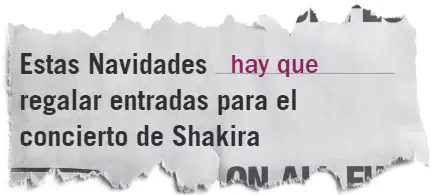
Complete the headline by choosing the correct expression: “Estas Navidades _____ regalar entradas para el concierto de Shakira.”
hay que
tiene que
Complete the headline by choosing the correct expression: “Lo que no _____ hacer una persona en su primer día de universidad.”
hay que
tiene que
Complete the headline by choosing the correct expression: “101 libros que _____ leer antes de dormir.”
hay que
tiene que
Complete the headline by choosing the correct expression: “¿Qué _____ saber un turista que viaja a México?”
hay que
tiene que
Choose the correct expression to complete the sentence: “Ana ha perdido su teléfono celular. _____ informar a su compañía.”
hay que
tengo que
tiene que
tienes que
Choose the correct expression to complete the sentence: “Para participar en el concurso _____ mandar un mensaje de texto al 572 con la palabra PARTICIPA.”
hay que
tengo que
tiene que
tienes que
Choose the correct expression to complete the sentence: “Cuando el teléfono se queda sin batería, _____ ponerlo a cargar.”
hay que
tengo que
tiene que
tienes que
Choose the correct expression to complete the sentence: “_____ llamar a Ana porque tengo una llamada perdida suya.”
hay que
tengo que
tiene que
tienes que
Choose the correct expression to complete the sentence: “Si quieres hablar con Lucía, _____ llamar más tarde.”
hay que
tengo que
tiene que
tienes que
Select the sentences that correctly state household obligations using deber, tener que, or hay que.
I have to clean my room.
I should help prepare the food.
The lawn must be cut once a month.
I must help my little brother with his homework.
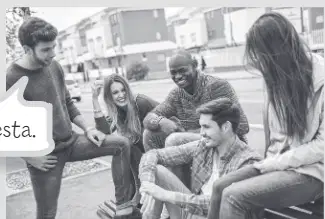
When Adela thinks about her future, choose the correct first person singular future form to complete: “(hacer) _____ una fiesta para celebrarlo.”
haré
hago
haría
he hecho
Choose the correct first person singular future form to complete: “(poder) _____ viajar.”
podré
puedo
podría
he podido
Choose the correct first person singular future form to complete: “(salir) _____ todos los fines de semana con mis amigos.”
saldré
salgo
saldría
he salido
Choose the correct first person singular future form to complete: “(tener) _____ dinero para comprarme un coche.”
tendré
tengo
tendría
he tenido
Choose the correct first person singular future form to complete: “(querer) _____ tener más tiempo para estudiar.”
querré
quiero
querría
he querido
Choose the sentence that correctly narrates future actions with the structure cuando + present + future main clause: “_____ a su casa a las nueve, tomará un taxi.”
Cuando salga
Cuando saldrá
Cuando ha salido
Cuando salía
Choose the sentence that correctly completes the plan: “Cuando _____ a la estación, subirá al tren para Monterrey.”
llegue
llegará
ha llegado
llegaba
Choose the sentence that correctly completes the plan: “Cuando se reúna con Antonio, _____ el contrato.”
firmará
firma
ha firmado
firmaría
Choose the sentence that correctly completes the plan: “Cuando tome un taxi, _____ al ensayo.”
irá
va
ha ido
iría
Choose the sentence that correctly completes the plan: “Cuando llegue al camerino, _____.”
se maquillará
se maquilla
se ha maquillado
se maquillaría
Choose the sentence that correctly completes the plan: “Cuando salga al escenario, _____ los bailes.”
ensayará
ensaya
ha ensayado
ensayaría
Based on the performance calendar, choose the correct future time marker to complete the text: “Hoy es domingo 9 de octubre. Natalia Guzmán actuará esta noche en Buenos Aires. _____ su espectáculo de salsa irá hasta Córdoba, y _____ la podrán ver los habitantes de Rosario.”
Mañana / en tres días
Pasado mañana / mañana
La próxima semana / el mes que viene
Hoy / mañana
Choose the correct future time marker to complete: “_____ cambiará de país y la podremos ver en México D. F., y _____ sus fans de Miami podrán disfrutar de esta gran bailarina.”
La próxima semana / el mes que viene
Mañana / en tres días
Hoy / pasado mañana
El próximo año / mañana
Choose the correct future time marker to complete: “Después se tomará unos días de descanso y podremos volver a verla _____ en Chile.”
el próximo año
mañana
la próxima semana
pasado mañana
Complete the outcome using the future tense: “Cuando aprenda a hablar bien español, _____ de viaje a varios países del mundo hispano.”
iré
voy
iba
he ido
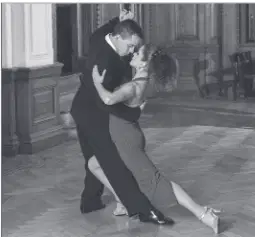
According to the contest notice, where and when must students register for the Latin dance contest?
In the school office between September 15 and 30
Online any day in October
At the theater on the day of the show
In the gym during lunch only
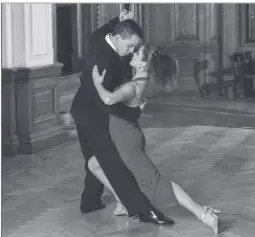
According to the contest rules, what must participants wear?
The typical clothing of their dance
Formal evening attire
Any casual clothes
Uniforms provided by the school
According to the contest rules, who is responsible for bringing the music?
Each pair brings their own music
The school provides all music
Only the judges bring music
No music is allowed
According to the contest rules, how large can groups be in the competition?
Up to four people per group
Up to six people per group
Only pairs are allowed; no groups
Any number of people
According to the contest rules, what is the maximum performance time for pairs or groups?
Three minutes
One minute
Five minutes
Ten minutes
According to the contest rules, which types of dance are permitted?
Any ballroom dance
Only salsa
Only tango and merengue
Hip-hop only
Complete this telephone conversation following the boxed directions: ask for Anabel Fuentes, the director of the Department of Personnel; ask when you can call her; and say that you called and that you will call again. According to these directions, whom should you ask for when the secretary answers?
Anabel Fuentes, director of the Department of Personnel
The switchboard operator
Any available assistant
The accounting manager
Complete this telephone conversation following the boxed directions: ask for Anabel Fuentes, the director of the Department of Personnel; ask when you can call her; and say that you called and that you will call again. When told she is in a meeting, which response best follows the directions?
Say you will call again in an hour
Insist on being connected immediately
Leave no message and hang up
Ask for the accounting department instead
Complete this telephone conversation following the boxed directions: ask for Anabel Fuentes, the director of the Department of Personnel; ask when you can call her; and say that you called and that you will call again. Which question fulfills the instruction to ask about timing?
When can I call her?
Who is speaking?
Can you transfer me to sales?
Do you have her email?
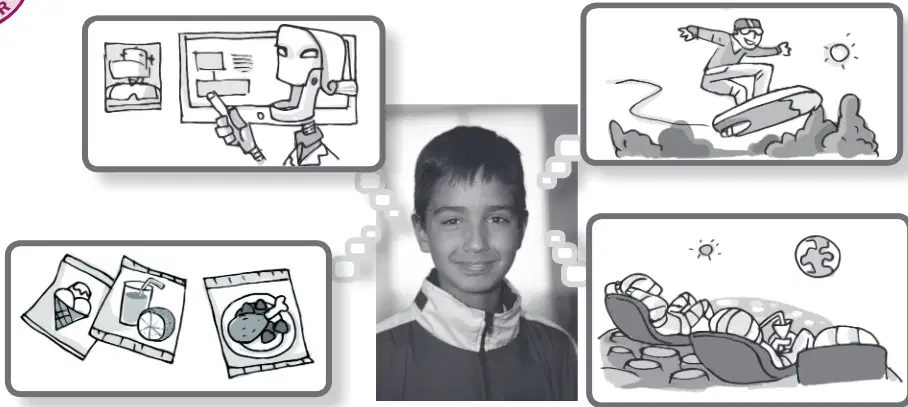
Write how Manuel imagines teachers, skates, food, and vacations in the year 3000. Based on the provided examples, what does Manuel imagine about teachers in the year 3000?
Teachers will be robots
Teachers will work only online from home
Teachers will no longer exist
Students will teach themselves without any teachers
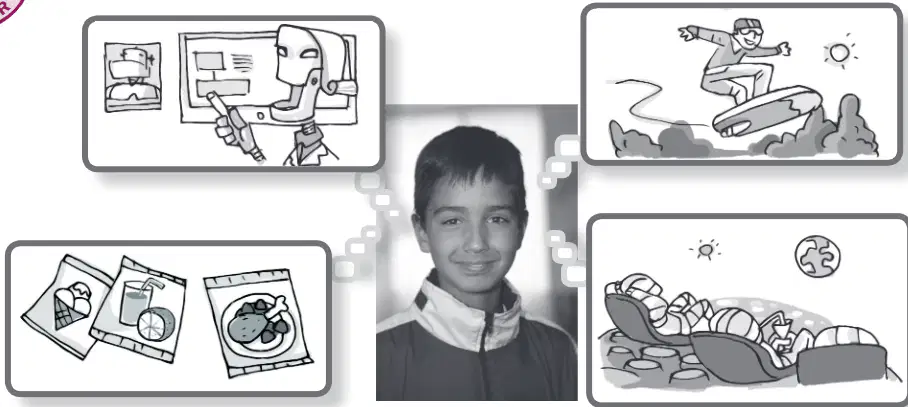
Write how Manuel imagines teachers, skates, food, and vacations in the year 3000. According to the examples, how does Manuel imagine using skates in the future?
People will fly using a skate
Skates will be banned
Skates will only be used indoors
Skates will become slower than walking
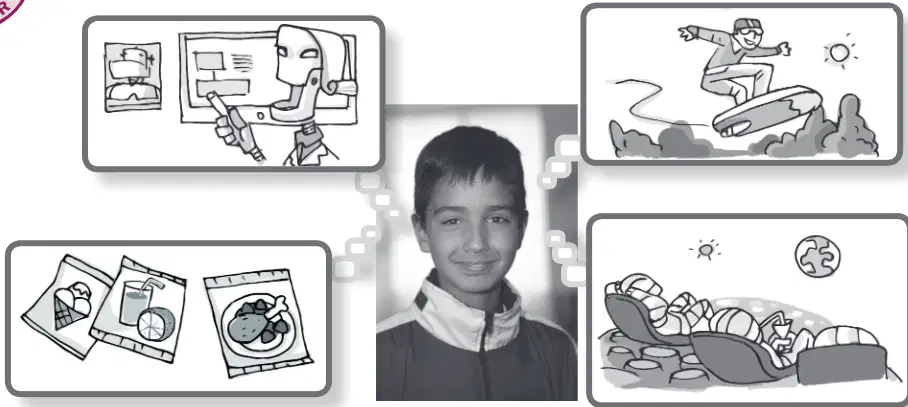
Write how Manuel imagines teachers, skates, food, and vacations in the year 3000. What does Manuel imagine about food in the year 3000?
Food will come in packets
Food will be grown only in home gardens
Meals will all be soups
Restaurants will disappear
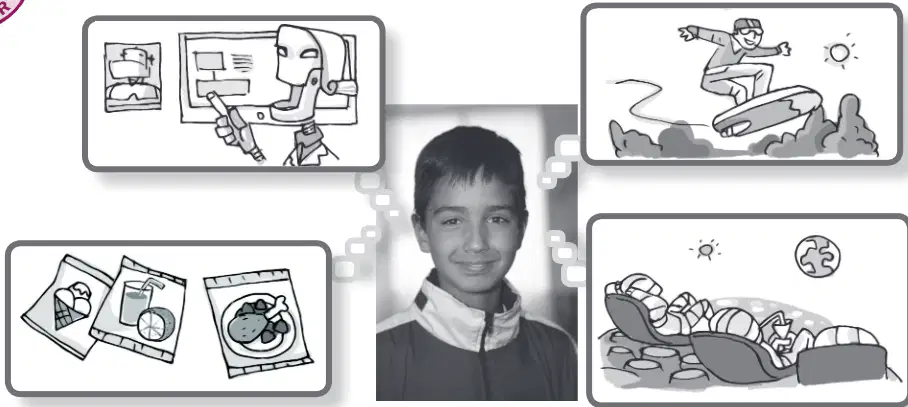
Write how Manuel imagines teachers, skates, food, and vacations in the year 3000. Where does Manuel imagine people will go on vacation?
To the Moon
Only to nearby cities
To underwater hotels
To virtual reality resorts
Answer questions about one of your friends. Where and when did you meet, according to the provided model answer?
At school seven years ago
At work last year
At a park five months ago
Online two years ago
Answer questions about one of your friends. What did you like most about this person at first, according to the model answer?
Their sincerity
Their fashion sense
Their athletic skills
Their cooking
Answer questions about one of your friends. Which qualities are highlighted in the checklist in the model answer? Select all that apply.
Never lies
Knows how to forgive
Always forgets friends
Respects everyone’s opinions
Answer questions about one of your friends. According to the model answers, how do you feel in these situations? Select all that apply.
You feel happy when you see each other
You feel sad when you fight
You feel indifferent when you meet
You feel angry when you study together
Answer questions about one of your friends. Complete the sentence according to the model: “I am very happy to …”
know him
borrow from him
compete with him
avoid him
Answer questions about one of your friends. Complete the wish stated in the model: “I hope that …”
we are always friends
we stop talking
we rarely meet
we never forgive each other
Write a dedication for your friend using the previous information. Which sentence from the model expresses hope for the future of the friendship?
I hope we are always friends
I liked your sincerity
I appreciate your trust
I feel happy when I see you
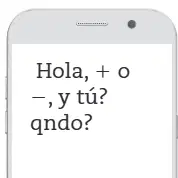
Choose one of these plans and write text messages to invite a friend. In the sample text exchanges, what does the abbreviation “qndo?” ask?
When?
Where?
Who?
How?
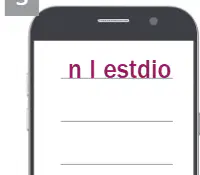
Choose one of these plans and write text messages to invite a friend. In the sample exchange, the reply “n l estdio” answers which question?
Where?
When?
Who is going?
How much does it cost?
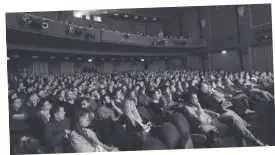
Choose one of these plans and write text messages to invite a friend. The message “bien, l sábdo” answers which detail of the plan?
The day of the event
The cost of tickets
The meeting point
The number of guests
Write your objectives for your Spanish class this year, using the ideas provided. What is the objective stated in sentence 1 of the model?
Improve my pronunciation
Memorize all vocabulary lists
Stop speaking English
Travel immediately to Spain
Write your objectives for your Spanish class this year, using the ideas provided. What is the objective in sentence 2 of the model?
Practice writing
Avoid grammar exercises
Only read poetry
Speak less in class
Write your objectives for your Spanish class this year, using the ideas provided. Which objective appears in sentence 3 of the model?
Study irregular verbs
Master advanced calculus
Learn French
Practice painting
Write your objectives for your Spanish class this year, using the ideas provided. Which cultural goal is named in sentence 4 of the model?
Learn more about Spanish and Latin American culture
Cook traditional dishes
Visit museums every weekend
Study only history of Spain

