
Font size
 Worksheets
French Revolution and the Enlightenment
Total questions: 76
Worksheet time: 43mins
Which statement best describes France’s status in the 1700s before the Revolution?
Religiously tolerant yet culturally unpopular
Militarily dominant with declining agriculture
Politically unified but economically isolated
Most advanced culture and prosperous foreign trade
Under the Old Regime, French society was divided into what?
Two estates and royal councils
Guilds, communes, and prefectures
Three estates or social classes
Four provinces and two parishes
Which development is highlighted as a recurring historical pattern in the material?
Foreign trade eliminates domestic conflicts
Economic and social inequalities spark revolts
Cultural achievements prevent political unrest
Religious unity resolves class tensions
Which description best captures Marie Antoinette’s approach to fashion reforms?
Advocated rigid dress regulations
Banned the wearing of undergarments
Supported tight corsetry for court
Promoted looser cotton dresses
Using the biographies, which inference explains public hostility toward the monarchy?
The king’s decisive policymaking
The court’s perceived extravagance
The nobles’ support for tax equality
The queen’s frugal household spending
Strategically, why did Louis XVI’s reliance on poor advice hinder reform?
It reduced the national deficit
It improved bureaucratic efficiency
It delayed necessary decisions
It strengthened popular trust
What slogan did revolutionary leaders adopt that reflected their ideals?
Order, Stability, Tradition
Liberty, Equality, Fraternity
Faith, Crown, Nation
Commerce, Industry, Prosperity
What was a key effect of making the Church part of the state during the reforms?
Monasteries gained tax exemptions again
Clergy were elected and paid as state officials
Church courts regained criminal jurisdiction
Pope appointed bishops for French dioceses
Despite reforms, what problem continued to challenge the new government?
International trade monopolies
Religious persecution of nobles
Food shortages and national debt
Colonial uprisings in the Caribbean
Why were Russia, Prussia, and Austria described as loosely attached to Napoleon’s empire?
They were neutral states refusing any diplomacy
They were fully annexed provinces of France
They were independent but tied through alliances
They were conquered colonies with French governors


80% of the French population were....
city workers
farmers
wealthy merchants
Roman Catholic clergy

Which group best replaces the question mark in the table?
Foreign citizens
Revolutionary leaders
Soldiers and military officers
Members of the middle class
clergy
The bourgeoisie (middle class) belonged to which of the three Estates?
First
Second
Third
None
The ___ made up roughly 97% of the French population.
First Estate
Second Estate
Third Estate
Church officials
Of the Three Estates, which one had the LEAST money, yet paid the MOST taxes?
First Estate
Second Estate
Third Estate
Before the Revolution, which TWO REASONS caused France to sink into debt?
France's support of the American Revolution
France's long-running war with England
Marie Antoinette's expensive taste
the invention of the printing press
What was the Estates General?
a war hero during the French Revolution
an assembly of representatives from the Three Estates
an assembly of royalty and noblemen
What was unfair about the Estates General?
Each Estate had to pay for their own travel to the meetings
Each Estate had unlimited votes
Each Estate got one vote, even though the Third Estate had most of France's population
Why did the Third Estate break off from the Estates General to create the National Assembly?
Because the Third Estate wasn't getting fair representation in the Estates General
Because the Second Estate had the most votes
Because the First Estate was too religious
What was the goal of the National Assembly?
to draft a new constitution for France
to move into the Palace of Versailles
to behead the king and queen
What happened when King Louis ordered the First and Second Estates to meet with the National Assembly, BUT he let his finance minister stay home?
thousands of outraged Parisians joined soldiers to storm the Bastille
thousands of Englishmen stormed the Bastille
millions of people went hungry
The Bastille was a prison, but it was also what TWO other things?
a symbol of royal power
a large storehouse of weapons
a royal bank
a getaway home for the Third Estate
As the rebellion spread through France, what system was abolished?
The Estates System
The monarchy
The Enlightenment ideas
The National Assembly wrote a constitution for France. What was the name of that constitution?
The Bill of Rights
The Versailles Treaty
The Declaration of the Rights of Man
What TWO main ideas were in the Declaration of the Rights of Man?
individual rights and freedoms are fundamental to human nature
government exists only to protect individual rights
freedom of speech
freedom to bear arms
What TWO things did the French nobles do when their privileges were stripped away?
they fled the country
they begged foreign rulers to invade France and restore order
they offered the clergy a room in the castle
they offered the Third Estate land
Even though he was still in charge, what did King Louis try to do in 1791 as the Revolution was underway?
flee the country
bribe members of the Third Estate
give food to the Third Estate
When King Louis was caught, what THREE things happened?
he was beheaded
the royal family was arrested
he was charged with treason
he went on vacation
True or False: With the beheading of King Louis, 1,000 years of monarchy ended and the first French Republic was declared.
True
False
True or False: Marie Antoinette was not executed.
True
False
The Reign of Terror took place during which important historical event?
American Revolution
World War I
French Revolution
Hundred Years' War
Which group ruled the country during the Reign of Terror?
Second Estate
Committee of Public Safety
French nobles
King Louis XVI
Who was the main French leader during the Reign of Terror?
Lafayette
King Louis XVI
Marie Antionette
Maximilien Robespierre
True or False: Everyone who was killed or imprisoned during the Reign of Terror received a fair trial.
True
False
True or False: Many revolutionaries used the Reign of Terror to execute their rivals.
True
False
What happened to Robespierre after the Reign of Terror ended?
He retired to his country house
He became the King
He was executed
He continued working in the government
What was the guillotine?
A revolutionary newspaper
A political club
The official uniform of the revolutionaries
A device used to execute people
True or False. King Louis XVI and Queen Marie Antoinette were executed.
True
False
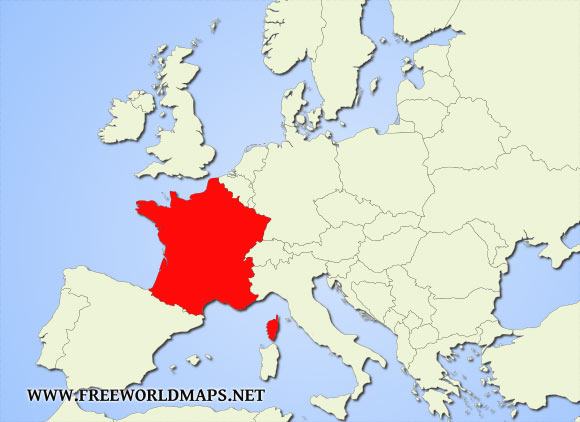
Which country stands out in this map?
England
France
Germany
Canada
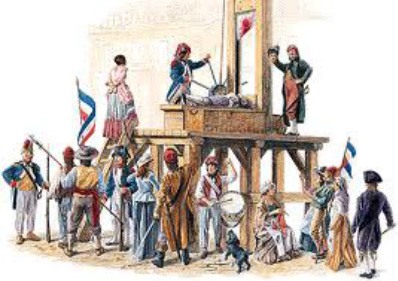
T/F: Only members of the clergy and nobility were killed during the Reign of Terror.
TRUE
FALSE
What was the Reign of Terror?
A period of mass execution on suspicion alone
A war against Austria, Great Britain, and Prussia
People being beaten
The storming of the Bastille
Which of these was an early event of the French Revolution?
France supported the American Revolution
France wrote a New Constitution
the Tennis Court Oath
Louis XIV was executed
The National Assembly was dissolved and replaced by
the French Republic.
the monarchy.
the Senate.
the National Convention.
Someone who supports extreme changes in a society is a
liberal
conservative
radical
Jacobin

What device was used to cause terror and fear during the Reign of Terror?
Flamethrower
Spear
Guillotine
Gallows
The Reign of Terror took place during which major historical event?
American Revolution
World War I
Hundred Years' War
French Revolution
Napoleonic Wars
Which group ruled the country during the Reign of Terror?
Second Estate
Committee of Public Safety
French nobles
Estates General
King Louis XVI and his advisors

The cartoonist's point of view is that
the 3rd Estate had no problem paying all the taxes in France
all 3 estates were treated equally before the Revolution
the estate system in France was unfair to the 3rd Estate
the Church was not a member of the estates.
The kingdoms of Austria and Prussia tried to invade France in order to
protect the French Revolution and help spread democratic ideas
put the autocratic King Louis back on the throne and stop the spread of democracy
After the fall of Robespierre and the end of the Reign of Terror, France obtained another constitution where power was transferred to a very corrupt five-member executive branch called
Concordat
Directory
Plebiscite
First Consul
Time period in Europe during the 17th & 18th Centuries when Philosophers began applying the concept of reason to the political environment and challenged absolutism (unlimited government).
Scientific Revolution
Renaissance
Enlightenment
Middle Ages
The rights of life, liberty, and property are called:
Unalienable Rights
Essential Rights
Natural Rights
Original Rights

An Unlimited Government where the king or queen have unlimited power
Constitutional Monarchy
Absolute Monarchy
Democracy
Dictatorship
The concept that people have to agree to be governed. If the government fails to protect their rights, people can revolt and abolish the government.
Separation of powers
Freedom of speech
Freedom of religion
Social Contract
This Enlightenment thinker believed in freedom of speech
John Locke
Rousseau
Machiavelli
Voltaire
The original goal of both the American and French Revolution was to....
To produce more food
To get rid of the monarchy rule
To create a new religion
To allow the people to become aristocrats
One of the first radical moves of the Reign of Terror was sending King Louis XVI to what?
The Electric Chair
The Guillotine
The Firing Squad
Drown
This nation was forced to pay an "independence debt" for its successful revolution.
America
Brazil
Mexico
Haiti
What was a major cause of the French Revolution?
inequalities in the tax structure
economic success of mercantilism
failure of the congress of Vienna
Continental System in Europe
Prior to the French Revolution, France was deep in debt because
money spent on the American Revolution
the monarchy's lavish spending
the 1st and 2nd estates did not pay taxes
all of the above
During the Reign of Terror, who was safe?
ABSOLUTELY NO ONE
THE KING
ROBESPIERRE
CITIZENS OF FRANCE
On July 14, 1789, French peasants stormed which French prison and armory?
French Armory
Fort Sumter
Bastille
Versailles
Who was the preeminent revolutionary leader in Haiti?
Simon Bolivar
Toussaint L'ouverture
Dom Pedro I
Miguel Hidalgo
The first estate in pre revolutionary France was the
Clergy
Monarchy
Nobles
Bourgeoisie
Which estate paid all of the taxes in France?
1st Estate
2nd Estate
3rd Estate
They all paid roughly the same
The French Revolution ended with
A permanent democracy in France
The execution of Napoleon
The monarchy being reestablished in France
None of the above

