wayground logo

Free Printable Worksheets

Font size

S
M
L
XL
Worksheets

Additional AP Bio S1 Final Review

Total questions: 65

Worksheet time: 1hrs 20mins

Name
Class
Date
1.

What does a high heat of vaporization mean?

a)
It means the substance cools down quickly when vaporizing.
b)
It indicates the substance has a low boiling point.
c)
It means the substance requires a lot of energy to vaporize.
d)
It suggests the substance evaporates easily at room temperature.
2.

Which of the following is an example of water's high heat of vaporization?

a)
Water freezes at a lower temperature than alcohol.
b)
Ice melting absorbs heat from the surroundings.
c)
Boiling water creates steam quickly.
d)
Sweating cools the body as sweat evaporates.
3.

Assuming that the purple molecules are too large to pass through the membrane, what would happen to the water level as a result of osmosis?

a)

The water level would rise on the A side

b)

The water level would rise on the B side

c)

The water level would remain constant

d)

The water level would drop on the A side.

4.
What is the purpose of splitting water in PS2 of the light dependent reaction?
a)
Provides e- for PS2 and H+ for the thylakoid space
b)
To produce Oxygen for animals
c)
There is no purpose
5.

What are the main structural and functional benefits of cell compartmentalization? (Select ALL correct answers.)

a)

increased surface area for more nutrient and wasted exchange

b)

decreased surface area for greater mobility

c)

membrane separated microenvironments for specialized biochemical reactions

d)

specialization of compartments leads to increased overall cell efficiency

6.

Compartmentalization means a cell

a)

has membrane bound organelles.

b)

is undivided.

c)

is simple.

d)

All of the above

7.
Where does ETC occur?
a)
Mitochondrial matrix
b)
Outer mitochondrial membrane
c)
Inner mitochondrial membrane
d)
Cytosol
8.

Where do protons build up in cellular respiration in eukaryotes?

a)

Intermembrane space

b)

Matrix of mitochondrion

c)

Cytoplasm

d)

Nucleus

9.

Where does the Krebs Cycle occur?

a)

Outer Membrane

b)

Inner Membrane

c)

Mitochondria Matrix

d)
Cytoplasm
10.
Which process does not occur in aerobic conditions? 
a)
Fermentation
b)
Pyruvate Oxidation
c)
Citric Acid Cycle or Krebs cycle 
d)
Oxidative Phosphorylation 
11.

Surface tension is caused by ________________.

a)

strong cohesion between water molecules

b)

condensation

c)

strong adhesion between water molecules

d)

water cycle

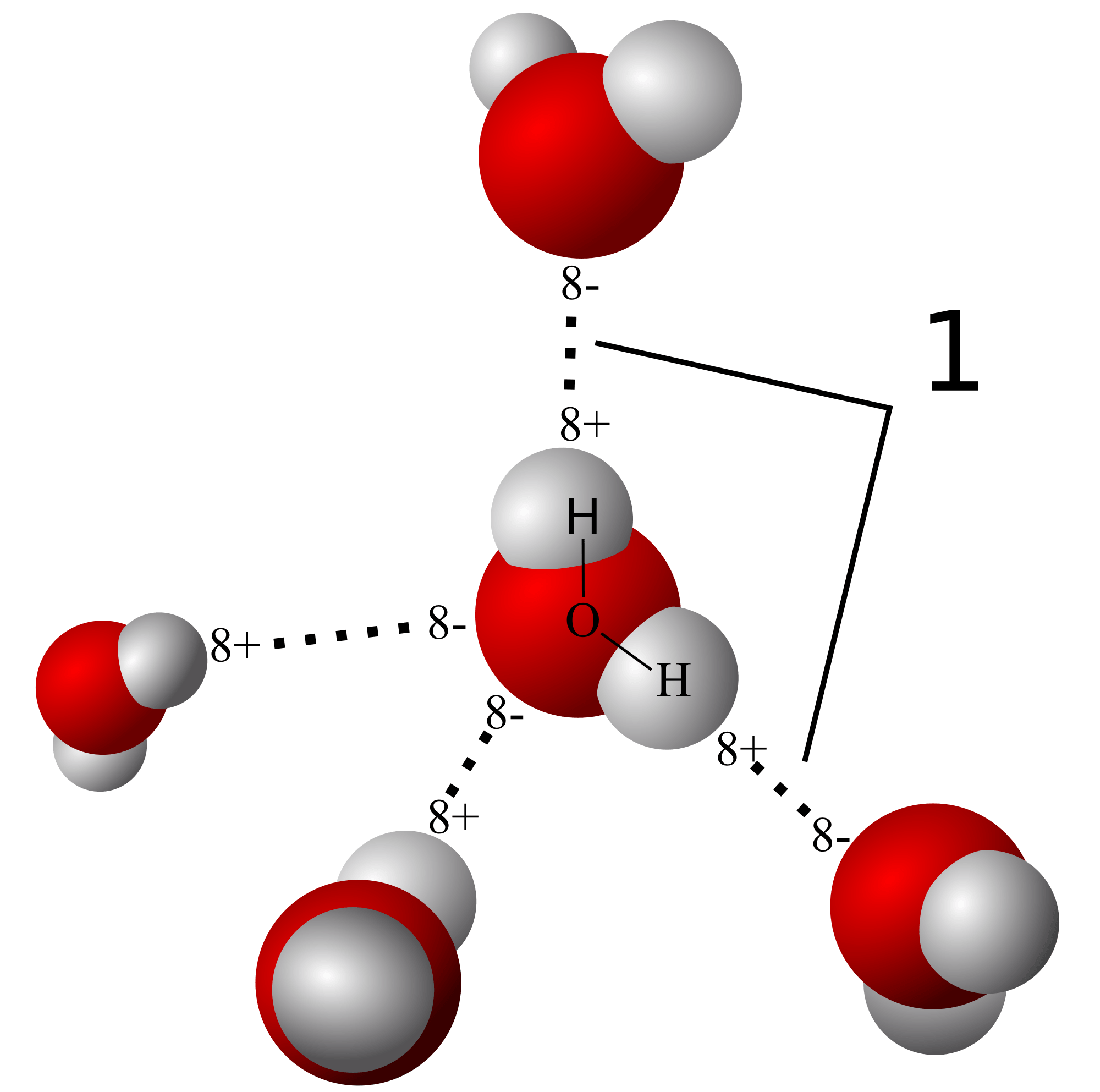
12.
Attractions between water molecules are called
a)
Covalent bonds
b)
Ionic bonds
c)
Polar bonds
d)
Hydrogen bonds
13.
Which of the following is LEAST likely to dissolve in water?
a)
nonpolar fats and oils
b)
polar sugar molecules
c)
salt made of a positive sodium ion and a negative chloride ion
d)
all of the substances will dissolve easily in water
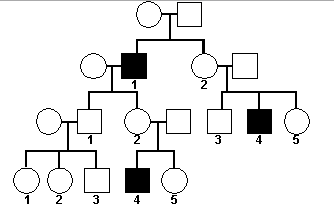
14.

What type of heredity is shown in the pedigree?

a)

Sex-Linked Dominant

b)

Sex-Linked Recessive

c)

Autosomal Dominant

d)

Autosomal Recessive

15.

The pedigree is showing a _____________ trait.

a)

autosomal dominant

b)

autosomal recessive

c)

sex linked recessive

16.

This is a __ trait.

a)

autosomal recessive

b)

sex-linked recessive

c)

autosomal dominant

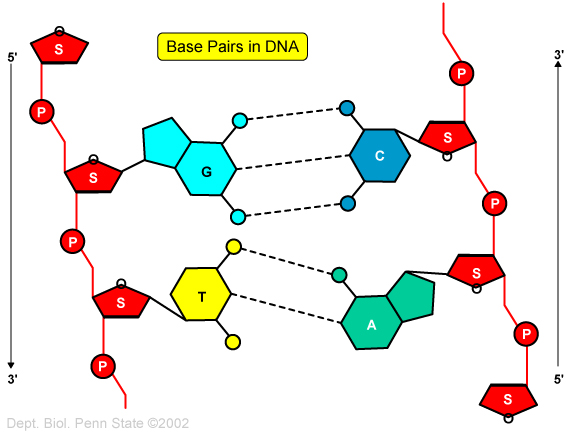
17.
Nitrogenous bases are joined by which type of bond?
a)
polar bonds
b)
ionic bonds
c)
covalent bonds
d)
hydrogen bonds
18.
What are the nucleotides made of?
a)
Sugar, Phosphate, nitrogen base
b)
Phosphate, Adenine, nitrogen base
c)
Thymine, Adenine, Cytomine
d)
Phosphate, Nitrogen, Adenine
19.

What is homeostasis?

a)

the process of maintaining relatively stable internal conditions

b)

All the physical and chemical changes occurring in an organism

c)

the process of becoming bigger

d)

Movement of substances throughout the body

20.

When you are hot, your body sweats to cool you down. This means your temperature went above normal and your body sweats to counteract that change to bring you back to normal. What kind of feedback loop would this be?

a)

Negative Feedback Loop

b)

Positive Feedback Loop

c)

Neutral Feedback Loop

d)

Linear Feedback Loop

21.
When you get cut, your skin cells release hormones that signal platelets to come and stop the bleeding. Platelets then release more hormones that signal even more platelets to help stop bleeding. The hormone signals continue until the cut is closed.
a)
Positive Feedback Response
b)
Negative Feedback Loop 
22.

Which of the following sequences correctly describes the flow of electrons in the light-dependent reactions?

a)

Photosystem I \rightarrow Photosystem II

b)

Photosystem II \rightarrow Photosystem I

c)

Calvin Cycle \rightarrow Photosystem I

d)

Electron Transport Chain \rightarrow Photosystem II

23.

A. Photons excite the electrons of PS I

B. Photons excite the electrons of PSII

C. Electrons travel along the ETC, allowing for the pumping of a proton

D. NADP + is reduced to NADPH


What is correct sequence of events?

a)

A, C, B, D

b)

B, C, A, D

c)

A, B, C, D

d)

C, A, B, D

24.

Inhibitor that binds to the

active site

a)

Competitive inhibitor

b)

Noncompetitive inhibitor

25.
How does the control group differ from an experimental group in a scientific experiment?
a)
the control group does not contain the experimental data, whereas the experimental group does
b)
the control group does not contain the experimental variable, whereas the experimental group does not
c)
the control group is not tested or measured
d)
the control group contains more than one experimental variable
26.
The purpose of a controlled experiment is to allow a scientist to isolate and test-
a)
a single variable
b)
several variables
c)
many data
d)
a conclusion
27.
What is definition of null hypothesis?
a)
The independent variable has no effect on the dependent variable for the population
b)
The independent variable does have an effect on the dependent variable
c)
The dependent variable has no effect on the independent variable
d)
The dependent variable does have effec on the independent variable
28.
When does crossing over occur?
a)
Interphase
b)
Prophase 1
c)
Prophase 2
d)
Metaphase 1
29.
Human eggs and sperm are _____, and each has ____ chromosomes.
a)
diploid, 23
b)
diploid, 46
c)
haploid, 23
d)
haploid, 46
30.

If 2n = 48 for a particular cell, then the chromosome number in each cell after meiosis would be

a)

96

b)

48

c)

24

d)

12

31.

G1 is associated with what event?

a)

doubling of cell content

b)

DNA replication

c)

The beginning of mitosis

d)

breakdown of the nuclear membrane

32.
Which of the following shows the correct sequence of the cell cycle?
a)
Mitosis-> G1->S->G2->cytokinesis
b)
S->G1-> G2-> mitosis-> cytokinesis
c)
cytokinesis->mitosis->G1->S->G2
d)
 G1->S->G2->mitosis->cytokinesis
33.

The amount of DNA in a cell is measured right after mitosis and found to be 8 picograms. How many picograms of DNA would be found in a nucleus in the G2 phase?

a)

4

b)

8

c)

16

d)

24

34.

What is the difference between diploid and triploid?

a)
Diploid has 3 sets of chromosomes; triploid has 4 sets.
b)
Diploid has 1 set of chromosomes; triploid has 2 sets.
c)
Diploid has 2 pairs of chromosomes; triploid has 3 pairs.
d)
Diploid has 2 sets of chromosomes; triploid has 3 sets.
35.
As a cell’s size increases, its ratio of surface area to volume decreases.
a)
True
b)
False
36.
Which cells are more efficient at obtaining nutrients?
a)
Small Cells
b)
Medium Size Cells
c)
Large Cells
d)
X-Large Cells
37.

Which of the following is least efficient?

a)

A

b)

B

c)

C

d)

D

38.

This checkpoint is responsible for verifying that the DNA has been completely replicated and checked for errors.

a)

G0

b)

G1

c)

G2

d)

S

39.
Which of the following is the driving force for simple diffusion?
a)
Concentration gradient
b)
ATP hydrolysis
c)
ADP hydrolysis
d)
Phosphorylation
40.

What kinds of molecules pass through a cell membrane most easily?

a)

ionic

b)

small and hydrophobic

c)

large polar

d)

large and hydrophobic

41.

Define independent assortment.

a)
Independent assortment is the process of gene mutation during DNA replication.
b)
Independent assortment is the random mixing of chromosomes during cell division.
c)
Independent assortment refers to the pairing of homologous chromosomes in meiosis.
d)

Independent assortment is the process by which alleles of different genes separate independently during gamete formation.

42.

What is dehydration synthesis

a)

A reaction where large molecules are made into small molecules by removing water

b)

A reaction where small molecules are made into large molecules by removing water

c)

A reaction where small molecules are made into large molecules by adding water

d)

A reaction where large molecules are made into large molecules by adding water

43.

What is hydrolysis reaction

a)

Splitting the bond using h2O

b)

Creating a polymer using h2O

44.

'Which one is the hydrophilic (water-loving) portion of the plasma membrane that can mix with water?

a)

A

b)

B

45.

Phospholipid heads contain...

a)

Amino group and fatty acids

b)

Phosphate group and glycerol

c)

Amino group and glycerol

d)

Phosphate group and fatty acids

46.

Which of the following is required for facilitated diffusion?

a)

ATP

b)

Concentration gradient

c)

Glycolipid

d)

Membrane Protein

47.

What is a channel protein?

a)
A channel protein is a type of enzyme that catalyzes chemical reactions in the cell.
b)
A channel protein is a membrane protein that allows specific substances to pass through the cell membrane.
c)
A channel protein is a carbohydrate that provides structural support to the cell membrane.
d)
A channel protein is a type of lipid that stores energy in cells.
48.

Which organelles are thought to have originated from ancient bacteria?

a)

Mitochondria and chloroplasts

b)

Ribosomes and golgi apparatus

c)

Endoplasmic reticulum and lysosomes

d)

Vacuoles and peroxisomes

49.

What is the endosymbiotic theory?

a)

The theory that eukaryotic cells evolved from prokaryotic cells

b)

The theory that mitochondria and chloroplasts were derived from ancient bacteria

c)

The theory that plant cells are more complex than animal cells

d)

The theory that organelles are specialized structures within a cell

50.

Which evidence supports the endosymbiotic theory?

a)

Presence of circular DNA in mitochondria and chloroplasts

b)

Ability of mitochondria and chloroplasts to divide independently

c)

Double membranes of mitochondria and chloroplasts

d)

All of the above

51.

What is the signaling molecule & where does it bind?​

a)

Ligand; Enzyme​

b)

Ligand; Receptor​

c)

Substrate; Enzyme​

d)

Substrate; Receptor​

52.

What is the stage of signal transduction labeled A?

a)

Transduction

b)

Response

c)

Reception

d)

Endocrine

53.

What is the function of a lysosome?

a)
Lysosomes store genetic information for the cell.
b)
Lysosomes are responsible for protein synthesis in cells.
c)
Lysosomes transport nutrients to other organelles.
d)

Lysosome digest and break down waste materials.

54.

What is apoptosis?

a)
Apoptosis is a type of cell division.
b)
Apoptosis is a form of programmed cell death.
c)
Apoptosis is a form of cellular growth.
d)
Apoptosis is a method of cell repair.
55.

Hydrolisis _____ water

a)

produces

b)

requires

56.

Dehydration Synthesis _____ water

a)

produces

b)

requires

57.

In the reaction depicted below, maltose is broken down into two molecules of glucose. Which of the following best explains the process of this reaction?

a)

The addition of a water molecule cleaves the covalent bond holding maltose together.

b)

The reverse of this reaction would require the addition of water to build the maltose dimer from the glucose monomers

c)

This breakdown process requires the release of water as a product of the reaction.

d)

The ionic bond of maltose is broken down through the addition of water in this hydrolysis reaction.

58.
I include the bases Guanine, Cytosine, Adenine and Thymine.
a)
DNA
b)
RNA
59.
I include the bases Guanine, Cytosine, Adenine and Uracil .
a)
DNA
b)
RNA
60.
Enzymes need certain environmental conditions in order to function properly.  What happens when enzymes are heated to a high temperature?
a)
they die
b)
they denature
c)
they change their amino acid sequence
d)
they work better
61.

Meiosis results in ______.

a)

4 genetically unique haploid gametes

b)

4 genetically unique diploid cells

c)

2 genetically identical cells

d)

4 genetically identical cells

62.
When an area of a chromatid is exchanged with the matching area on a chromatid of its homologous chromosome, _________________ occurs
a)
crossing over
b)
mutagenesis
c)
hybridization
d)
fertilization
63.

Which of the following contributes to genetic variation in sexually reproducing species?

a)

crossing over, internal fertilization, independent assortment

b)

independent assortment, spindle formation, random fertilization

c)

random fertilization, DNA synthesis, independent assortment

d)

random fertilization, independent assortment, crossing over

e)

internal fertilization, spindle formation, crossing over

64.

What is an indication that two genes are linked?

a)
A lower frequency of recombination between the genes.
b)
A high frequency of recombination between the genes.
c)
No observable phenotypic differences in offspring.
d)
Equal segregation of alleles during meiosis.
65.

Which of the following BEST describes linked genes?

a)
Genes located close together on the same chromosome that tend to be inherited together.
b)
Genes that are located on different chromosomes and assort independently.
c)
Genes that are always expressed together in the same phenotype.
d)
Genes that are located far apart on the same chromosome and do not interact.