
Font size
 Worksheets
Fingerprints Review
Total questions: 52
Worksheet time: 38mins
Which early evidence shows fingerprints were used on legal documents around 1000 BCE?
Medieval European guild contracts
Roman Empire census administrators
Ancient Chinese and Babylonian civilizations
Mayan scribes recording market trades
What was Sir Francis Galton’s major contribution in 1892?
Proving fingerprints change after skin injuries
Creating a national fingerprint file for policing
Introducing inkless fingerprint capture devices
Publishing a book laying out a classification method
Where do fingerprints form, and why do they reappear after superficial damage?
In sweat glands that fully regrow every few weeks
Along scar tissue lines that permanently encode patterns
On the epidermal surface where grooves constantly regenerate
In the dermal papillae under the skin layer that persists
Which feature of friction skin most directly aids in grasping objects?
The regular shedding of keratinized surface epithelium
The dense pattern of approximately 2,700 ridges per square inch
The alignment of nail beds with digital flexion creases
The presence of subcutaneous fat pads beneath the fingertips

Which skin layer contains the sweat glands and papillae that create the ridge patterns seen as fingerprints?
Hypodermis with adipose tissue
Stratum corneum with dead cells
Dermis with glands and papillae
Epidermis with flat keratin layers

Fingerprints are primarily deposited because hands secrete which substances through pores?
Proteins and DNA strands
Carbohydrates and acids
Water and oils from sweat
Salts and pigments only
Which statement best describes the individuality of fingerprints used in forensic identification?
Depth of sweat ducts defines identity
Shape of the whole pattern defines identity
Overall size of the finger defines identity
Number and location of minutiae define identity
Courts commonly require approximately how many matched minutiae to declare a positive fingerprint match?
6–8 matched features
10–12 matched features
14–16 matched features
20–24 matched features
Which general ridge pattern is the least common in the population?
Composites at forty to forty-five percent
Arches at about five percent
Loops at sixty to sixty-five percent
Whorls at thirty to thirty-five percent
Which description matches a latent print?
Blood-stained ridge impression
Invisible and must be developed
Impression in soft media like wax
Print visible without enhancement
Dusting with fine powder helps to visualize latent prints mainly by adhering to which residues?
Saliva proteins on ridges
Oil and sweat trace films
Skin DNA and RNA
Epidermal keratin flakes
Which statement about heredity and permanence of fingerprints is supported by forensic principles?
Fingerprints are not hereditary and vary yearly
Fingerprints are hereditary and change with age
Fingerprints are hereditary and remain unchanged
Fingerprints are not hereditary but remain unchanged
Within a class pattern such as a loop, what provides the individual characteristics used to distinguish two people?
Ridge count across the core
Overall finger size and curvature
Presence of sweat pores only
Specific types and positions of minutiae
Which scenario best illustrates a visible print rather than a latent or plastic print?
Water-only trace requiring chemical fuming
Ridge impression sunken into putty
Oily ridges seen after dusting powder
Bloody ridge pattern seen on a wall
Which statement about leather and surgical gloves aligns with forensic observations?
All gloves deposit only the wearer’s DNA
Leather gloves can leave unique glove prints
Leather gloves leave no traceable markings
Surgical gloves cannot transfer prints
Which classification correctly orders the population prevalence of the three main fingerprint patterns from most to least common?
Loops, whorls, arches
Whorls, loops, arches
Whorls, arches, loops
Arches, loops, whorls
Which statement best describes latent fingerprints?
They are molded impressions in soft material
They are clearly visible without processing
They are invisible and need development
They are machine-made replicas of ridges
On a glass bottle found at a scene, which surface category and primary development method are most appropriate?
Non-porous surface, dusting powders
Porous surface, iodine fuming
Porous surface, ninhydrin spray
Absorbent surface, wet chemical bath
Which powder is most suitable for a dark, mirrored surface?
Magnetic powder for better control
Carbon powder for high contrast
Luminescent powder for UV viewing
Aluminum powder for high visibility
Why is dusting generally unsuitable for paper and cloth?
These are porous and absorb residues
These lack skin oils to adhere powder
These always destroy ridge detail
These are too smooth and reflective
Which statement about iodine fuming is accurate?
Iodine forms a white polymer on ridges
Iodine only works on non-porous metal
Iodine dissolves ridges and fixes permanently
Iodine sublimates and temporarily stains prints
A key safety implication of iodine fuming in practice is that the results:
Convert to plastic prints on cooling
Improve when reheated repeatedly
Persist indefinitely without recording
Fade over time and need quick capture
During superglue fuming, what chemical change makes prints visible?
Carbon particles adhere by static charge
Iodine molecules sublime onto surfaces
Aluminum flakes reflect ambient lighting
Cyanoacrylate vapors polymerize on residues
After superglue fuming, investigators often add a fluorescent dye primarily to:
Increase the visibility of white prints
Remove background surface glare
Preserve prints from rapid fading
Neutralize harmful cyanoacrylate
What is a core function of AFIS in law enforcement?
Develop latent prints on porous materials
Destroy duplicates to reduce database size
Create plastic impressions from crime scenes
Classify and compare prints to find matches
Which preservation method is standard before lifting a developed print?
Wash the surface to reduce contamination
Heat the surface to fix the powder permanently
Apply acetone to bond the powders strongly
Photograph using analog or digital imaging
A technician must choose between iodine fuming and superglue fuming for a porous note card. Which choice and justification are most appropriate?
Iodine fuming, useful on porous materials
Superglue fuming, designed for absorbent paper
Superglue fuming, temporary and reversible
Iodine fuming, forms a white stable polymer
Identify the core and the delta in this fingerprint.
core
delta
Label the finger prints correctly
Arch
Loop
Whorl
Match the following minutiae.

ridge ending

bifurcation

eye

island

bridge
A (a) fingerprint is a three-dimensional fingerprint made in a soft material such as clay, soap, or putty.
soap
putty

arch

whorl

loop

tented arch
Match the following prints with the correct names

arch

whorl

loop
A fingerprint is an impression left on a surface that consists of patterns made by (a) on a finger.
ridges
DNA
fibers
A (a) fingerprint is a concealed fingerprint that must be made visible using powders or other forensic techniques.

Identify the fingerprint pattern shown.
loop
arch
whorl
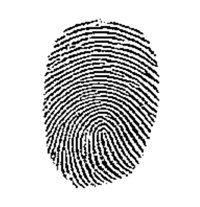

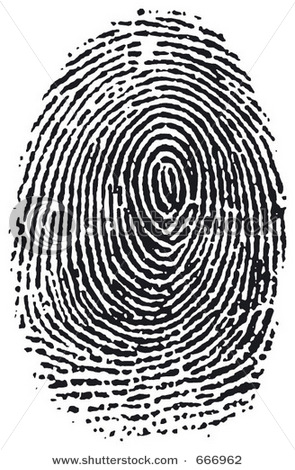

What is this fingerprint pattern?
radial loop
plain whorl
tented arch
accidental whorl


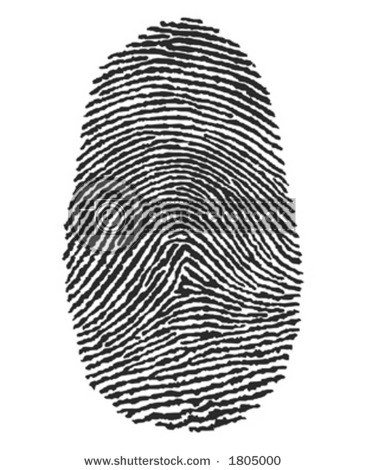

Name this minutiae type.
Bridge
Island (dot)
Bifurcation (fork)
Pore

What pattern is this?
Loop
Arch
Whorl

Name this minutiae type.
Enclosure
Island
Bifurcation (fork)
Ridge ending


What is indicated by the green mark?
core
loop
dot
delta

Dusting powder and super glue fumes actually stick to which of the following? (Check all that apply.)
amino acids
lipids
oils
proteins

The small details in fingerprint ridges (as shown here) are called:
minutiae
ridge details
loops
patterns
What is the main reason fingerprints are considered unique for identification?
They are visible to the naked eye
They are inherited from parents
No two individuals have identical ridge patterns
They change with age
Which fingerprint pattern is the least common in the general population?
Loop
Whorl
Arch
Tented arch

