
 Worksheets
A.3.1 Qualities of Training: Review
Total questions: 92
Worksheet time: 46mins
Which statement best explains why training design is necessary across different sports?
Training only matters for endurance-based activities
Performance mainly depends on talent not planning
All athletes need identical workouts and schedules
Athletes have diverse physical demands across sports
A javelin thrower primarily requires which physical quality compared with a 5,000 m runner?
Higher explosive muscle power than aerobic endurance
Superior balance with minimal strength or endurance
Greater aerobic endurance than muscle power
More flexibility than either strength or endurance
Which combination most directly supports maximizing physical performance when paired with appropriate training?
Adequate sleep, appropriate diet, reduced stress
Frequent competition, minimal rest, high anxiety
Irregular workouts, excess calories, maximal stress
High-volume training, low nutrition, variable sleep
You are designing a program for a sprinter and a distance runner on the same team. What planning choice best reflects sound training design principles?
Create distinct sessions aligned to each event's demands
Use a uniform plan emphasizing identical intervals
Base workouts only on available equipment
Prioritize general fitness and ignore event needs
Which term best describes training that fails to provide adequate stimulation due to infrequent, too short, or low‑intensity sessions?
Acute overload
Overtraining syndrome
Overreaching
Undertraining
Acute overload in the training continuum most directly leads to which typical outcome when appropriately managed?
Minor physiological adaptations with no performance change
Positive physiological adaptations with minor performance improvements
Physiological maladaptations with performance decrements
Positive physiological adaptations with short‑term performance decrease
Which scenario illustrates functional overreaching rather than overtraining syndrome?
Long‑term high intensity leading to persistent hormonal issues
Too infrequent and low‑intensity sessions over several weeks
Prolonged excessive training with months to full recovery
Short period beyond tolerance with recovery in days to weeks
In the continuum diagram, what trend is shown as intensity, duration, and frequency of training increase?
From random fluctuations to unrelated outcomes overall
From minor adaptations to maladaptations across states
From maladaptations to minor adaptations across states
From constant performance to sudden improvements only
Which statement best defines the principle of specificity in exercise training?
Adaptations mirror the trained mode, intensity, and duration
Improvements occur only when rest periods are extended greatly
Any exercise improves all sports equally due to general fitness
Training benefits are maintained regardless of stimulus type
An open-water 10 km swimmer focuses training on which priority to enhance endurance?
Long-duration swimming stressing aerobic physiological systems
Upper-body powerlifting emphasizing one-rep maximum loads
Short, maximal-effort sprint running sessions on a track
High-intensity intermittent cycling with heavy resistance
Which scenario illustrates the principle of reversibility most accurately?
Flexibility remains unchanged even after halting all stretching
Strength and VO2 max continue rising during prolonged inactivity
Adaptations are preserved fully by cross-training once monthly
Fitness declines toward baseline when training stimulus is removed
A coach wants to sustain gains during the off-season. Which plan aligns with reversibility?
Implement a maintenance program with reduced but regular training
Cease all training for six weeks to allow supercompensation
Focus solely on variety without structured stimulus dosing
Replace all sessions with one maximal test each fortnight
Progressive overload is best described as which practice?
Elevating intensity abruptly by tripling load in one session
Changing only exercise selection without altering total work
Maintaining identical volume and intensity to preserve adaptations
Systematically increasing demands to promote continued improvement
Which change increases training load while keeping other variables constant?
Increasing repetitions performed at the same external load
Reducing weekly training frequency to prevent monotony
Extending inter-set rest well beyond previous durations
Lowering density by spreading sessions across more time
Training density refers most directly to which idea?
Amount of work performed per unit of time in sessions
Percentage of fast-twitch fibers recruited during sprints
Oxygen uptake normalized to body mass in endurance tests
Relative intensity expressed as a fraction of one-rep max
Which example demonstrates recovery as a planned training component?
Replacing all cooldowns with maximal-effort finisher drills
Removing hydration strategies to increase perceived exertion
Eliminating rest days to maximize weekly total work volume
Scheduling adequate sleep, nutrition, and periodic deload weeks
Why might the principle of variety be integrated into a long-term program?
To replace specificity with solely novel exercises each session
To avoid progression by substituting random movements intermittently
To ensure every week repeats identical exercises and loading
To maintain challenge by changing mode, volume, or intensity over time
Which pair best represents variety within a shared movement pattern for progression?
Deadlift and long-distance cycling for posterior-chain emphasis
Rowing ergometer and yoga balance work for core endurance
Bench press and freestyle swim drills for upper-body pushing
Dumbbell goblet squat and barbell back squat for lower-body
Which statement best defines periodization in athletic training?
An organized plan cycling phases to peak performance
A daily routine focused only on strength endurance
A single long cycle aiming to avoid any rest periods
Random workouts varied to avoid monotony entirely
Which list correctly names the three main phases in a periodized program?
Transition, preparation, competition
Warm-up, conditioning, cool-down
Off-season, tapering, peaking
Macrocycle, mesocycle, microcycle
Primary purpose of the transition (post‑season) phase is to:
Facilitate mental and physical recovery before new training
Maximize competitive performance and peak fitness
Increase training load sharply to maintain adaptations
Eliminate cross‑training and avoid different environments
Recommended approximate duration for a typical transition phase is:
No set length; continue until next competition
At least 12 weeks to reverse detraining fully
Approximately 8–10 weeks for most athletes
About 3–4 weeks, rarely beyond 5 weeks
Which approach best maintains fitness during transition while promoting recovery?
Immediate resumption of pre‑season microcycles
Active rest using different activities and environments
Complete rest with no physical activity at all
High‑intensity training mimicking competition loads
Main goal of the preparation (pre‑season) phase is to:
Achieve peak performance in key competitions
Develop physical, technical, tactical, and psychological tools
Reduce training loads to allow full supercompensation
Maintain only general physical conditioning levels
In the general preparatory sub‑phase, emphasis is placed on:
Building basic fitness and broad physical conditioning
Simulating competition and peaking strategies
Restoration methods with minimal exercise
Sport‑specific tactics at maximal intensity
In the specific preparatory sub‑phase, training most strongly emphasizes:
Skills and demands of the athlete’s specific sport
Exclusive participation in friendly competitions only
Only aerobic base with minimal technical practice
Equal focus on all sports regardless of discipline
During preparation, progressive overload guidelines generally recommend increases in training load around:
More than fifty percent for rapid performance gains
Approximately ten percent to allow adaptation safely
Roughly thirty percent to accelerate adaptation speed
Near zero percent to prevent any fatigue accumulation
Key caution when applying the 10% guideline for training load is that:
It prevents any risk of injury regardless of context
It should be ignored during any pre‑season microcycle
The rule applies strictly to weight only, not to volume
Individual responses vary, so the same increase may be excessive
Primary objective of the competition phase is to:
Return to general physical preparation exclusively
Eliminate all training load to prioritize complete rest
Maintain general condition while refining sport‑specific skills
Attempt large gains in fitness and new techniques
Which scenario best illustrates the cyclical nature of periodization?
Preparation continues year‑round without any transition
Transition is optional and occurs only after injuries
Competition occurs first, followed by preparation only
Transition leads to preparation, then competition, repeating
Which definition best matches microcycle in periodized training?
A weekly training plan including recovery
A post-season taper for competition
A three-week block focused on endurance
An annual plan covering all phases
What is a mesocycle most accurately described as?
A block composed of several microcycles
A daily session of technical drills
A single workout emphasizing intensity
An off-season rest-only phase
In a periodized programme, the macrocycle typically spans which duration?
An entire year or competitive season
A four-week tapering transition
A single week of structured training
Two consecutive competition days
Which monitoring indicator most directly helps judge readiness to train today?
Average body mass over years
Preferred music during warm-ups
Total medals won last season
Sleep quality and heart rate metrics
A coach plans a 3-week endurance block during preparation. What is this block called?
A microcycle with three macrocycles
One macrocycle with three mesocycles
Three macrocycles with one microcycle
One mesocycle with three microcycles
Which statement about the hierarchy is correct?
Microcycles contain multiple mesocycles
Mesocycles contain multiple microcycles
Microcycles last many months typically
Macrocycles are contained within mesocycles
Why adjust training intensity and volume during a week when fatigue indicators rise?
To reduce overtraining risk and aid recovery
To permanently lower baseline fitness levels
To replace endurance work with only tactics
To guarantee a personal record in competition
If a mesocycle lasts five weeks, how many microcycles does it include?
Five microcycles aligning to weeks
Three microcycles regardless of length
Seven microcycles plus a taper week
One microcycle repeated five times
Which sequence reflects the correct top-down planning order for a season?
Macrocycle → mesocycles → microcycles
Microcycle → macrocycles → mesocycles
Mesocycle → microcycles → macrocycle
Competition → macrocycle → microcycles
Which goal is most appropriate for a single microcycle within preparation phase?
Progress aerobic endurance with planned recovery
Evaluate lifetime training history thoroughly
Lay out the entire year’s competition schedule
Finalize all long-term performance objectives
Which best describes the primary purpose of baseline measurements at the start of a training programme?
Provide a reference for current fitness level
Prioritize body composition over other fitness domains
Replace the need for ongoing performance testing
Predict competition outcomes with certainty
Which combination most accurately differentiates internal from external training load indicators?
Speed and repetitions versus oxygen uptake and lactate
Blood lactate and oxygen uptake versus RPE and speed
Distance and power versus heart rate and RPE
Heart rate and RPE versus distance and power
Why is adjusting training load to an athlete’s status essential for performance?
To avoid measuring external indicators like distance
To ensure all athletes follow identical training plans
To balance fatigue and recovery for optimal adaptations
To eliminate the need for any recovery days entirely
What risk arises if prescribed resistance training intensity is too low for an adult athlete?
Aerobic capacity will always decrease
Immediate overtraining syndrome will result
Insufficient muscular adaptations may occur
Excessive hypertrophy may develop rapidly
Which statement best captures a core aim of prehabilitation in sport?
Shorten warm-up to conserve training time
Replace rehabilitation after injuries occur
Increase tissue capacity to tolerate sport loads
Reduce fitness testing frequency each season
Which injury profile is most typical for endurance sports like running?
Dislocations due to direct hits in scrimmage
Overuse injuries such as tendon or stress injuries
Traumatic tears from sudden directional changes
Contact injuries like contusions from collisions
Which warm-up feature is most consistently linked with reduced injury rates?
Static stretching held for long durations only
Skipping cardio exercise to save energy
Eliminating balance drills from the warm-up
Adherence to structured warm-up programmes
Which exercise is specifically used to reduce hamstring tear risk by strengthening the posterior chain?
Standing hip abductor swing
Romanian calf raise drill
Nordic hamstring exercise
Isometric quadriceps wall sit
An athlete presents high perceived exertion and elevated heart rate at a usual training pace. What is the most appropriate immediate adjustment?
Ignore internal load and track distance
Increase load to accelerate adaptation
Maintain load because pace is unchanged
Reduce training load to allow recovery
A novice ice hockey player is preparing for a first game after structured practice. Which warm-up emphasis best prepares and lowers injury risk?
Only passive stretching with long static holds
Skipping warm-up to preserve glycogen stores
Dynamic mobility with balance and strengthening drills
Maximal sprints without progressive buildup
Which training consideration best addresses age-related differences in physiological development?
Prioritize maximal strength over endurance for youths
Avoid modifying intensity across developmental stages
Use identical aerobic loads for all participants
Delay endurance work until late adulthood
Tailor programmes to individual age group needs
Which sex difference is most associated with higher overall ACL injury risk in team sports?
Female athletes show higher anterior cruciate ligament injury
Male athletes show higher anterior cruciate ligament injury
Risk disappears when accounting for hip strength only
Risk is unrelated to sex-specific biomechanics
Both sexes show identical knee ligament injury rates
What hormonal profile generally contributes to greater muscle mass and strength in males?
Reduced luteinizing hormone in adolescence
Higher oestrogen with lower progesterone
Equal testosterone across biological sexes
Lower testosterone compared with females
Higher testosterone compared with females
Which research policy change improved inclusion of women in U.S. human studies?
NSF banned hormonal research in athletes
USDA funded exercise studies for men exclusively
CDC mandated women-only sports studies
FDA restricted trials to male volunteers only
NIH required inclusion unless clear justification
Which hormones are commonly monitored to distinguish menstrual cycle phases?
Adrenaline, noradrenaline, cortisol, T3
Insulin, cortisol, GH, prolactin
Aldosterone, renin, vasopressin, ANP
Leptin, ghrelin, adiponectin, resistin
Oestrogen, progesterone, LH, FSH
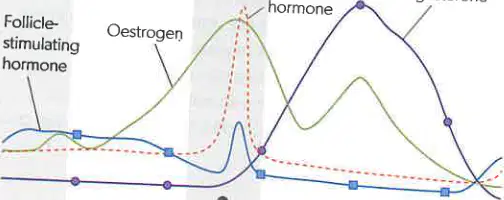
Which two main phases categorize the menstrual cycle for training considerations?
Basal and surge hormone phases
Proliferative and secretory phases
Ovulatory and menstrual phases
Early and late pregnancy
Follicular and luteal phases
During the late follicular phase, which statement is most accurate for training?
Progesterone peaks while oestrogen stays low
Oestrogen rises while progesterone remains low
LH and FSH are fully suppressed
Oestrogen falls rapidly below baseline
Both progesterone and oestrogen are minimal
Which risk consideration is linked with high oestrogen around ovulation?
Elimination of sprain risk in ankles
Reduced joint laxity and stiffness
Lowered ACL risk due to collagen cross-links
Increased joint injury susceptibility
Neutral effect on connective tissue stress
Which phase is characterized by elevated progesterone supporting endometrium preparation?
Luteal phase between ovulation and menstruation
Early follicular phase after menstruation onset
Late follicular phase before fertilization
Periovulatory window before corpus luteum
Menstruation phase with lining shedding
Which thermoregulatory effect is attributed to high progesterone?
Increased thermogenesis and hydration demand
Decreased metabolic heat and sweat rate
Reduced skin blood flow in cold stress
Suppressed shivering and insulation
Lowered core temperature during exercise
What is meant by glycogen sparing observed in the luteal phase?
Lower liver glycogen storage with higher glucose use
Increased glycogenolysis throughout exercise duration
Greater fat use with reduced carbohydrate breakdown
Unchanged substrate use regardless of hormones
Complete reliance on plasma glucose during work
Which statement best reflects findings on menstrual cycle and high-intensity exercise to exhaustion?
Time to exhaustion was longest only in luteal phase
Exercise time was similar across phases in trained females
Phase had no effect on any metabolic variable measured
Exercise time varied primarily with insulin only
Time to exhaustion was shortest only in follicular phase
Which substrate measure showed greater decrease during exercise in the late follicular phase versus early follicular?
Muscle glycogen decreased more in late follicular
Blood glucose fell most in early follicular
Muscle glycogen decreased more in early follicular
Muscle glycogen was identical across all phases
Serum free fatty acids increased the least in luteal
Which practical programming decision aligns with cycle-informed training for elite females?
Emphasize high-intensity sessions near late follicular with caution for joints
Avoid endurance work throughout luteal due to fatigue
Reduce carbohydrate intake across entire cycle equally
Maximise plyometrics during menstruation for pain relief
Ignore hormonal status because cycles are too variable
Which age-related principle most directly supports safe endurance improvements in youth?
Use adult VO2max tests without adjustments
Progress load with organ and muscle maturation
Prioritize anaerobic sprints over aerobic base
Isolate strength work and omit skill practice
Maintain fixed intensity blocks year-round
Which hormone is associated with promoting higher core body temperature during the luteal phase?
Oestrogen
Progesterone
Testosterone
Cortisol
During heat exposure and exercise, which primary avenue of heat loss increases and can be affected by menstrual phase?
Sweating and evaporation
Conduction to air
Shivering responses
Radiant heat gain
What planning consideration becomes especially important for athletes during the luteal phase due to increased internal temperature?
Protein periodization
Carbohydrate restriction
Hydration demands
Altitude acclimation
In a study of elite Australian athletes, when did the highest proportion choose to compete for perceived optimal performance?
Early in follicular phase
Just after their period
Late in the luteal phase
During mid-ovulation
Which symptom cluster was commonly reported by athletes experiencing a natural menstrual cycle across sports like gymnastics and weightlifting?
Hypertension spikes
Cramps and low energy
Enhanced euphoria
Visual aura only
A review of 662 publications found effects of menstrual cycle phase on performance to be what overall?
Variable and inconclusive
Strong and uniform
Nonexistent entirely
Predictable and linear
What was a key aim of Chelsea F.C. Women using a specialist app to align training with players’ cycles?
Lower match congestion
Increase weekly mileage
Eliminate strength training
Reduce soft tissue injuries
Which four phases were players taught to track with the app for training decisions?
Preseason, in-season, taper, peaking
Early follicular, mid-cycle, mid-luteal, off
Anabolic, catabolic, recovery, overreach
Menstruation, late follicular, ovulation, luteal
Why might exercising in a fasted state be discouraged during the luteal phase?
Enhanced sprint performance
Greater injury and symptom risk
Improved fat oxidation only
Lower sweat rate advantage
A 2022 review of menstrual cycle disorder prevalence in female athletes suggested higher rates than the general population. Which factors were proposed as explanations?
Supplements and hydration
Altitude exposure and cold
Superior genetics and sleep
High demands and inadequate recovery
Elite female athletes reported reduced motivation to train associated with which experiences?
Menstrual symptoms and mood changes
Travel logistics only
New equipment issues
Coaching style changes
Regular menstruation can be a sign of hormonal health. What might delayed or missing menstruation indicate in an athlete?
Potential energy deficiency
Superior aerobic capacity
Iron overload syndrome
Optimal bone remodeling
Which statement best defines Overtraining Syndrome (OTS)?
Prolonged training exceeding tolerance with insufficient recovery
Temporary soreness resolving within twenty-four hours
Brief intense exercise with adequate nutritional support
Normal adaptation to gradually increased training loads
A hallmark symptom pattern of OTS most consistently reported is which combination?
Elevated mood, increased appetite, improved focus
Acute muscle tear, joint swelling, ligament laxity
Rapid strength gains, decreased soreness, lower heart rate
Persistent fatigue, sleep disturbance, immune suppression
How do cytokines contribute to symptoms associated with OTS and severe DOMS?
They repair muscle fibers to accelerate hypertrophy
They suppress pain signaling to reduce soreness
They promote inflammation that disrupts sleep and mood
They neutralize free radicals to improve endurance
Which finding is most consistent with immune function suppression linked to OTS?
Enhanced neutrophil function at rest
Reduced cortisol and catecholamine responses
Increased frequency of upper respiratory infections
Higher vaccination antibody titers after training
Which scenario most likely differentiates OTS from normal training fatigue?
Short-term soreness peaking at forty-eight hours
Transient irritability during a hard workout
Minor fatigue resolving after a single rest day
Performance decrements lasting weeks despite rest
Which risk factor most increases the likelihood of OTS development?
Balanced nutrition meeting energy availability needs
Consistent periodization with deload weeks and sleep
Rapid training volume escalation with inadequate recovery
Cross-training that reduces repetitive strain
Which biomarker profile would most plausibly suggest OTS in an endurance athlete?
Elevated resting heart rate with mood disturbance
Decreased perceived exertion with faster times
Lowered hemoglobin with improved performance
Stable heart rate with enhanced sleep quality
What is the most appropriate initial management strategy when OTS is suspected?
Ignoring symptoms while maintaining current program
Immediate switch to higher intensity intervals and sprints
Significant reduction of training load and emphasis on recovery
Use of anabolic supplements to offset catabolism
Which statement about DOMS in relation to OTS is most accurate?
DOMS only affects untrained individuals and not athletes
Any DOMS after new exercise indicates established OTS
Severe, persistent DOMS with systemic symptoms may indicate OTS
DOMS and OTS are unrelated processes without overlap
Why is diagnosing OTS clinically challenging?
Symptoms appear only in novice athletes after competitions
A definitive blood test always confirms the syndrome
Symptoms overlap with other conditions and lack a single test
The syndrome presents exclusively with musculoskeletal pain
Which training response pattern aligns with being a high responder to aerobic training?
No change in submaximal heart rate after repeated testing
Stable aerobic enzymes with no performance gains
Large VO2max improvements under standardized programs
Consistent declines in VO2max across interventions
Which statement best explains individual variability in training adaptations?
Genetic and environmental factors create diverse responses
Metabolism variability has no role in exercise response
All individuals adapt identically given the same program
Only neural factors determine cardiovascular regulation
Which interpretation of non-responders is supported by recent views?
They only occur in strength but never endurance training
They cannot adapt to any form of exercise under any conditions
They are defined by immediate VO2max improvements with rest
Many are better described as stubborn responders needing different stimuli
Which ethical concern is most relevant to genetic screening in sport?
Proven safety of gene doping to improve performance
Guaranteed selection of elite athletes without bias
Discrimination risk from predicting susceptibility to injury
Absence of consent requirements for genetic testing
Which measurement caveat is emphasized when assessing training response?
Lack of change in one variable does not exclude other benefits
Only VO2max captures all adaptations to exercise programs
Non-physiological outcomes like social benefits are irrelevant
Single-session tests are sufficient for long-term conclusions

