
 Worksheets
BIO 168 CH 3 & 4 Review
Total questions: 91
Worksheet time: 59mins
Which organelle is the site of protein synthesis?
vacuole
endoplasmic reticulum
Golgi apparatus
ribosomes
Which organelle is the site of protein synthesis?
vacuole
endoplasmic reticulum
Golgi apparatus
ribosomes
Which organelle is the site of cellular respiration (powerhouse of the cell)?
ribosome
mitochondria
rough E.R
smooth E.R
What molecules make up the cell membrane?
all of the following
cholesterol
proteins
phospholipid bilayer
Links amino acids together to make proteins.
endoplasmic reticulum
ribosomes
Golgi apparatus
vacuole
Mitochondria is ______.
Responsible for making energy (ATP) needed for the cell
the site of cell respiration
Found in animal and plant cells
All of the above
Flagella are found in Prokaryotes and animal cells and have a ________ shaped tail used for locamotion.
whip like
star
heart
triangle
Cilia are found in Prokaryotes and animal cells and have __________ used for locamotion.
spear shaped tails
trianlge shaped tails
numerous hair-like projections that move back and forth
gills
Nucleolus is found inside the nucleus, of Eukaryotes only, and makes _____.
ribosomes
cilia
flagella
prokaryotes
There are two types of Endoplasmic Reticulum, smooth and rough. They ______.
make energy
protect the cell
carry out chemical reactions and transports materials
make the ribosomes
Golgi Apparatus (Golgi Bodies) are found in Eukaryotes only. They _____.
Sorts, packages, and modifies proteins to be sent in or out of the cell
Excretes stuff in and out using transport membranes called vesicles
a and b
a only
Centrioles are found only in animal cells. They ____.
Help with cell division
make the ribosomes
carry out chemical reactions and transports materials
are used for locamotion
The _____________ holds the DNA, and controls the functions of eukaryotic cells.
Nucleus
Nuclear Membrane
Mitochondria
Chloroplast
The (a) is the smallest unit of living things.
an enzyme that makes ATP by adding phosphate groups to ADP
electron transport chain
fermentation
ATP synthase
glycolysis
process that releases energy by breaking down glucose and other food molecules in the presence of oxygen
fermentation
photosynthesis
glycolysis
cellular respiration
a process by which some organisms use chemical energy from hydrothermal vents instead of light energy to make eenergy-storing carbon-based molecules, such as sugar
photosynthesis
chemosynthesis
fermentation
cellular respiration
low-energy molecule that can be converted by adding a phosphate
ATP Synthase
electron transport chain
adenosine triphosphate (ATP)
adenosine diphosphate (ADP)
study of the flow and transformation of energy in the universe
thermodynamics
cellular respiration
metabolism
photosynthesis
a chain of proteins in the mitochondria that uses energy-carying molecules from the Krebs cycl.e and oxygen to make ATP
fermentation
glycolysis
Krebs Cycle
electron transport chain
a type of fermentation that occurs in your muscle cells; it causes your muscles to "burn" during hard exercise
lactic acid
fermentation
energy
adenosine triphosphate (ATP)
second stage of cellular respiration, in which pyruvic acid is broken down into carbon dioxide in a series of energy-extracting reactions
Krebs cycle
glycolysis
ferementation
electron transport chain
the stacks of thylakoids embedded in the stroma of a chloroplast
chlorophyll
grana (granum)
stroma
photosynthesis
the first step in releasing the energy of glucose, in which a molecule of glucose is broken down into two molecules of pyruvic acid
Krebs cycle
fermentation
glycolysis
electron transport chain
all of the chemical reactions that occur within an organism
cellular respiration
glycolysis
metabolism
photosynthesis
light-independent reactions of photosynthesis in which energy from ATP and NADPH is used to build high-energy compounds such as sugar
glycolysis
Calvin Cycle
Krebs Cycle
electron transport chain
The type of metabolic pathway where polymers are built and requires energy is
an enzymatic response
anabolic
Enzymes are
able to lower activation energy of chemical reactions
able to increase the rate of biochemical reactions
all of the choices are correct
During the light reactions, energy is provided by
ATP
ADP
CO2
All of the chemical reactions taking place within cells is called
catabolism
anabolism
metabolism
The reaction where glucose is broken down and used by cells that require oxygen is called
photosynthesis
respiration
fermentation
What is another name for glucose?
Chlorophyll
Chloroplasts
Sugar
All living things do which of the following?
Chemosynthesis
Respiration
photosynthesis

#4 is pointing to an individual "pancake" in this stack. What is this called?
Stroma
Thylakoid
Granum

#3 is pointing to the space outside the stacks in this chloroplast. What is this area called?
Thylakoid space
Thylakoid
Stroma
The calvin cycle takes place in __________.
stroma
thylakoid membrane
chlorophyll

This is a photo of....
Cellular Respiration
Photosynthesis
None
The purpose of cellular respiration is to
make water
make ATP
make glucose

Which stage of the cellular respiration process produces the most ATP?
Glycolysis
Acetyl CoA
Electron Transport Chain
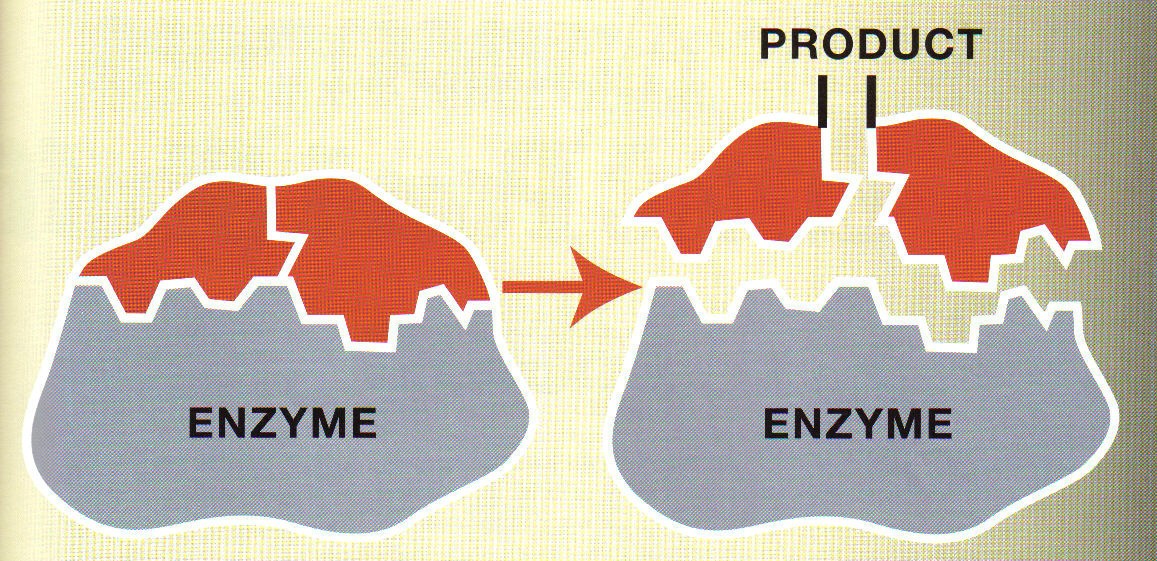
Enzymes speed up reaction rates by changing:
Activation Energy
pH
Hydrogen Bonds

How many chromosomes do human cells have?
46
23
2
44
Bundled up, organized DNA is called a
gene
trait
chromosome
nucleotide
A change in a DNA sequence(order) that affects genetic information.
Recessive trait
Mutation
Allele

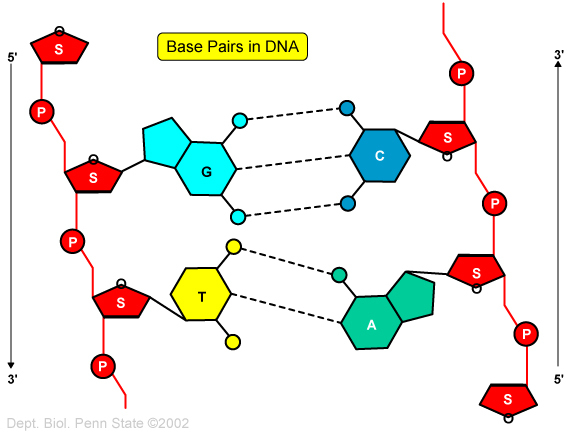
DNA POLYMERASE'S JOB IS TO DO THE FOLLOWING
UNTWIST THE DNA MOLECULE
CARRY THE CODE TO THE RIBOSOME
PROOFREAD THE DNA STRAND FRO REPLICATION
WHAT IS THE NAME OF THE ENZYME THAT UNZIPS THE DNA MOLECULE?
REPLICASE
DNA POLYMERASE
HELICASE
ZIPACASE
Which of the following is not a DNA base?
ADENINE
THYMINE
URACIL
GUANINE
Nucleotides are the _____________ that make up the DNA and RNA ___________.
MONOMERS, POLYMERS
POLYMERS, MONOMERS
WHAT IS A NUCLEOTIDE MADE OF?
DEOXYRIBOSE, PHOSPHATE, NITROGENOUS BASE
RIBOSE, NITROGEN, CARBOHYDRATES
DEOXYRIBOSE, PROTEINS
NITROGEN AND PROTEIN

The picture below shows an enzyme unwinding and unzipping DNA.
What is the name of this enzyme?
DNA Helicase
DNA Ligase
DNA polyermase
RNA Polymerase
Which of the following DNA nucleotides are paired with the correct corresponding DNA nucleotide? (mark all that apply)
Adenine with Thymine
Guanine with Cytosine
Thymine with Cytosine
Adenine with Uracil.
Uracil with Thymine
You are given the DNA strand 5'ATGCTCAGCTGA3'. What is the corresponding DNA strand?
5'UACGAGUCGACU3'
5'TACGAGTCGACT3'
3'UACGAGUCGACU5'
3'TACGAGTCGACT5'
Many enzymes are involved in DNA replication. Which is the correct order of enzymes involved in DNA replication from beginning to end?
Helicase, DNA primase, DNA polymerase, Ligase
RNA primase, Helicase, DNA polymerase, Ligase
Helicase, RNA primase, DNA polymerase, Ligase
DNA primase, Helicase, RNA polymerase, Ligase
Which is the role of DNA polymerase?
Unwinds the original DNA strand
Lays down RNA primer for new nucleotide bases.
Builds new strands by bringing in new nucleotide bases.
Remove Okazaki fragments for new nucleotides.
Which is the last step of DNA replication?
RNA Helicase unwinds original DNA strand
DNA Primase lays down RNA primer for new nucleotide bases.
RNA polymerase builds new strands by bring in new nucleotide bases.
Ligase knits together fragments on lagging strand
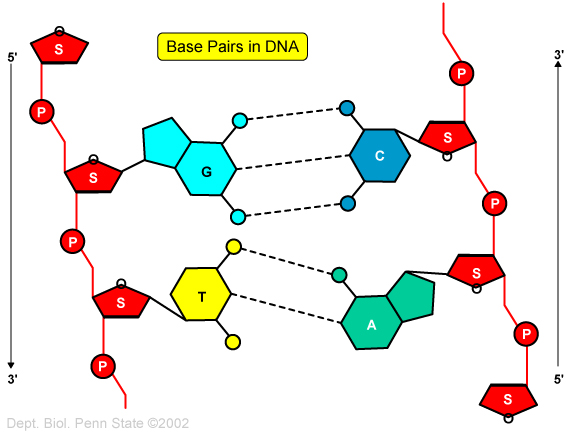
What is the charge of a DNA molecule?
Positive because of the purine bases
Negative because of the phosphate groups
Positive because deoxyribose has a positive charge
Negative because of the hydrogen bonds
What's the difference between purine and pyrimidine nitrogen bases?
Pyrimidines are only found in DNA, not RNA
Pyrimidines have two rings, Purines have one
Purines are only found in DNA, not RNA
Purines have two rings, Pyrimidines have one
Which statement is true about RNA?
RNA is usually single stranded and contains the base uracil
RNA is usually double stranded and contains the base thymine
RNA is made in the nucleus and stays there to carry out its function
All of the above are true.
Which RNA carries the message?
mRNA
rRNA
tRNA


Messenger RNA travels out of the nucleus to ribosomes
and is used as a template to assemble a protein.
Translation
Transcription
Replication
Homeostasis
WHERE is the DNA molecule located?
Nucleus
Chromosome
Cytoplasm
Bacteriophage
Chromatin consistsof DNA that is tightly coiled around protiens called
Hox Genes
Histones
Nucleosomes
Plasmid
What is used to unzip DNA molecules?
DNA Polymerse
DNA Ligase
RNA Primer
Histone
The copying process by which a cell duplicates its DNA.
Translation
Transcription
Gene Regulation
Replication
What is the job of the RNA molecule?
Make up ribosomes
Carry copies of instructions
Protien Synthesis
Unzip the double helix
What are the "messengers" from DNA to the rest of the cell?
Nucleotides
Ribose
DNA
mRNA
What is a CHANGE in the DNA sequence?
Translation
Mutation
Replication
When a segment of the chromosome is REPEATED.
Translation
Deletion
Duplication
Inversion

