
 Worksheets
Page 1
Total questions: 15
Worksheet time: 8mins
Currently, which generation is widely deployed with the next generation gaining ground, according to the material?
1G reintroduced with better coverage
4G broadly deployed with 5G expanding
2G expanding with 3G declining
5G completed while 6G dominates
If you were to replicate Bose’s 1895 setup, which instrumentation focus would be most appropriate?
Low‑frequency spark gap telegraphy
Microwave and millimeter‑wave components
Fiber‑optic interferometers for lasers
Acoustic transducers for sonar tests
Longwave maritime antenna networks
Early mobile systems relied on what transmitter configuration to cover large areas?
Distributed antenna systems
Multiple low power cells
Single high power transmitter
Satellite beamforming arrays
A key benefit of frequency reuse is improved utilization of what resource?
Antenna mast height
User equipment memory
Backhaul fiber capacity
Available frequency spectrum
Why does frequency reuse enable reduced transmitter power in cellular systems?
Fewer users share a channel
Digital modulation removes noise
Higher antennas negate fading
Smaller cells lower path losses
What is the relationship between cell size and the need for transmitter power in a reuse-based network?
Smaller cells require less power
Smaller cells require more power
Cell size does not affect power
Power rises then falls with size
A mobile device cannot reach another mobile device in the same cell without which element?
An MSC connection
A base station present
A PSTN trunk
A satellite relay
If interference is observed between two cells using the same channel group, which planning change most directly reduces co-channel interference?
Replace hexagons with circular cell shapes
Decrease cluster size N to reuse more often
Increase cluster size N to separate co-channels
Randomize channel assignment within a cluster
In a GSM architecture, which element typically interfaces the mobile station (MS) with the network over the air?
Visitor Location Register
Base Transceiver Station (BTS) antenna
Gateway GPRS Support Node
Home Location Register (HLR) database
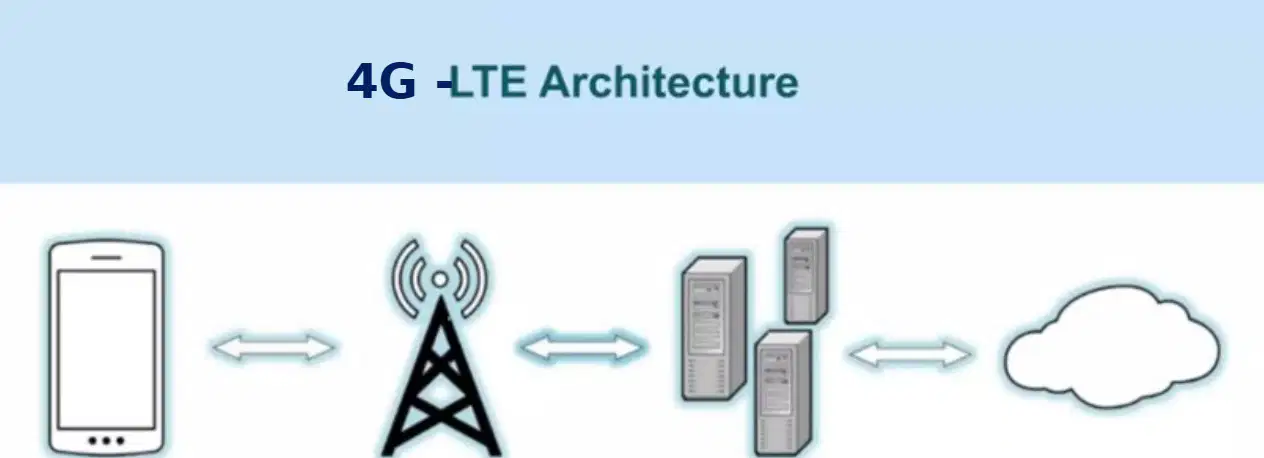
Which path correctly represents the end‑to‑end data flow for a user session in LTE?
IP Network → EPC → E-UTRAN → UE
EPC → UE → IP Network → E-UTRAN
UE → IP Network → E-UTRAN → EPC
UE → E-UTRAN → EPC → IP Network
Which interface links the MME to the Serving Gateway as shown?
X2 inter-baseband link
S11 control interface
S6a subscriber link
GX policy channel
S1-U user plane
In LTE, which network portion encompasses the eNodeBs interconnected by X2?
Wi‑Fi access segment
IP backbone cloud
IMS service domain
E-UTRAN access network
EPC core subsystem
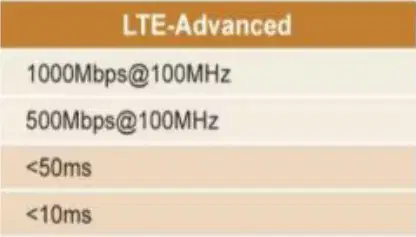
Compared with LTE, LTE-Advanced shows which user-plane delay (without load) characteristic?
Higher than LTE delay
Equal to LTE delay
Unspecified for LTE-Advanced
Lower than LTE delay
Which technologies are explicitly labeled under 3G in the figure?
EDGE, CDMA2000, TD-CDMA, WCDMA, IEEE 802.16e
GSM, IS-95A, IS-136, PDC
LTE Rel 8 only
CDMA 1xEV-DO, 1x-EV-DV, HSDPA, HSPA+
3GPP and IEEE only
Which feature combines multiple spectrum blocks to increase overall bandwidth?
Heterogeneous network support
Enhanced carrier aggregation
Massive Machine Type Communication
Coordinated multipoint reception

