
Font size
 Worksheets
apwh UNIT 5 REVIEW 2025
Total questions: 70
Worksheet time: 1hrs 7mins
The Industrial Revolution: A Transformative Era
The Industrial Revolution, which began in the late 18th century, was driven by several key causes. Among these were advancements in agricultural practices, which increased food production and freed up labor for industrial work. The availability of natural resources like coal and iron, coupled with innovations in transportation such as canals and railways, further fueled industrial growth. Additionally, the rise of capitalism and the pursuit of profit encouraged investment in new technologies and factories, setting the stage for widespread change.
Urbanization was one of the most significant impacts of the Industrial Revolution. As factories emerged, people migrated from rural areas to cities in search of employment, leading to rapid urban growth. This shift brought about challenges such as overcrowding, poor sanitation, and the rise of slums. Technological innovations like the steam engine and mechanized textile production revolutionized industries, increasing efficiency and output. However, these advancements also led to the exploitation of workers, including women and children, who often labored in harsh conditions for minimal pay.
The Industrial Revolution also sparked labor movements and economic changes that reshaped society. Workers began organizing to demand better wages, safer working conditions, and shorter hours, leading to the formation of unions and strikes. Economically, the era marked a shift from agrarian economies to industrial ones, fostering global trade and the rise of consumer culture. Socially, the revolution widened the gap between the wealthy and the poor, while also creating a new middle class. Despite its challenges, the Industrial Revolution laid the foundation for modern economic and social structures, transforming the world in profound ways.
What was one of the key causes of the Industrial Revolution?
Advancements in agricultural practices
Decline in natural resources
Decrease in food production
Reduction in urbanization
Which technological innovation significantly increased industrial efficiency during the Industrial Revolution?
Steam engine
Windmill
Solar panels
Electric cars
What was a major social impact of the Industrial Revolution?
Creation of a new middle class
Elimination of poverty
Decline in global trade
Reduction in urban population

During the Industrial Revolution, the economic system that allowed extreme wealth inequality was known as (a) . The wealthy business owners were known as the (b) while the working class were known as the (c) .
capitalism
bourgeoise
proletariat
monopoly
socialism
communism
fascism
perestroika
During the Industrial Revolution, society changed from an/a (a) society to a/an (b) society
Agrarian
Manufacturing
luxurious
poor
middle class
Feudal
Communist
factory system
This replaced localized cottage industry.
middle class
A social class made up of skilled workers, professionals, business people, and wealthy farmers
Proletariat
Marx's term for the exploited class, the mass of workers who do not own the means of production
Socialism
means of production and distribution should be owned or regulated by society, not government
Match the following
Capitalist
No government control
Communism
Full government control
Socialism
Control shared by government & people

Why were railroads so important during this time?
they moved goods more quickly and less expensively over greater distances
they were fun to ride on to go visit family in other states
people could ride on railroads to get to their jobs in another city
What is the movement from rural to urban areas called?
Moving
colonization
inflation
urbanization

Which thesis (big idea) statement is supported by the graph above?
In the late 19th and early 20th centuries, the population distribution shifted as the urban population began to increase more dramatically than the rural population.
Most immigrants to the United States in the late 19th century settled in rural areas.
By the early 20th century, the population of cities grew while the population in rural areas declined.
The population center of the United States moved westward in the late 19th and early 20th
centuries.
What impact did inventions such as the telephone, sewing machine, and typewriter have in the role of women in American society?
These inventions were controlled byt he government and therefore limited their role in American politics.
These inventions provided new job opportunities for children, leaving women with more tasks at home.
These inventions pushed women further out of the working world.
These inventions provided new job opportunities to women.
Which of the following was a cause of the French Revolution?
unequal tax burdens; the Third Estate paid all of the taxes
a growing French Empire
a law granting peasants more freedom
equal land ownership
Who was the King of France during the French Revolution?
Maximilien Robespierre
Marie Antoinette
Louis XVI
Napoleon Bonaparte
The clergy and church officials made up which estate?
First Estate
Second Estate
Third Estate
Estates General
Why were peasants upset by taxes(SELECT TWO)
They weren't high enough
They were too high
Tax evasion was very common
Taxes were unfair among the estates
Legislative group in France prior to the French Revolution that Louis had to meet with to raise taxes on the 3rd Estate:
Congress
Estates General
National Assembly
Old Regime
Which group was taxed the most prior to the Revolution?
1st Estate
2nd Estate
3rd Estate
All taxed equally
Which events was the officially started the French Revolution?
Storming of the Bastille
Tennis Court Oath
Spanish Invasion
Shooting at Lexington and Concord
Which government was created by the 3rd Estate at that start of the Revolution?
National Assembly
National Convention
Directory
Committee of Public Safety
The ______ took place when the 3rd estate swore to write a constitution.
Scorched Earth
Storming of the Bastillee
Estates General
Tennis Court Oath
Who was the leader of the Committee of Public Safety and established the Reign of Terror?
Napoleon
Louis XVI
Louis XIV
Robespierre
What was the Reign of Terror?
A period of mass execution without evidence
A war against Austria, Britain and Prussia
People getting beaten
The Storming of the Bastille
What was the main financial crisis that contributed to the French Revolution?
Debt from the American Revolutionary War
Loss of colonies in Asia
Overproduction of goods
Inflation due to gold influx
Which document declared the rights of man and citizen during the French Revolution?
The Magna Carta
The Declaration of Independence
The Declaration of the Rights of Man and of the Citizen
The Bill of Rights
What was the primary goal of the Women's March on Versailles?
To demand bread and food supplies
To overthrow the monarchy
To establish a new government
To support the King
Belief in the ideas of _______________________________and discontent within the Third Estate were causes of the French Revolution.
Renaissance
Spanish Inquisition
Enlightenment
Catholic Reformation
Which writer is credited with the idea that the powers of government should be separated into three branches with each branch keeping the others in check?
René Descartes
Maximilien Robespierre
Baron de Montesquieu
Bishop Jacques-Bénigne Bossuet

Based on this passage, what did the Third Estate want?
independence from France
more influence in the political system
removal of the monarchy
freedom of religion in France
Which individual suggested the idea that if a government fails to protect its people’s natural rights of life, liberty, and property, the people have the right to overthrow it?
Karl Marx
John Locke
Thomas Hobbes
Niccolò Machiavelli
Select the choices that are causes of the French Revolution.
Inspiration from American Revolution
Enlightenment Ideas
Strong economy
Low food prices
Inequality among the 3 Estates

What cause of the French Revolution is represented by this image?
Economic crisis
Weak leadership of the monarchy
Unequal social class system
Inspiration from the Enlightenment
What European country primarily colonized Latin America?
Spain
Portugal
England
France
All of the following influenced the Latin American Revolutions except:
Ideas of the French Revolution
Ideas of the American Revolution
Ideas of the Enlightenment
Ideas of the Divine Right of King
Which of the following statements are correct about the social hierarchy in Latin America?
Society was divided up into social classes based on birth
Peninsulares were native Spaniards and held the most power
European bloodline would guarantee a person more power and wealth
All of the above
Who led a successful revolution in the northern area of South America, eventually having a country named after him?
Father Miguel Hidalgo
Napoleon Bonaparte
Simon Bolivar
Jose de San Martin
Peninsulares who were given authority to rule colonies in Latin America were known as
Viceroys
Creoles
Haciendas
Encomiendas

What part of the world was most impacted by the Monroe Doctrine?
1
2
3
4
Which was the first country in Latin America to gain independence?
Bolivia
Haiti
Venezuela
Mexico
Who was the leader of the Haitian Revolution?
Toussaint L'Ouverture
Napoleon Bonaparte
François Hollande
James Monroe
What is nationalism?
the country where you were born
a strong love, pride, or respect for your country
the idea that your country should rule all the others
citizenship to a specific country
The first type of work to be industrialized in England was
shipbuilding
coal mining
textiles
railroads
Karl Marx is associated with which TWO economic ideas?
Capitalism
Socialism
Communism
Imperialism
The Industrial Revolution led to reforms in many areas including
Government
Labor
Gender
Economics
The best fitting synonym for “suffrage” is:
The right to vote
The right to an education
The right to divorce your husband
The right to have children
Crop rotation and the enclosure movement were important because
nations began looking to colonize in Africa and Asia.
farming became profitable and large numbers of people moved away from cities.
the increase in food increased the number of people who could work in factories.
these changes led to massive starvation and a population decline in Europe.
Socialism is an economic system in which
individuals and
corporations own the factories while the government plays a minimal role in
the economy.
the government controls all factories, farms, and transportation and distributes jobs.
society is unequal because of the large gap between the rich and poor.
the laissez-faire principle is applied to the economy.
What was the goal of communism, according to Marx?
the oppression of the working class
a more equal and fair society
making everybody rich
making everybody poor
Which were the classes created by early capitalism?
aristocrats and peasants
lords and ladies
bourgeoisie and proletariat
workers and owners of capital
What was originally the central idea of Communism?
free communication for everyone
communal ownership of means of production
all factories and land would be destroyed
oppression of the rich by the poor
A Social Contract is.....
an agreement between the citizens of a country and the government that sacrifice individual rights in exchange for state protection
an agreement met to provide social services to all citizens
an agreement with government in exchange social clubs
a piece of paper that can be ripped up at any time because nobody actually follows it
What sparked the idea for revolution in Haiti?
The French Revolution and the death of Louis the XIV
The Russian Revolution
The Unification of Germany
The Spanish-American War
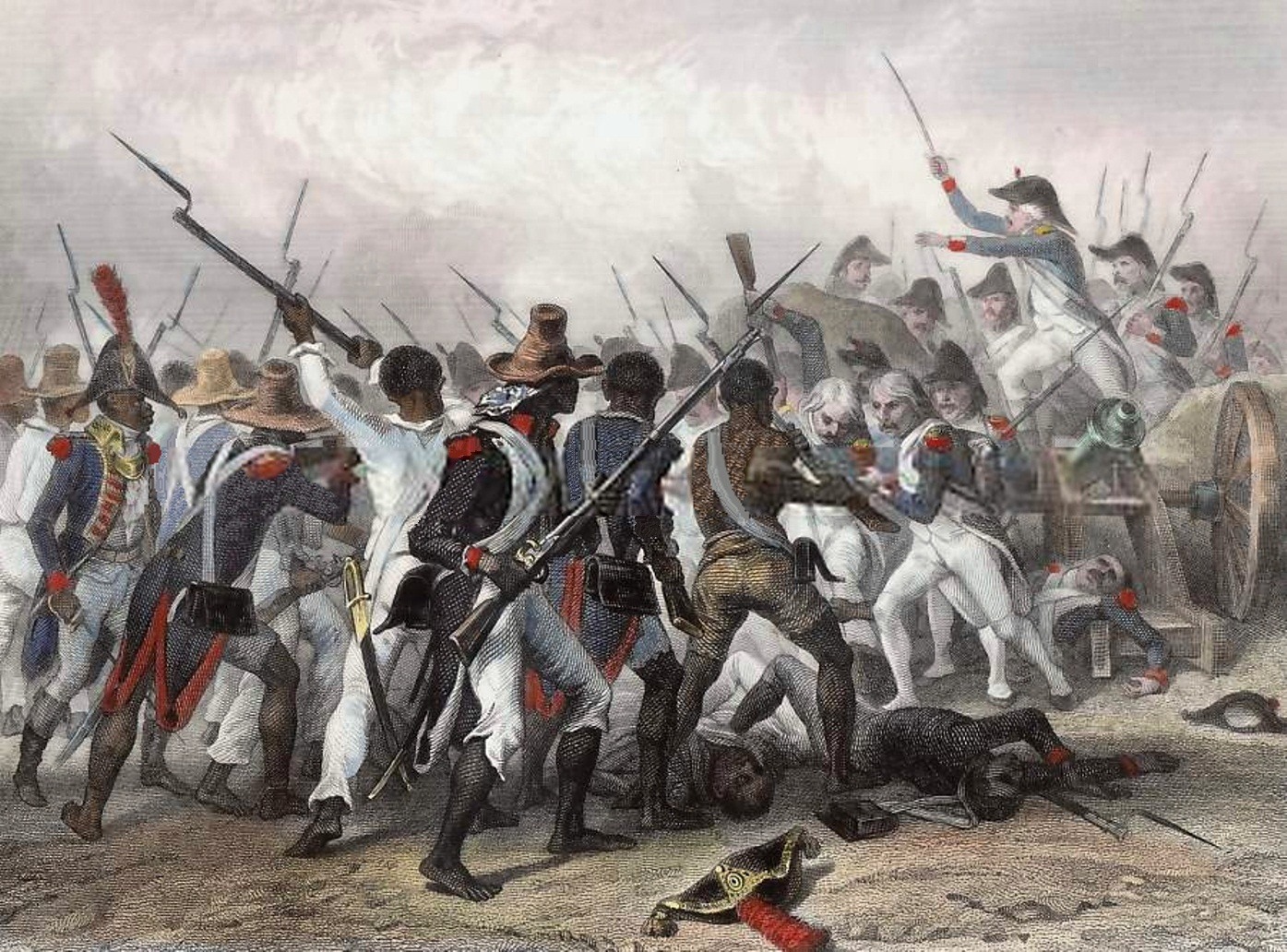
The Haitian Revolution was the first completely successful _____ revolt in world history.
Male
Rich landowner
Slave
Nationalistic
The social classes of Latin America were based on the _________ of the person.
Wealth
Race
Heritage
Ability

This man was a famous creole general, that led the South American revolutions
Father Miguel Hidalgo
Toussaint L'Overture
Napoleon Bonaparte
Simon Bolivar
What was Simon Bolivar's dream?
To free Haitian slaves
to unite South America into one nation named GranColombia
to give Mexico its independence

Elizabeth Cady Stanton wrote the Declaration of Sentiments which was presented at the First Women's Convention in Seneca Falls. Stanton changed the words in this document to say that
" all men are created equal"
"all men and women are created equal"
"all men and women can attend conventions from this day forward"
"all women have the right to vote"

Saint Domingue (Haiti) was a colony of what country?
Spain
France
England
Germany
"The aim of every political association is the preservation of the natural and imprescriptible rights of man. These rights are liberty, property, security and resistance to oppression."
-Declaration of the rights of Man and of the Citizen, 1789
Which philosopher best upholds the ideas expressed in the document above?
Montesquieu
Wollstonecraft
Locke
Hobbes
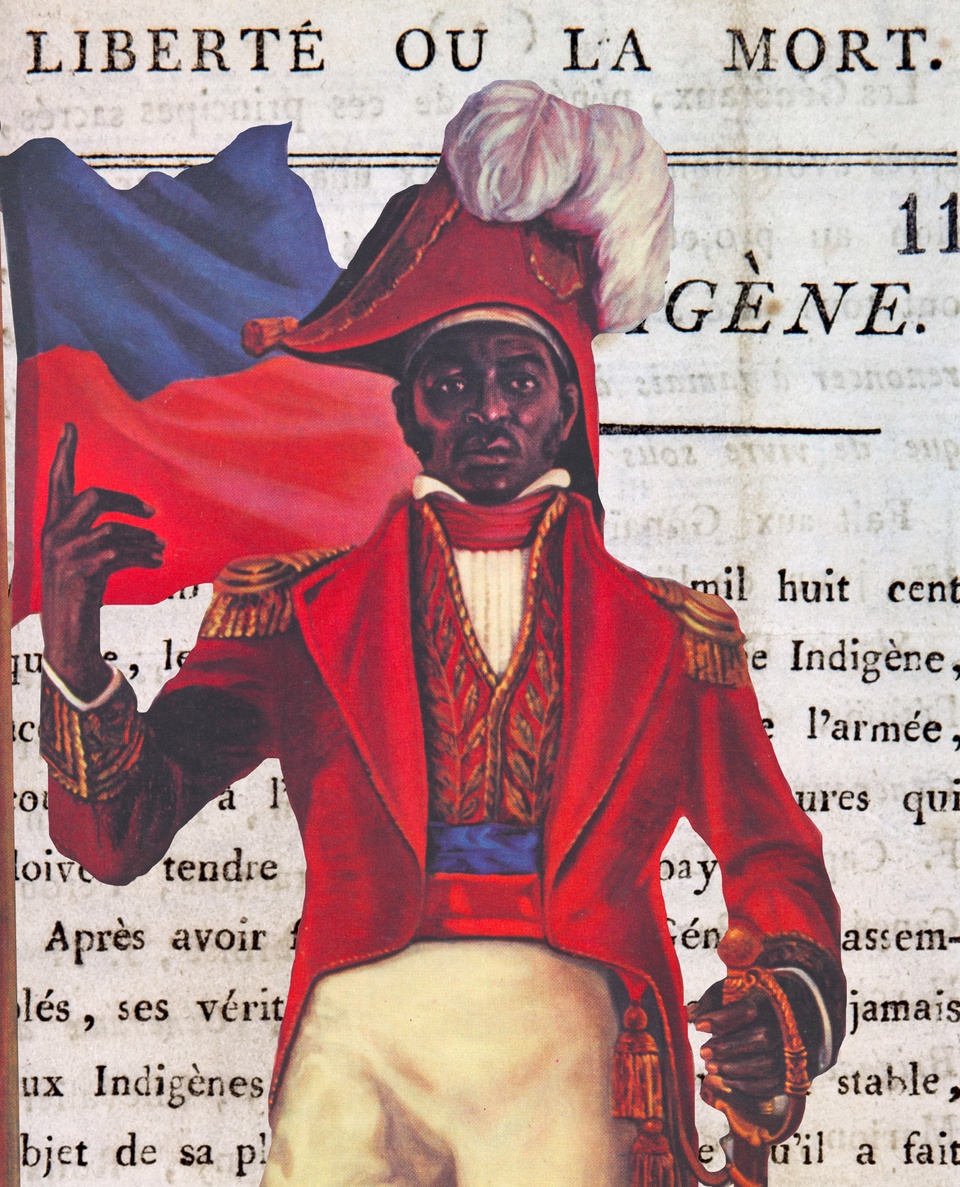
As a result of the Haitian Revolution, Haiti created the first ever
black monarchy
black dictatorship
black republic
black oligarchy
"I may not agree with what you say, but will defend to the death your right to say it."
Voltaire
Montesquieu
John Locke
Rousseau
System of checks and balances should limit the governments power.
John Locke
Montesquieu
Rousseau
Voltaire
writing which had the purpose of outlining Bolivar's philosophical and political ideals for Latin America
Jamaica Letter
Tanzimat Reforms
Franco Letter
Declaration of the Rights of Man and Citizen
Proclamation of 1763
The American Revolution was what to the world?
Nothing
How important industrialization is
Stronger belief in monarchies
A call for other nations to gain independance
A wife being able to stay at home diuring the Industrial Revolution showed what?
Lower social status as she did not work
High social status as her husband had a high paying job
no one cared
This was not possible as everyone had to work
Which of the following describes the effect of skin color, ethnicity, and former slave status in Latin America in the late 19th century?
There was little effect for most people
Marriage alliances among all classes and castes eliminated the effect on all three
Large numbers of people of color migrated to the newly "Reconstructed" southern United States
There continued to be discrimination on the basis of all three factors.
Which of the following is the Enlightenment belief in reason over faith?
Empiricism
Deism
Social Contract
Scientific Revolution
Effects of the French Revolution
The French Revolution brought significant social changes, reshaping the structure of society. It challenged the traditional hierarchy, leading to the decline of feudal privileges and the rise of equality among citizens. The revolution also emphasized the importance of individual rights, inspiring movements for justice and fairness. These changes laid the foundation for modern democratic principles, influencing how societies view governance and social order.
Internationally, the French Revolution had a profound impact, inspiring revolutionary movements across Europe and beyond. Its ideals of liberty, equality, and fraternity resonated with oppressed populations, encouraging them to challenge authoritarian regimes. The revolution also altered the balance of power in Europe, leading to conflicts and alliances that shaped the continent's political landscape. Nations began to adopt reforms influenced by the revolutionary ideas, marking a shift in global governance.
The legacy of the French Revolution remains significant, as it continues to influence political thought and social movements. It demonstrated the power of collective action in achieving societal change and highlighted the importance of addressing inequality. The revolution's principles are reflected in modern constitutions and human rights declarations, showcasing its enduring relevance. By challenging the status quo, the French Revolution set a precedent for future struggles for freedom and justice.
What was one of the major social changes brought about by the French Revolution?
Decline of feudal privileges
Rise of monarchy
Increase in feudal privileges
Strengthening of traditional hierarchy
Which ideals of the French Revolution inspired oppressed populations internationally?
Liberty, equality, fraternity
Monarchy, feudalism, hierarchy
Justice, fairness, governance
Power, control, dominance
How did the French Revolution influence global governance?
By inspiring nations to adopt reforms
By strengthening authoritarian regimes
By promoting feudal privileges
By discouraging revolutionary movements
What is one way the legacy of the French Revolution is reflected in modern times?
In human rights declarations
In the rise of feudalism
In the decline of democratic principles
In the strengthening of authoritarian regimes
What precedent did the French Revolution set for future struggles?
Challenging the status quo
Strengthening traditional hierarchy
Promoting inequality
Discouraging collective action
Women’s Opportunities During the Industrial Revolution
During the Industrial Revolution, women began to experience new opportunities outside of their traditional roles in the home. One significant change was the rise of education opportunities for women. As industrialization progressed, schools and institutions started to open their doors to female students, allowing them to gain knowledge and skills that were previously inaccessible. This shift marked an important step toward gender equality in education.
Women also played a vital role in social reform during this period. Many women became active in movements aimed at improving working conditions, advocating for labor rights, and addressing social injustices. Their contributions to these causes not only helped shape the future of industrial societies but also demonstrated their ability to lead and influence change on a broader scale.
The Industrial Revolution also had a profound impact on family roles. As more women entered the workforce, traditional family dynamics began to shift. Women were no longer solely confined to domestic duties, and their financial contributions to the household became increasingly significant. This change challenged long-standing societal norms and paved the way for greater independence for women.
Overall, the Industrial Revolution was a transformative period for women, offering them new opportunities in education, social reform, and the workforce. These changes not only improved their individual lives but also contributed to the broader progress of society. The era marked a turning point in the recognition of women’s capabilities and their role in shaping the modern world.
What was one significant change for women during the Industrial Revolution?
Rise of education opportunities
Decline in social reform movements
Increase in domestic duties
Reduction in workforce participation
How did women contribute to social reform during the Industrial Revolution?
By advocating for labor rights
By focusing solely on domestic duties
By opposing industrialization
By avoiding involvement in societal issues
What impact did the Industrial Revolution have on family roles?
Women became more financially independent
Women were confined to domestic duties
Family dynamics remained unchanged
Men stopped contributing financially
Which of the following areas saw progress for women during the Industrial Revolution?
Education, social reform, and workforce
Only domestic duties
Military and politics
None of the above
What broader impact did the Industrial Revolution have on women’s roles?
It marked a turning point in recognizing women’s capabilities
It restricted women to traditional roles
It reduced their involvement in societal progress
It had no impact on women’s roles
Karl Marx's Ideas on Social Classes and Economic Systems
Karl Marx introduced the concept of the 'haves' and 'have-nots' to describe the division between the bourgeoisie and the proletariat. The bourgeoisie, or the 'haves,' are the wealthy class that owns the means of production, such as factories and businesses. On the other hand, the proletariat, or the 'have-nots,' are the working class who sell their labor to survive. Marx believed this division created inequality and exploitation in society.
Marx proposed communism and socialism as alternatives to capitalism to address these inequalities. Communism advocates for a classless society where resources and production are collectively owned, eliminating the gap between the bourgeoisie and proletariat. Socialism, while similar, focuses on redistributing wealth and ensuring that essential industries are controlled by the community or government. Both systems aim to create fairness and reduce economic disparities.
Marx's critique of capitalism highlighted its tendency to concentrate wealth in the hands of a few while leaving the majority struggling. He argued that capitalism prioritizes profit over the well-being of workers, leading to exploitation and social unrest. Marx believed that the inherent conflicts within capitalism would eventually lead to its downfall, paving the way for a more equitable economic system. His ideas continue to influence discussions on social justice and economic reform.
Who are the 'haves' according to Karl Marx?
The proletariat
The bourgeoisie
The working class
The government
What does communism advocate for, as per Karl Marx's ideas?
A capitalist society
A classless society
A society with private ownership
A society with wealth concentration
What is the main focus of socialism according to Marx?
Redistributing wealth
Eliminating all classes
Promoting capitalism
Concentrating wealth
What did Marx believe capitalism prioritizes over the well-being of workers?
Social justice
Profit
Economic equality
Worker satisfaction
What did Marx predict would happen to capitalism due to its inherent conflicts?
It would thrive
It would lead to social harmony
It would eventually collapse
It would eliminate inequality
The Cult of Domesticity
The Cult of Domesticity, a prevailing ideology in the 19th century, emphasized the role of women as caretakers of the home and moral guides for their families. Social expectations dictated that women should embody virtues such as piety, purity, and submissiveness, while focusing on domestic responsibilities. This ideal reinforced the belief that a woman's primary purpose was to nurture her family and create a harmonious household environment.
Critiques of domesticity emerged as women began to challenge the limitations imposed by this ideology. Many argued that the Cult of Domesticity restricted women's opportunities for education, professional growth, and participation in public life. Critics highlighted the unfairness of confining women to the private sphere while men dominated the public and economic realms, sparking debates about gender equality and societal progress.
The role of women evolved as movements advocating for women's rights gained momentum. Activists pushed for greater access to education, suffrage, and employment opportunities, challenging traditional norms. While the Cult of Domesticity shaped societal expectations for decades, its influence waned as women increasingly sought to redefine their roles and contribute to broader social and political change.
What was the primary focus of the Cult of Domesticity in the 19th century?
Emphasizing women's role as caretakers and moral guides
Promoting gender equality and women's suffrage
Encouraging women to pursue professional careers
Advocating for women's participation in public life
Which virtue was NOT emphasized by the Cult of Domesticity?
Piety
Purity
Submissiveness
Ambition
What led to the decline of the Cult of Domesticity's influence?
The rise of industrialization
Movements advocating for women's rights
Increased focus on domestic responsibilities
The emergence of new religious ideologies
Understanding the Congress of Vienna
The Congress of Vienna, held from 1814 to 1815, aimed to restore stability and order in Europe after the Napoleonic Wars. One of its primary goals was to establish a balance of power among European nations to prevent any single country from dominating the continent. This principle sought to maintain peace by ensuring that no nation could become too powerful.
Another significant objective of the Congress was the restoration of monarchies that had been overthrown during the revolutionary and Napoleonic periods. Leaders believed that reinstating traditional rulers would bring stability and legitimacy to governments. Monarchs were returned to their thrones in countries like France, Spain, and several Italian states.
While the Congress focused on stability, it also faced challenges from growing nationalism and liberalism. Nationalism inspired people to seek independence and self-rule, often clashing with the Congress's efforts to maintain old boundaries. Liberalism, on the other hand, promoted ideas of individual rights and democratic governance, which contrasted with the conservative goals of the Congress.
In conclusion, the Congress of Vienna played a crucial role in shaping post-Napoleonic Europe. By balancing power, restoring monarchies, and addressing the rise of nationalism and liberalism, it laid the groundwork for a new political order. However, its decisions also sowed the seeds for future conflicts and revolutions across the continent.
What was the primary goal of the Congress of Vienna?
To establish a balance of power among European nations
To promote liberalism and individual rights
To encourage nationalism and self-rule
To expand the territories of powerful nations
Which countries had monarchs restored to their thrones as part of the Congress of Vienna?
France, Spain, and several Italian states
Germany, Austria, and Russia
England, Portugal, and the Netherlands
Sweden, Denmark, and Norway
What challenge did the Congress of Vienna face from nationalism?
Nationalism inspired people to seek independence and self-rule
Nationalism promoted the idea of restoring monarchies
Nationalism aimed to balance power among European nations
Nationalism supported the conservative goals of the Congress
How did liberalism contrast with the goals of the Congress of Vienna?
Liberalism promoted individual rights and democratic governance
Liberalism supported the restoration of monarchies
Liberalism aimed to maintain old boundaries
Liberalism sought to prevent any single country from dominating Europe
What was one of the outcomes of the Congress of Vienna?
It laid the groundwork for a new political order
It eliminated nationalism and liberalism
It expanded the territories of powerful nations
It prevented future conflicts and revolutions
Nationalism and the Unification of Germany and Italy
Nationalism played a pivotal role in the unification of Germany and Italy during the 19th century. It fostered a sense of shared identity among people who spoke the same language, practiced similar traditions, and shared common historical experiences. This collective identity motivated citizens to seek political unity and independence from foreign rule, driving movements that reshaped the political landscape of Europe.
In Germany, nationalism was a unifying force that brought together fragmented states under a single nation. Leaders like Otto von Bismarck utilized nationalist sentiments to rally support for unification. Through strategic diplomacy and military campaigns, Bismarck strengthened alliances and defeated opposition, ultimately leading to the establishment of the German Empire in 1871.
Similarly, Italy's unification was deeply influenced by nationalist ideals. Figures such as Giuseppe Garibaldi and Count Camillo di Cavour worked tirelessly to unite the various Italian states. Garibaldi’s military efforts and Cavour’s political strategies were instrumental in overcoming regional divisions and foreign control, culminating in the creation of the Kingdom of Italy in 1861.
Political alliances were crucial in both unification processes, as they provided the necessary support to achieve nationalist goals. In Germany, Bismarck formed alliances with Austria and later isolated France to ensure success. In Italy, Cavour allied with France to defeat Austrian forces, paving the way for unification. These alliances highlight how nationalism and strategic partnerships worked hand in hand to shape modern Europe.
What role did nationalism play in the unification of Germany and Italy during the 19th century?
It fostered a sense of shared identity among people.
It divided people based on their traditions.
It discouraged political unity.
It promoted foreign rule.
Who was a key leader in the unification of Germany?
Otto von Bismarck
Giuseppe Garibaldi
Count Camillo di Cavour
Napoleon Bonaparte
Which year marked the establishment of the German Empire?
1871
1861
1848
1900
What strategy did Count Camillo di Cavour use to aid Italy's unification?
Forming alliances with France
Military campaigns
Isolating France
Strengthening alliances with Austria

