
 Worksheets
Anatomic and Physiologic Overview
Total questions: 150
Worksheet time: 1hrs 15mins
Which division includes brain and spinal cord?
Autonomic nervous system branches
Somatic nervous system pathways
Central nervous system structures
Peripheral nervous system components
Which is NOT listed as a function of the nervous system?
Regulating autonomic functions
Producing red blood cells
Managing cognitive functions
Controlling sensory activities
Cranial and spinal nerves belong to which division?
Enteric nervous system division
Peripheral nervous system division
Central nervous system division
Endocrine system division
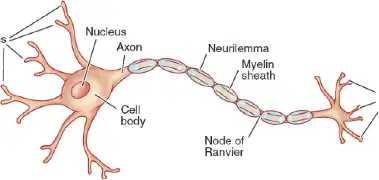
What effect does a myelinated sheath have on axonal conduction?
Increases speed of impulse conduction
Blocks electrical signaling entirely
Decreases impulse speed slightly
Maintains constant slow conduction
Clusters of nerve cell bodies in the PNS are called what?
Tracts in peripheral nerves
Cortex in peripheral nerves
Ganglia in peripheral nerves
Nuclei in peripheral nerves
Which statement best describes glial cells (neuroglia)?
Form muscle contraction fibers
Support, protect, and nourish neurons
Transmit long-distance impulses
Act as primary sensory receptors
Which pathway link is emphasized for the nervous system?
Respiratory and circulatory pathways linkage
Skeletal and muscular pathways linkage
Motor and sensory pathways linkage
Digestive and endocrine pathways linkage
Where are nuclei (clusters of neuronal cell bodies) located?
Autonomic ganglia structures
Central nervous system structures
Peripheral nervous system structures
Somatic plexus structures
Which statement best describes a neurotransmitter’s basic role in the nervous system?
Chemical messenger transmitting signals between neurons
Electrical current generated by voltage-gated channels
Structural protein forming myelin around axons
Hormone exclusively released by endocrine glands
Which pair correctly matches division with general function in the autonomic nervous system?
Parasympathetic—inhibit cardiac conduction
Sympathetic—fight or flight responses
Parasympathetic—increase skeletal muscle tone
Sympathetic—rest and digest activities
Which neuroglial cell primarily forms myelin within the central nervous system?
Oligodendrocyte in CNS myelination
Schwann cell in CNS myelination
Microglia in cerebrospinal fluid flow
Astrocyte in synaptic vesicle release
Which is a defining function of a neuron compared with neuroglia?
Transmits nerve impulses rapidly
Provides immune surveillance
Maintains blood–brain barrier
Produces structural framework
Dopamine deficiency in the basal ganglia most directly contributes to which disorder?
Multiple sclerosis demyelination
Myasthenia gravis respiratory failure
Parkinson’s disease motor symptoms
Alzheimer’s disease memory loss
Myasthenia gravis primarily involves which neurotransmitter mechanism at the neuromuscular junction?
Reduced norepinephrine at sweat glands
Excess dopamine release to muscles
Impaired acetylcholine receptor binding
Blocked GABA uptake in cortex
Which neurotransmitter is generally inhibitory in the CNS and helps calm neural activity?
Norepinephrine in sympathetic nerves
Acetylcholine in parasympathetics
Epinephrine from adrenal medulla
Gamma-aminobutyric acid (GABA)
Which source–action pairing for norepinephrine is most accurate?
Vagal nuclei—rest and digest activation
Spinal cord dorsal horn—pain inhibition
Basal ganglia neurons—usually inhibitory
Brainstem and sympathetic neurons—usually excitatory
A patient with mood and sleep regulation issues may have altered levels of which primarily inhibitory neurotransmitter from brainstem and hypothalamus?
Dopamine increasing fine movement
Endorphins boosting heart rate
Acetylcholine enhancing skeletal tone
Serotonin affecting mood and sleep
Which statement about acetylcholine is most accurate regarding its actions?
Usually excitatory; parasympathetic effects can be inhibitory
Always inhibitory; blocks autonomic ganglia transmission
Usually excitatory only in sympathetic nerves
Always excitatory at cardiac pacemaker cells
Which statement best describes the average brain weight across age groups?
Older adult around 1000 grams
Older adult around 1600 grams
Young adult around 1100 grams
Young adult around 1400 grams
Which major divisions make up the brain?
Midbrain, pons, thalamus
Cortex, basal ganglia, limbic
Cerebrum, brain stem, cerebellum
Cerebrum, diencephalon, medulla
Which structure provides outside protection to the brain?
Cerebral white matter
Arachnoid villi network
Falx cerebri extension
Cranial bone of the skull
Which best matches skull fossae with contents?
Anterior fossa—frontal lobe
Middle fossa—occipital lobe
Posterior fossa—cerebrum
Anterior fossa—cerebellum
Which list correctly names the meningeal layers from outer to inner?
Dura mater, pia mater, arachnoid
Pia mater, dura mater, arachnoid
Dura mater, arachnoid, pia mater
Arachnoid, dura mater, pia mater
Which description characterizes the dura mater?
Highly vascular, loose connective tissue
Delicate, spider web–like membrane
Thin, transparent; closely adherent
Tough, thick, inelastic; fibrous and gray
Which dural extension separates the two cerebral hemispheres?
Arachnoid villi
Falx cerebelli
Tentorium
Falx cerebri
Where is the epidural space located in the cranium?
Between pia and brain
Between skull and dura mater
Between dura and arachnoid
Within subarachnoid space
Which space contains cerebrospinal fluid in the meninges?
Subarachnoid space
Periosteal space
Subdural space
Epidural space
What is the primary function of arachnoid villi?
Absorb CSF into venous system
Produce CSF in ventricles
Anchor pia to cortex
Seal the superior sagittal sinus
Which clinical consequence may follow obstruction of arachnoid villi?
Meningioma forming in posterior fossa
Communicating hydrocephalus with enlarged ventricles
Spinal cord transection with paralysis
Subarachnoid hemorrhage with vasospasm
Which statement about the cerebrum’s surface is accurate?
Fissures eliminate folding to save space
Sulci flatten the cortex reducing area
Gyri increase surface area enabling high activity
Gyri reduce surface area to limit activity
Which description best matches the cerebral cortex (gray matter)?
Outer layer containing neuron cell bodies
Inner layer of hemispheres with tracts
Thick bundle connecting hemispheres
Region composed mainly of myelinated axons
What is the primary composition of cerebral white matter?
Unmyelinated axons and cell bodies
Myelinated nerve fibers and neuroglia
Cortical gyri and sulci grooves
Sensory nuclei and basal ganglia
Which structure separates the cerebrum into right and left hemispheres?
Central sulcus dividing frontal and parietal
Great longitudinal fissure midline separation
Transverse fissure behind occipital lobe
Lateral fissure between temporal and frontal
What is the main function of the corpus callosum?
Relays olfactory signals to thalamus
Controls motor speech production
Connects right and left cerebral hemispheres
Regulates pituitary hormone secretion
Which lobe is primarily responsible for visual interpretation and memory?
Occipital lobe visual processing and memory
Temporal lobe auditory and language
Parietal lobe somatosensory interpretation
Frontal lobe executive functions and motor
Broca’s area is typically located where and controls what?
Right hemisphere, sensory speech comprehension
Left hemisphere, motor control of speech
Brainstem, reflexive vocalization pathways
Cerebellum, coordination of speech rhythm
Which function is most associated with the parietal lobe?
Initiation of voluntary motor actions
Analysis of sensory information
Coordination of balance and posture
Auditory memory and music processing
Which statement about sulci and fissures is accurate?
They are white matter tracts connecting lobes
They are grooves serving anatomic divisions
They are gyri that increase surface area
They are nuclei clustered in basal regions
Which set lists functions of the frontal lobe?
Hearing and language understanding
Somatosensory analysis and discrimination
Visual memory and interpretation
Concentration and abstract thinking
Which outcome would most likely follow damage to the parietal lobe?
Loss of endocrine temperature control
Loss of reflexive eye movements
Loss of coordinated gait and balance
Loss of right–left orientation skills
White matter tracts primarily connect which structures?
Hypothalamus with third ventricle walls
Thalamus with pituitary gland stalk
Cortex with lower brain structures
Cerebellum with basal ganglia nuclei
Which hemisphere is dominant in most right-handed individuals and for which functions?
Right hemisphere; spatial and musical abilities
Right hemisphere; arithmetic and calculation
Left hemisphere; verbal and analytic functions
Left hemisphere; geometric and spatial skills
A lesion affecting transmission between hemispheres most likely involves which structure?
Corpus callosum thick fiber bundle
Thalamus sensory relay nucleus
Central sulcus cortical landmark
Infundibulum connecting hypothalamus
Which statement about the thalamus is correct?
Acts as relay for all sensations except smell
Initiates voluntary motor commands primarily
Controls pituitary hormone production directly
Stores long-term visual memories centrally
Which hypothalamic function is accurately paired?
Maintains fluid balance with cerebellum
Provides motor control of speech output
Transmits pain impulses to cerebrum
Regulates body temperature with pituitary
Which structure primarily regulates appetite and contains the hunger center?
Thalamus in dorsal diencephalon
Basal ganglia within cerebrum
Hypothalamus in ventral diencephalon
Epithalamus near pineal region
Which role best characterizes the thalamus in neural pathways?
Primary relay for sensory signals
Executive of endocrine output
Coordinator of autonomic reflexes
Generator of cerebrospinal fluid
Which component of the epithalamus secretes melatonin to regulate circadian rhythms?
Mammillary bodies pair
Habenular nuclei complex
Pineal gland in epithalamus
Optic chiasm junction
Which hypothalamic function is correctly matched?
Regulates rage and fear responses
Forms motor tracts in medulla
Coordinates cerebellar posture
Stores procedural memories
Which brainstem part connects the pons and cerebellum with the cerebral hemispheres and houses auditory and visual reflex centers?
Midbrain with tectal nuclei
Pons with respiratory nuclei
Reticular formation network
Medulla with decussation area
Which cranial nerves originate in the midbrain?
CN III and CN IV set
CN V through CN VIII
CN IX to CN XII group
CN I and CN II pair
Which statement about the pons is most accurate?
Acts as a bridge between cerebellar halves
Site where most motor fibers decussate
Primary origin of cerebrospinal fluid
Controls fine motor movements alone
Which set of cranial nerves is associated with the pons?
CN III–IV only
CN V–VIII distribution
CN IX–XII series
CN I–II exclusively
Which feature is characteristic of the medulla oblongata?
Initiates limbic emotional learning
Integrates higher visual processing
Generates melatonin secretion cycles
Contains motor fibers to spinal cord
Most fiber decussation for ascending and descending tracts occurs at which level?
Medulla pyramidal region
Cerebellar peduncles
Midbrain near tectum
Pons anterior portion
Which reflex centers are located in the medulla?
Respiration and blood pressure
Circadian rhythm regulation
Visual and auditory reflexes
Proprioception and posture
Which statement about the reticular formation is correct?
Produces cerebrospinal fluid directly
Controls melatonin secretion cycles
Confined to cerebellar cortex only
Begins in medulla and modulates arousal
The basal ganglia are primarily responsible for which function?
Fine motor control of extremities
Production of CSF in ventricles
Coordination of respiratory rate
Generation of auditory reflexes
Which cerebellar function is best described?
Initiates endocrine stress responses
Regulates sexual behavior directly
Provides smooth coordinated movement
Acts as primary sensory relay station
Which structure absorbs cerebrospinal fluid after it reaches the subarachnoid space?
Dural sinus valves
Choroid plexus villi
Arachnoid villi
Astrocyte end-feet
Blockage anywhere in the ventricular system most directly risks which condition?
Ischemic stroke
Obstructive hydrocephalus
Subarachnoid hemorrhage
Meningeal irritation
Normal CSF color and specific gravity are best described as which pair?
Pink and 1.015
Cloudy and 1.000
Clear and 1.007
Amber and 1.020
During lumbar puncture, the extraction level is typically between which vertebral landmarks?
Between L2–L3
Between L1–L2
Between L3–L4
Between T12–L1
Which patient position helps access the L3–L4 interspace for CSF extraction?
Seated with lordosis
Supine with arms overhead
Lateral recumbent curl
Prone with hip extension
After lumbar puncture, which action helps prevent spinal headache?
Elevate head and shoulders
Walk for thirty minutes
Lay flat six to eight hours
Drink diuretics immediately
Which CSF finding is considered normal in a healthy adult?
High red blood cells
Minimal white cells
Elevated protein level
Positive glucose test
Which test is commonly included in laboratory analysis of CSF?
Serum creatinine comparison
Platelet aggregation study
Specific gravity measurement
Lactate dehydrogenase isoforms
Approximately what fraction of cardiac output is delivered to the brain at rest?
Twenty percent
Fifteen percent
Ten percent
Five percent
Which feature makes cerebral blood vessels more prone to rupture under stress?
Large muscular tunica
Fenestrated endothelium
Two-layer wall structure
Four elastic layers
Collateral circulation in the brain is primarily provided by which arterial structure?
Anterior spinal artery
Circle of Willis
Cavernous sinus
Basilar bifurcation
Which pair of arteries are branches of the internal carotid that contribute to the circle of Willis?
Posterior communicating and basilar
Anterior cerebral and middle cerebral
Posterior cerebral and basilar
Vertebral and spinal anterior
Posterior circulation to the brain arises from which source before forming the basilar artery?
Common carotid arteries
Subclavian vertebral arteries
External carotid branches
Internal jugular veins
At bifurcation points within the circle of Willis, which pathology commonly forms due to wall weakness?
Arteriovenous malformation
Saccular aneurysm
Cavernous hemangioma
Venous varicosity
Venous drainage of the brain differs from most body structures because it primarily empties into which channels?
Superficial venous valves
Dural venous sinuses
Subcutaneous plexuses
Deep lymphatic sacs
Which characteristic of cerebral veins most influences blood flow direction?
Presence of valves
Dependence on gravity
Elastic recoil dominance
Muscular wall pumping
Which cellular structure forms the blood-brain barrier’s tight junctions around brain capillaries?
Fenestrated endothelia
Microglial processes
Endothelial cells
Pericyte membranes
All substances entering the CSF must traverse which combination of barrier cells?
Astrocytes and neurons
Capillary endothelial cells
Ependyma and pia mater
Oligodendrocyte myelin
Which change increases BBB permeability, raising CNS exposure to macromolecules?
Normotension
Trauma
Hypernatremia
Hypoglycemia
A key function of the BBB is to maintain which CNS condition?
Stable environment
High protein content
Variable ionic milieu
Rapid immune influx
The spinal cord typically terminates at which anatomical level in adults?
Cervical C7 spine
Middle sacral S2
Lower border of L1
Upper thoracic T4
Below the conus medullaris, which structure contains nerve roots resembling a horse’s tail?
Dural sleeve
Cauda equina
Posterior column
Filum terminale
Which statement best describes afferent versus efferent fibers in spinal pathways?
Afferent create movement
Efferent carry sensations
Afferent carry impulses to brain
Efferent send signals to skin
Which spinal cord region contains motor neuron cell bodies forming anterior roots?
Posterior horns of gray matter
Anterior horns of gray matter
White matter dorsal columns
Lateral horns in cervical region
What is the primary function of posterior (dorsal) horns?
Relay for sensory and reflex pathways
Initiate voluntary motor movement
Conduct fast myelinated tracts only
House autonomic preganglionic neurons
Lateral horns in the thoracic region give rise to which fibers?
Corticospinal axons
Autonomic sympathetic fibers
Posterior sensory roots
Somatic motor efferents
Bundles of myelinated and unmyelinated fibers with a common function are called what?
Tracts in white matter
Ganglia in gray matter
Nuclei in brainstem
Columns in vertebrae
Which posterior column tract carries deep touch and vibration from the lower body?
Fasciculus gracilis pathway
Fasciculus cuneatus system
Spinothalamic anterior tract
Anterior corticospinal route
Posterior column fibers ascend on the same side and then cross at which level?
Cerebellar peduncle crossing
Spinal cord segment level
Medulla before reaching cortex
Midbrain pyramidal decussation
The anterior spinocerebellar tract primarily does what?
Transmits pain and temperature to thalamus
Controls voluntary distal limb movement
Conveys proprioceptive input to cerebellum
Carries vibration from upper extremity
Which spinothalamic tract conveys pain, temperature, and fine touch from the body?
Posterior column fasciculi
Lateral and anterior spinothalamic
Reticulospinal bundles
Vestibulospinal pathways
Where do spinothalamic tracts cross before ascending to the thalamus?
At the spinal cord level
Within the cerebral cortex
In the medulla oblongata
Across the cerebellar commissure
Which corticospinal tract function is most accurate?
Conducts motor impulses for voluntary control
Relays sensory position sense to cortex
Carries autonomic sweating regulation
Mediates involuntary reflex muscle activity
Corticospinal fibers originate from which side relative to their target muscles?
Thoracic spinal segments
Cerebellar hemispheres only
Same side as the muscles
Opposite side of the brain
Where do corticospinal tracts cross en route to anterior horn cells?
Across intervertebral foramina
Through posterior columns
At the thalamic level
In the medulla pyramids
Vestibulospinal tracts typically descend how and control what?
Descend uncrossed; involuntary muscle control
Descend crossed; voluntary hand movements
Ascend crossed; fine touch sensation
Ascend uncrossed; vibration sense
Which tract conducts impulses for involuntary muscle movement alongside rubrospinal and reticulospinal pathways?
Spinothalamic medial system
Anterior corticospinal fibers
Posterior column fasciculi
Rubrospinal and reticulospinal tracts
Which vertebral components normally compose the vertebral column?
7 cervical, 12 thoracic, 4 lumbar, sacrum only
6 cervical, 11 thoracic, 4 lumbar, sacrum, coccyx
7 cervical, 12 thoracic, 5 lumbar, sacrum, coccyx
8 cervical, 12 thoracic, 5 lumbar, coccyx only
Nerve roots exit the spinal column through which openings?
Neural canal sinuses
Transverse processes
Costal facets
Intervertebral foramina
Which statement about posterior spinocerebellar tract is correct?
Ascends uncrossed to cerebellum
Crosses at spinal cord then thalamus
Terminates in cerebral cortex layers
Carries pain and temperature only
Which sensory receptor pairing is correctly matched to its pathway?
Pacinian corpuscles to frontal cortex directly
Krause end bulbs to parietal bypassing hypothalamus
Ruffini end organ directly to cerebellum
Meissner’s corpuscle to thalamus to parietal
Which cranial nerve is responsible for the sense of smell?
Glossopharyngeal nerve (IX) gag reflex
Trigeminal nerve (V) jaw movement
Olfactory nerve (I) smell function
Optic nerve (II) vision function
Which test best assesses optic nerve (II) function?
Taste on posterior tongue
Downward eye movement
Visual acuity and visual fields
Jaw clench and mastication
Which action primarily evaluates the oculomotor nerve (III)?
Pupil constriction response
Taste anterior tongue
Lateral eye abduction
Head tilt and diplopia
Damage to the trochlear nerve (IV) most likely causes which deficit?
Facial droop and loss of taste
Loss of smell, anosmia
Difficulty looking down, head tilt
Lateral eye deviation outward
Which cranial nerve controls lateral eye movement (abduction)?
Abducens nerve (VI) motor
Facial nerve (VII) motor
Oculomotor nerve (III) motor
Trochlear nerve (IV) motor
Facial nerve (VII) damage commonly presents with which findings?
Dilated pupil and ptosis
Facial droop, decreased tearing
Impaired hearing bilaterally
Loss of gag reflex only
Which cranial nerve mediates taste on the posterior one‑third of the tongue?
Glossopharyngeal nerve (IX) posterior taste
Vagus nerve (X) swallowing only
Facial nerve (VII) anterior taste
Hypoglossal nerve (XII) tongue strength
Which finding best indicates vagus nerve (X) impairment?
Inability to clench the jaw
Loss of shoulder shrug strength
Hoarseness and swallowing difficulty
Anosmia with nasal testing
Accessory nerve (XI) primarily innervates which function?
Pupil constriction reflex
Tongue protrusion strength
Movement of shoulder muscles
Taste anterior two‑thirds
Which bedside maneuver best tests hypoglossal nerve (XII)?
Ask patient to smile widely
Assess visual fields bilaterally
Ask patient to protrude tongue
Test hearing with tuning fork
How many pairs of spinal nerves exist in humans?
Thirty‑one total pairs
Thirty‑three total pairs
Twenty‑four total pairs
Twenty‑nine total pairs
Which pairing correctly lists spinal nerve counts by region?
8 cervical, 11 thoracic, 6 lumbar
7 cervical, 11 thoracic, 5 lumbar
7 cervical, 12 thoracic, 5 lumbar
8 cervical, 12 thoracic, 5 lumbar
Which statement best distinguishes dorsal and ventral roots?
Both sensory to organs
Dorsal motor, ventral sensory
Dorsal sensory, ventral motor
Both motor to dermatomes
Dermatomes convey sensory input primarily to which structure?
Dorsal horn ganglia
Cerebellar cortex
Ventral horn nuclei
Anterior spinal artery
Somatic sensory fibers carry which information?
Pain, temperature, touch
Visceral organ stretch
Pupil constriction data
Taste posterior tongue
Which spinal level is most associated with wrist and elbow movement?
C7 function region
L3 knee extension
S2 sexual function
T12 trunk stability
Which division primarily mediates the fight-or-flight response?
Parasympathetic division
Enteric nervous system
Somatic motor system
Sympathetic division
Which neurotransmitter action predominates at most sympathetic postganglionic effector synapses?
GABAergic inhibition
Cholinergic muscarinic action
Cholinergic nicotinic action
Adrenergic norepinephrine release
Which effect is characteristic of parasympathetic activity on the heart?
Decreases heart rate and contractility
Causes ventricular fibrillation
Increases heart rate and contractility
No change in heart function
Where are sympathetic preganglionic neurons chiefly located?
Cervical and sacral cord
Thoracic and lumbar cord
Brainstem nuclei only
Across entire spinal cord
Which structure coordinates autonomic functions and links them to endocrine and behavioral responses?
Cerebellum
Amygdala
Thalamus
Hypothalamus
Which statement best describes the sympathetic chain (paravertebral ganglia)?
Found exclusively in the cervical region
Located within abdominal viscera
Twenty-two interconnected ganglia
Single midline ganglion only
Preganglionic fibers can pass through a ganglion without synapsing. What is this pathway associated with?
Somatic motor reflex arcs
Immediate postganglionic reentry
Direct synapse in terminal ganglia
Splanchnic nerves to prevertebral ganglia
Which effect on the pupil is produced by sympathetic activation?
Constriction of the pupil
Dilation of the pupil
No change in size
Irregular oscillation
In the gastrointestinal tract, parasympathetic activity generally produces which effect?
Decreased peristalsis and secretion
Increased peristalsis and secretion
Contracted sphincters and reduced motility
Relaxed sphincters and reduced tone
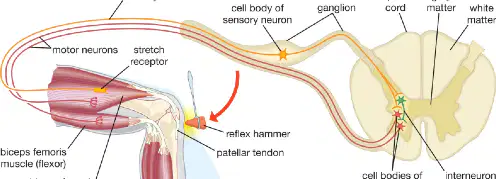
Which reflex involves involuntary rapid quadriceps contraction after patellar tendon tap?
Golgi tendon reflex
Withdrawal reflex
Crossed extensor reflex
Knee jerk reflex
Which plexus receives sympathetic fibers via three splanchnic nerves and parasympathetic fibers from the vagus?
Pulmonary plexus
Hypogastric plexus
Celiac (solar) plexus
Cardiac plexus
Which clinical state reflects extreme sympathetic discharge often seen after traumatic brain injury?
Adrenal failure
Sympathetic storm
Parasympathetic storm
Neurogenic shock
Which finding most strongly indicates an upper motor neuron lesion rather than a lower motor neuron lesion?
Spasticity with hyperactive reflexes
Absent reflexes with fasciculations
Flaccid paralysis with muscle atrophy
Loss of voluntary control without tone change
Upper motor neurons primarily originate in which brain region before forming descending pathways?
Basal ganglia nuclei
Cranial nerve motor nuclei
Anterior horn of spinal cord
Cerebral cortex areas
Damage to the internal capsule most directly affects which structure’s fibers?
Upper motor neuron fibers
Cerebellar peduncle tracts
Lower motor neuron axons
Basal ganglia output
Which pattern describes paralysis of all four extremities?
Tetraplegia affecting all limbs
Monoplegia of one limb
Paraplegia of both legs
Hemiplegia on one body side
A patient shows decreased or absent superficial reflexes and Babinski sign. What is the most consistent interpretation?
Lower motor neuron damage present
Upper motor neuron pathway disrupted
Peripheral nerve regeneration occurring
Basal ganglia dysfunction alone
Which clinical feature best differentiates LMN lesions from UMN lesions?
Loss of inhibitory control with brisk reflexes
Pathologic reflexes like Babinski
Increased muscle tone and spasticity
Muscle atrophy due to disuse
Where are lower motor neurons located before their axons exit to innervate muscle?
Motor cortex gray matter
Posterior columns of cord
Cerebellar deep nuclei
Anterior horn of spinal cord
Which statement about neuromuscular junction involvement in LMN lesions is accurate?
UMNs directly innervate skeletal muscle
LMNs synapse in the internal capsule
UMNs decussate at spinal anterior horns
LMNs terminate at neuromuscular junctions
Which cause is commonly associated with upper motor neuron lesions?
Peripheral neuropathy toxin exposure
Herniated disc compressing root
Stroke affecting corticospinal tracts
Anterior horn cell degeneration
Which finding suggests cerebellar involvement in coordination deficits?
Rigidity with posture control
Resting tremor suppression
Chorea with unwanted movements
Opposing muscles coordination loss
Basal ganglia dysfunction typically leads to which movement problem?
Difficulty initiating voluntary movement
Loss of joint position sensation
Ataxia with smooth rapid movements
Hyperreflexia with spastic tone
In assessing neurologic history, which element is essential to characterize symptom time course?
Age and educational level
Onset, duration, progression
Dietary intake patterns
Preferred hand dominance
Which component is part of the five elements of a neurologic assessment?
Renal clearance measurement
Endocrine gland testing
Cranial nerves evaluation
Pulmonary function screening
Which description best defines nociceptive pain?
Pain from tissue injury activating nociceptors
Pain from immune response causing fever
Pain due to psychological stress only
Pain from endocrine dysfunction hormones
During family history assessment for neurologic disorders, what is a key inquiry?
Age of onset in affected relatives
Daily sodium intake patterns
Travel history last year
Preferred sleep positions nightly
Which symptom definition aligns with seizures in the cerebral cortex?
Abnormal electrical discharges causing alterations
Muscle inflammation causing tenderness and heat
Peripheral edema creating pitting and swelling
Joint degeneration producing crepitus and stiffness
Which phase of pain processing involves the brain recognizing and interpreting pain?
Perception stage in the brain
Modulation within spinal cord
Transduction at damaged tissue
Transmission along peripheral nerves
Which finding would you inspect for during patient assessment of neurologic health?
Varicose veins indicating venous stasis
Skin turgor reflecting dehydration risk
Cafe-au-lait spots suggesting neurofibromatosis
Jaundice suggesting hepatic cholestasis
Which term best matches neuropathic pain etiology?
Localized muscle strain
Acute ligament sprain
Cutaneous burn wound
Nerve injury or dysfunction
Which statement about abnormal sensation in neurologic disease is accurate?
It reflects altered sensory processing centrally or peripherally
It always indicates musculoskeletal trauma exclusively
It occurs only in localized small skin areas
It cannot affect large body regions at all
Which component assesses ability related to awareness and understanding?
Respiratory excursion
Gastrointestinal motility
End-organ perfusion
Consciousness and cognition
Which process in nociceptive pain converts chemical signals to nerve impulses?
Modulation by descending pathways
Transduction at the injury site
Transmission through spinal tracts
Perception in the cerebrum

