
 Worksheets
C.3.3 Motivation Climate Overview
Total questions: 27
Worksheet time: 14mins
Which statement best defines motivational climate in sport?
Physical space and equipment at the venue
Biological traits determining athlete ability
Psychological environment shaped by coaching
Social media presence of the team
A coach designing sessions with clear instruction and feedback primarily aims to:
Eliminate all competitive pressures
Increase athletes’ genetic potential
Build a motivating psychological environment
Reduce the need for teamwork entirely
Which features characterize a mastery motivational climate?
Winning at all costs
Cooperation among athletes
Support and recognition of effort
Emphasis on personal or team development
Which features characterize an ego motivational climate?
Competition and social comparison
Winning prioritized over learning
Cooperation and steady improvement
Short‑term effectiveness with anxiety
Which statement about the effectiveness of motivational climates is most accurate?
Mastery climates enhance enjoyment and teamwork
Ego climates maximize long‑term performance
Mastery climates increase anxiety in athletes
Ego climates eliminate comparison with others
What does the TARGET approach help coaches foster?
Genetic selection strategies
A mastery motivational climate
Nutritional supplementation plans
Strict punishment systems
Motivation most strongly influences which choice for individuals?
Engaging in physical activity regularly
Selecting parents’ athletic careers
Changing biological sex characteristics
Erasing all injury risk in sport
Motivational climate influences how people perceive which aspects of themselves?
Height and bone density
Sense of success
Skills and abilities
Goals they pursue
Which scenario best reflects a mastery (task) climate in sport or fitness?
Trying to look fitter than teammates
Trying to beat last week’s 5K time
Trying to place first in the local 5K
Trying to gain more social media followers
In a mastery climate, success is primarily attributed to which factor?
Effort invested in the task
Superior social status
Natural talent alone
Outperforming others
Which set of outcomes is most typical of an ego climate?
Intrinsic motivation, effort emphasis
Preference for challenging learning
Low boredom, high satisfaction
High anxiety, strong comparison focus
Select ALL statements that characterize a mastery (task) climate.
Success judged by effort and learning
Rewards hinge on beating others
Intrinsic motivation is encouraged
Goals tied to personal improvement
A runner says, “I want to be first to finish; the time doesn’t matter.” This goal orientation most closely indicates:
Ego climate orientation
Mastery climate orientation
Low concern with comparison
Process-focused training
Which feature differentiates mastery and ego climates most clearly?
Use of technology during practice
Team size differences across settings
Coach-centered instruction styles
Individualized effort-based rewards vs competitive rewards

Which statement best describes a mastery-oriented task goal in the TARGET framework?
Striving for personal improvement over time
Competing to outperform specific teammates
Maximizing external rewards and public praise
Following coach-directed drills without input
According to attribution theory applied to sport motivation, which attribution most strongly supports future success beliefs?
Effort is controllable and leads to improvement
Ability is fixed and determines outcomes
Luck explains wins and losses mostly
Opponent quality is the primary factor
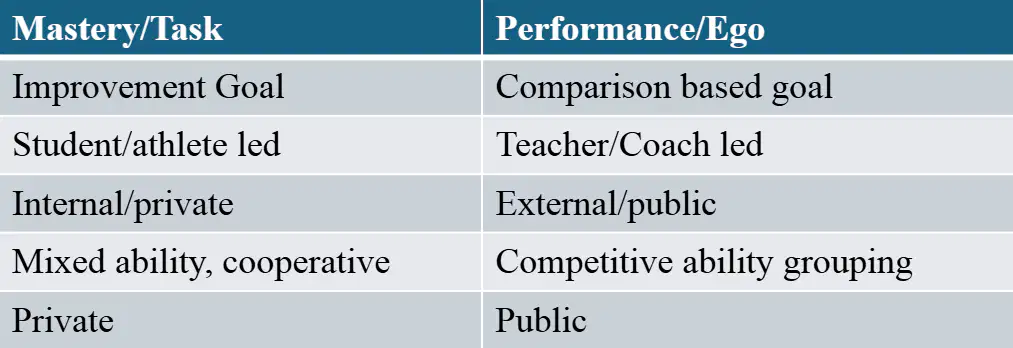
In the TARGET acronym, what does the letter A emphasize within a mastery climate?
Autonomy limited by rigid rules
Approval based on public recognition
Authority centralized in the coach
Student/athlete-led decision making

Which recognition practice aligns with a performance/ego climate?
External and public acknowledgment
Internal and private feedback
Self-referenced progress notes
Personal goal reflections
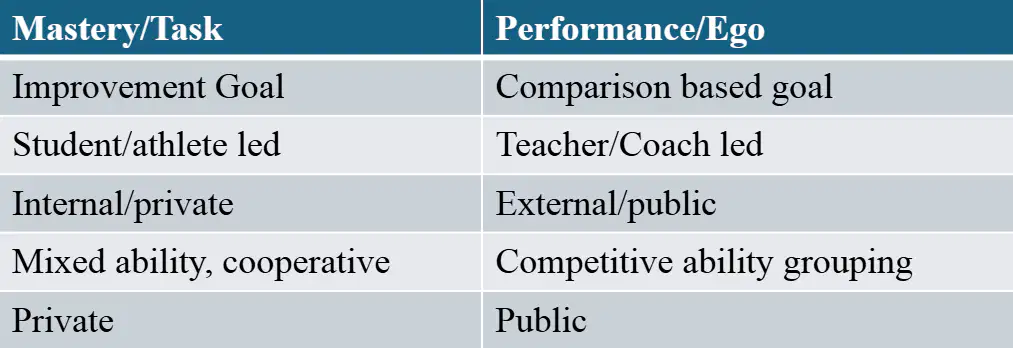
Which grouping strategy best supports mastery motivation in a team setting?
Groups selected by coach ranking
Ability-based competitive groups
Mixed ability, cooperative groups
Groups formed by win–loss records

Which evaluation approach reflects a performance climate in the TARGET framework?
Public comparison against peers
Private self-referenced assessment
Individual progress review meetings
Personal best tracking over time

Time management within a mastery climate is characterized by what feature?
Fixed durations for all tasks
Rigid schedules for drills
Flexible pacing for learning
Strict timed performance tests
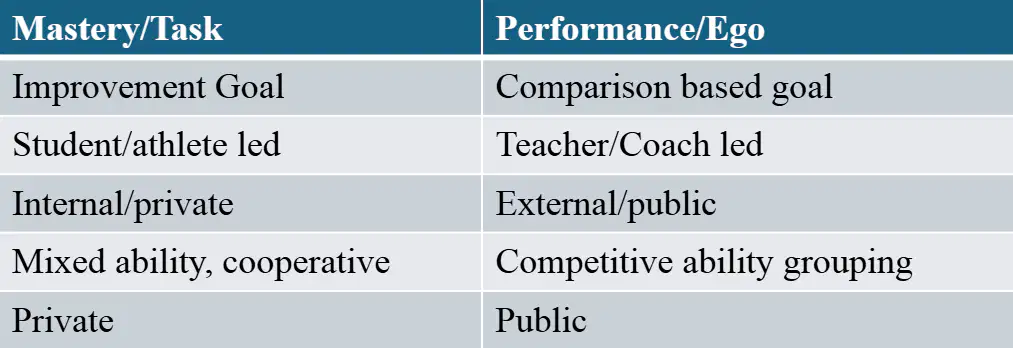
Which pair best contrasts mastery/task versus performance/ego goals?
Improvement goal vs comparison-based goal
External praise vs private feedback
Coach-led drills vs athlete autonomy
Rigid timing vs flexible pacing
Which actions help shift athletes toward a mastery-oriented climate? Select all that apply.
Make evaluations public and comparative
Provide private, effort-focused feedback
Group athletes by competitive ability
Set self-referenced improvement goals
Why does shifting an athlete toward mastery/task orientation yield psychological benefits?
It emphasizes public recognition of success
It increases dependence on coach authority
It prioritizes rigid time and structure
It promotes controllable effort attributions

What is the primary purpose of the Task and Ego Orientation in Sport Questionnaire (TEOSQ)?
Rank coaches based on their motivational strategies
Measure whether athletes are motivated by ego or mastery
Assess physical fitness levels through performance tests
Diagnose mental health disorders in athletes

In the TEOSQ process, what do athletes do to help determine their motivational orientation?
Rank certain sport situations on importance
Complete timed endurance drills
Write reflective essays on training
Compare their scores with teammates
Which statements align with how TEOSQ differentiates motivation types? Select all that apply.
Preference for coach approval defines mastery orientation
Prioritizing personal improvement reflects mastery orientation
Ranking situations by importance informs motivation type
Higher emphasis on outperforming others reflects ego orientation

