
NEW
Font size
 Worksheets
Introduction to Cardiovascular Disease
Total questions: 50
Worksheet time: 25mins
In the diagram stating components of the cardiovascular system, which combination best represents the system as a whole?
Heart, blood, and blood vessels
Heart and lungs only
Blood and lymph nodes only
Arteries and veins only
A slide defines noncommunicable disease and cites cardiovascular disease as most common. Which statement fits that definition?
It cannot be transmitted person-to-person
It spreads through respiratory droplets
It requires a mosquito vector to spread
It is acquired only from contaminated water
On the diagram listing types of cardiovascular diseases, which item is categorized as a disease of the heart?
Stroke
Atherosclerosis
Hypertension
Arrhythmias
Which condition in the diagram primarily involves blood vessels rather than heart muscle?
Arrhythmias
Atherosclerosis
Congestive heart failure
Angina pectoris
From the diagram grouping of cardiovascular diseases, which choice best matches an effect on the entire system due to impaired circulation?
Heart attack
Arrhythmias
Angina pectoris
Stroke
Which statement best explains why hypertension is called a “silent killer”?
Early stages rarely show noticeable symptoms
It only affects people older than sixty
It always causes severe chest pain early
Blood pressure measurements are unreliable
A 34-year-old with consistently high blood pressure asks about prevention. Which action is most appropriate to reduce risk?
Use antibiotics to prevent artery infections
Avoid all carbohydrates and fruits completely
Increase physical activity and manage body weight
Only monitor blood pressure once per year
Which description correctly distinguishes atherosclerosis from arteriosclerosis?
Abnormal heart rhythms versus elevated blood pressure
Narrowing of veins versus thickening of capillaries
Autoimmune attack on vessels versus bacterial invasion
Plaque buildup in arteries versus general arterial hardening
Which combination of risk factors most strongly promotes atherosclerotic plaque formation?
Viral infection, high vitamin D, exercise
High calcium intake, low iron, dehydration
Smoking, high LDL cholesterol, hypertension
Frequent fasting, low sodium diet, yoga
A patient’s artery shows reduced elasticity and is stiff. This finding most closely describes:
Acute myocarditis caused by viruses
Arteriosclerosis associated with atherosclerosis
Varicose veins due to valve failure
Aneurysm from congenital weakness
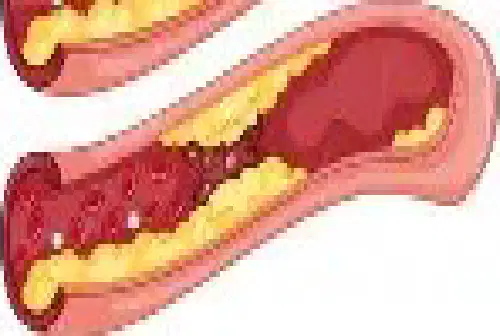
Based on the diagram of progressive plaque buildup, what is the most likely immediate consequence near severe narrowing?
Formation of a blood clot that obstructs flow
Expansion of the artery to lower resistance
Increased oxygen delivery to downstream organs
Rapid regeneration of artery elastic tissue
Which dietary pattern would most directly reduce the main cause of atherosclerosis described?
Limit saturated fats and cholesterol-rich foods
Increase processed foods high in trans fats
Eliminate all carbohydrates including vegetables
Consume only red meat and full-fat dairy
If an artery supplying the brain becomes blocked by plaque and a clot, which outcome is most likely?
Ischemic stroke due to reduced cerebral blood flow
Improved cognition from increased perfusion
Benign headache that resolves without damage
Pulmonary embolism originating in the lungs
Which scenario best explains angina pectoris during exertion?
Heart muscle lacks oxygen due to narrowed arteries
Heart valves stick causing blood to backflow suddenly
Lungs overinflate reducing chest wall movement
Brain misinterprets signals causing phantom chest pain
A patient reports brief chest pain lasting a few minutes during exercise. What is the most likely underlying mechanism?
Atherosclerotic narrowing reduces coronary blood flow
Pulmonary embolism blocks a major lung artery
Gastroesophageal reflux irritates the esophagus
Muscle strain of the pectoral muscles
Which action is most appropriate when someone experiences angina-like chest pain?
Apply ice to the chest to reduce inflammation
Encourage vigorous activity to improve circulation
Treat as a warning that the heart lacks blood
Ignore if pain stops within ten minutes
Which description best matches an arrhythmia requiring urgent intervention?
Mild tachycardia during anxiety or excitement
Occasional premature atrial contractions at rest
Sinus bradycardia with slightly slower heart rate
Ventricular fibrillation causing chaotic electrical impulses
Why is ventricular fibrillation life-threatening without rapid treatment?
It blocks oxygen absorption in the lungs
It always progresses to congestive heart failure
It permanently damages heart valves immediately
It is the most common cause of cardiac arrest
Which statement best distinguishes a heart attack from cardiac arrest?
Cardiac arrest is chest pain spreading to both arms
Heart attack is an electrical failure stopping the heartbeat
Cardiac arrest is plaque slowly narrowing arteries
Heart attack is blood supply damage to heart muscle
A patient with chest pressure and pain radiating to the jaw should first do which action?
Wait to see if symptoms fade after resting quietly
Take any available antacid to relieve chest discomfort
Drive themselves to the nearest urgent care clinic
Call emergency services immediately for possible heart attack
Which symptom set most aligns with an atypical heart attack presentation?
Low back ache relieved by stretching
Brief tingling in fingers after heavy lifting
Sharp stabbing chest pain with hiccups
Shortness of breath, nausea, unusual fatigue
What causes a heart attack in terms of physiology?
Fluid overload stretches the ventricles permanently
Restricted coronary blood flow damages heart muscle
A valve leaf partially detaches and blocks outflow
The heart’s pacemaker fires too rapidly and irregularly
In congestive heart failure, which description best captures the condition’s progression?
Intermittent spasms cause brief high-pressure surges
Gradual weakening reduces pumping rate and force
Temporary inflammation raises heart rate for days
Sudden rupture completely stops cardiac output
Which management approach is appropriate for congestive heart failure over time?
Ongoing medication plus healthful lifestyle behaviors
One-time surgery cures the problem permanently
Strict bed rest without medications is sufficient
Short course antibiotics resolves fluid retention
Which definition accurately describes stroke?
Slow death of brain cells from long-term oxygen excess
Chronic narrowing of veins returning blood from the brain
Temporary seizure activity from abnormal electrical signals
Acute interruption of brain blood flow by blockage or burst
A cerebral hemorrhage is best described as which event?
Stroke from a burst blood vessel in the brain
Stroke from a clot blocking a neck artery
Brain swelling after minor head trauma
Mini-stroke causing symptoms under one hour
Which combination of signs should raise immediate concern for stroke?
Severe headache, one-sided numbness, confusion
Blurred vision after reading without glasses
Muscle cramps, thirst, heavy sweating
Mild fever, sore throat, nasal congestion
Which statement about stroke outcomes is most accurate?
Vision problems occur only with left hemisphere strokes
All strokes cause total body paralysis permanently
Effects like paralysis vary by stroke size and brain area
Recovery is identical regardless of location or severity
What is a key goal of clot-busting drugs in ischemic stroke treatment?
Reduce fluid to stop hemorrhage inside brain tissue
Break up a clot to restore normal brain blood flow
Sedate the patient to prevent further brain activity
Increase blood pressure to force vessels open quickly
Which diagnostic test is best for evaluating the heart’s electrical activity over time?
Electrocardiogram generating electrical graphs
Angiography with injected contrast dye
MRI using powerful magnetic fields
CT scan creating multiple heart images
A patient with suspected myocardial damage needs imaging to show tissue defects. Which test is most appropriate?
EKG recording electrical waveforms
MRI producing detailed tissue images
CT scanning calcium blockages
Angiography visualizing vessel lumen
During angiography, what is the primary purpose of the injected dye?
Measure heart electrical signals
Enhance MRI magnetic resonance
Visualize vessel obstructions on X-ray
Inflate a balloon to open arteries
Which scenario most justifies choosing a CT scan for cardiac assessment?
Need to track rhythm irregularities
Need images of soft tissue defects
Need to plan pacemaker implantation
Need to detect calcium in arteries
A patient has a severely blocked coronary artery not responsive to catheter procedures. Which treatment best restores flow?
Angioplasty temporarily inflating balloon
Laser intervention vaporizing plaque
Coronary bypass creating a detour
Pacemaker regulating heart rhythm
What distinguishes angioplasty from coronary bypass in how the blockage is addressed?
Angioplasty opens the existing artery lumen
Bypass measures electrical pacing impulses
Angioplasty removes a healthy vein graft
Bypass inflates a balloon against artery walls
Which treatment most directly targets a focal plaque by converting it to smaller particles to restore flow?
Laser intervention vaporizing blockage
Angiography with contrast dye
Pacemaker sending timed impulses
Coronary bypass using vein graft
Which statement best explains why adolescents can have cardiovascular risk without symptoms?
Symptoms always appear immediately after damage
CVD begins only after age thirty usually
Teen hearts cannot feel pain until adulthood
Early vessel damage may be silent for years
A teen who smokes and has diabetes is more likely to show which outcome?
Complete protection from CVD occurs
No change in vessels is expected
Only temporary vessel irritation happens
Greater blood vessel damage is likely
Which risk factor for CVD is unavoidable and linked to family history?
Tobacco exposure is always controllable
Diet alone eliminates stroke risk entirely
Exercise directly prevents all heart attacks
Heredity increases personal CVD likelihood
How does gender relate to cardiovascular outcomes?
Women have higher CVD risk than men
Men always survive heart attacks better
Women never have heart attacks
Men face higher CVD risk overall
Which statement about age and CVD risk is most accurate?
Age has no effect on cardiovascular risk
Risk peaks in teens then declines sharply
Only people under thirty die from CVD
Risk rises with age; many deaths at 65+
Which strategy best reduces teen risk from tobacco-related cardiovascular disease?
Switch to low-nicotine cigarettes daily
Avoid using tobacco entirely
Limit smoking to weekends only
Vape instead of smoking cigarettes
Which statement aligns with evidence about secondhand smoke and cardiovascular deaths?
No established link exists for nonsmokers
It contributes to thousands of deaths yearly
Only causes minor breathing irritation
Risks apply only to elderly populations
A student plans heart‑healthy habits. Which combination targets high blood pressure risk?
Daily energy drinks and less sleep
Skip breakfast to control calories
Eat healthfully and exercise regularly
High-sodium snacks to boost electrolytes
Which dietary change directly addresses high cholesterol risk?
Avoid all sources of dietary fiber
Choose only low-sodium packaged meals
Increase sugary desserts after workouts
Eat fewer high-fat, high-cholesterol foods
How can physical activity help manage cardiovascular risk factors?
It raises resting blood pressure long-term
It supports weight management and lowers strain
It increases arterial plaque formation
It eliminates the need for screenings
Plaque formation in arteries is most directly linked to which risk factor?
Regular aerobic exercise
High cholesterol levels
Adequate sleep patterns
Low-sodium diet choices
Choose the most comprehensive plan to reduce hypertension risk.
Eat well, exercise, and manage weight
Take caffeine to raise alertness
Skip routine blood pressure checks
Use salty snacks before workouts
What is the greatest modifiable risk factor for cardiovascular disease among teens?
Weekend video gaming
Low hydration on hot days
Tobacco use and exposure
Occasional stress before exams
A community health poster must include one evidence-based fact about smoke exposure. Which is most accurate?
Secondhand smoke affects respiratory system but not the heart
Only smokers develop cardiovascular complications from smoke
Secondhand smoke poses no cardiovascular risk to nonsmokers
Secondhand smoke causes tens of thousands of CVD deaths yearly

