
 Worksheets
HS20 - Final Review - Unit 11 - Urinary System
Total questions: 50
Worksheet time: 25mins
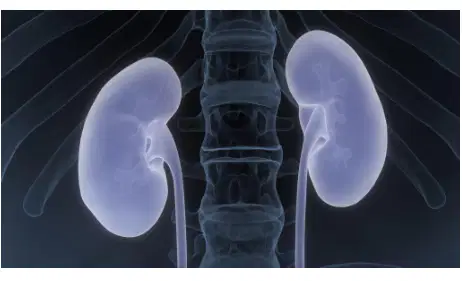
How many kidneys does a typical human have?
One
Two
Three
Four

Where are the kidneys located in relation to the digestive system?
Anterior to the digestive system
Superior to the digestive system
Posterior to the digestive system
Inferior to the digestive system
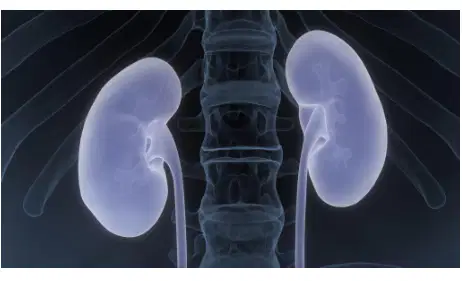
What is the shape of each kidney?
Heart-shaped
Round
Bean-shaped
Square
Each kidney is about the size of which of the following?
Your thumb
Your fist
A grape
A tennis ball
Which of the following structures is NOT a part of a nephron?
Glomerulus
Bowman's capsule
Tubule
Renal artery
Approximately how many urine-forming nephrons does each kidney contain?
One hundred
One thousand
One million
Ten million
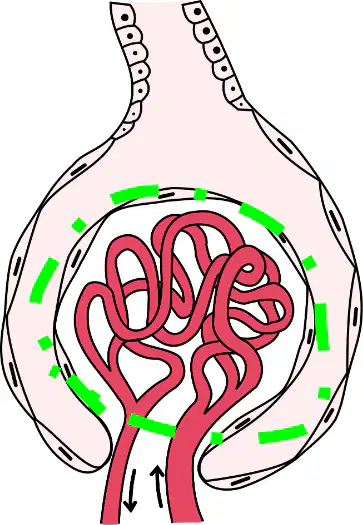
What is the primary function of the glomerulus in the kidney?
To filter out everything smaller than red blood cells and larger proteins from the blood
To produce red blood cells
To absorb nutrients from the blood
To break down proteins into amino acids
Which structure in the kidney acts like a sieve, allowing certain substances to leak out of the blood?
Glomerulus
Ureter
Renal pelvis
Collecting duct
What is the primary function of Bowman’s capsule in the nephron?
It acts as a balloon-like sac that surrounds the glomerulus and catches everything filtered out, sending it to a tube.
It produces urine directly from the blood.
It reabsorbs water and nutrients back into the blood.
It breaks down waste products into smaller molecules.
Why is Bowman’s capsule described as “balloon-like”?
Because it is filled with air
Because it is a sac that surrounds and encloses the glomerulus
Because it floats in the kidney
Because it is made of rubbery tissue
What is the main function of the tubule in the nephron after the capillaries filter everything out?
To reabsorb everything good that the blood needs back into itself
To produce red blood cells
To break down proteins
To store glucose
What happens to the filtrate at the end of the tubule?
It is deposited into the collecting duct and taken to the bladder as urine
It is absorbed into the bloodstream as nutrients
It is converted into sweat
It is stored in the liver
Why is the process of reabsorption important in the nephron's tubule?
It ensures that essential substances are returned to the blood
It increases the production of urine
It helps the body digest food
It creates new blood cells
What is the primary function of the proximal convoluted tubule in the nephron?
Reabsorption of ions, water, and nutrients; removal of toxins; adjustment of filtrate pH
Filtration of large proteins from the blood
Secretion of hormones into the blood
Storage of urine
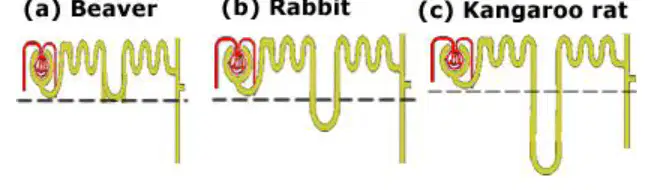
Which type of loop of Henle do mammals that live in areas with lots of fresh water typically have?
Long loops
Short loops
No loops
Medium loops
Why do mammals that live where there is less fresh water have very long loops of Henle?
To absorb very little water
To absorb a lot of water
To increase their body temperature
To help them swim better
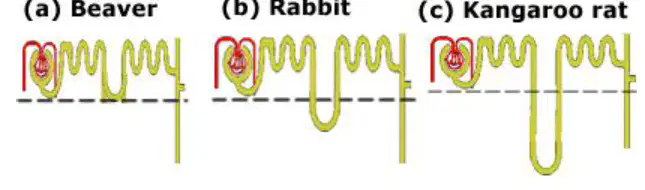
Based on the diagram, which animal is most likely to live in an environment with scarce fresh water?
Beaver
Rabbit
Kangaroo rat
Squirrel
What is the main function of the distal tubule in the nephron?
Filtering small solutes from the blood
Reabsorbing solutes and water from the filtrate
Reabsorbing calcium and sodium (salts) into the blood
Removing toxins and adjusting filtrate pH
What is the main function of the collecting tubule in the nephron?
It filters small solutes from the blood.
It reabsorbs ions, water, and nutrients.
It is where the filtrate flows to the renal pelvis and a lot of water is reabsorbed, concentrating the urine.
It selectively secretes and absorbs different ions to maintain blood pH.
Where does the filtrate go after passing through the collecting tubule?
It is reabsorbed into the blood.
It flows down to the renal pelvis to be sent to the bladder through the ureters.
It is filtered again by the glomerulus.
It is secreted into the distal tubule.
Where is the urinary bladder located in the human body?
In the chest
Deep in the pelvis
Behind the kidneys
In the brain
Which of the following best describes the structure of the urinary bladder?
A bony plate
A muscular sac
A fatty tissue
A rigid tube
Why is the urinary bladder described as a muscular sac?
Because it is made of bone
Because it stores blood
Because it can contract to expel urine
Because it produces hormones
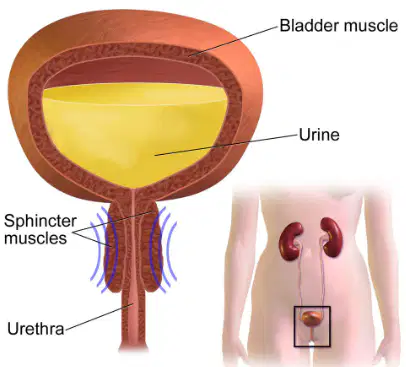
What is the main function of the urinary bladder?
To filter blood
To receive urine from the kidneys and release it out of the body
To produce hormones
To digest food
Through which structure does urine leave the body?
Ureter
Urethra
Bladder muscle
Sphincter muscle
What happens when the bladder is full?
The kidneys stop producing urine
The bladder releases hormones
A nerve sends a signal to the brain that you need to urinate
The ureters close
Why are most urinary system diseases classified as kidney diseases?
Because the kidneys are the main organs affected in the urinary system.
Because the liver is part of the urinary system.
Because the heart pumps blood to the kidneys.
Because the lungs filter waste from the blood.
Explain why chronic kidney disease can result from both high blood pressure and diabetes.
Both conditions damage blood vessels, reducing kidney function
Both conditions increase kidney size, causing pain
Both conditions cause dehydration, affecting the kidneys
Both conditions improve kidney function, leading to overwork
What is a common symptom experienced when passing kidney stones?
Extreme pain
Mild itching
Loss of appetite
Fever only
What process leads to the formation of kidney stones?
Crystallization of minerals and other substances in the blood within the kidneys
Evaporation of water from the kidneys
Infection by bacteria in the kidneys
Absorption of nutrients in the kidneys
What can speed up the recovery from glomerulonephritis?
Antibiotics
Painkillers
Chemotherapy
Insulin
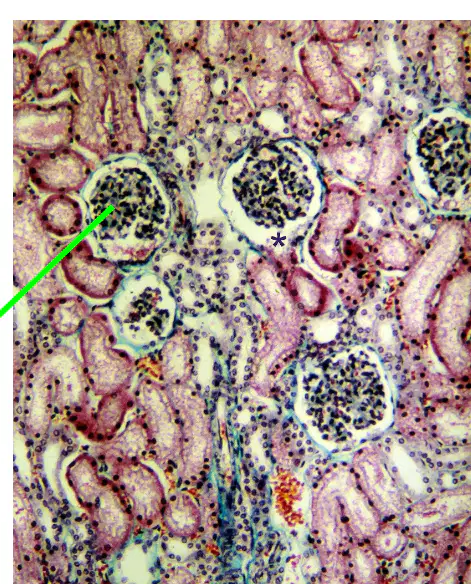
In the provided diagram, what do the little black dots represent?
Inflammation
Blood vessels
Nerve endings
Fat cells
What is a urinary tract infection (UTI)?
An infection of the urethra or bladder caused by bacteria
A viral infection of the lungs
A fungal infection of the skin
An allergic reaction in the stomach
Which of the following is a typical treatment for a urinary tract infection?
Antibiotics
Painkillers
Antivirals
Surgery
Why are urinary tract infections more common in females and children?
Due to the length of the urethra
Because they drink more water
Due to higher body temperature
Because they exercise more
Which part of the urinary system is most likely to become infected in a UTI?
Urethra or bladder
Kidneys only
Liver
Heart
Explain why the length of the urethra affects the likelihood of developing a urinary tract infection.
A shorter urethra allows bacteria to reach the bladder more easily.
A longer urethra makes it harder for bacteria to survive.
The length of the urethra has no effect on infection risk.
A shorter urethra increases urine flow, preventing infection.

What is the main treatment for chronic kidney disease?
Dialysis
Chemotherapy
Insulin therapy
Radiation therapy
Which of the following best describes how dialysis works?
It injects medicine directly into the kidneys
It pumps blood out, cleans it, and returns it to the body
It removes the kidneys and replaces them with artificial ones
It increases urine production to remove toxins
Why do some patients need to undergo dialysis multiple times a week or daily?
Because dialysis only treats symptoms, not the underlying disease
Because dialysis cures the disease after several sessions
Because the machine can only be used once a month
Because the treatment is only effective for a few minutes
Which medical technique can be used to break kidney stones into smaller pieces?
Ultrasound
X-ray
MRI
Chemotherapy
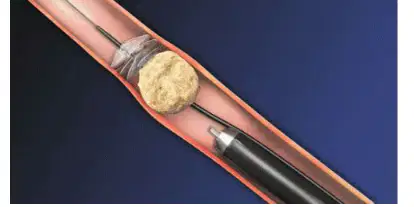
In extreme cases, what is a possible treatment for kidney stones?
Surgery
Physical therapy
Acupuncture
Blood transfusion
Explain why drinking water is recommended for patients with kidney stones.
It helps dilute the stones and prevents new stones from forming.
It increases the size of the stones.
It causes the stones to dissolve instantly.
It makes the stones more visible on scans.
A patient is unable to pass kidney stones naturally and is not responding to increased water intake. What is a logical next step in their treatment?
Use ultrasound to break the stones into smaller pieces.
Prescribe antibiotics.
Recommend bed rest.
Suggest a high-protein diet.
What is the main function of the urinary system in the human body?
To digest food
To remove waste generated from each cell
To circulate blood
To produce hormones
How is the waste removed by the urinary system different from the waste produced by the digestive system?
The urinary system removes waste from food digestion
The urinary system removes waste generated by each cell, while the digestive system removes waste from food digestion
Both systems remove the same type of waste
The digestive system removes waste from each cell
Which chemical is usually used to test for the presence of sugars in urine during urinalysis?
Benedict’s Reagent
Biuret Solution
Iodine Solution
Silver Nitrate
If sugars are found in a patient's urine, what could this indicate about the patient's health?
The patient is diabetic
The patient is anemic
The patient is dehydrated
The patient has a kidney stone
What does the presence of ketones in urine most likely indicate about a patient?
The patient is starving and breaking down extra fats into sugars.
The patient is consuming excessive carbohydrates.
The patient is dehydrated.
The patient has a bacterial infection.
Which of the following could also result in the presence of ketones in urine, besides starvation?
Strenuous exercise
High protein intake
Excessive water consumption
Vitamin deficiency

