
 Worksheets
SMI Med Term ETC
Total questions: 53
Worksheet time: 32mins





What type of fracture is this?
Comminuated
Greenstick
Avulsion
Impacted
What type of fracture penetrates through the skin?
Closed (simple)
Open (compound)
Greenstick
Transverse

What type of fracture is this? (Hint: it's across the bone.)
Dorsal
Linear
Closed
Transverse

What is the name of the incomplete fracture usually seen in children?
Linear
Transverse
Fibial
Greenstick

_________ fractures are diagonal breaks in the bone.
Incomplete
Linear
Closed
Oblique
What type of fracture DOESN'T penetrate through the skin?
Open
Closed
Comminuted
Oblique
The femur is what type of bone?
Long Bone
Short Bone
Flat Bone
Irregular Bone
Sesamoid Bone
The tibia is what type of bone?
Long Bone
Short Bone
Flat Bone
Irregular Bone
Sesamoid Bone
The tarsals is what type of bone?
Long Bone
Short Bone
Flat Bone
Irregular Bone
Sesamoid Bone
The carpels is what type of bone?
Long Bone
Short Bone
Flat Bone
Irregular Bone
Sesamoid Bone
The frontal bone is what type of bone?
Long Bone
Short Bone
Flat Bone
Irregular Bone
Sesamoid Bone
The sternum is what type of bone?
Long Bone
Short Bone
Flat Bone
Irregular Bone
Sesamoid Bone
The ribs is what type of bone?
Long Bone
Short Bone
Flat Bone
Irregular Bone
Sesamoid Bone
The scapula is what type of bone?
Long Bone
Short Bone
Flat Bone
Irregular Bone
Sesamoid Bone
The vertebra is what type of bone?
Long Bone
Short Bone
Flat Bone
Irregular Bone
Sesamoid Bone
The sacrum is what type of bone?
Long Bone
Short Bone
Flat Bone
Irregular Bone
Sesamoid Bone
The patella is what type of bone?
Long Bone
Short Bone
Flat Bone
Irregular Bone
Sesamoid Bone

The xray shows a fracture that has bones broken into more than two pieces. What type of fracture is this?
Simple
Compound
Impacted
Comminuted


The diagram shows a fracture that has two bones crushing into each other. What type of fracture is this?
Simple
Compound
Impacted
Comminuted

S-shaped separation of the bone. Occurs when the foot is firmly planted and body is suddenly rotated.
Greenstick Fracture
Oblique Fracture
Spiral Fracture
Transverse Fracture

Commonly occurs when falling from heights. Causes the long bone to become compressed along the long axis. Requires immediate splinting and traction to ensure normal length of the injured limb.
Avulsion Fractue
Comminuted Fracture
Impacted Fracture
Longitudinal Fracture

This fracture type has 5 classifications and specifically affects the growth plate of adolescents
Transverse fx
Buckle fx
Greenstick fx
Salter-Harris fx
This fracture is an overuse injury compared to an acute injury
Avulsion fx
Stress fx
Transverse fx
Buckle fx
What are the most common causes of fractures?
Falls, car accidents, and sports accidents
Car accidents
Sports Accidents
All of the these are correct


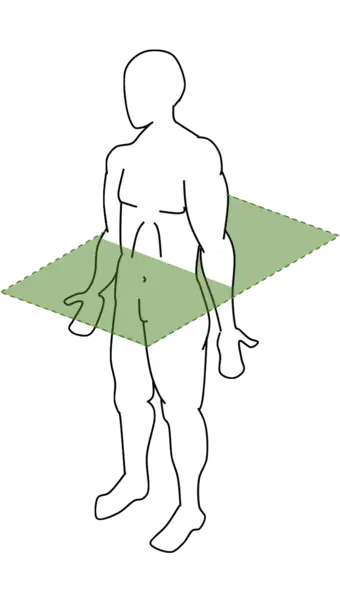
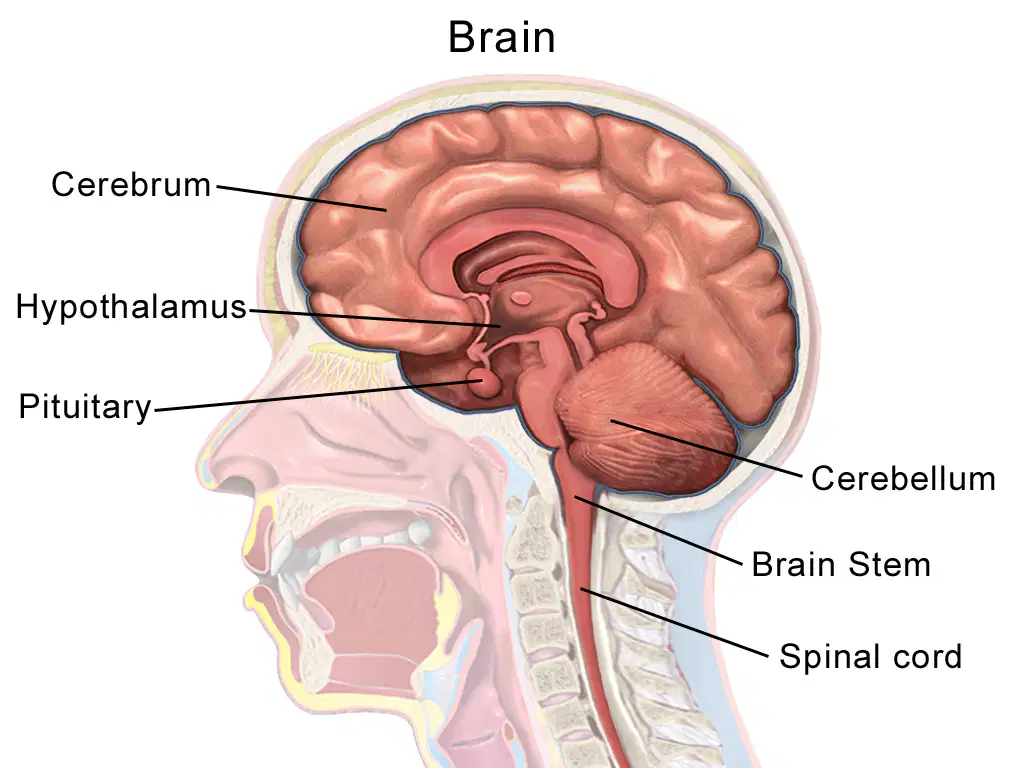
Which anatomical plane divides the body into equal right and left sides?
Transverse
Horizontal
Sagittal

Which anatomical plane divides the body into front and back
frontal/coronal
transverse/horizontal
sagittal plane
none of the above

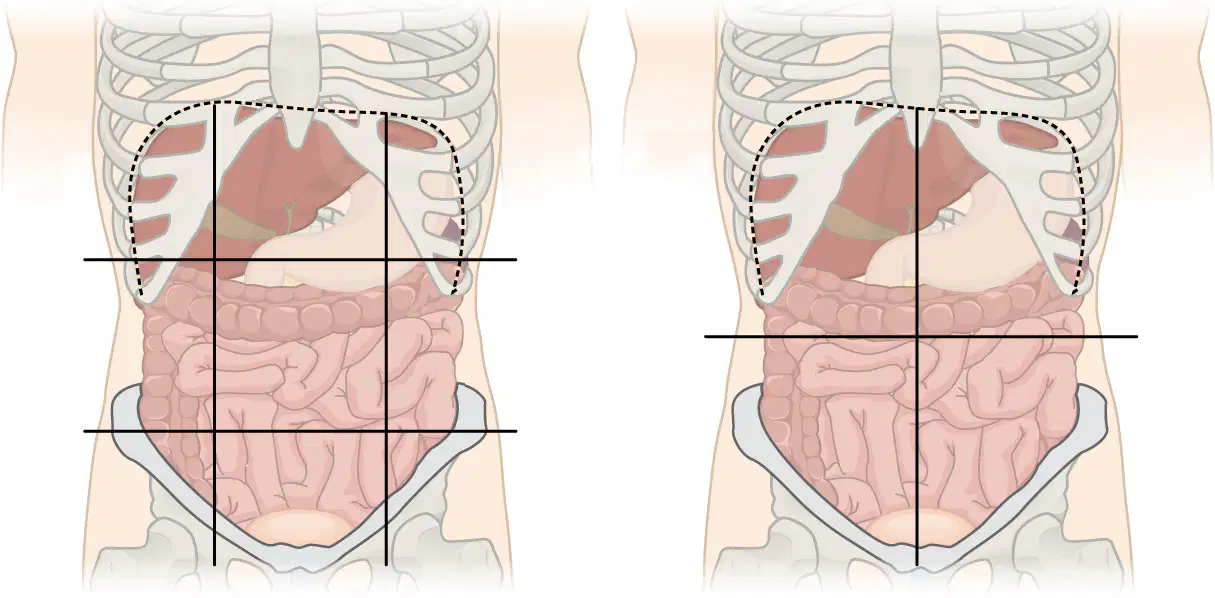
Match the following body regions:
A
right upper quadrant (RUQ)
B
left upper quadrant (LUQ)
C
right lower quadrant (RLQ)
D
left lower quadrant (LLQ)
Which plane divides the body into front and back portions?
Sagittal plane
Transverse plane
Midsagittal plane
Coronal plane
Ventral
Toward the front / belly
Toward the back
Toward the head
Toward the tail
Dorsal
Toward the tail
Toward the head
Toward the front / belly
Toward the back

