
 Worksheets
153 Exam 1 review
Total questions: 194
Worksheet time: 2hrs 48mins
Which statement best distinguishes systematics from phylogeny in biology?
Phylogeny focuses on identifying anatomical functions
Systematics draws trees showing only living species
Systematics classifies organisms and infers relationships
Phylogeny names organisms using formal ranks
In a branching diagram, what does a node most directly represent?
A reversal to an ancestral trait in one lineage
The most recent living species in a clade
A common ancestor shared by descendant lineages
A point where similar traits independently evolved
Which description best matches a clade (monophyletic group)?
An ancestor and all of its descendants
A group formed by similar body shapes
An ancestor and only some descendants
Multiple unrelated groups with shared traits
Which statement about similarity and evolutionary relationship is most accurate?
Similarity always predicts shared ancestry
Greater differences always mean older divergence
Similarity proves species evolved at the same rate
Similarity can mislead because evolution rates vary
Which scenario illustrates convergent evolution?
Features inherited from one immediate ancestor
Wings in bats and insects evolving independently
Loss of a derived trait returning to ancestral state
Traits shared by all members of a single clade
What is an evolutionary reversal?
Replacement of a common ancestor by a new one
Independent evolution of similar traits in species
Emergence of a novel derived character in a clade
Re-evolution of an ancestral character in a lineage
Which term correctly pairs with its definition: synapomorphy?
A trait unique to a single individual
A primitive trait present in an outgroup
A shared derived character uniting a clade
A naming system using hierarchical ranks
In cladistics, which practice helps determine relationships most reliably?
Using shared derived characters to group taxa
Grouping species by overall appearance alone
Counting the total number of similarities
Prioritizing the fastest-evolving lineages
Which statement best defines a cladogram in evolutionary biology?
A diagram showing trait frequencies across populations
A chart depicting ecological niches over time
A hypothesis of relationships using shared derived characters
A timeline of fossil ages for different taxa
In cladistics, what is a taxon?
A group such as species, genus, or family
An outgroup used for comparison
A specific derived character state
A single organism used as a model
Which feature is a synapomorphy of mammals in basic examples?
Amniotic eggs with leathery shells
Seven cervical vertebrae in the neck
Hair covering at least part of the body
Presence of lungs in adults
What role does an outgroup play in cladistic analysis?
It provides the oldest fossil dates for calibration
It helps infer which character states are ancestral
It ensures each clade has equal species counts
It determines which taxa are ecological competitors
Which term refers to a shared ancestral character state within a clade?
Synapomorphy
Parsimony
Plesiomorphy
Homoplasy
Homoplasy most often results from which process?
Horizontal gene transfer among bacteria
Convergent evolution or evolutionary reversal
Hybridization between closely related species
Random genetic drift in small populations
According to the principle of parsimony, which cladogram should be preferred?
One showing equal branch lengths for all taxa
One requiring the fewest evolutionary events
One with the most detailed character list
One matching traditional taxonomic ranks
Why do lungs fail to group mammals separately from lizards in cladistics?
Lungs are present in amphibians and reptiles
Lungs are a shared derived trait of reptiles
Lungs evolve too rapidly to be informative
Lungs are unique to mammals only
Which statement correctly contrasts ancestral and derived characters?
Ancestral states are unique to one species only
Derived states occur due to random mutations only
Derived states cannot be shared by multiple taxa
Ancestral states existed in the common ancestor
When using DNA characters in rapidly evolving regions, what complication can arise?
Many similarities that are homoplasies
Excessive plesiomorphies masking clades
Parsimony failing to produce any tree
Outgroups becoming identical to ingroups
Which part of a scientific name is capitalized and which is not in binomial nomenclature?
Both genus and species lowercase
Both genus and species capitalized
Species capitalized, genus lowercase
Genus capitalized, species lowercase
What is the primary purpose of taxonomy within biology?
Name and classify organisms
Predict habitat suitability
Calculate population growth
Measure molecule evolution rates
Which sequence correctly lists the taxonomic hierarchy from most inclusive to least inclusive?
Species, genus, family, order, class, phylum, kingdom, domain
Domain, phylum, kingdom, class, order, family, genus, species
Domain, kingdom, phylum, class, order, family, genus, species
Kingdom, domain, phylum, class, order, family, genus, species
What defines a monophyletic group (clade)?
Most recent common ancestor and all descendants
Most recent common ancestor and some descendants
Organisms from different clades without shared ancestor
Species grouped by similar traits only
Which description best matches a paraphyletic taxon?
Includes only unrelated species with similar traits
Includes the ancestor but not all descendants
Includes multiple clades without shared ancestor
Includes the ancestor and all descendants
Which situation illustrates a polyphyletic group?
Species drawn from different clades without their most recent common ancestor
Species including an ancestor but excluding some descendants
Species including an ancestor and all descendants
Species grouped strictly by shared derived characters
Why is binomial nomenclature useful for avoiding confusion?
It measures evolutionary relationships
It identifies habitats for each species
It standardizes names across languages
It ranks species by abundance
In the phylogenetic species concept, what criterion is central for defining species?
Shared derived characters indicating independent evolution
Shared habitats indicating ecological similarity
Similar physical size indicating relatedness
Ability to interbreed across all populations
Which statement about the phylogenetic species concept is accurate?
Applicable to both sexual and asexual organisms
Limited to sexually reproducing organisms
Only works for sympatric populations
Requires identical morphology across populations
Traditional groups like "reptiles" often fail to be monophyletic because they
Combine species from unrelated clades
Include all descendants of a common ancestor
Are based on shared derived characters
Exclude some descendants of a common ancestor
Which statement best distinguishes homologous from homoplastic traits?
Homoplastic traits always come from common ancestry
Homologous traits arise by similar selection pressures
Homologous traits share an ancestral origin
Homoplastic traits are unique to a single lineage
Which example illustrates homoplastic convergence rather than shared ancestry?
Hollow bones passed down in theropods
Saber teeth evolving in cats and marsupials
Feathers shared by all modern birds
Parental care inherited across crocodiles
Complex characters like flight typically evolve how?
From identical changes in all lineages
Instantly as a single mutation event
Only by horizontal gene transfer
Through a sequence of evolutionary steps
How can phylogenetic methods help explain beetle diversification?
By assuming diversification is random
By measuring only body size changes
By ignoring specialization on plants
By testing hypotheses about resource use
What is the most supported origin of HIV in humans?
Spontaneous mutation in human cells
Transmission from SIV in other primates
Direct evolution from influenza virus
Hybridization between unrelated viruses
Why are phylogenies useful in tracking diseases like AIDS and COVID-19?
They only show symptoms in patients
They prevent mutations in the pathogen
They replace clinical testing entirely
They reveal paths of transmission over time
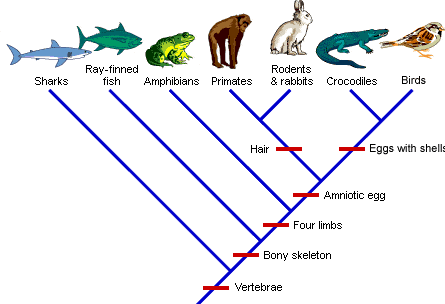
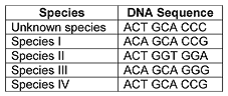

What is the common ancestor of Letters A, B, C, D, E?
1
2
3
4
Which statement best defines speciation in evolutionary biology?
The extinction of all members of a species
The process of one species giving rise to another
The migration of individuals between populations
The accumulation of mutations without lineage splitting
According to the Biological Species Concept, what primarily delineates species boundaries?
Common ancestry inferred from phylogenies
Shared ecological niches and resources
Reproductive isolation among natural populations
Similar anatomical structures and shapes
What is a gene pool?
All of the alleles present in a species
All DNA sequences in an ecosystem
The set of genes found in one organism
The sum of phenotypes in a population
In the Biological Species Concept, members of a species are populations that
Actually or potentially interbreed and produce fertile offspring
Share the same geographic location at all times
Look identical across their entire range
Occupy the same trophic level in food webs
Reproductively isolated populations are those whose members
Exhibit identical morphological traits
Avoid competition for the same resources
Do not mate or cannot produce fertile offspring
Share genes through hybrid vigor
Which scenario illustrates sympatric species?
Identical species occupying distant islands
Species that migrate seasonally across regions
Populations separated by a mountain range
Distinct species occurring together in one locale
Geographic variation within a species often involves
Instantaneous formation of new species
Uniform morphology across all habitats
Complete reproductive isolation across all ranges
Intervening populations with intermediate traits
Which mechanism primarily reduces the chance of different species producing hybrids?
Increased mutation rates in gametes
Reproductive isolating mechanisms
Genetic drift within small groups
Directional selection on one trait
Prezygotic isolating mechanisms act by
Eliminating deleterious alleles in a gene pool
Separating populations with physical barriers
Reducing hybrid fertility after birth
Preventing mating or fertilization between species
Postzygotic isolating mechanisms typically result in
Mechanical mismatch of reproductive organs
Behavioral differences in courtship signals
Temporal separation of mating seasons
Hybrid inviability or hybrid infertility
Which term describes species that are connected by intermediate populations despite appearing different?
Geographically distinct populations
Convergent morphological forms
Completely segregated lineages
Allopatric species in isolation
Allopatric speciation most often begins with
Hybrid sterility arising within one locale
Behavioral changes in courtship signals
Sudden polyploidy in a single generation
Physical separation of populations by barriers
Sympatric speciation can be promoted by
Random mating across all subpopulations
Gene flow increasing between regions
Gradual erosion of mountain barriers
Polyploidy forming instant reproductive barriers
Which concept focuses on diagnosable lineage differences rather than interbreeding tests?
Phylogenetic Species Concept
Biological Species Concept
Ecological Species Concept
Morphological Species Concept
The Ecological Species Concept defines species based on
Occupation of distinct ecological niches
Ability to interbreed in the wild
Ancestral relationships on a tree
Similarity of external morphology
Behavioral isolation is best exemplified by
Seasonal shifts causing mating at different times
Divergent courtship signals preventing mating
Physical incompatibility of reproductive organs
Chromosome mismatches after fertilization
Temporal isolation occurs when
Populations breed in different seasons or times
Mating signals differ across habitats
Gametes fail to fuse after mating
Hybrids die before reaching maturity
Mechanical isolation prevents reproduction because
Reproductive structures are physically incompatible
Gametes cannot locate each other chemically
Zygotes fail to proceed past cleavage
Hybrids have low survivorship in nature
Preventing gamete fusion specifically refers to cases where
Mating times never overlap across seasons
Sperm and egg are incompatible even after mating
Zygotes form but hybrids are sterile adults
Courtship behaviors are not recognized
Which outcome would most directly contradict the Biological Species Concept for two populations?
Groups occupy separate ecological niches
Hybrid offspring have reduced viability
Populations look different across environments
Members freely interbreed and produce fertile offspring
Which statement best distinguishes prezygotic from postzygotic isolating mechanisms?
Prezygotic barriers act before fertilization occurs
Postzygotic barriers prevent mating attempts entirely
Prezygotic barriers kill hybrid adults after birth
Postzygotic barriers allow gene flow without limits
Ecological isolation is best illustrated by which scenario?
Two species have compatible gametes across taxa
Two species share identical courtship signals
Two species breed at the exact same season
Two species occupy same region but different microhabitats
Behavioral isolation typically involves which feature?
Species-specific courtship signals and rituals
Gamete membrane protein incompatibility
Seasonal separation in mating times
Physical mismatch of reproductive organs
Temporal isolation can occur when two species in one habitat
Mate in different seasons or times of day
Display identical mating behaviors
Hybridize and produce sterile offspring
Produce inviable zygotes after fertilization
Mechanical isolation most directly refers to
Structural differences preventing copulation
Gametes failing to recognize each other
Embryos failing during early development
Hybrids producing nonfunctional gametes
Prevention of gamete fusion is best described as
Sperm and egg incompatibility blocking fertilization
Hybrid zygotes failing to develop fully
Adults unable to find mates in habitat
Mating seasons not overlapping annually
Hybrid inviability most accurately means
Hybrid embryos fail to develop or die early
Gametes from different species cannot fuse
Hybrids reach adulthood but are sterile
First generation fertile, second generation weak
A mule is an example used to illustrate
Ecological isolation in grasslands
Hybrid infertility resulting in sterility
Mechanical isolation between equids
Prezygotic temporal separation
Hybrid breakdown occurs when
Adults cannot perform courtship rituals
Hybrids die as embryos immediately
Gametes from two species never fuse
F1 hybrids fertile but later generations decline
A limitation of the biological species concept is that it
Emphasizes ecological niche differentiation
Defines species by unique phylogenetic branches
Relies on measurable morphological traits
Excludes asexual and fossil organisms
The ecological species concept primarily defines species by
Ability to interbreed and produce offspring
Overall morphological similarity patterns
Shared ancestry on a cladogram branch
Adaptation to specific environmental roles
The morphological species concept is especially useful for
Assessing hybrid fertility in captivity
Testing reproductive isolation experimentally
Classifying fossils and asexual lineages
Measuring gene flow between subpopulations
A noted problem with the morphological species concept is
Inability to reconstruct phylogenetic trees
Dependence on breeding experiments in nature
Exclusion of ecological niche information
High variation within or similarity across species
The phylogenetic species concept defines a species as
Populations occupying distinct microhabitats
Organisms sharing identical morphologies
Any group that interbreeds successfully
A smallest monophyletic cluster of populations
Which situation best shows selection reinforcing isolation?
Asexual organisms grouped by morphology alone
Two species share habitats and interbreed freely
Hybrids have reduced fitness, strengthening barriers
Disruptive selection merges two populations
Which statement best describes reinforcement in speciation?
Bottlenecks increase heterozygosity and reduce isolation
Selection strengthens prezygotic barriers where hybrids are unfit
Random drift fixes neutral alleles across isolated islands
Hybrid zones promote gene flow that merges populations
In the absence of reproductive isolating mechanisms, what most likely happens when diverging populations come into contact?
Selection immediately completes speciation between groups
Geographical isolation intensifies without contact
Genetic drift rapidly creates new isolating barriers
Interbreeding restores gene flow and merges differences
Which scenario exemplifies the founder effect’s role in speciation?
A few colonists carry rare traits that drift to high frequency
Large populations maintain polymorphisms by strong migration
Hybrid zones produce highly fertile recombinant swarms
Bottlenecks increase genetic variation through new mutations
Population bottlenecks can contribute to speciation primarily because they
always create ecological isolation in new habitats
eliminate drift allowing selection to act uniformly
guarantee evolution of postzygotic isolation quickly
increase drift causing trait shifts that reduce interbreeding
Which statement about gene flow and speciation is most accurate?
Gene flow only occurs under complete geographic isolation
Gene flow has no effect on allele frequency differences
Gene flow generally accelerates reproductive isolation
Gene flow counteracts divergence by homogenizing populations
Ecological or behavioral isolation can evolve when populations adapt to different conditions. Which example fits this pattern?
Uniform selection maintaining identical courtship cues
Divergence in mating signals like lizard dewlap displays
Random fixation of synonymous codons in allopatry
Instant chromosome doubling producing sterile offspring
Which statement best captures the two-step view of speciation?
Populations diverge, then isolating mechanisms maintain differences
Geographical isolation alone completes speciation immediately
Hybrids form first, then divergence eliminates all isolation
Selection ends, then drift creates postzygotic incompatibilities
How does geographical isolation typically influence speciation?
It is required in every case for speciation to occur
It guarantees reinforcement in all hybrid zones
It directly creates new species without divergence
It reduces gene flow, making divergence more likely
Which statement best defines allopatric speciation?
Speciation occurs only through polyploid chromosome doubling
Speciation occurs by random mating within mixed populations
Speciation occurs when gene flow is interrupted by isolation
Speciation occurs with continuous gene flow within one area
A mountain range forms between two populations of the same species. Over time they diverge and can no longer interbreed. Which mechanism initially caused this speciation?
Directional selection in a uniform environment
Hybrid vigor increasing fertility
Geographic isolation preventing gene flow
Genetic drift within a single habitat
Which example best fits sympatric speciation?
Two bird populations separated by an ocean
Fish populations isolated by a new waterfall
Plants forming new species via polyploidy
Lizards split by uplift of an isthmus
Polyploidy can cause speciation primarily because polyploids often
cannot interbreed with the parent species
migrate to new geographic regions
display reduced mutation rates
experience enhanced gene flow
Disruptive selection maintaining two phenotypes in a single habitat is most likely to lead to
allopatric divergence through migration
sympatric speciation via reproductive isolation
genetic drift eliminating variation
directional selection toward one extreme
Adaptive radiation is best described as
the formation of hybrids between distant lineages
the gradual loss of species diversity over time
the evolution of many related species from one ancestor
the evolution of identical traits in unrelated species
Which situation most favors adaptive radiation?
A habitat with uniform resources and strong gene flow
An old ecosystem at carrying capacity
A new environment with few species and many niches
A stable environment with many competitors
A key innovation is important in adaptive radiation because it
prevents hybridization among species
removes geographic barriers to dispersal
reduces mutation rates across lineages
allows access to new resources or niches
On newly formed island chains, adaptive radiation often proceeds through an initial
hybrid phase with sterile offspring
stasis phase without any change
allopatric phase with island isolation
sympatric phase with random mating
Character displacement during the sympatric phase of radiation most directly
reduces divergence in feeding structures
eliminates ecological specialization entirely
favors individuals using resources differently
increases competition among close relatives
Which empirical pattern illustrates rapid diversification linked to isolation and ecological opportunity?
Decline of species after invasive predators
Stable lineages of open-ocean plankton
Radiation of Hawaiian fruit flies and lobeliads
Gradual evolution in African mammals
Lake Victoria cichlids diversified rapidly partly because
predator release eliminated selection pressures
polyploidy created sterile hybrids in one lake
rising and falling levels isolated fish in small lakes
stable water levels promoted constant gene flow
Which statement differentiates gradualism from punctuated equilibrium?
Gradualism accumulates small changes over long times
Punctuated equilibrium predicts slow, continuous change
Gradualism predicts long stasis without change
Punctuated equilibrium denies natural selection occurs
Punctuated equilibrium proposes that most lineages experience
periodic polyploidy replacing selection
continuous gene flow preventing divergence
constant, slow accumulation of tiny changes
long stasis with brief bursts of rapid change
A mass extinction is defined as
a localized event without global impact
a temporary bottleneck with quick recovery
a gradual diversification of lineages
a sharp decline when extinctions outpace speciation
Which inference follows from past and present mass extinctions?
All species will persist with minor fluctuations
Current species richness is lower than ever recorded
Human activities are driving a rapid biodiversity decline
Only five mass extinctions have ever occurred
Which statement best defines genetic variation in a population?
Different behaviors learned during an organism’s life
Different climates experienced across a region
Different alleles of genes within individuals
Different species living in the same habitat
Which measure describes the occurrence of an allele as a proportion of the population?
Mutation rate across generations
Genotype frequency in individuals
Allele frequency in the gene pool
Fitness of the selected trait
Which statement about evolution and populations is correct?
Populations evolve over generations
Individuals rapidly change their genes
Populations always stay the same
Individuals evolve during their lifetime
Which process can change allele frequencies in a population? Select all that apply.
Random chance in small populations
Natural selection acting on traits
Mutation creating new alleles
Migration bringing alleles
What is the focus of population genetics?
Study of genetic variation in a population
Study of a single organism’s genome
Study of climate effects on habitats
Study of energy flow in ecosystems
Which statement about polymorphic variation is accurate?
Multiple behaviors learned over time
Multiple morphs or morphological differences
Multiple habitats across a large region
Multiple species sharing one niche
Which Hardy-Weinberg assumption is correctly matched with its description? Select all that apply.
No gene flow: no migration occurs
No mutation: alleles do not change
Very large population: no genetic drift
Random mating: mates are chosen by chance
In Hardy-Weinberg Equilibrium, what remains constant from one generation to the next?
Population density and birthrates
Allele and genotype frequencies
Body size and coloration
Mutation rates and selection
In a two-allele system, which binomial equation represents allele frequencies?
p − q = 0 in individuals
p + q = 1 in the gene pool
p × q = 1 across traits
p ÷ q = 1 within groups
Which equation gives genotype frequencies under Hardy-Weinberg conditions?
p2 − q2 + pq = 1
p2 + 2pq + q2 = 1
2p + q + q2 = 1
p + q + pq = 1
If p is the dominant allele frequency and q is the recessive allele frequency, which statement is true?
p + q equals one
p − q equals zero
p × q equals one
p ÷ q equals one
Which situation would violate Hardy-Weinberg Equilibrium?
Extremely large population size
Nonrandom assortative mating
No mutation across generations
No gene flow between populations
What is gene flow in population genetics?
Movement of alleles between populations
Change in allele due to mutation
Differential survival by fitness
Random loss by genetic drift
Which factor especially affects small populations by random changes in allele frequencies?
Genetic drift in small populations
High levels of gene flow always
Strong mutation rates each generation
Perfectly balanced natural selection
Disassortative mating most directly leads to which outcome?
Higher proportion of heterozygotes in the population
Higher proportion of homozygotes in the population
Fixation of harmful alleles by chance
No change in genotype frequencies overall
Genetic drift is best characterized as
Migration that adds new alleles to a population consistently
Selection favoring traits that increase survival in large populations
Nonrandom mating that changes allele frequencies in any population
Random changes in allele frequencies, strongest in small populations
Which scenario illustrates the founder effect?
A few individuals colonize an island, carrying rare alleles
A drought reduces a large population suddenly to a few
Individuals choose mates with different phenotypes
Predators remove individuals with conspicuous coloration
Natural selection requires which conditions to operate effectively?
Heritable variation among individuals
Differences in reproductive success
Phenotypic variation without genetic basis
Equal survival and mating success for all
Artificial selection differs from natural selection because
Humans choose traits to breed deliberately
Mating is strictly disassortative in all cases
Environment chooses traits to favor consistently
Chance events change allele frequencies randomly
In small isolated populations, genetic drift can cause which outcome?
Loss of genetic variation over time
Predictable advantage of rare phenotypes
Random fixation of harmful alleles
Stable allele frequencies unaffected by chance
Which components can contribute to an individual’s overall fitness?
Mating success with available partners
Mutation rate of the individual’s genome
Offspring produced per mating event
Survival to reproductive age
Sexual selection most directly involves
Environmental disasters reshaping population genetics
Random drift of alleles due to small population size
Parental investment equal between sexes in all species
Competition for mates and mate choice influencing traits
Which description matches sexual dimorphism?
Traits changing only during environmental oscillations
Identical ornamentation and size across all individuals
Differences in secondary sexual traits between sexes
Differences in allele frequencies within one sex only
Intersexual selection is best exemplified by
Parents investing equal energy in all offspring
Predators removing conspicuous individuals quickly
Males fighting each other for access to females
Females choosing males with ornate plumage
Intrasexual selection often involves
Choice by females based on male ornaments
Competition among males for access to females
Frequency-dependent advantage of rare alleles
Random pairing of mates without preferences
Which statement about frequency-dependent selection is correct?
Fitness of a phenotype depends on its frequency
Fitness is constant regardless of population frequency
Only rare phenotypes are favored in every case
Only common phenotypes are favored in every case
Negative frequency-dependent selection tends to
Eliminate heterozygotes from the population
Favor common phenotypes and remove variation
Favor rare phenotypes and maintain variation
Increase fixation of harmful alleles by chance
Positive frequency-dependent selection tends to
Favor common phenotypes and reduce variation
Favor rare phenotypes and increase variation
Keep genotype frequencies unchanged always
Increase assortative mating across the species
Oscillating selection across changing environments typically
Favors different phenotypes at different times
Fixes a single phenotype permanently in populations
Eliminates all variation regardless of conditions
Removes rare alleles from the gene pool quickly
Heterozygote advantage means that
Homozygotes have higher fitness than heterozygotes
Heterozygotes have higher fitness than homozygotes
Rare alleles are always eliminated by selection
All genotypes have equal fitness in every environment
Which scenario best illustrates disruptive selection in a population with continuous variation?
Individuals with extreme traits have higher fitness
Individuals at one end of the range are favored
Individuals with intermediate traits have highest fitness
All phenotypes have equal fitness
Directional selection most likely occurs when which condition is met?
Selection increases genetic drift effects
Selection removes both extremes of phenotypes
Selection removes intermediate phenotypes
Selection favors one extreme over the other
Stabilizing selection leads to which outcome in a trait distribution?
Both extremes are favored
One extreme phenotype is favored
Intermediate phenotypes are favored
Phenotypes shift randomly over time
Frequency-dependent selection can maintain variation. Which example fits this mechanism?
Rare phenotypes gain an advantage
Mutation rates rapidly increase
Intermediate phenotypes are eliminated
Common phenotypes always win
Oscillating selection would most likely produce what pattern across years?
Continuous removal of intermediates
Constant advantage to rare types
Alternating favoring of different extremes
Stable favoring of intermediates
Heterozygote advantage occurs when heterozygotes have which property compared to homozygotes?
Equal fitness across all conditions
Fitness only under genetic drift
Lower fitness in all environments
Higher fitness than both homozygotes
Which statement about mutation and genetic drift is most accurate in natural populations?
Drift is strongest in large populations
Mutation rates are typically low
Genetic drift can remove high-fitness alleles
Mutation alone quickly changes traits
Gene flow can influence adaptation. Which effects are possible?
Introduce alleles with lower fitness
Spread beneficial alleles between populations
Always decrease genetic variation
Always increase local fitness
Pleiotropy can limit selection because
One gene affects multiple traits
Mutation rates are extremely high
Multiple genes affect one trait
No genetic variation exists
Epistasis affects selection outcomes when
One gene’s effect depends on another gene
Traits are determined by single genes only
Allele fitness is environment independent
Gene interactions never constrain traits
In a population at Hardy-Weinberg equilibrium, if the frequency of the recessive allele is 0.3, what is the frequency of the dominant allele?
0.3
0.5
0.7
1.0
In the Hardy-Weinberg equation p2+2pq+q2=1 , what does 2pq represent?
Frequency of the homozygous dominant genotype
Frequency of the heterozygous genotype
Frequency of the homozygous recessive genotype
Total allele frequency
The allele frequency of p=.20 What is the percentage of recessive genotype?
.80
.04
.32
.64
A population's recessive allele frequency 25%. What is the percentage of the Homozygous Dominant genotype?
.5625
.3750
.0625
.25
.5
64% of the population has the recessive phenotype. What is the percentage of the recessive genotype?
.04
.32
.64
.2
.8
A population's recessive allele frequency 25%. What is the percentage of the Heterozygous genotype?
.5625
.3750
.0625
.25
.5
Which term describes human-driven breeding that increases the frequency of chosen traits across generations?
Vestigial structures
Artificial selection
Convergent evolution
Biogeography
Structures in different species that share a common ancestry but may serve different functions are called what?
Homologous structures
Convergent traits
Vestigial structures
Analogous structures
Which concept examines the geographic distribution of species to infer evolutionary history?
Vestigial structures
Homologous structures
Biogeography
Artificial selection
When unrelated lineages independently evolve similar adaptations due to similar selective pressures, this is known as what?
Biogeographic radiation
Homologous divergence
Convergent evolution
Artificial selection
Remnant anatomical features that have lost most or all original function are referred to as what?
Adaptive novelties
Vestigial structures
Homologous structures
Analogous organs
Select all terms that involve comparison of form and function across species to infer evolutionary relationships.
Homologous structures
Vestigial structures
Convergent evolution
Biogeography
Which pair correctly matches the term with its best concise description?
Biogeography: molecular clock calibration
Convergent evolution: shared ancestry explaining similarity
Vestigial structures: fully functional novel organ
Artificial selection: human-mediated trait increase
Choose the statement that best distinguishes homologous from analogous features.
Both homologous and analogous share ancestry equally
Analogous share ancestry, homologous share function
Neither homologous nor analogous imply ancestry
Homologous share ancestry, analogous share function
Which combination is most likely under similar environments but independent lineages?
Convergent evolution producing analogous traits
Vestigial structures increasing primary function
Biogeography preventing adaptive change
Artificial selection producing homologous traits
Which statement best captures natural selection as described using Darwin’s finches?
All finches adapt identically regardless of food type
Environmental change creates new beak genes during drought
Individuals with advantageous beak traits leave more offspring
Random mutations guarantee larger beaks in each generation
For natural selection to operate in a population, which set of conditions must be met?
Phenotypic variation exists among individuals
Variation affects lifetime reproductive success
Variation is genetically transmissible to offspring
Individual effort causes heritable improvements
In medium ground finches, what trend was observed during dry years with tough seeds?
Beaks became larger across the population
Beaks became smaller across the population
Beak size did not change measurably
Beaks changed due to learning, not genetics
Which scenario illustrates selection pressure reversing when conditions change?
Constant predation regardless of pollution levels
Polluted habitats favoring dark moths, then light moths as air clears
A drought permanently fixing small beaks in finches
Industrial areas always favoring light-colored moths
Industrial melanism in peppered moths primarily involves which biological feature?
Body color controlled by genetic variation
Wing shape altered by industrial soot
Metabolic rate increased by pollution exposure
Behavioral changes reducing predation risk
What is a plausible agent of selection influencing peppered moth coloration in polluted environments?
Direct poisoning effects of air pollutants
Bird predation against conspicuous morphs
Sunlight intensity differences between regions
Seasonal migration patterns of moths
Which statement about the decrease of light-colored moths in polluted areas is most accurate?
Light morphs chose darker resting sites consistently
Light morphs were genetically replaced by new species
Light morphs were sterile under industrial conditions
Light morphs suffered higher predation when conspicuous on soot
How does artificial selection differ from natural selection in mechanism?
Genetic drift eliminates variation over time
Mutations are prevented by controlled mating
Random environmental changes drive trait frequencies
Humans intentionally choose breeding individuals
Which outcome is expected under artificial selection conducted in laboratories on fruit flies?
Only non-heritable traits respond to selection
Traits remain unchanged due to lack of pressure
Targeted traits shift in population across generations
Experimental selection decreases genetic transmissibility
Which statement correctly links phenotypic variation to evolutionary change?
Variation matters only if it affects reproduction
Variation arises solely from environmental learning
Variation guarantees immediate species formation
Variation is unnecessary when environments are stable
During wet years with abundant small seeds, finch beak size trends toward which outcome?
Beak size increases due to exercise
Larger average beaks across the population
No change because selection pauses
Smaller average beaks across the population
Which misconception should be rejected when interpreting selection in peppered moths?
Agents of selection can be difficult to pinpoint
Multiple agents may contribute to observed patterns
Only one agent, predation, can drive color change
Genetic body color allows differential survival
Which process best explains how a buried organism becomes a rock fossil?
Sediments compress, hard parts mineralize, rock forms
Water dissolves tissues, soft parts inflate, gas escapes
Wind erodes bones, clay dries, layers peel away
Heat melts shells, magma cools, crystals surround
In sedimentary strata, which layer typically contains older fossils?
Middle layers between igneous intrusions
Deeper layers beneath newer deposits
Topmost layers exposed to weather
Surface soils above bedrock
Relative dating of fossils relies primarily on which principle?
All strata form at equal rates
Newer strata overlie older strata
Strata ages match volcanic cycles
Older strata always contain more species
What defines the half-life of an isotope used in absolute dating?
Time for 50% of unstable atoms to decay
Time for all atoms in a sample to vanish
Time an isotope takes to start decaying
Time for stable isotopes to become unstable
Carbon-14 dating is most accurate for which approximate timescale?
Millions of years, across most of Phanerozoic
Thousands of years, up to ~50,000 years
Billions of years, entire Earth history
Days to months, recent ecological events
Which statement about isotopic decay used in dating is accurate?
Less stable isotopes decay into more stable isotopes
Stable isotopes spontaneously become unstable frequently
Decay rates change significantly with environment
Isotopes decay only when exposed to sunlight
Fossils preserve remains of organisms in which settings most commonly?
Dry caves and sedimentary rock
Amber inclusions or permafrost
Molten lava and metamorphic schist
Basalt flows and granite plutons
What can an ordered array from oldest to youngest fossils reveal?
Daily behaviors recorded in sediments
Exact population sizes for each species
Patterns of evolutionary change over time
Genetic sequences of extinct organisms
Which statement best characterizes the fossil record regarding transitions?
It only records extinctions, not origins
It lacks any transitional forms between major groups
It provides continuous, gapless sequences for all lineages
It shows transitions with gaps and incomplete sampling
Archaeopteryx is significant because it provides evidence of what?
A link between dinosaurs and birds
Direct ancestry of whales from fishes
Modern humans evolving from Neanderthals
Independent origin of mammals from reptiles
Which evolutionary transition is documented by fossils of aquatic mammals?
Four-legged ancestors evolving into whales and dolphins
Primates evolving directly into marine seals
Winged reptiles evolving into modern bats
Cartilaginous fishes evolving into amphibians
What do fossils of snakes with legs indicate about snake evolution?
Snakes originated independently from worms
Snakes evolved legs after becoming burrowers
Snakes lost legs due to aquatic lifestyles
Snakes descended from lizards with limbs
Which statement about evolutionary trends inferred from fossils is most accurate?
Overall history alternates major changes with long stasis
Evolution proceeds at a constant uniform rate everywhere
All lineages show gradual change without interruptions
Periods of change always coincide with volcanic eruptions
Why is horse evolution considered a prime fossil example?
It is well documented with studied sequences
It shows zero variation across time
It depends solely on carbon-14 dates
It proves all evolution happened rapidly
Which statement best describes homologous structures in evolutionary biology?
Structures with similar function but different ancestry
Structures with different appearances yet shared ancestral origin
Structures identical in both form and function across species
Structures arising independently due to similar environments
Which example illustrates a homologous structure among mammals?
Human appendix with no clear function
Pelvis remnants in certain snake skeletons
Photoreceptor cells facing forward in mollusks
Forelimb bones adapted for varied functions
Early vertebrate embryos share which common features indicating descent with modification?
Direct development without larval stages
Placenta formation in all vertebrates
External gills and adult fur coats
Pharyngeal pouches and post-anal tails
Which statement explains why some biological structures are imperfectly suited to their use?
Evolution redesigns organisms from scratch each generation
Natural selection optimizes toward a perfect plan
Natural selection modifies what is available historically
Mutation always produces ideal solutions for function
Why do vertebrate eyes have a blind spot, whereas mollusk eyes do not?
Mollusks evolved eyes independently with different wiring
Vertebrates lack photoreceptors altogether
Mollusk photoreceptors face backward like vertebrates
Blind spots are necessary for color vision
Vestigial structures are best characterized as
Newly evolved traits with enhanced function
Convergent adaptations with similar utility
Remnants from ancestors with no apparent current function
Homologous organs identical in modern species
Which is a likely example of a vestigial structure in humans?
Muscles used to wiggle ears
Forelimb bones specialized for grasping
Forward-facing photoreceptor cells
Pharyngeal pouches in embryos
Which definition of biogeography is most accurate for evolutionary studies?
The classification of homologous body plans
The measurement of mutation rates in populations
The study of geographic distribution of species
The study of genetic drift across time
Convergent evolution is defined as
Shared traits due to common ancestry
Rapid speciation within isolated populations
Gradual loss of structures over generations
Independent evolution of similar features in separate lineages
Which statement about streamlined bodies moving through water reflects convergent evolution?
Form is predetermined by perfect evolutionary plans
Streamlining appears only in vertebrate swimmers
Shared design came from a common aquatic ancestor
Similar shapes evolved independently to reduce drag
What conclusion follows from species on islands being closely related to mainland species yet diverging?
Convergent evolution prevents divergence among island taxa
Isolation promotes adaptation to new niches and speciation
Gene flow eliminates differences across habitats
Island environments halt natural selection entirely
In scientific usage, which statement best defines a theory?
A single observation confirmed once
A hypothesis with no empirical support
A speculative guess needing proof
An idea strongly supported by many lines of evidence
If the half-life of a radioactive group of atoms is 300 years, then how old is the rock if there have been three half-lives?
37.5 years
100 years
600 years
900 years

