


6th Grade Area and Perimeter Quizzes
Master area and perimeter concepts with our comprehensive Grade 6 geometry quiz collection, featuring practice questions that help students assess their understanding of calculating measurements for various shapes. These self-paced quizzes provide instant feedback to strengthen problem-solving skills and build confidence in essential geometry fundamentals.

20 questions
Ordered Pairs, Reflections, and Area and Perimeter on the Coordinate Plane

Quiz
•
6th Grade

20 questions
Area and Perimeter of a Triangle
Quiz
•
6th Grade

20 questions
Area and Perimeter of Triangle
Quiz
•
6th Grade
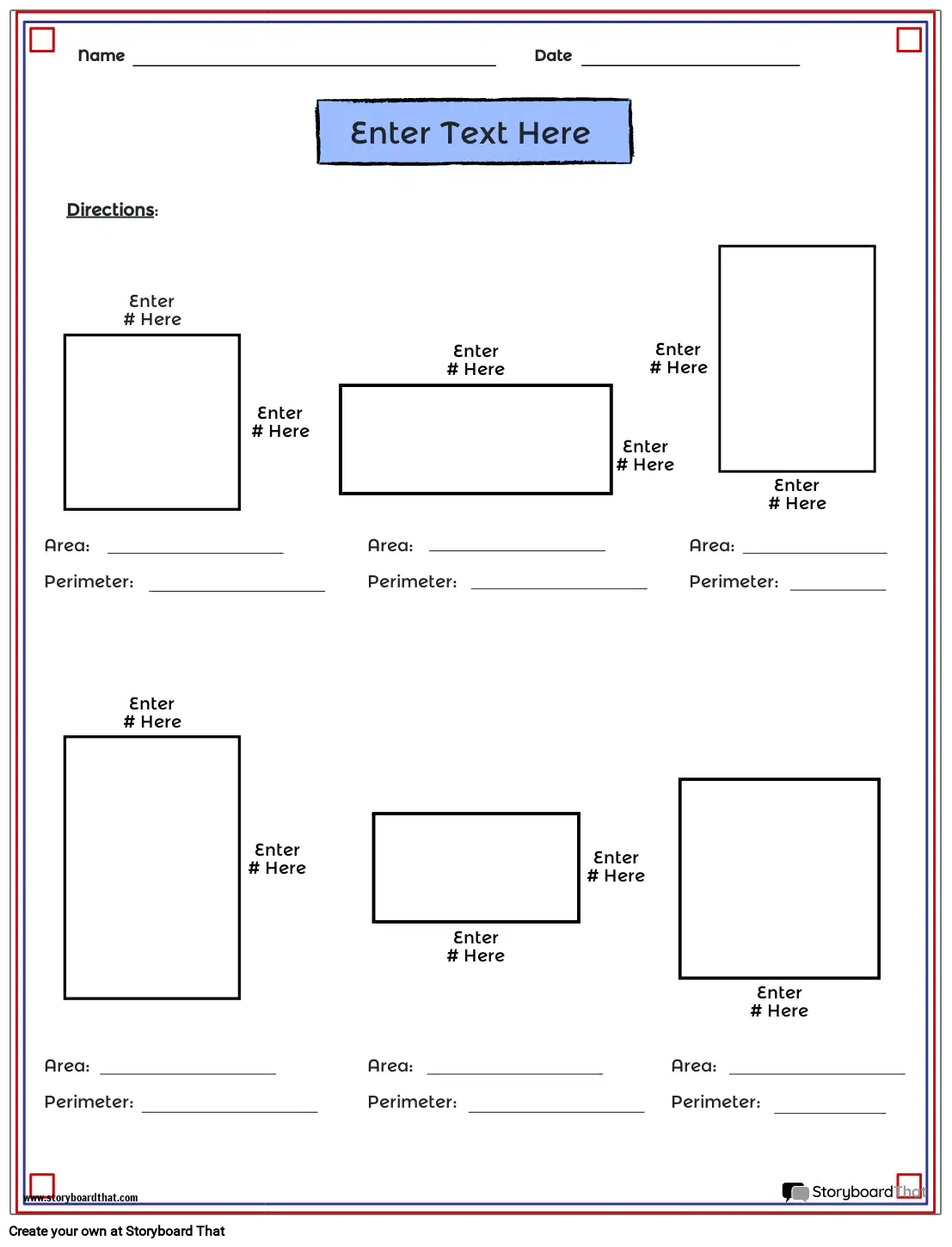
20 questions
Area and Perimeter of Rectangles
Quiz
•
6th Grade

15 questions
Area and Perimeter of Triangles and Parallelograms
Quiz
•
6th Grade

10 questions
area and perimeter grade 5
Quiz
•
4th - 6th Grade
20 questions
Graphing Area and Perimeter
Quiz
•
4th Grade
14 questions
Area and Perimeter Word Problems
Quiz
•
4th Grade
20 questions
Area and Perimeter Word Problems
Quiz
•
4th Grade
19 questions
Area and Perimeter Spanish
Quiz
•
4th Grade
15 questions
Geometry Area and Perimeter Triangle and Square
Quiz
•
4th Grade
15 questions
Rectilinear Shapes/Area and Perimeter
Quiz
•
4th Grade
Explore 6th Grade Area and Perimeter Quizzes
Area and perimeter concepts form the foundation of Grade 6 geometry studies, requiring students to master calculation methods for various two-dimensional shapes including rectangles, squares, triangles, and circles. Wayground's comprehensive quiz collection provides targeted assessment opportunities that help students develop proficiency in measuring distances around shapes and calculating enclosed surface areas. These practice questions systematically build understanding through problems involving real-world applications, compound shapes, and unit conversions, while providing immediate feedback to reinforce correct problem-solving strategies and identify areas requiring additional support. Wayground's extensive library draws from millions of teacher-created resources specifically designed for Grade 6 area and perimeter instruction, offering educators powerful search and filtering capabilities to locate standards-aligned content that matches their curriculum requirements. Teachers can easily differentiate instruction by selecting quizzes with varying complexity levels, customizing question sets to address individual student needs, and delivering assessments through flexible digital formats that accommodate diverse classroom environments. These tools enable effective lesson planning while supporting targeted remediation for struggling learners and enrichment opportunities for advanced students, ensuring comprehensive skill reinforcement across all mathematical proficiency levels in geometric measurement concepts.
FAQs
How should I teach area and perimeter in Grade 6?
Move from formula recall to decomposition. Have students mark a composite figure into rectangles or triangles, calculate each part, and explain why the outer boundary alone determines perimeter. Real examples such as carpeting a room versus fencing a garden reinforce the distinction.
What are good Grade 6 area and perimeter practice problems?
Use triangles, irregular polygons, and composite figures with missing or converted dimensions. Include multi-step situations in which students must decide whether they need surface coverage, boundary length, or both.
What errors should I look for when assessing Grade 6 area and perimeter?
Look for an incorrect triangle height, failure to divide by two when finding triangle area, and inclusion of internal segments in a composite figure’s perimeter. Unit errors are also revealing: area needs square units, while perimeter uses linear units.
How do I use a Wayground Grade 6 area and perimeter quiz?
Teachers can run the quiz as a digital quiz on Wayground or assign its printable PDF on paper. Each quiz includes a complete answer key; printed work can be scanned or captured and graded through the Wayground for Teachers app.
How does Grade 6 area work align with Common Core?
Common Core extends rectangular area to triangles, special quadrilaterals, and polygons by composing and decomposing figures. Students use these areas in real-world problems and build toward surface area and more advanced geometric measurement.
How can I differentiate composite-area practice in Grade 6?
Provide larger text and wider spacing so students can label each component of a figure. During digital work, extended time supports multi-step calculations, while advanced students can solve figures with missing dimensions or more than one valid decomposition.
What area and perimeter skills should sixth graders have?
Sixth graders should calculate the area of rectangles, triangles, and composite figures; find the perimeter of regular and irregular polygons; convert relevant units; and explain how they decomposed a complex shape.

Accessibility
Features
Wayground Super
School & District
Wayground for Business
Create a quiz
Create a presentation
Wayground AI
Subjects
Mathematics
Social Studies
Science
Physics
Chemistry
Biology
About
Our Story
Wayground Blog
Media Kit
Careers
Support
F.A.Q.
Help & Support
Privacy Policy
Terms of Service
Teacher Resources
2026 Wayground


Get our app

