


End Behavior of Polynomials Quizzes
Master the end behavior of polynomials with our comprehensive collection of interactive quizzes designed to assess your understanding of how polynomial functions behave as x approaches positive and negative infinity. Practice identifying leading coefficients, degrees, and graphical patterns through self-paced assessments that provide instant feedback to strengthen your algebra skills.

14 questions
End Behavior of Polynomials

Quiz
•
10th Grade

20 questions
End Behavior of Polynomials
Quiz
•
9th - 12th Grade

9 questions
3.1B End Behavior of Polynomials
Quiz
•
11th Grade

10 questions
End Behavior of Polynomials
Quiz
•
10th - 11th Grade
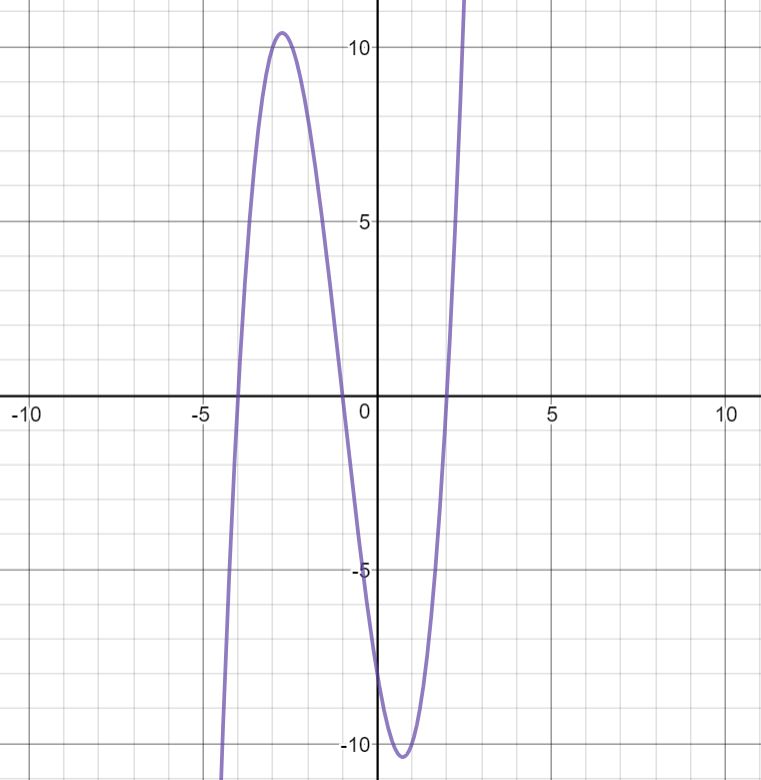
20 questions
The End Behavior of Polynomials
Quiz
•
11th Grade

13 questions
Degree and End Behavior of Polynomials Review
Quiz
•
11th Grade
15 questions
End Behavior of Polynomials
Quiz
•
10th Grade
14 questions
Degree and End Behavior of Polynomials
Quiz
•
11th Grade
16 questions
End Behavior of polynomials
Quiz
•
9th - 12th Grade
7 questions
End behavior of polynomials
Quiz
•
9th - 12th Grade
14 questions
End Behavior of Polynomials
Quiz
•
10th - 11th Grade
10 questions
End Behavior of Polynomials
Quiz
•
10th Grade
Browse by grade
Explore End Behavior of Polynomials Quizzes
End behavior of polynomials represents a fundamental concept in advanced algebra that examines how polynomial functions behave as input values approach positive and negative infinity. Wayground's comprehensive quiz collection provides students with targeted assessment opportunities to master this critical mathematical skill through carefully designed practice questions that evaluate their understanding of leading coefficients, degree analysis, and graphical interpretation. These quizzes develop essential analytical abilities by requiring students to determine whether polynomial functions rise or fall at their extremes, connect algebraic expressions to their corresponding graphical representations, and apply systematic approaches to predict function behavior without extensive calculations. The immediate feedback mechanism inherent in these digital assessments allows students to identify misconceptions quickly and reinforces proper mathematical reasoning processes essential for success in higher-level mathematics courses. Wayground's platform empowers mathematics educators with access to millions of teacher-created quiz resources specifically focused on polynomial end behavior, supported by robust search functionality and filtering options that enable precise alignment with curriculum standards and learning objectives. The platform's sophisticated customization tools allow teachers to differentiate instruction by adjusting question difficulty, modifying time constraints, and selecting specific sub-concepts within end behavior analysis to meet diverse student needs. These flexible delivery formats accommodate various classroom environments, from individual practice sessions to collaborative group assessments, while comprehensive analytics provide detailed insights into student performance patterns. Teachers can seamlessly integrate these resources into their instructional planning for initial concept introduction, targeted remediation of struggling learners, enrichment activities for advanced students, and ongoing skill reinforcement throughout the academic year.
FAQs
How do I teach end behavior of polynomials?
Start with the two rules students need to internalize: even-degree polynomials have matching end behavior on both sides, and odd-degree polynomials have opposite end behavior. Then layer in the leading coefficient — positive or negative — to determine which direction each tail points. A useful classroom move is to have students sketch the four cases (even/positive, even/negative, odd/positive, odd/negative) as a reference card before they touch any specific function. Once those patterns are solid, students can analyze any polynomial by looking only at the leading term, ignoring everything else.
What exercises help students practice end behavior of polynomials?
The most effective practice mixes two directions: given an equation, predict the end behavior; given a graph, identify the degree parity and sign of the leading coefficient. Problems that ask students to match graphs to functions — without giving them the equation first — force them to reason from visual evidence rather than just apply a memorized rule. Wayground's quizzes cover this range, moving from straightforward quadratic and cubic cases up to higher-degree polynomials where the degree isn't immediately obvious.
What mistakes do students commonly make with end behavior of polynomials?
The most persistent error is letting middle terms distract them — students see a large coefficient on an x³ term and assume it dominates, ignoring that a higher-degree term controls end behavior. A close second is confusing even/odd degree with positive/negative leading coefficient, which produces the wrong tail directions. Watch also for students who correctly identify end behavior algebraically but then draw graphs where both tails point the same way for an odd-degree function — the algebraic and graphical representations haven't connected yet.
How do I use Wayground's end behavior of polynomials quizzes in my class?
Each quiz comes with a complete answer key, so students can check their own work during independent practice or you can use it for quick grading. If you're going digital, you can host the quiz as a quiz on Wayground and get immediate scoring without any paper to collect. If you prefer paper — whether for a low-tech day or to reduce screen time — download the printable PDF and grade submissions using the Wayground for Teachers app, which lets you scan or capture student work directly.
Is end behavior of polynomials aligned to Common Core standards?
Yes. Common Core's high school algebra and functions progression treats polynomial analysis as a bridge between understanding structure in expressions and interpreting function behavior graphically. End behavior sits at that intersection: students are expected to use the degree and leading coefficient of a polynomial to reason about what its graph does at the extremes, which directly supports the broader Common Core goal of connecting algebraic form to graphical meaning. This skill builds from earlier work with linear and quadratic functions — where students already know both tails of a parabola rise together — and extends toward the function analysis students will need in precalculus and calculus.
How can I differentiate end behavior practice for mixed-ability classes?
For students who are still shaky on identifying degree and leading coefficient, Wayground's reduced answer choices accommodation narrows the options they see, lowering cognitive load while keeping the core reasoning task intact. For students with reading challenges, the Read Aloud feature handles question text so they can focus on the math. At the quiz level, you can generate alternate versions with larger font sizes or a dyslexia-friendly font — same problems, adjusted presentation — without creating a separate assignment for the rest of the class.
What grade level covers end behavior of polynomials?
End behavior is typically introduced in Algebra 2, which most students encounter in grades 9–11 depending on their math track. It appears again in precalculus (often grade 11 or 12) with greater emphasis on connecting end behavior to limits and graphical analysis. Students on an accelerated track may first see it in grade 9; students in a standard sequence more commonly encounter it in grades 10–11.

Accessibility
Features
Wayground Super
School & District
Wayground for Business
Create a quiz
Create a presentation
Wayground AI
Subjects
Mathematics
Social Studies
Science
Physics
Chemistry
Biology
About
Our Story
Wayground Blog
Media Kit
Careers
Support
F.A.Q.
Help & Support
Privacy Policy
Terms of Service
Teacher Resources
2026 Wayground


Get our app

