


6th Grade Measuring Cylinder Quizzes
Master measuring cylinder techniques and volume measurement skills with this comprehensive Grade 6 quiz designed to assess your understanding of liquid measurement tools. Practice questions with instant feedback help you build confidence in reading graduated cylinders and applying proper measurement procedures.
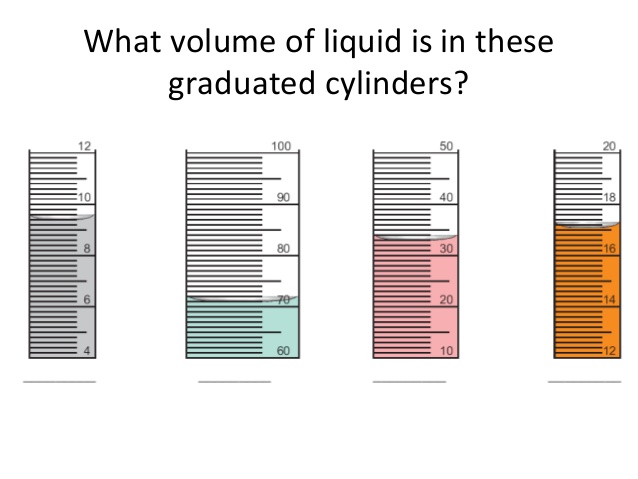


Explore 6th Grade Measuring Cylinder Quizzes
Measuring cylinder proficiency forms a critical foundation for Grade 6 students developing essential scientific measurement skills and laboratory techniques. Wayground's comprehensive quiz collection offers targeted assessment opportunities that help students master the proper use, reading, and application of measuring cylinders in various scientific contexts. These interactive practice questions challenge students to demonstrate their understanding of volume measurement principles, accurate liquid reading techniques at the meniscus, and appropriate measuring cylinder selection for different experimental scenarios. Through immediate feedback and varied question formats, students develop confidence in interpreting graduated markings, converting between measurement units, and applying measuring cylinder skills to real-world scientific investigations and data collection activities. Wayground supports science educators with access to millions of teacher-created measuring cylinder quizzes that align with Grade 6 curriculum standards and learning objectives. The platform's advanced search and filtering capabilities enable teachers to quickly locate resources that match specific skill levels, measurement ranges, and complexity requirements for their diverse student populations. Customization tools allow educators to modify existing quizzes or combine multiple assessments to create differentiated learning experiences that address individual student needs and learning gaps. These digital-first quiz resources facilitate flexible delivery through various classroom formats, supporting both formative assessment during instruction and summative evaluation of measuring cylinder competency, while enabling teachers to track student progress and implement targeted remediation or enrichment strategies based on detailed performance analytics.
FAQs
How do I teach students to read a measuring cylinder correctly?
Teach students to position their eyes level with the liquid surface to avoid parallax error, then read from the bottom of the meniscus for most liquids such as water. Introduce graduation marks systematically by starting with cylinders that have larger, easier-to-read intervals before progressing to finer scales. Reinforce that every reading should include the correct unit and an appropriate level of precision based on the cylinder's smallest graduation.
What exercises help students practice reading measuring cylinders?
Effective practice exercises include reading static diagrams of cylinders filled to various levels, identifying the value of each graduation mark before attempting a reading, and completing tables that require students to record volumes with correct decimal notation. Graduated problem sets that increase in scale complexity, such as moving from 10 mL cylinders to 100 mL cylinders, build confidence systematically. Mixing whole-number and decimal readings within the same exercise reinforces the connection between measurement precision and significant figures.
What mistakes do students commonly make when reading a measuring cylinder?
The most common error is reading from the top of the meniscus rather than the bottom, which consistently produces a higher-than-actual value. Students also frequently misinterpret the value of graduation marks, especially on cylinders where each mark represents 2 mL or 0.5 mL rather than a whole number. A third widespread mistake is recording readings without units or with insufficient decimal places, which undermines measurement precision in scientific contexts.
How do I use Wayground's measuring cylinder quizzes in my classroom?
Wayground's measuring cylinder quizzes are available as printable PDFs for traditional classroom use and in digital formats for technology-integrated environments, so they work equally well as independent seat work, homework, or structured lab preparation tasks. Teachers can also host the quizzes as a quiz directly on Wayground, enabling real-time tracking of student responses. Each quiz includes a complete answer key, reducing preparation time and making self-correction and peer-marking straightforward.
How can I differentiate measuring cylinder practice for students at different skill levels?
Begin lower-confidence students with larger-graduation cylinders and whole-number readings before introducing finer scales and decimal values. For students who need additional support during digital activities on Wayground, you can enable accommodations such as Read Aloud so questions are read to them, or reduce the number of answer choices to lower cognitive load. These settings can be applied to individual students without affecting the experience of the rest of the class, and they carry over to future sessions automatically.
How does reading a measuring cylinder connect to broader science and math skills?
Reading a measuring cylinder accurately requires students to apply decimal notation, understand significant figures, and make proportional judgments between graduation marks, all of which are foundational mathematical skills used across science subjects. In a laboratory context, measurement errors compound quickly, so developing precision with a measuring cylinder builds the careful observational habits students need for any experimental procedure. Reinforcing these connections explicitly helps students see practical arithmetic as a scientific tool rather than an isolated classroom skill.

Accessibility
Features
Wayground Super
School & District
Wayground for Business
Create a quiz
Create a presentation
Wayground AI
Subjects
Mathematics
Social Studies
Science
Physics
Chemistry
Biology
About
Our Story
Wayground Blog
Media Kit
Careers
Support
F.A.Q.
Help & Support
Privacy Policy
Terms of Service
Teacher Resources
2026 Wayground


Get our app

