


Northwest Ordinance Quizzes
Test your knowledge of the Northwest Ordinance with this comprehensive quiz designed to assess your understanding of this pivotal legislation in early American history. Practice answering questions about the ordinance's provisions, impact on westward expansion, and role in shaping territorial governance with instant feedback to reinforce your learning.

10 questions
The NW Ordinance & The Constitution

Quiz
•
10th Grade

13 questions
STAAR: Northwest Ordinance
Quiz
•
8th Grade

10 questions
Northwest Ordinance
Quiz
•
8th - 12th Grade

9 questions
STAAR Review - Northwest Ordinance
Quiz
•
8th Grade
15 questions
Northwest Ordinance
Quiz
•
8th Grade

12 questions
The Northwest Ordinance
Quiz
•
6th - 8th Grade
15 questions
CS 5 Land and Northwest Ordinances Overview
Quiz
•
10th Grade
13 questions
Northwest Ordinance
Quiz
•
8th Grade
15 questions
Land Ordinance and Northwest Ordinance
Quiz
•
10th Grade
15 questions
Tutoring: Northwest Ordinance
Quiz
•
8th Grade
9 questions
Northwest Ordinance STAAR
Quiz
•
8th Grade
9 questions
Staar Review Northwest Ordinance
Quiz
•
8th Grade
Browse by grade
Explore Northwest Ordinance Quizzes
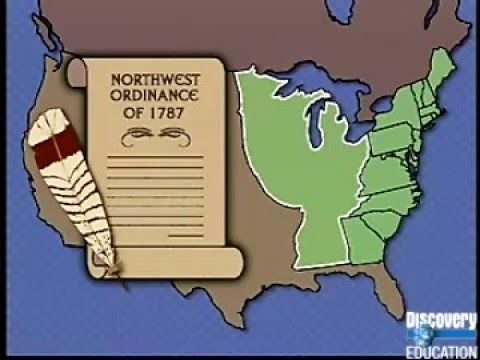
The Northwest Ordinance represents one of the most significant legislative achievements of the early American republic, establishing crucial precedents for westward expansion and territorial governance. Wayground's comprehensive quiz collection on this pivotal 1787 legislation provides educators with rigorous assessment tools that help students understand the ordinance's revolutionary approach to territorial administration, statehood requirements, and the prohibition of slavery in the Northwest Territory. These practice questions develop critical analytical skills as students examine how the ordinance balanced federal authority with territorial self-governance, while exploring its lasting impact on American democratic principles and expansion policies. Through targeted feedback and varied question formats, students gain deeper understanding of how this legislation shaped the nation's growth from the Great Lakes to the Ohio River and established templates for future territorial incorporation. Wayground's platform supports educators with millions of teacher-created quiz resources specifically aligned to U.S. History standards, offering powerful search and filtering capabilities that help instructors locate precisely the Northwest Ordinance content needed for their curriculum goals. The platform's differentiation tools enable teachers to customize quiz difficulty levels and question types to meet diverse learning needs, while flexible digital delivery formats accommodate various classroom environments and learning preferences. These comprehensive assessment resources support strategic lesson planning by providing formative evaluation opportunities that identify student misconceptions about territorial governance concepts, enable targeted remediation of specific historical understanding gaps, and offer enrichment activities for advanced learners ready to explore deeper connections between the Northwest Ordinance and subsequent American expansion policies.
FAQs
How do I teach the Northwest Ordinance to middle or high school students?
Start by grounding students in the context of post-Revolutionary America, particularly the challenge of governing newly acquired western territories. Introduce the Ordinance's three core contributions: the process for admitting new states, the guaranteed civil liberties for territorial settlers, and the prohibition of slavery north of the Ohio River. Primary source analysis works especially well here because the document is short enough to read in excerpts, yet dense enough to reward close reading. Connecting the Ordinance to later legislation, such as the Missouri Compromise, helps students see its long-term impact on American expansion and the slavery debate.
What are the most common misconceptions students have about the Northwest Ordinance?
A frequent misconception is that the Northwest Ordinance immediately abolished slavery across all U.S. territories, when in fact it only prohibited it in the specific Northwest Territory north of the Ohio River. Students also tend to conflate the Ordinance with the Constitution, not realizing it was passed under the Articles of Confederation and reflects the governing limitations of that era. Another common error is underestimating its significance, since students often overlook that it established the precedent for how all future territories would be organized and admitted as states.
What exercises help students practice analyzing the Northwest Ordinance?
Document analysis activities that walk students through primary source excerpts from the Ordinance itself build close reading and historical thinking skills simultaneously. Timeline activities help students place the Ordinance within the broader arc of American expansion, from the Land Ordinance of 1785 through the Missouri Compromise. Cause-and-effect graphic organizers are particularly effective for helping students trace how the Ordinance's provisions directly influenced westward migration patterns and later territorial legislation. Comparative analysis exercises that contrast the Northwest Territory's governance framework with that of states formed later reinforce understanding of the Ordinance's constitutional legacy.
How does the Northwest Ordinance connect to broader U.S. History standards?
The Northwest Ordinance is a foundational document in most state U.S. History standards because it bridges the Articles of Confederation period and the Constitutional era while directly addressing westward expansion, federalism, and civil liberties. It is frequently paired with the Constitution to show students how early American governance evolved, and it appears in many standards related to Manifest Destiny, the slavery debate, and the development of the federal system. Teachers covering APUSH or eighth-grade U.S. History will find it essential for units on the Critical Period and early republic.
How can I use Northwest Ordinance quizzes in my classroom?
Northwest Ordinance quizzes on Wayground are available as printable PDFs, making them easy to distribute in a traditional classroom setting, as well as in digital formats suited for remote or hybrid instruction. Teachers can also host the quizzes as an interactive quiz directly on Wayground, giving students immediate feedback while generating class-level data for the teacher. For students who need accommodations, Wayground supports features such as extended time, read-aloud functionality, and reduced answer choices, all configurable per individual student without disrupting the rest of the class.

Accessibility
Features
Wayground Super
School & District
Wayground for Business
Create a quiz
Create a presentation
Wayground AI
Subjects
Mathematics
Social Studies
Science
Physics
Chemistry
Biology
About
Our Story
Wayground Blog
Media Kit
Careers
Support
F.A.Q.
Help & Support
Privacy Policy
Terms of Service
Teacher Resources
2026 Wayground


Get our app

