Filters
Resource Type


Grades
3rd Grade Number Sense Quizzes
Grade 3 Number Sense Quiz: Assess Your Understanding of Mathematical Foundations. Practice self-paced questions with instant feedback to strengthen your grasp of counting, place value, and number relationships.
Recommended topics for you

19 questions
SQUARE, PERFECT SQUARES, SQUARE ROOTS

Quiz
•
1st Grade - Professional Development
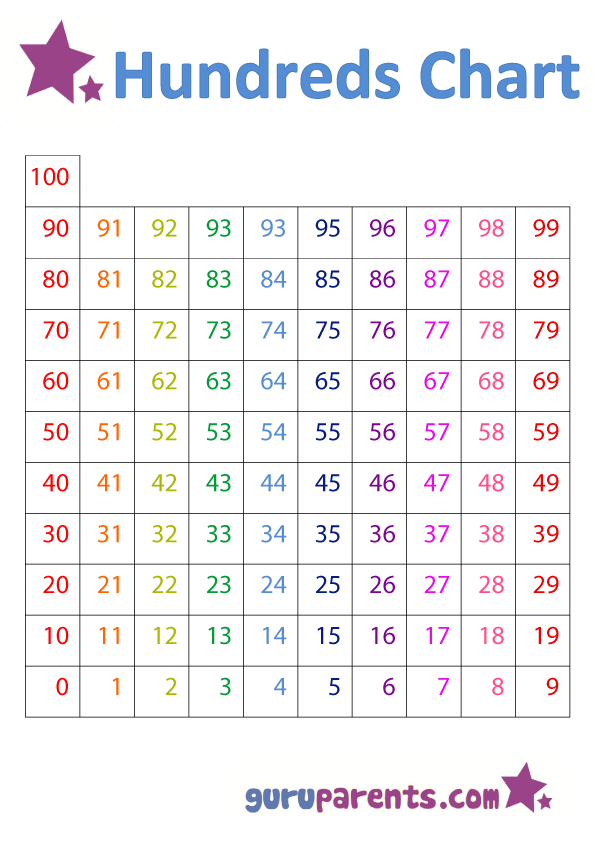
6 questions
Number Grid Difference
Quiz
•
3rd - 4th Grade

20 questions
Building Numbers with Base 10 Blocks
Quiz
•
3rd Grade

5 questions
Place Value
Quiz
•
3rd Grade

44 questions
Multiplication 0's, 1 's, 2's, 5's and 10's (Touch Math)
Quiz
•
1st - 5th Grade

14 questions
Number Forms
Quiz
•
3rd Grade
15 questions
Math Fact Fluency Mixed Multiplication and Division
Quiz
•
3rd Grade
16 questions
Number Forms
Quiz
•
2nd - 4th Grade
12 questions
G3 Positive and Negative Numbers
Quiz
•
2nd - 3rd Grade
15 questions
Addition on the Tens Frame
Quiz
•
1st Grade
20 questions
Skip Count by 10s
Quiz
•
2nd Grade
20 questions
Regrouping Tens and Ones
Quiz
•
2nd Grade
Explore 3rd Grade Number Sense Quizzes
Number sense forms the cornerstone of mathematical understanding for Grade 3 students, encompassing essential skills like place value comprehension, number relationships, and basic computational fluency. These comprehensive quizzes available through Wayground provide structured assessment opportunities that help educators evaluate student understanding of fundamental numerical concepts including counting patterns, comparing quantities, and recognizing number representations in various forms. Each practice question is designed to strengthen students' ability to work flexibly with numbers, offering immediate feedback that reinforces correct thinking while identifying areas where additional support may be needed. The assessment format allows teachers to monitor progress in critical skills such as skip counting, number line navigation, and understanding the base-ten system that serves as the foundation for all future mathematical learning. Wayground supports educators with millions of teacher-created quiz resources specifically aligned to Grade 3 number sense standards, featuring robust search and filtering capabilities that enable quick identification of content matching specific learning objectives. The platform's differentiation tools allow teachers to customize quiz difficulty and content focus, ensuring that both struggling learners and advanced students receive appropriately challenging material that promotes growth. Digital delivery formats provide immediate scoring and detailed analytics, while the extensive question banks support varied instructional approaches from whole-class review sessions to individualized remediation activities. These comprehensive assessment tools enable teachers to effectively plan targeted instruction, identify students requiring additional support, and provide enrichment opportunities that deepen number sense understanding across diverse learning needs and mathematical readiness levels.
FAQs
What are the major number sense goals for third grade?
In third grade, students solidify their understanding of whole numbers and are formally introduced to fractions as numbers. Key goals include fluently adding and subtracting within 1,000, rounding whole numbers to the nearest 10 or 100, and beginning to understand multiplication and division. A major new concept is understanding a fraction 1/b as one part of a whole partitioned into b equal parts.
What is an effective strategy for teaching rounding?
A vertical number line can be very effective. To round 237 to the nearest ten, you would place 230 at the bottom and 240 at the top. Mark the midpoint, 235. Students then place 237 on the number line and can clearly see it falls in the top half, so it rounds up to 240. This visual reinforces the 'midpoint' rule.
What types of practice problems build fluency with multi-digit numbers?
A mix of problem types is best. Include standard computation problems, but also ask students to solve word problems that require addition or subtraction. Puzzles like finding the missing number in an equation (e.g., 345 + ? = 500) are also excellent for developing number sense and flexible thinking.
What is a common mistake students make when rounding?
A frequent misconception is that you 'always round up' when the digit is 5, without considering the place value you are rounding to. Another common error is changing the digits in the higher place values after rounding. For example, when rounding 482 to the nearest hundred, a student might incorrectly write 582 instead of 500.
How does the third-grade curriculum expand students' understanding of numbers?
Aligned with frameworks like the Common Core, third grade expands number sense in two key ways. First, it solidifies whole number skills by introducing rounding as a tool for estimation. Second, it formally introduces fractions as a new type of number, laying the groundwork for understanding numbers that exist between whole numbers.
How can I use these third-grade number sense quizzes?
These quizzes are available as both printable PDFs and interactive digital assignments on Wayground. You can print a quiz for quiet seatwork or a homework assignment, and use the included answer key for quick grading. For paper assignments, the Wayground for Teachers app lets you scan and grade student work with your phone.
How can I differentiate rounding practice for my students?
For students who are struggling, start with quizzes that use number lines as a visual aid. For those ready for a challenge, use problems that ask them to find the largest or smallest number that rounds to a given value (e.g., 'What is the smallest whole number that rounds to 80?'). This requires them to think more deeply about the rounding range.

Accessibility
Features
Wayground Super
School & District
Wayground for Business
Create a quiz
Create a presentation
Wayground AI
Subjects
Mathematics
Social Studies
Science
Physics
Chemistry
Biology
About
Our Story
Wayground Blog
Media Kit
Careers
Support
F.A.Q.
Help & Support
Privacy Policy
Terms of Service
Teacher Resources
2026 Wayground


Get our app