


6th Grade Number Sequences Quizzes
Assess your Grade 6 students' understanding of number sequences with this comprehensive quiz featuring practice questions and instant feedback. Help learners master pattern recognition and sequence continuation through self-paced assessment activities.

16 questions
Highflyers 11+ Number Sequences

Quiz
•
6th Grade

10 questions
Number sequences
Quiz
•
6th Grade

5 questions
Number Sequences
Quiz
•
6th Grade
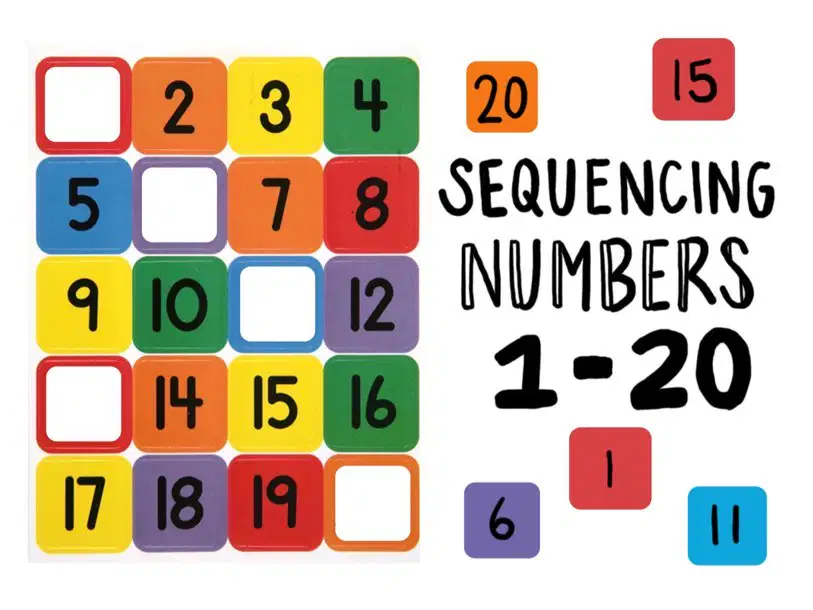
23 questions
algebraic expressions and number sequences
Quiz
•
6th Grade

10 questions
number sequences
Quiz
•
5th - 6th Grade

20 questions
Number Sequences- An exercise for your Brain
Quiz
•
5th - 6th Grade
15 questions
Number Sequences
Quiz
•
6th - 8th Grade
10 questions
Number Sequences BPS grade 7
Quiz
•
6th - 8th Grade
10 questions
Year 6 - Number Sequences
Quiz
•
4th - 6th Grade
16 questions
Rounding off and number sequences
Quiz
•
4th - 6th Grade
90 questions
Prime numbers and number sequences
Quiz
•
6th - 8th Grade
20 questions
Number sequences
Quiz
•
5th - 8th Grade
Explore 6th Grade Number Sequences Quizzes
Number sequences form a fundamental component of Grade 6 mathematics education, building students' ability to recognize patterns, predict outcomes, and understand mathematical relationships. Through Wayground's comprehensive collection of number sequence quizzes, formerly available on Quizizz, students engage with targeted practice questions that systematically develop their pattern recognition skills and numerical reasoning abilities. These assessment tools provide immediate feedback as students work through various sequence types, including arithmetic progressions, geometric patterns, and more complex numerical relationships, helping teachers gauge student understanding while reinforcing critical mathematical concepts that serve as building blocks for algebraic thinking. Wayground's extensive library draws from millions of teacher-created resources, offering educators robust search and filtering capabilities to locate grade-appropriate number sequence assessments that align with curriculum standards and learning objectives. Teachers can customize these digital quizzes to match their students' specific needs, incorporating differentiation strategies that support both remediation for struggling learners and enrichment opportunities for advanced students. The platform's flexible delivery formats enable seamless integration into various instructional settings, whether for whole-class review, small group practice, or individual skill reinforcement, while detailed analytics help educators identify knowledge gaps and plan targeted interventions to strengthen students' mastery of sequential mathematical patterns.
FAQs
How do I connect number sequences to algebra in Grade 6?
In Grade 6, the goal is to help students generalize a pattern's rule using variables. Start with an input-output table and ask them to describe the rule in words. Then, introduce a variable (like 'n') to represent the input number's position in the sequence and guide them to write an algebraic expression (e.g., '2n + 1') that describes the output.
What types of sequence problems prepare 6th graders for algebra?
The best problems require students to move beyond simply extending a pattern. They should practice writing an algebraic expression or equation that represents the relationship between two quantities, such as the term number and its value. For example, given the sequence 3, 5, 7, 9..., students should be able to determine the rule is 2n + 1.
What are common errors when students transition from patterns to variables?
A frequent mistake is confusing the term's value with its position. For example, in the sequence 5, 10, 15..., a student might see the first term is 5 and incorrectly write the rule as 'n + 4' instead of the correct '5n'. They may also struggle to find the rule for sequences that don't start with a simple multiple, such as 4, 7, 10, 13... (rule: 3n + 1).
How does this topic support the Grade 6 math standards?
Aligned with Common Core, this topic is crucial for the 'Expressions and Equations' domain in Grade 6. It helps students understand how to use variables to represent numbers and write expressions to solve problems. Analyzing how one quantity changes in relation to another in a sequence is a direct precursor to understanding dependent and independent variables in functions.
How can I use this Grade 6 number sequences quiz?
This quiz is designed for flexibility. You can print the PDF for in-class practice or homework, and then use the Wayground for Teachers app to quickly scan and grade the completed papers. Alternatively, you can assign it as a digital quiz on the Wayground platform for automatic grading and data analysis. A full answer key is always included.
How can I differentiate this topic for my 6th grade class?
For students needing support, provide partially completed input-output tables to scaffold the process of finding a rule. To challenge advanced learners, ask them to work with sequences that involve negative numbers or rational numbers, or have them analyze non-linear patterns like quadratic sequences (e.g., 1, 4, 9, 16...).

Accessibility
Features
Wayground Super
School & District
Wayground for Business
Create a quiz
Create a presentation
Wayground AI
Subjects
Mathematics
Social Studies
Science
Physics
Chemistry
Biology
About
Our Story
Wayground Blog
Media Kit
Careers
Support
F.A.Q.
Help & Support
Privacy Policy
Terms of Service
Teacher Resources
2026 Wayground


Get our app

