
Resource Type


- Resource Library
- ELA
- Grammar
- Grammar and Mechanics
- Sentence Structure
- Simple, Compound, and Complex Sentences
6th Grade Simple, Compound, and Complex Sentences Quizzes
Test your Grade 6 understanding of simple, compound, and complex sentences with this interactive quiz designed to assess your sentence structure knowledge. Practice identifying different sentence types through engaging questions that provide instant feedback to strengthen your English grammar skills.

35 questions
Simple, Compound and Complex Sentences

Quiz
•
6th Grade

15 questions
Simple, Compound, and Complex Sentences
Quiz
•
6th - 8th Grade

21 questions
Simple, Compound, and Complex Sentences
Quiz
•
6th - 8th Grade

15 questions
Simple, Compound , And Complex Sentences
Quiz
•
5th - 6th Grade
49 questions
Simple, Compound, and Complex Sentences
Quiz
•
6th - 8th Grade

10 questions
Simple, Compound and Complex Sentences
Quiz
•
6th - 8th Grade
17 questions
Simple, Compound, and Complex Sentences
Quiz
•
6th - 7th Grade
10 questions
Simple, Complex, Compound Sentences
Quiz
•
4th - 6th Grade
11 questions
Simple, compound and complex sentences
Quiz
•
4th - 6th Grade
51 questions
Simple, Compound, and Complex Sentences
Quiz
•
6th - 8th Grade
26 questions
TEST: Simple, Compound, and Complex Sentences
Quiz
•
6th - 8th Grade
10 questions
Simple, Compound, and Complex Sentences
Quiz
•
6th Grade
Explore 6th Grade Simple, Compound, and Complex Sentences Quizzes
Simple, compound, and complex sentences form the foundation of effective written communication for Grade 6 students, representing essential building blocks that distinguish basic from sophisticated writing. These comprehensive quiz collections available through Wayground provide targeted assessment opportunities that help students master the structural differences between these three sentence types through carefully designed practice questions. Students develop critical understanding of how independent and dependent clauses combine to create meaning, while receiving immediate feedback on their ability to identify, construct, and manipulate different sentence structures. The quizzes systematically build comprehension of coordination and subordination principles, ensuring students can recognize when ideas should be joined with coordinating conjunctions, separated as independent thoughts, or connected through dependent clause relationships. Wayground's extensive library contains millions of teacher-created quiz resources specifically designed to support educators in delivering effective sentence structure instruction for Grade 6 learners. The platform's robust search and filtering capabilities enable teachers to locate precisely targeted assessments that align with curriculum standards and address individual student needs across varying proficiency levels. Advanced customization tools allow educators to modify existing quizzes or create differentiated versions that accommodate diverse learning requirements, while flexible digital delivery formats ensure seamless integration into both classroom and remote learning environments. These comprehensive quiz collections support strategic instructional planning by providing reliable data for remediation decisions, enrichment opportunities for advanced learners, and systematic skill reinforcement that builds students' confidence in manipulating increasingly complex sentence structures throughout their writing development.
FAQs
How do I teach simple, compound, and complex sentences to students?
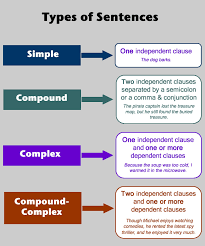
Begin by teaching each sentence type in isolation before asking students to compare and contrast them. Introduce simple sentences as single independent clauses, then show how coordinating conjunctions (for, and, nor, but, or, yet, so) link two independent clauses to form compound sentences. Once students are confident with those, introduce subordinating conjunctions (because, although, when, if) to build complex sentences with dependent and independent clauses. Using mentor texts and having students categorize sentences from their own reading helps anchor the concepts in authentic writing contexts.
What exercises help students practice identifying sentence types?
Sorting exercises are especially effective — give students a mixed set of sentences and have them label each as simple, compound, or complex, then justify their reasoning by identifying the clauses and conjunctions present. Sentence-combining tasks, where students merge two simple sentences into a compound or complex sentence, reinforce both recognition and construction skills. Graduated practice problems that start with identification and move toward original composition help students internalize the structural differences between each sentence type.
What mistakes do students commonly make when working with compound and complex sentences?
A frequent error is confusing compound and complex sentences, particularly when students misidentify subordinating conjunctions as coordinating ones. Students also commonly produce comma splices in compound sentences or omit the comma before the coordinating conjunction entirely. With complex sentences, many students struggle to determine which clause is dependent and which is independent, leading to inverted or incomplete constructions. Targeted practice that explicitly focuses on clause identification and punctuation rules helps correct these patterns before they become habitual.
How can I use sentence structure quizzes to support struggling writers?
For struggling writers, focus first on solidifying the concept of an independent clause before introducing compound or complex structures, since most errors trace back to clause confusion. Quizzes that use sentence frames or partially completed examples provide scaffolding without removing the cognitive work entirely. On Wayground, teachers can enable the Read Aloud feature so that questions and directions are read to students who need additional language support, and the Reduced Answer Choices accommodation can lower cognitive load for students working on identification tasks.
How do I use Wayground's simple, compound, and complex sentences quizzes in my classroom?
Wayground's sentence structure quizzes are available as printable PDFs for traditional classroom use and in digital formats for technology-integrated environments, including the option to host them as a quiz directly on the Wayground platform. Each quiz includes a complete answer key, making them practical for independent practice, homework, or in-class review. Teachers can filter materials to find quizzes aligned to specific learning objectives, then assign them to the whole class or individual students depending on where learners are in their understanding of sentence variety.
How do simple, compound, and complex sentences improve student writing?
Sentence variety is one of the clearest markers of writing maturity — over-reliance on simple sentences makes writing feel choppy, while poorly constructed compound or complex sentences can obscure meaning. Teaching students to intentionally vary sentence structure gives them a practical revision strategy they can apply across all writing tasks. When students can move fluidly between sentence types, they gain more control over pacing, emphasis, and the logical relationships between ideas in their writing.

Accessibility
Features
Wayground Super
School & District
Wayground for Business
Create a quiz
Create a presentation
Wayground AI
Subjects
Mathematics
Social Studies
Science
Physics
Chemistry
Biology
About
Our Story
Wayground Blog
Media Kit
Careers
Support
F.A.Q.
Help & Support
Privacy Policy
Terms of Service
Teacher Resources
2026 Wayground


Get our app

