

Kindergarten Soft C Quizzes
Help your kindergarten students assess their understanding of soft C sounds with this interactive phonics quiz. Practice identifying when the letter C makes the soft /s/ sound through engaging questions designed for early readers.

15 questions
Hard and Soft C Sound

Quiz
•
KG
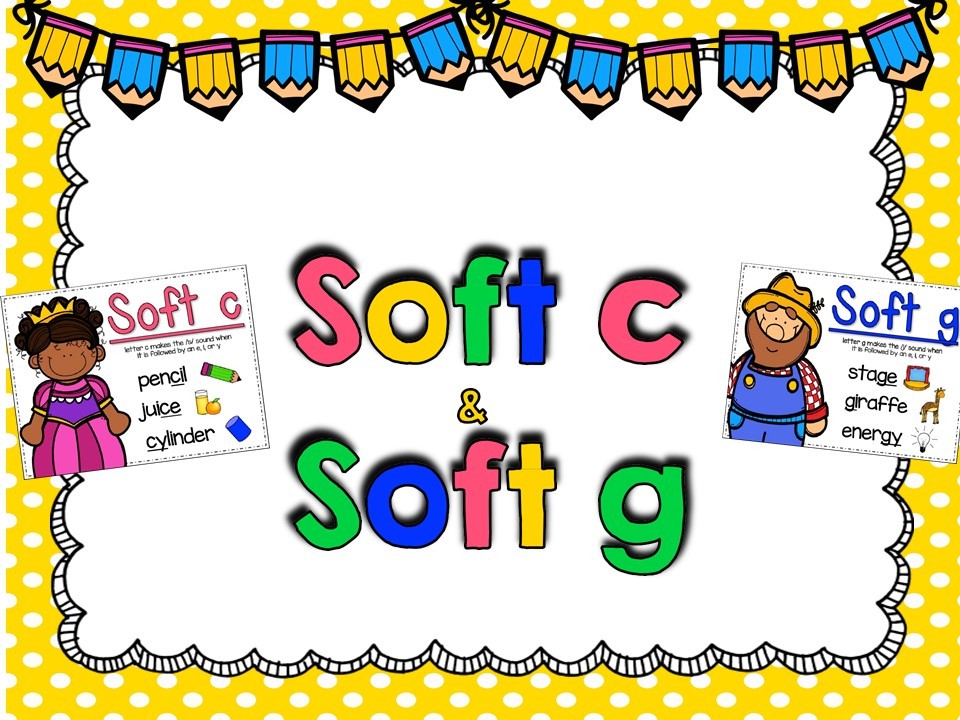
12 questions
Soft /c/ and Soft /g/
Quiz
•
KG

8 questions
Hard and soft c - Spelling test
Quiz
•
KG
13 questions
Pn4 soft c
Quiz
•
KG - 1st Grade

10 questions
Hard and soft c
Quiz
•
KG - 1st Grade

6 questions
Soft c, g phonics
Quiz
•
NaNth - 1st Grade
10 questions
Soft c, g, dge Unit 3 Week 3
Quiz
•
NaNth - 1st Grade
10 questions
soft c and soft g
Quiz
•
KG - 1st Grade
5 questions
Soft c soft g (dge) phonics
Quiz
•
NaNth - 1st Grade
10 questions
Soft C and Soft G
Quiz
•
KG - 2nd Grade
10 questions
Hard g and soft g & soft c and hard c.
Quiz
•
KG - 2nd Grade
25 questions
Abbreviations and Soft C
Quiz
•
KG - 2nd Grade
Browse by grade
Explore Kindergarten Soft C Quizzes
Soft C phonics skills form a crucial foundation for kindergarten students as they develop early reading abilities and learn to decode words with this specific letter-sound pattern. Wayground's comprehensive collection of soft C quizzes provides kindergarten educators with targeted assessment tools that help young learners practice identifying and pronouncing the /s/ sound when C appears before E, I, and Y in words like "city," "cent," and "cycle." These interactive practice questions offer immediate feedback to support student understanding while building confidence in phonetic recognition patterns that are essential for reading fluency development. Wayground's platform empowers teachers with access to millions of educator-created resources specifically designed for kindergarten phonics instruction, featuring robust search and filtering capabilities that make finding age-appropriate soft C content both efficient and effective. The platform's standards alignment ensures that quiz collections meet curriculum requirements while offering extensive customization tools that allow teachers to differentiate instruction based on individual student needs and learning paces. These digital-first delivery formats support flexible classroom implementation, enabling educators to seamlessly integrate soft C assessments into daily phonics routines, targeted remediation sessions, and enrichment activities that reinforce fundamental decoding skills essential for kindergarten reading success.
FAQs
How do I teach the soft C sound to early readers?
Teach soft C by introducing the rule that the letter C makes an /s/ sound when followed by E, I, or Y, as in 'cent,' 'city,' and 'cycle.' Start with high-frequency examples students already know, then use word-sorting activities to help them categorize soft C words from hard C words. Connecting the rule to real reading contexts, rather than isolated drill, helps students internalize the pattern more reliably.
What words should I use to practice the soft C sound with students?
Strong soft C practice words include 'city,' 'face,' 'icy,' 'cent,' 'circle,' 'cycle,' 'race,' 'twice,' and 'pencil.' Effective practice moves from simple CVC-pattern words like 'ace' to multisyllabic words like 'celebrate' or 'sentence,' which deepens pattern recognition across reading levels. Mixing soft C words into decodable sentences gives students context for applying the rule during authentic reading.
What mistakes do students commonly make with the soft C rule?
The most common error is over-applying the hard C sound to all C words, especially when students are still automatizing phonics rules. Students also frequently confuse soft C with the letter S, which can affect spelling accuracy even when reading is correct. Another common mistake is failing to apply the soft C rule in multisyllabic words where the C appears in an unstressed syllable, such as in 'acceptance' or 'concentrate.'
How can I use soft C quizzes to support differentiated instruction?
Soft C quizzes can be tiered by complexity, beginning with single-syllable word identification and progressing to multisyllabic decoding and sentence-level application for students who are ready. On Wayground, teachers can apply accommodations such as read-aloud support, reduced answer choices, and extended time to individual students, ensuring that learners with different needs access the same phonics content at an appropriate level. These settings are reusable across future sessions, reducing setup time for recurring differentiation needs.
How do I use Wayground's soft C quizzes in my classroom?
Wayground's soft C quizzes are available as printable PDFs for traditional classroom use and in digital formats for technology-integrated environments, making them flexible for whole-class lessons, small groups, or independent work. Teachers can also host the quizzes as a quiz directly on Wayground, enabling real-time student responses and instant feedback. Answer keys are included with every quiz, so grading and review require minimal additional preparation.
How does the soft C rule affect students' spelling development?
Understanding the soft C rule directly improves spelling accuracy because students learn to choose between C and S when representing the /s/ sound in words like 'center' versus 'sender.' Without explicit instruction, students often default to spelling the /s/ sound with S even in words that require C, producing errors like 'sircle' for 'circle.' Systematic phonics practice that highlights the CE, CI, and CY patterns gives students a reliable spelling strategy rather than relying on memorization alone.

Accessibility
Features
Wayground Super
School & District
Wayground for Business
Create a quiz
Create a presentation
Wayground AI
Subjects
Mathematics
Social Studies
Science
Physics
Chemistry
Biology
About
Our Story
Wayground Blog
Media Kit
Careers
Support
F.A.Q.
Help & Support
Privacy Policy
Terms of Service
Teacher Resources
2026 Wayground


Get our app

