

Kindergarten Soft G Quizzes
Test your kindergarten students' understanding of soft G sounds with this interactive phonics quiz. Practice identifying and using soft G letter combinations through self-paced assessment questions with instant feedback.

10 questions
Hard g, Soft g

Quiz
•
NaNth - NaNth Grade
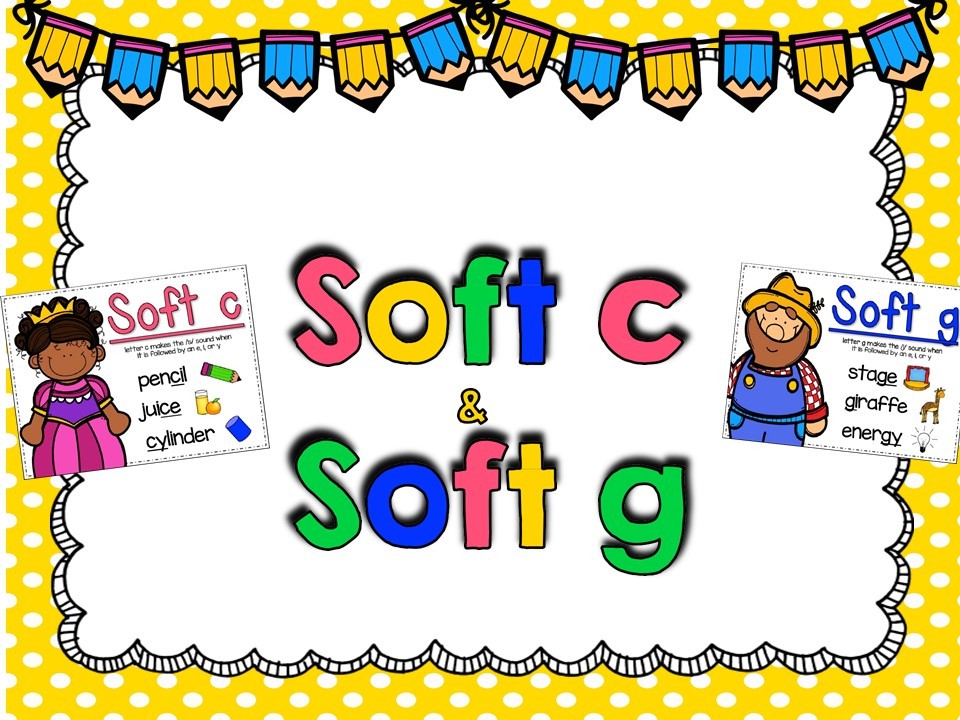
12 questions
Soft /c/ and Soft /g/
Quiz
•
KG

8 questions
Soft g
Quiz
•
KG

7 questions
Phonics: Long /i/ & Soft /g/
Quiz
•
KG

20 questions
Words with: ay=a; y=i; y=e; ge-gi-gy= soft g; ing
Quiz
•
KG

10 questions
Hard/Soft g
Quiz
•
NaNth - 1st Grade
10 questions
soft c and soft g
Quiz
•
KG - 1st Grade
5 questions
Soft c soft g (dge) phonics
Quiz
•
NaNth - 1st Grade
10 questions
Soft C and Soft G
Quiz
•
KG - 2nd Grade
10 questions
Hard g and soft g & soft c and hard c.
Quiz
•
KG - 2nd Grade
5 questions
Phonic Session- Soft g
Quiz
•
KG - 2nd Grade
8 questions
Hard and soft sounds (G, C)
Quiz
•
KG - 2nd Grade
Browse by grade
Explore Kindergarten Soft G Quizzes
Soft G phonics represents a fundamental building block in kindergarten literacy development, where young learners discover how the letter G produces a gentle "j" sound in words like "gem," "giraffe," and "gentle." Wayground's comprehensive collection of soft G quizzes provides kindergarten educators with targeted assessment tools that help students master this essential phonetic concept through engaging practice questions and immediate feedback. These interactive quizzes systematically develop phonemic awareness, letter-sound correspondence, and early reading skills by presenting age-appropriate exercises that reinforce soft G recognition in various word positions and contexts. Students gain deeper understanding of when G softens before vowels like E, I, and Y, building the foundational knowledge necessary for successful reading and spelling development. Wayground supports kindergarten teachers with millions of educator-created soft G phonics resources that streamline lesson planning and enhance differentiated instruction. The platform's robust search and filtering capabilities allow teachers to quickly locate standards-aligned quizzes that match their specific curriculum requirements and student ability levels. Teachers can customize quiz content, adjust difficulty levels, and modify question formats to meet diverse learning needs, whether providing remediation for struggling readers or enrichment activities for advanced students. The flexible digital delivery system enables seamless integration into whole-group instruction, small reading groups, or independent practice stations, while detailed performance analytics help educators identify knowledge gaps and track student progress in soft G mastery. These comprehensive tools support systematic phonics instruction that builds confident, capable readers through consistent skill reinforcement and targeted practice opportunities.
FAQs
How do I teach the soft G sound to early readers?
Teaching the soft G sound works best when students first understand the rule: G typically makes a /j/ sound when followed by E, I, or Y, as in 'gem,' 'giraffe,' and 'gym.' Introduce the pattern explicitly with anchor words students already know, then build recognition through word sorting activities that contrast soft G and hard G words. Consistent exposure through reading and spelling practice reinforces the rule across contexts.
What exercises help students practice the soft G phonics pattern?
Word sorting activities are especially effective for soft G practice because they require students to actively apply the spelling rule rather than passively recognize it. Spelling exercises, cloze sentences, and reading passages that embed soft G words in context also build both decoding and encoding skills. Repeated exposure across multiple exercise types helps students internalize the pattern rather than memorize isolated words.
What mistakes do students commonly make with the soft G rule?
The most common error is overgeneralizing: students often assume G always makes a /j/ sound before E, I, or Y, but English has exceptions like 'get,' 'give,' and 'girl' where G remains hard. Students also frequently confuse soft G with the letter J, which produces the same sound, leading to spelling errors. Pointing out exceptions explicitly and practicing them alongside rule-following words helps students build more accurate phoneme-grapheme mapping.
How do I differentiate soft G instruction for struggling readers?
For students who struggle with soft G, reduce the cognitive load by focusing on a small set of high-frequency soft G words before expanding to broader pattern recognition. Wayground supports individual student accommodations including Read Aloud, which allows the platform to read questions aloud for students who need auditory support, and reduced answer choices to lower the difficulty of recognition tasks. These settings can be applied to specific students without affecting the rest of the class.
How do I use Wayground's soft G quizzes in my classroom?
Wayground's soft G quizzes are available as printable PDFs for traditional classroom use and in digital formats for technology-integrated environments, giving teachers flexibility to assign them for in-class instruction, independent practice, or homework. Teachers can also host the quizzes as a live quiz on Wayground, making them suitable for whole-class review or formative assessment. Complete answer keys are included with every quiz, reducing grading time.

Accessibility
Features
Wayground Super
School & District
Wayground for Business
Create a quiz
Create a presentation
Wayground AI
Subjects
Mathematics
Social Studies
Science
Physics
Chemistry
Biology
About
Our Story
Wayground Blog
Media Kit
Careers
Support
F.A.Q.
Help & Support
Privacy Policy
Terms of Service
Teacher Resources
2026 Wayground


Get our app

