
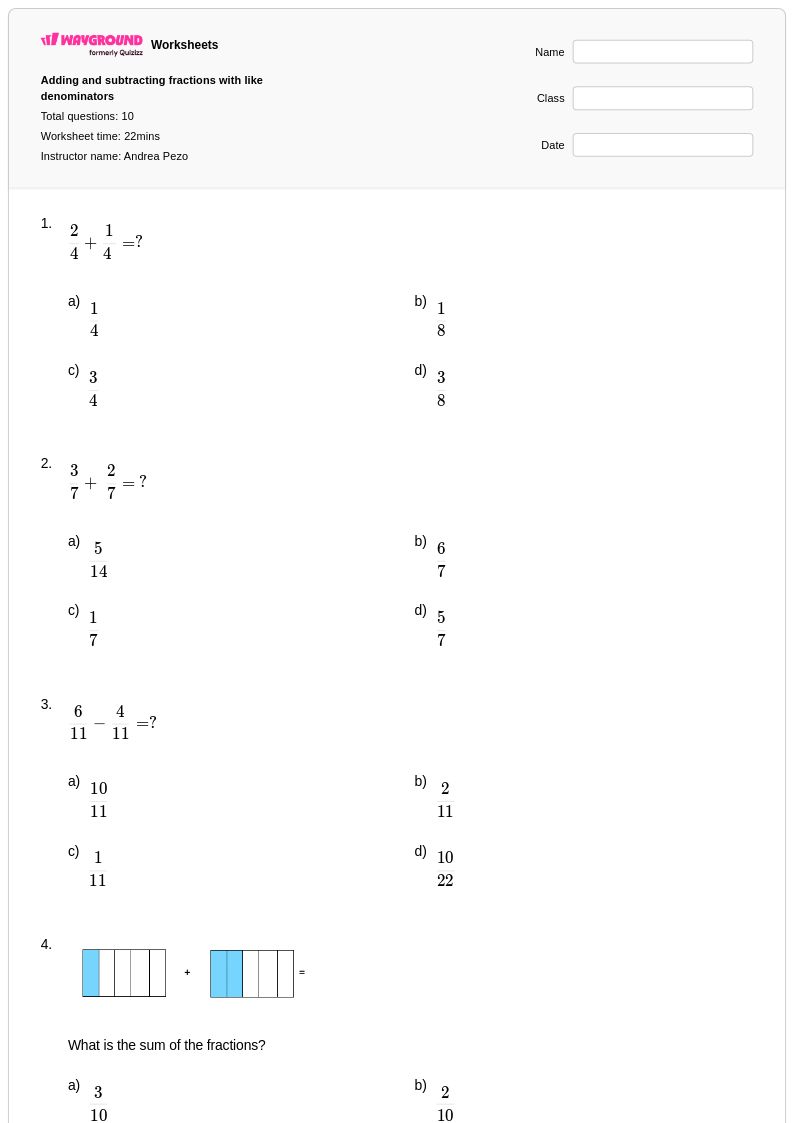
10 คิว
3rd
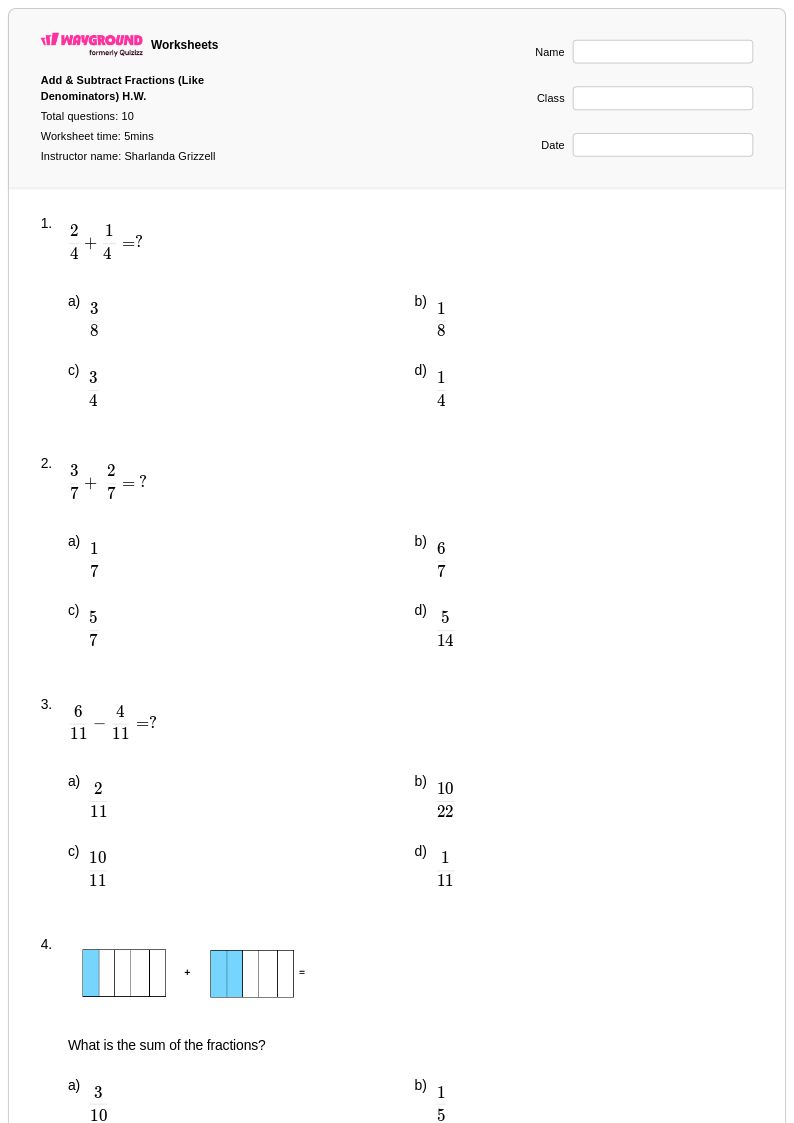
10 คิว
3rd
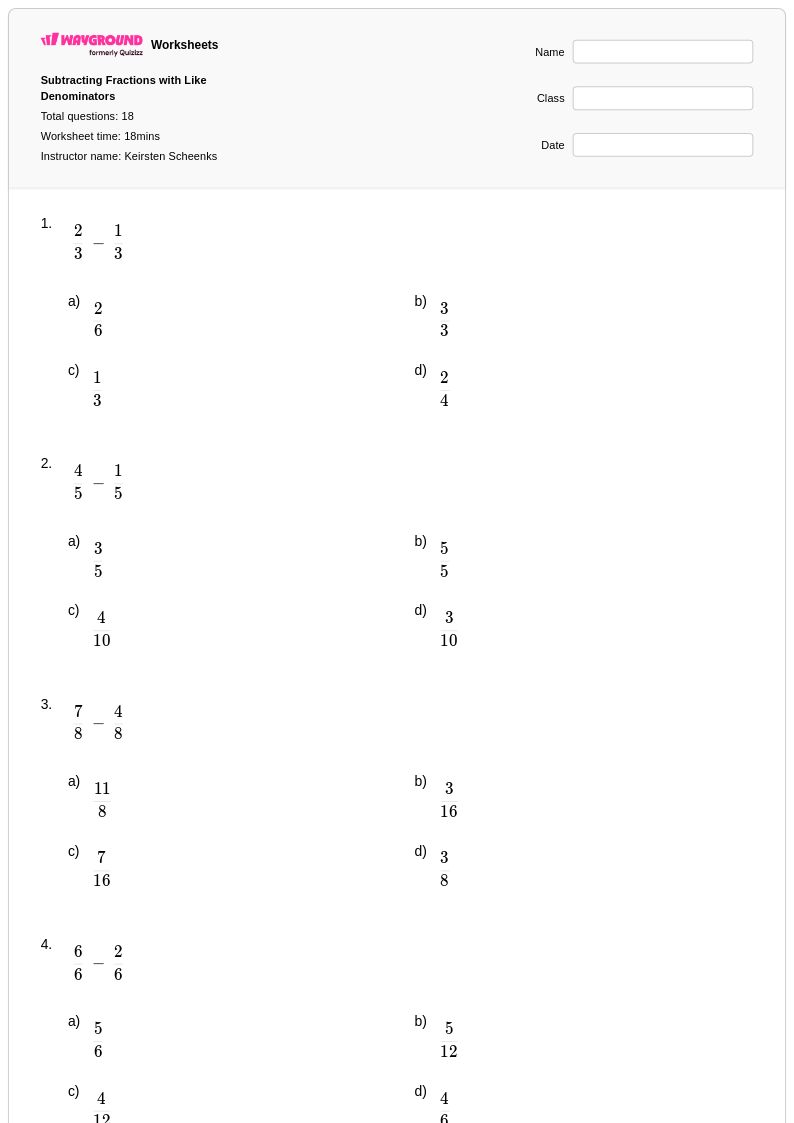
18 คิว
3rd - 5th
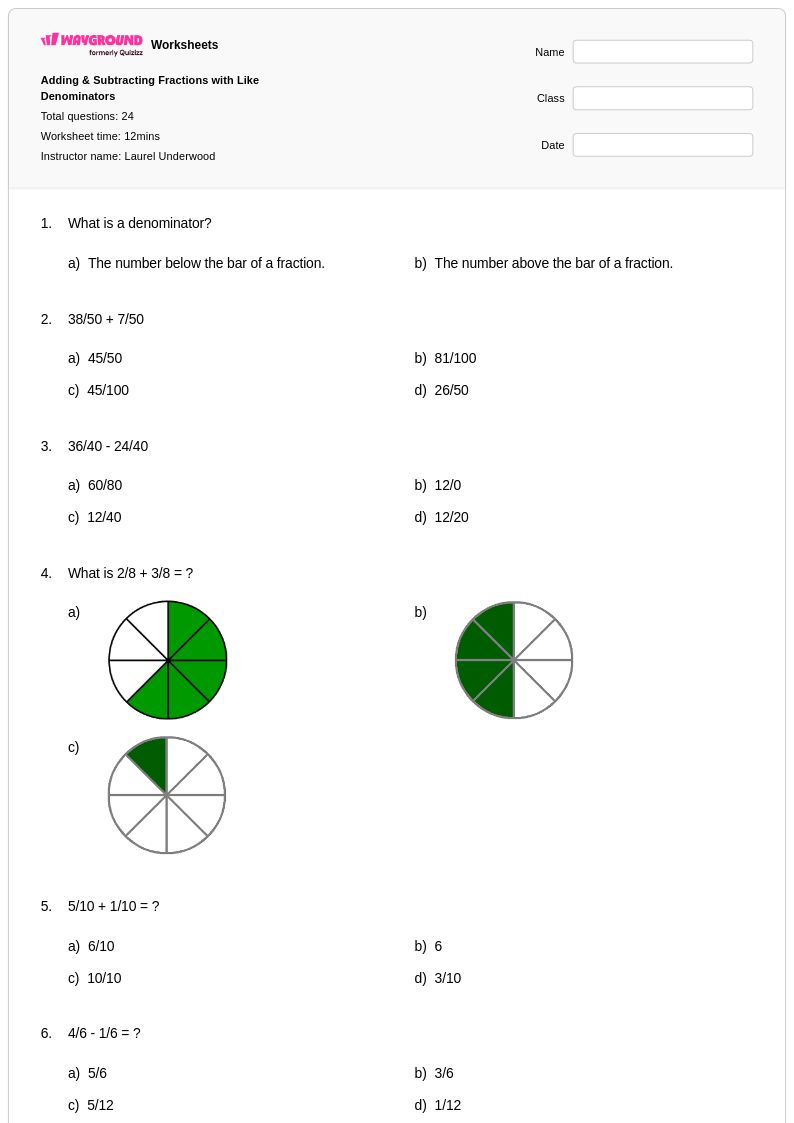
24 คิว
3rd - 4th
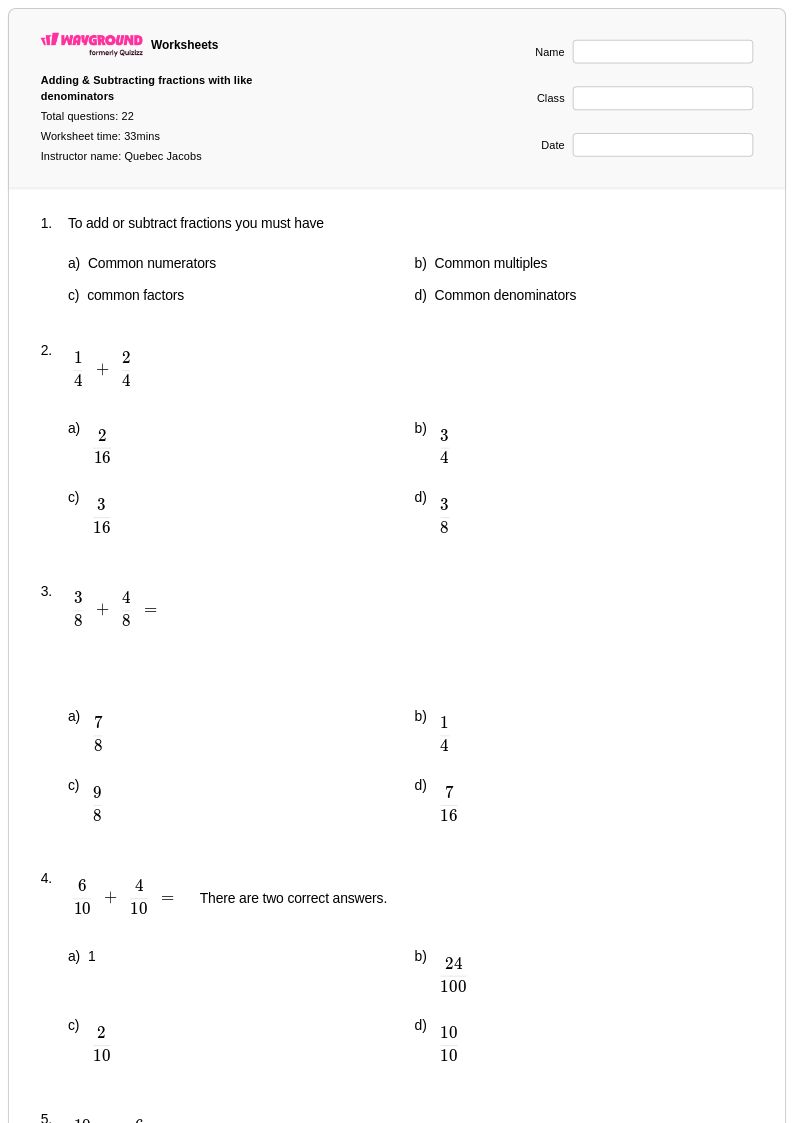
22 คิว
3rd - 5th
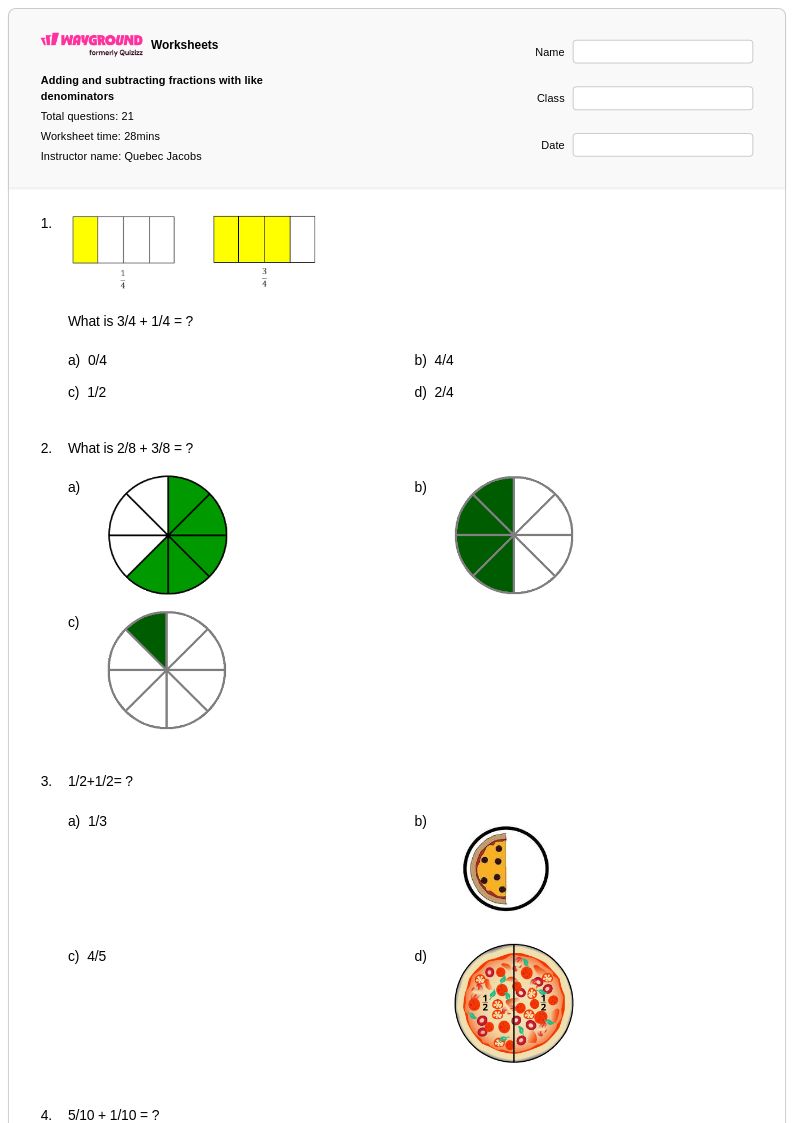
21 คิว
3rd - 5th
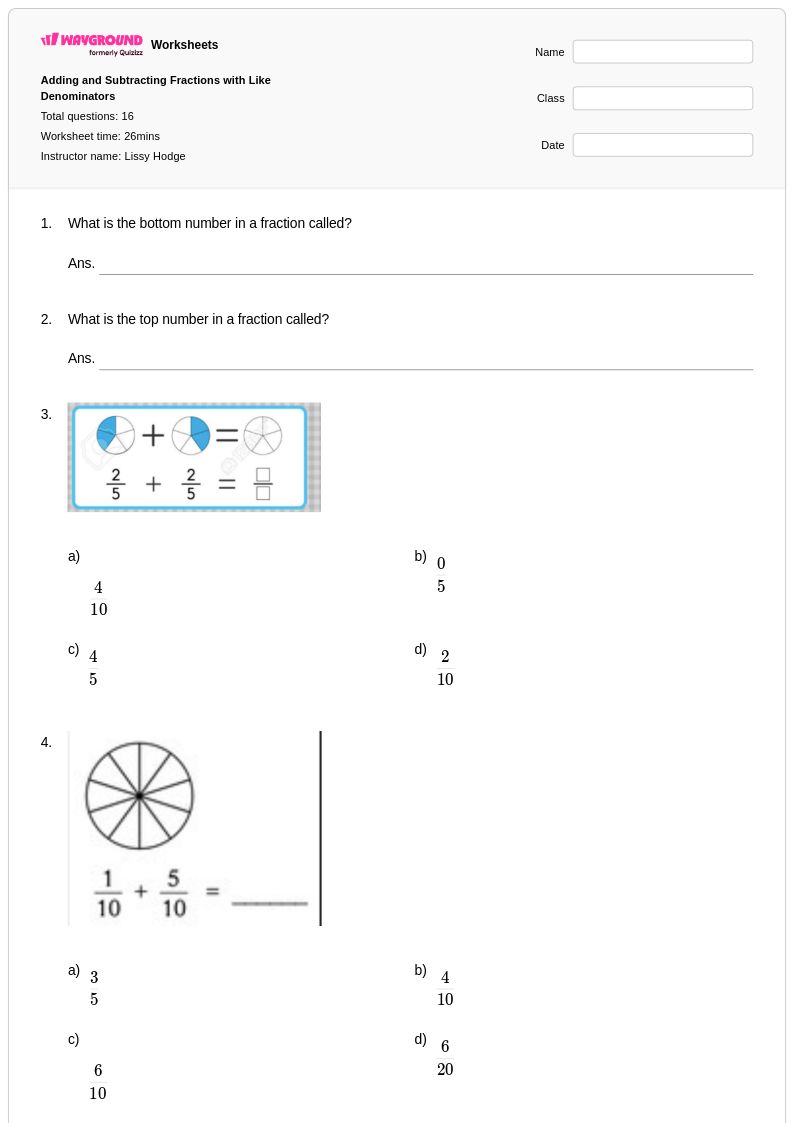
16 คิว
3rd - 5th
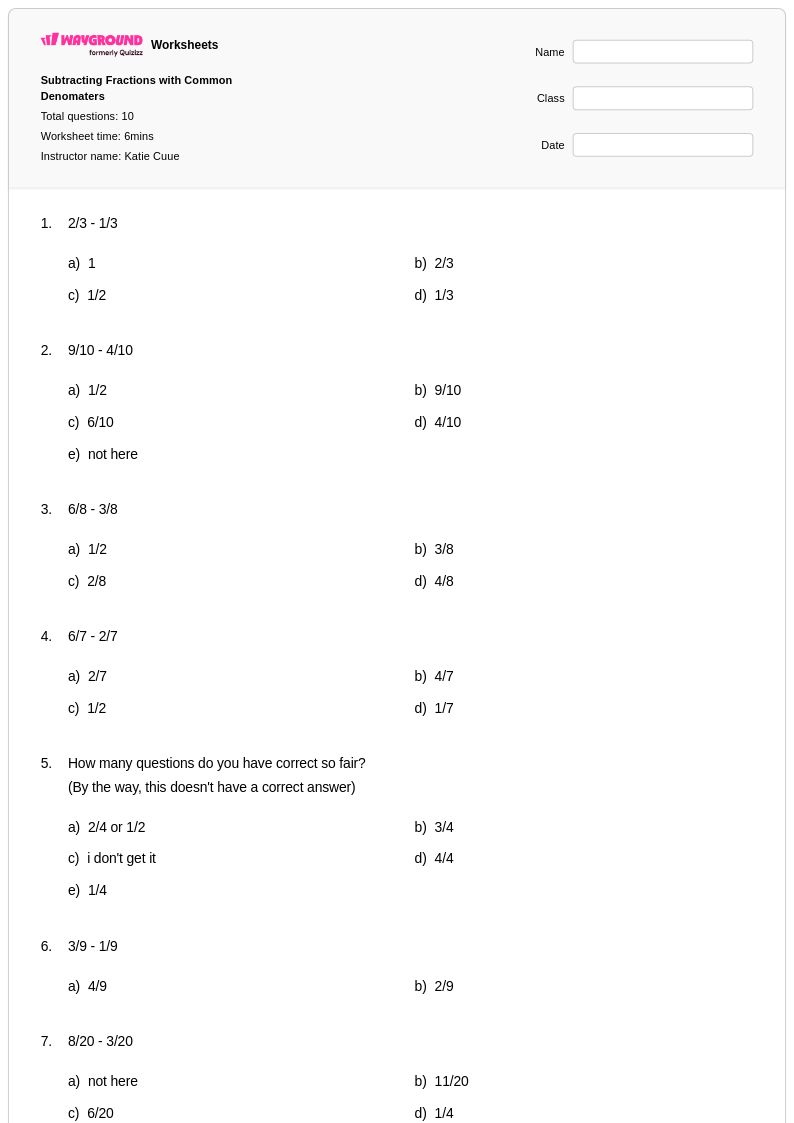
10 คิว
2nd - 4th
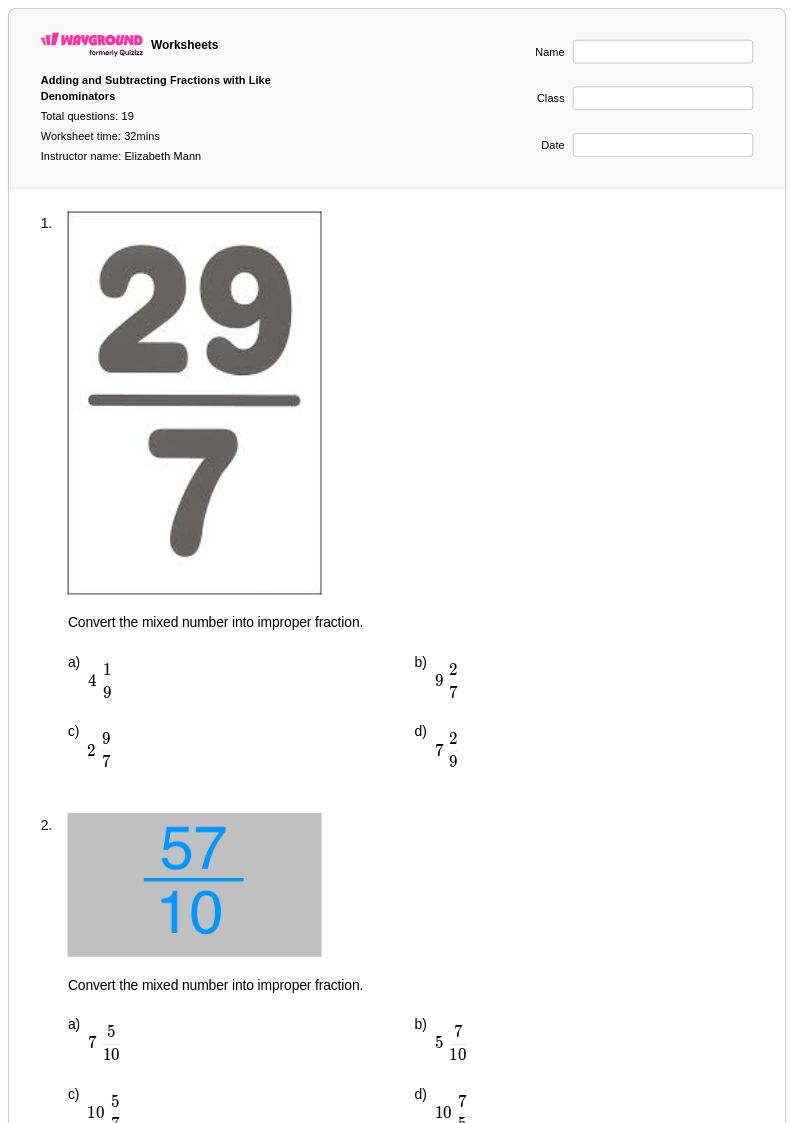
19 คิว
1st - 5th
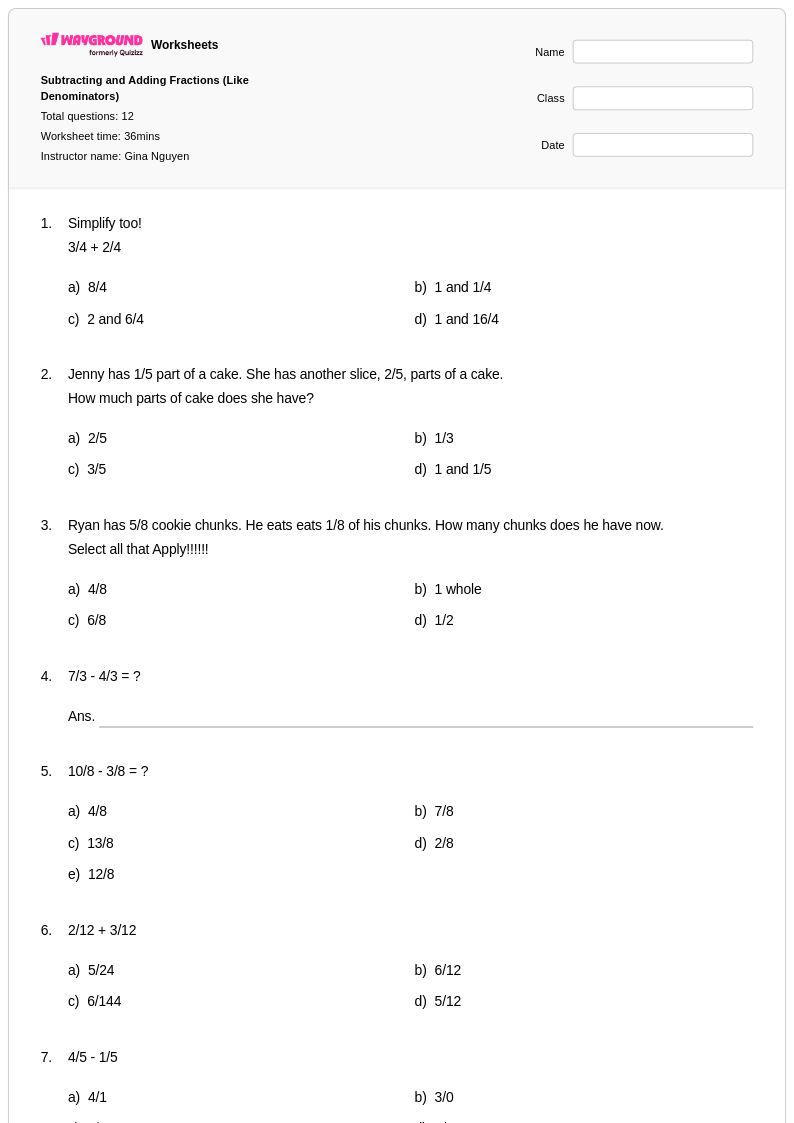
12 คิว
3rd
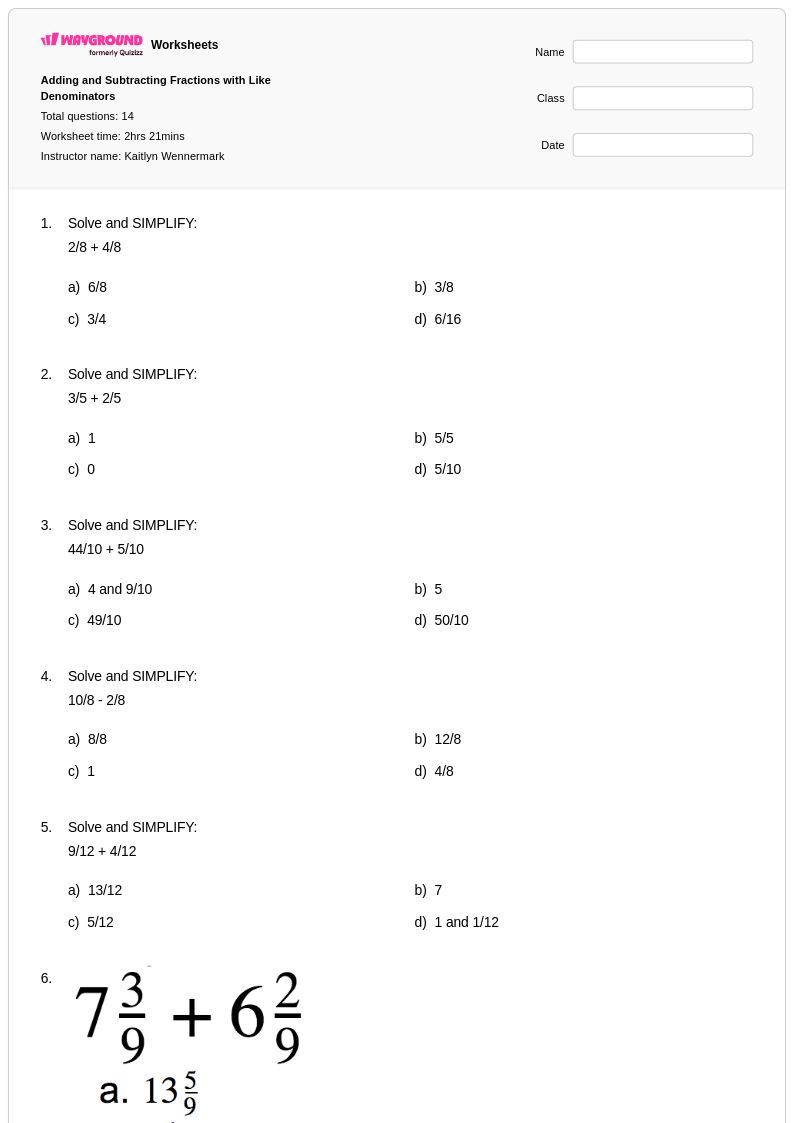
14 คิว
3rd - 6th
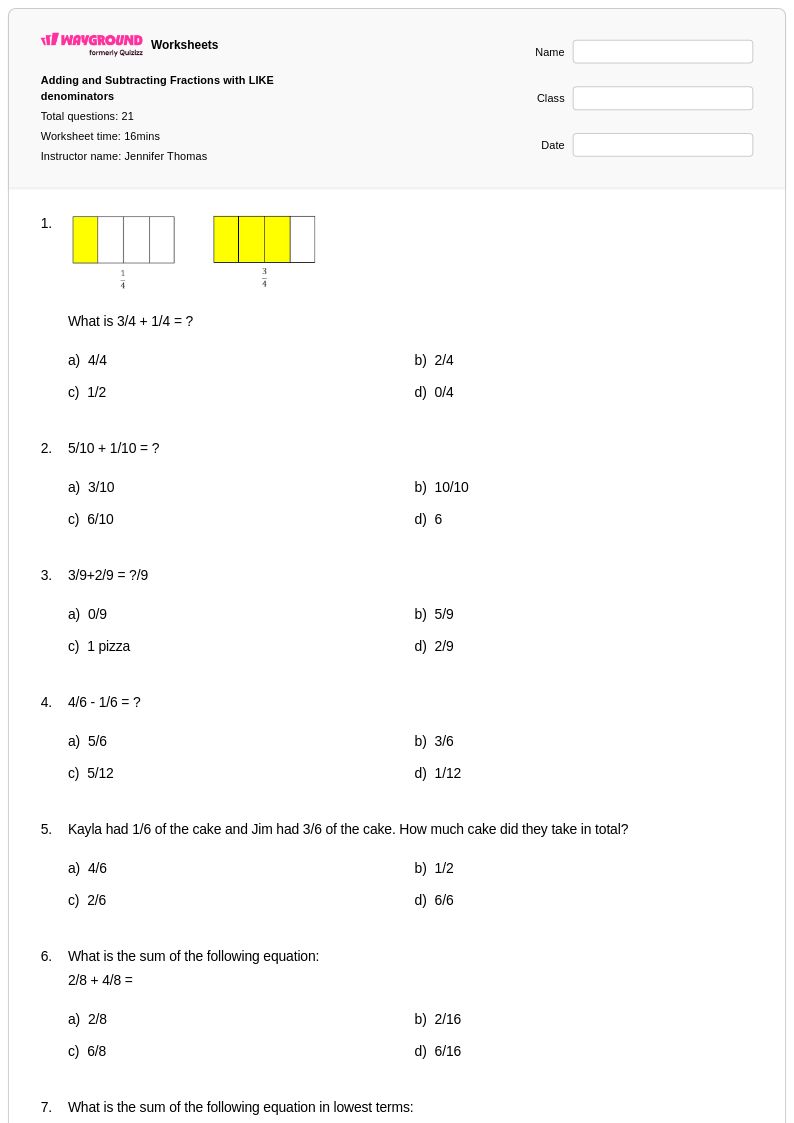
21 คิว
3rd - 4th
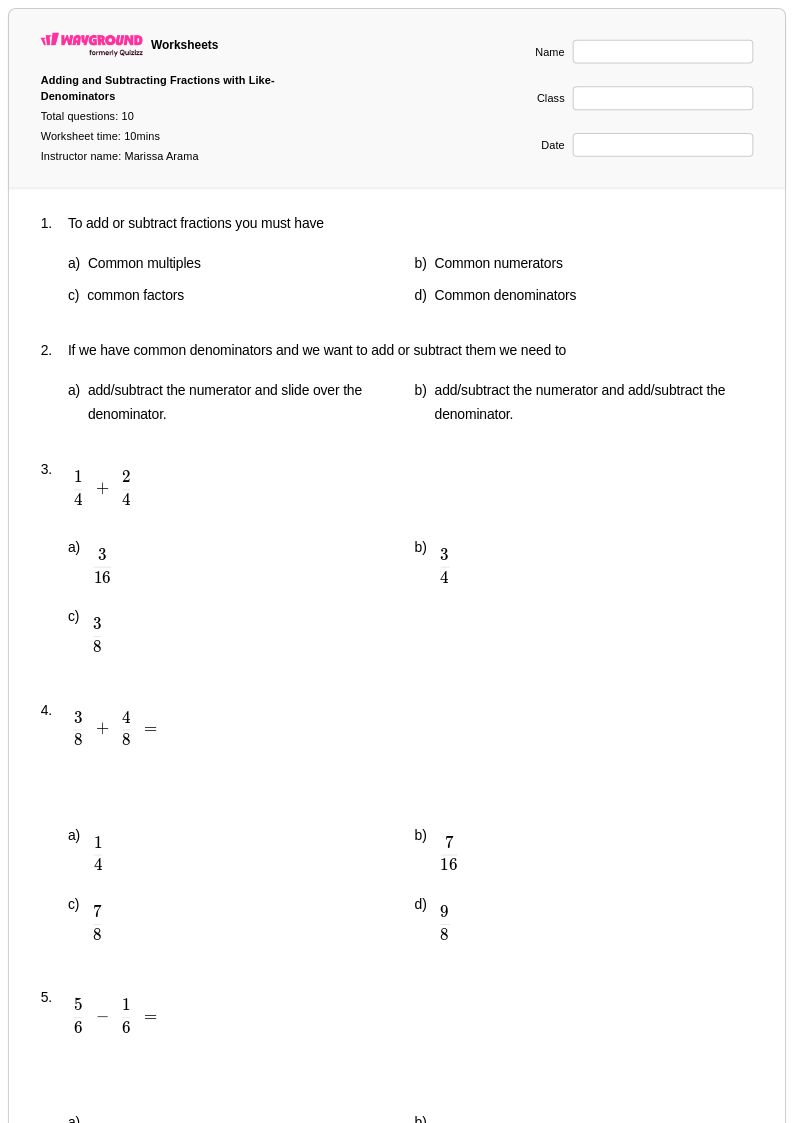
10 คิว
3rd - 4th
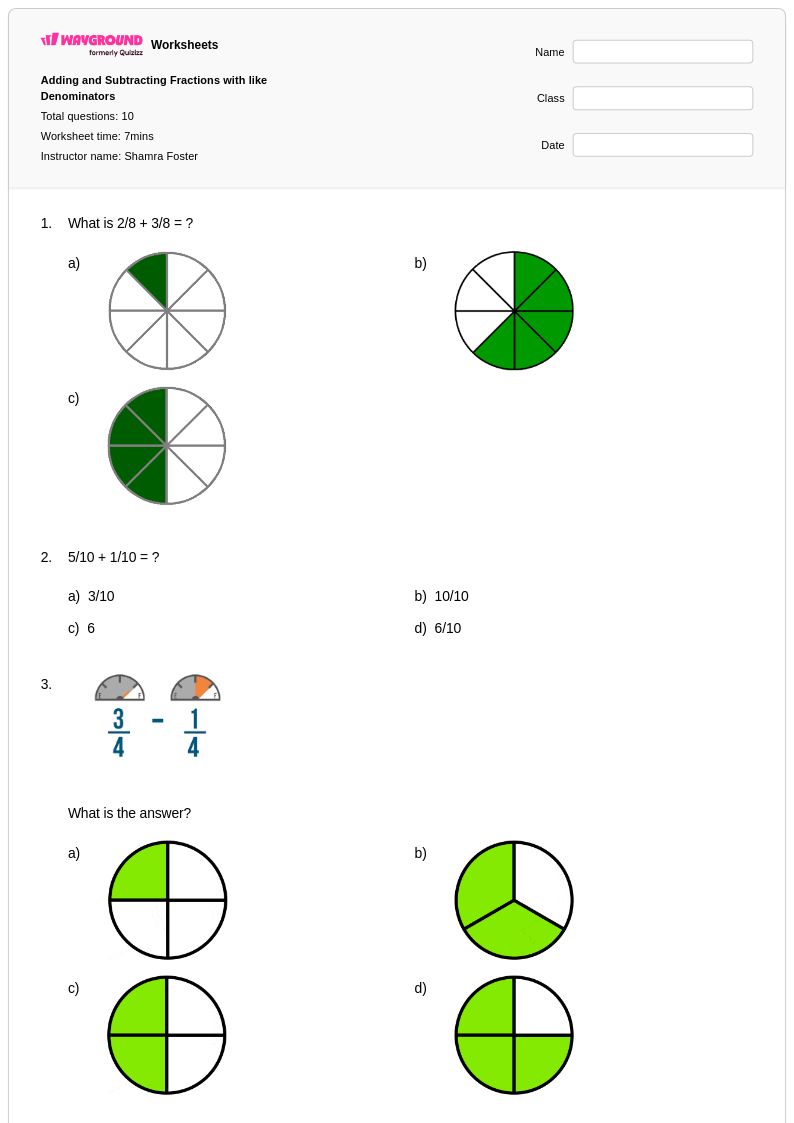
10 คิว
3rd
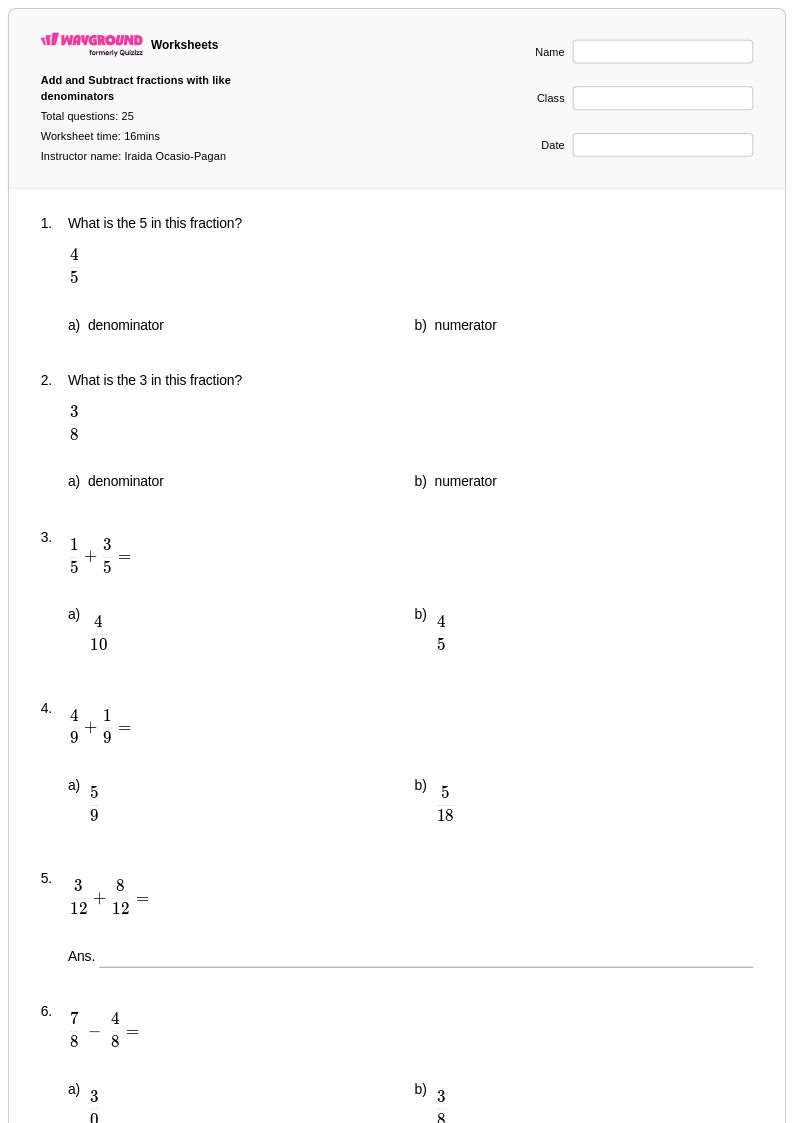
25 คิว
3rd
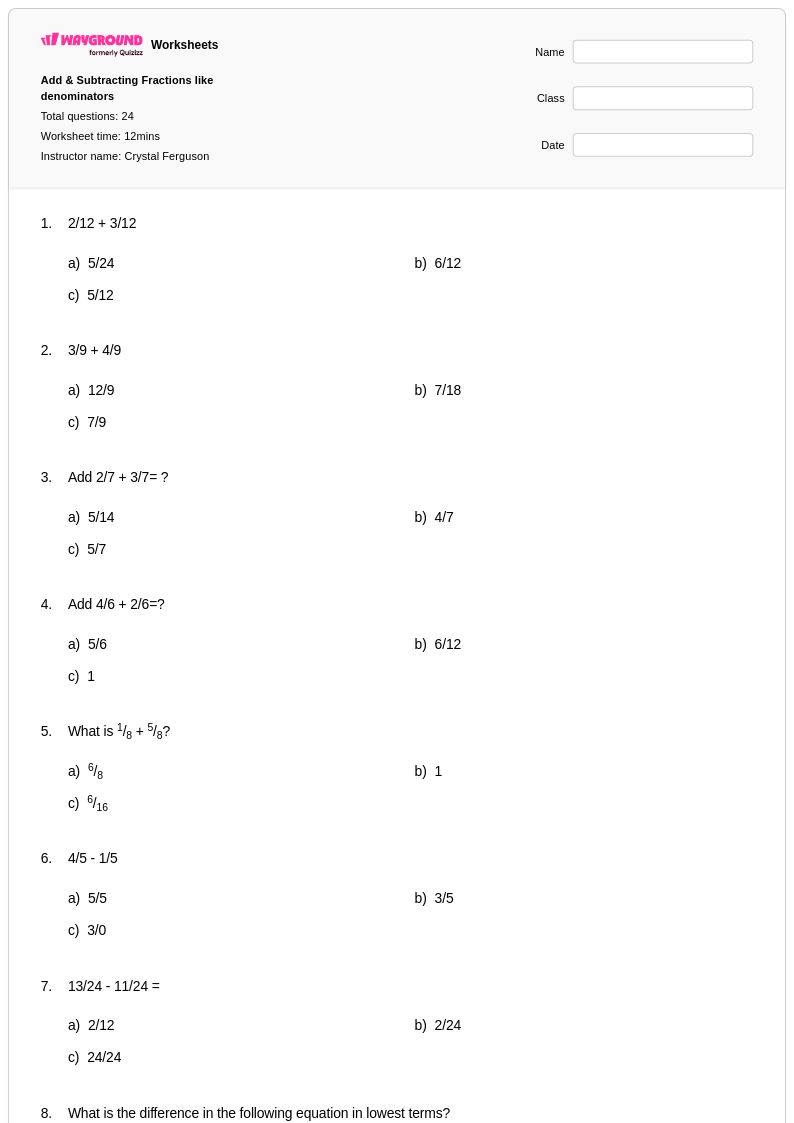
24 คิว
3rd
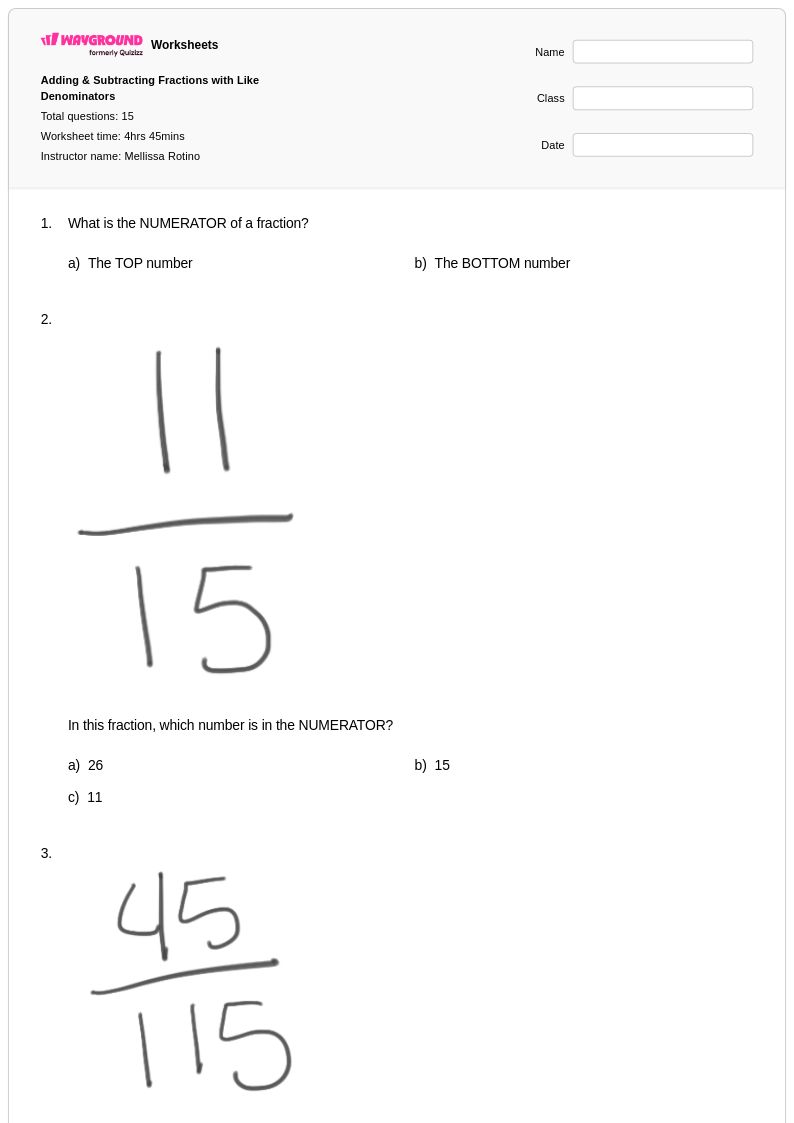
15 คิว
3rd - 6th
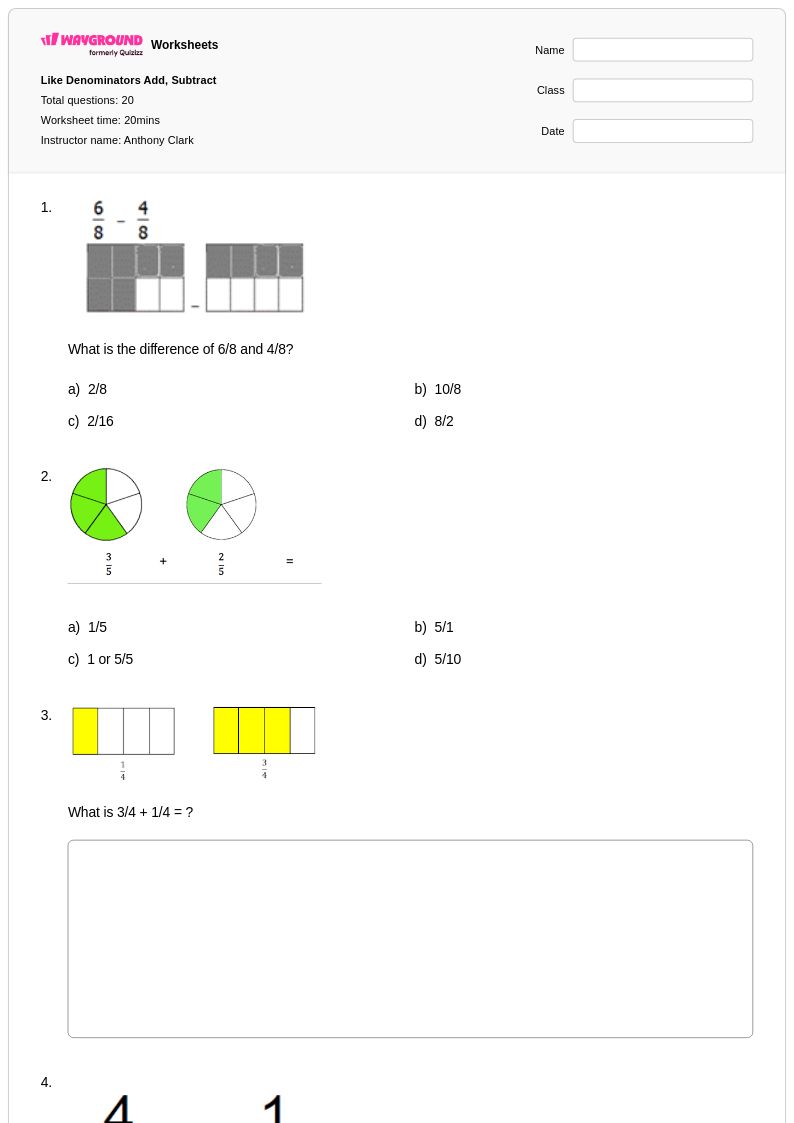
20 คิว
3rd - Uni
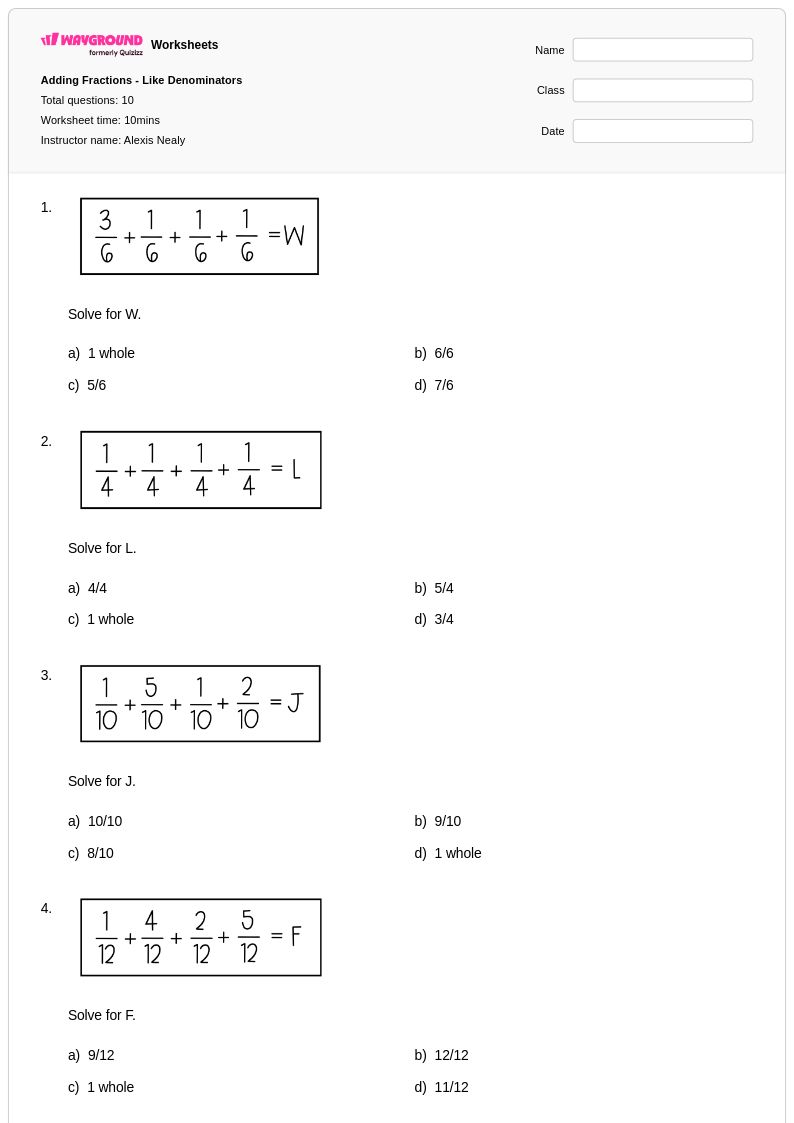
10 คิว
3rd - 5th
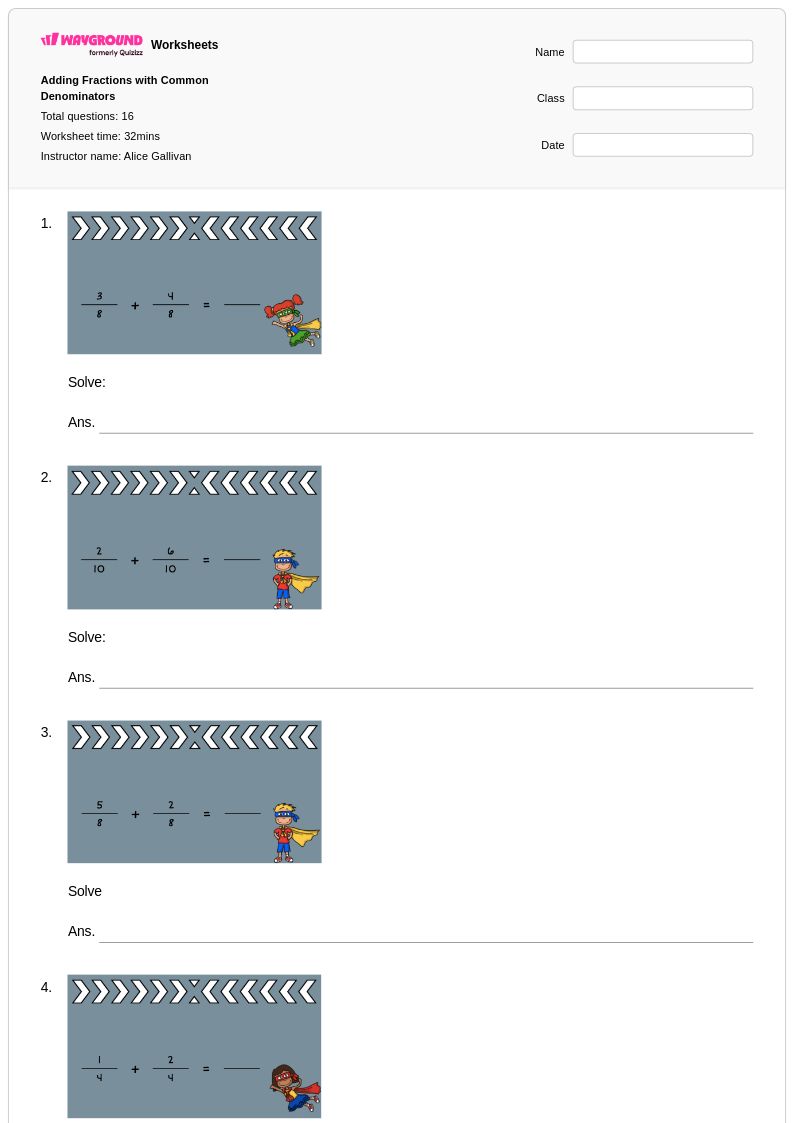
16 คิว
3rd - 5th
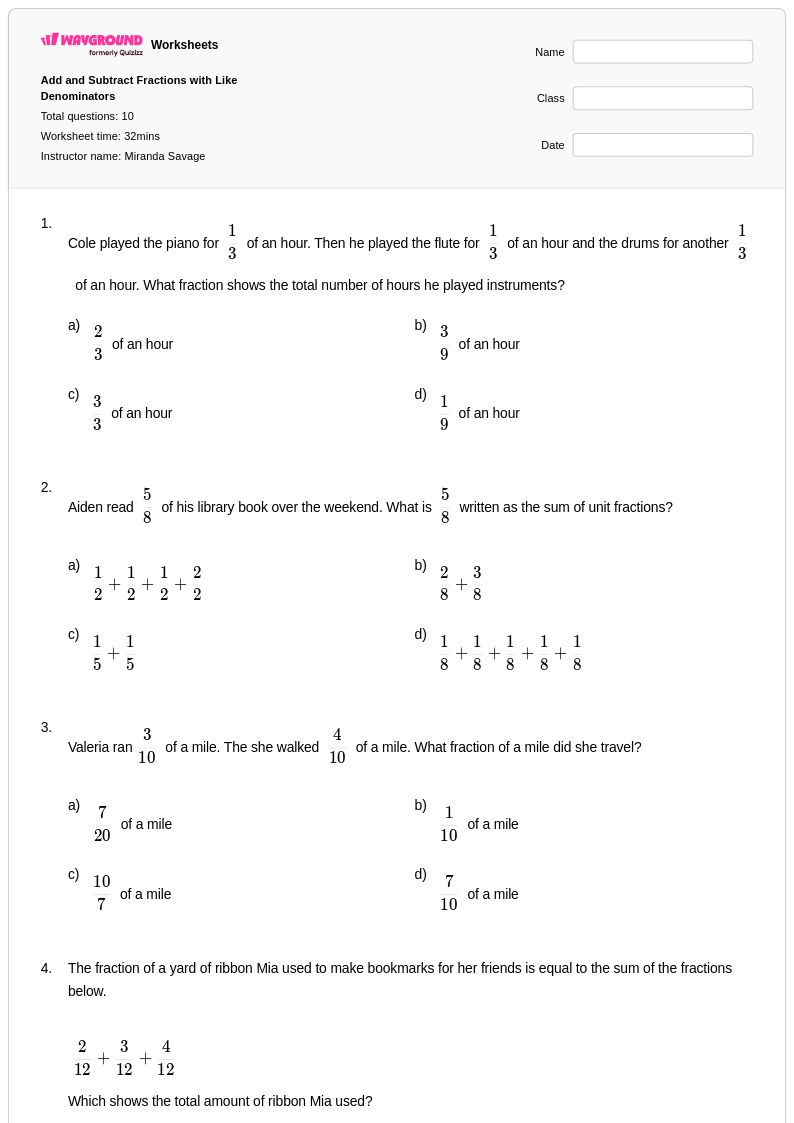
10 คิว
3rd - 6th
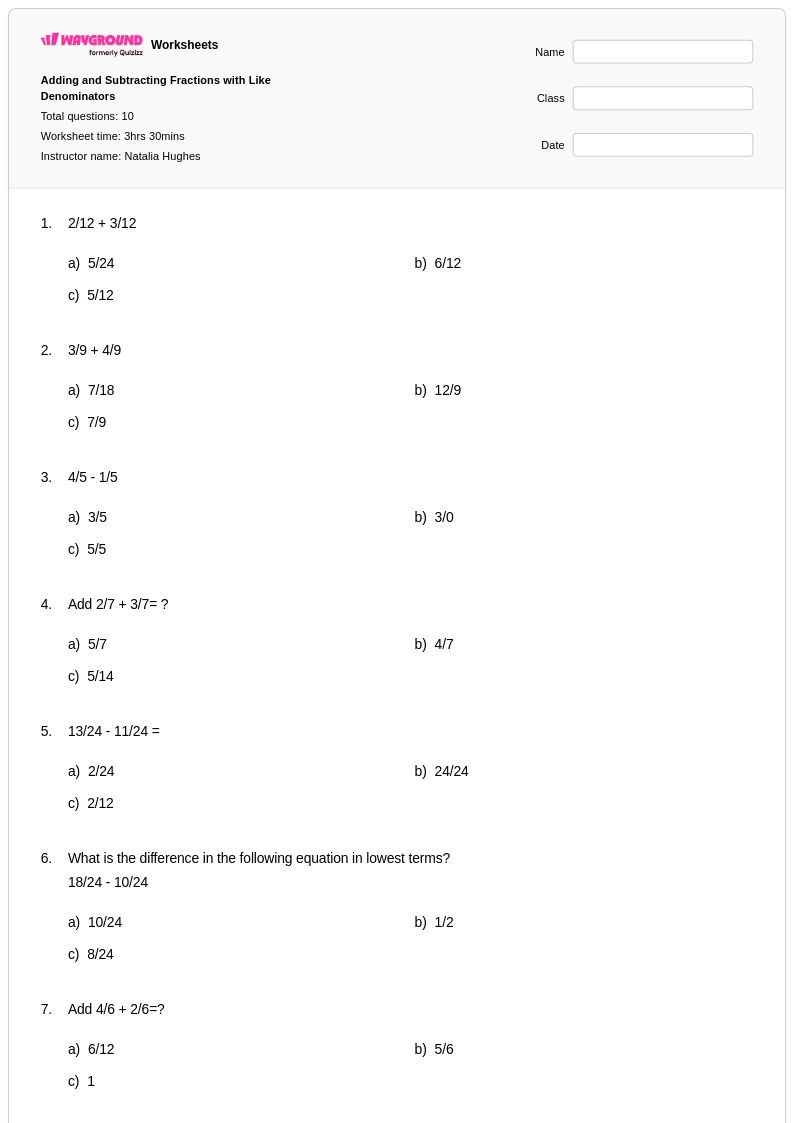
10 คิว
3rd - 4th
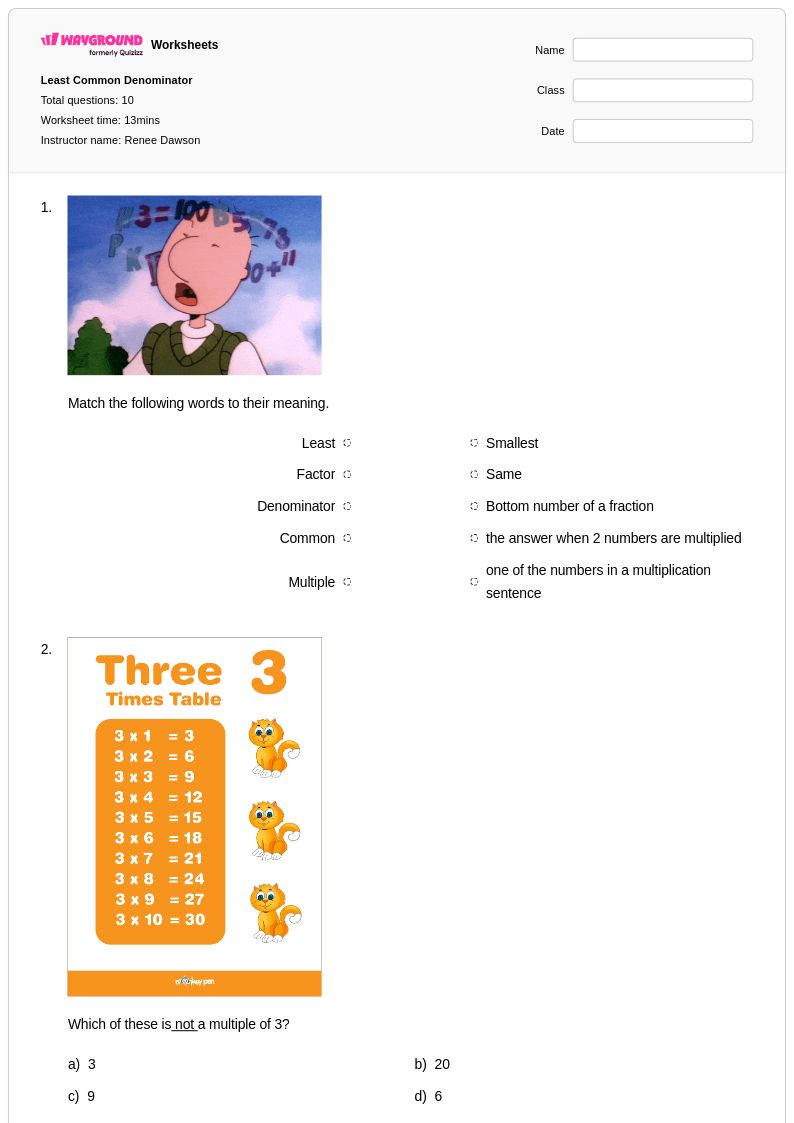
10 คิว
3rd - 6th
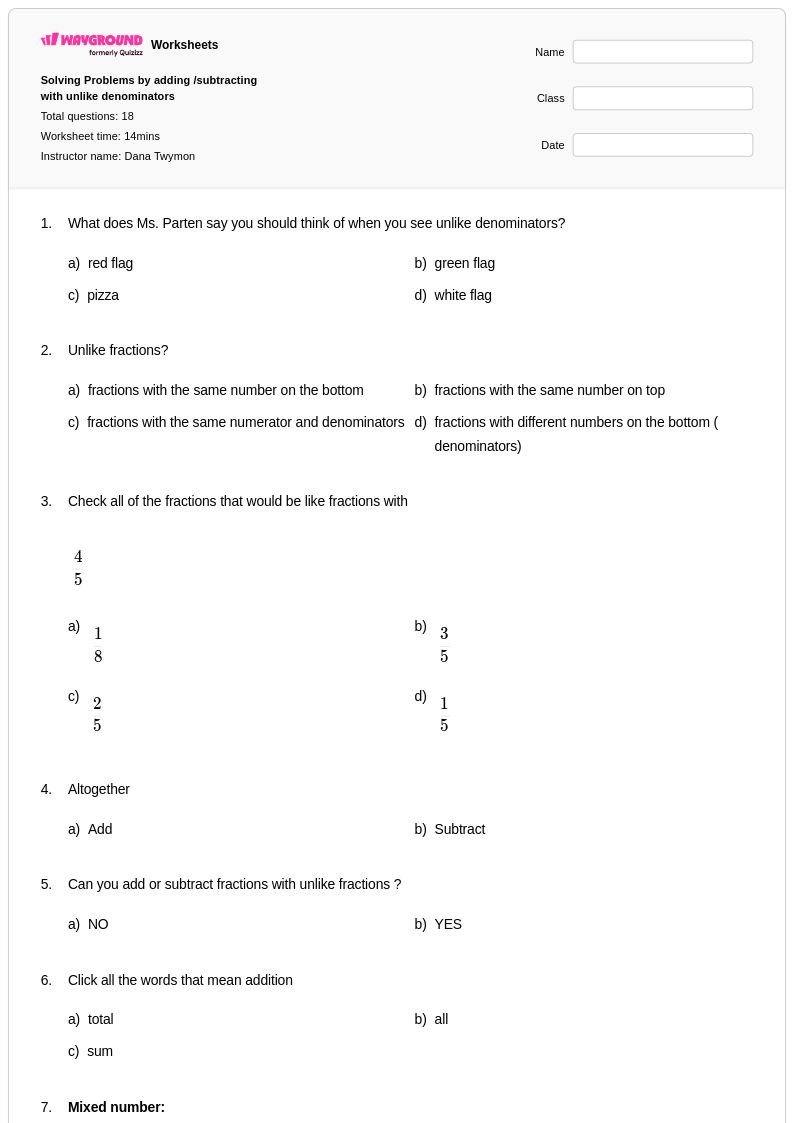
18 คิว
3rd - 5th
สำรวจใบงานวิชาอื่นๆ สำหรับ ระดับ 3
สำรวจแผ่นงาน การลบเศษส่วนที่มีตัวส่วนเท่ากัน ที่พิมพ์ได้สำหรับ ชั้นประถมศึกษาปีที่ 3
แบบฝึกหัดการลบเศษส่วนที่มีตัวส่วนเท่ากันสำหรับนักเรียนชั้นประถมศึกษาปีที่ 3 จาก Wayground เป็นแบบฝึกหัดพื้นฐานที่สำคัญเกี่ยวกับการคำนวณเศษส่วน แบบฝึกหัดเหล่านี้ได้รับการออกแบบอย่างพิถีพิถัน ช่วยให้นักเรียนชั้นประถมศึกษาปีที่ 3 ฝึกฝนทักษะพื้นฐานของการลบเศษส่วนเมื่อตัวส่วนเท่ากัน สร้างความมั่นใจด้วยแบบจำลองภาพ เส้นจำนวน และวิธีการแก้ปัญหาแบบทีละขั้นตอน นักเรียนพัฒนาการให้เหตุผลทางคณิตศาสตร์ที่สำคัญขณะที่พวกเขาทำแบบฝึกหัดที่เสริมสร้างแนวคิดที่ว่า เมื่อตัวส่วนเท่ากัน จะต้องลบเฉพาะตัวเศษเท่านั้น แบบฝึกหัดแต่ละชุดมีเฉลยคำตอบโดยละเอียดและมีให้ดาวน์โหลดเป็นไฟล์ PDF ฟรี ทำให้ครูผู้สอนสามารถจัดเตรียมแบบฝึกหัดเศษส่วนที่ตรงกับความคาดหวังทางคณิตศาสตร์ของชั้นประถมศึกษาปีที่ 3 ได้อย่างง่ายดาย
Wayground ซึ่งเดิมชื่อ Quizizz ช่วยเสริมศักยภาพครูผู้สอนด้วยแบบฝึกหัดนับล้านชุดที่สร้างโดยครูผู้สอนโดยเฉพาะ ซึ่งมุ่งเน้นไปที่การลบเศษส่วนที่มีตัวส่วนเท่ากันและแนวคิดทางคณิตศาสตร์ที่สำคัญอื่นๆ สำหรับชั้นประถมศึกษาปีที่ 3 แพลตฟอร์มนี้มีฟังก์ชันการค้นหาและการกรองที่ทรงประสิทธิภาพ ช่วยให้ครูสามารถค้นหาแบบฝึกหัดที่ตรงกับความต้องการในการเรียนรู้เฉพาะของนักเรียนได้อย่างรวดเร็ว ในขณะที่การจัดเรียงตามมาตรฐานช่วยให้มั่นใจได้ว่าเนื้อหาจะสนับสนุนข้อกำหนดของหลักสูตร ครูสามารถปรับแต่งแบบฝึกหัดในรูปแบบไฟล์ PDF ทั้งแบบพิมพ์ได้และแบบดิจิทัลได้อย่างง่ายดาย เพื่อให้การสอนมีความแตกต่างกัน ไม่ว่านักเรียนจะต้องการการแก้ไขเพิ่มเติมเกี่ยวกับแนวคิดเศษส่วนพื้นฐาน หรือต้องการเสริมความรู้ผ่านสถานการณ์การลบที่ท้าทายมากขึ้น ความยืดหยุ่นทั้งในรูปแบบและระดับความยากนี้ทำให้การวางแผนบทเรียนมีประสิทธิภาพมากขึ้น ในขณะเดียวกันก็สนับสนุนรูปแบบการเรียนรู้ที่หลากหลายผ่านการฝึกฝนทักษะที่ตรงเป้าหมาย ซึ่งจะช่วยสร้างความคล่องแคล่วทางคณิตศาสตร์ในการดำเนินการกับเศษส่วน
FAQs
How do I introduce subtracting fractions with like denominators in Grade 3?
What Grade 3 exercises build fraction subtraction skills?
Why do third graders sometimes subtract the denominators too?
How can I use these Grade 3 worksheets in class or at home?
Is subtracting fractions with like denominators part of the Grade 3 Common Core progression?
How can I support Grade 3 students who struggle with fraction subtraction?
What grade do students learn to subtract fractions with like denominators?