

Families of the Periodic Table

Flashcard
•
Science
•
6th - 8th Grade
•
Hard

Barbara White
FREE Resource
Student preview

18 questions
Show all answers
1.
FLASHCARD QUESTION
Front
Groups Noun
[groops]
Back
Groups
The vertical columns of the periodic table where elements share similar chemical properties due to having the same valence electrons.
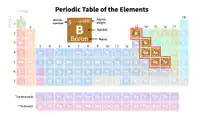
Example: This diagram shows the periodic table, where the vertical columns are called 'Groups.' Specific groups with similar properties, like the Alkali metals or Noble gases, are color-coded as families.

2.
FLASHCARD QUESTION
Front
Octet Rule Noun
[ok-tet rool]
Back
Octet Rule
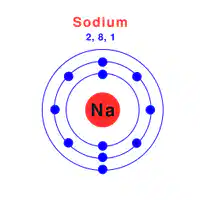
The principle that atoms tend to react in ways that give them eight electrons in their outermost valence shell.
Example: This Bohr model of a Sodium atom shows one electron in its outermost shell, which it will lose to achieve a stable outer shell with eight electrons (an octet).
3.
FLASHCARD QUESTION
Front
Cation Noun
[kat-ahy-uhn]
Back
Cation
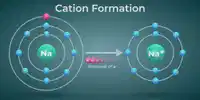
An ion that has lost one or more electrons, resulting in a net positive electrical charge.
Example: A neutral sodium atom (Na) loses its single outer electron, transforming it into a positively charged sodium ion (Na+), which is a cation.
4.
FLASHCARD QUESTION
Front
Anion Noun
[an-ahy-uhn]
Back
Anion
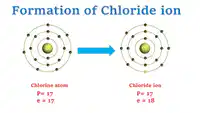
An ion that has gained one or more electrons, resulting in a net negative electrical charge.
Example: A neutral chlorine atom gains one electron to become a chloride ion, which is an anion with more electrons (18) than protons (17).
5.
FLASHCARD QUESTION
Front
Reactivity Noun
[ree-ak-tiv-i-tee]
Back
Reactivity
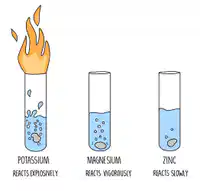
The tendency or likelihood of a substance to undergo a chemical reaction, either by itself or with other materials.
Example: This image shows that different metals have different levels of reactivity by comparing their reactions; Potassium explodes, Magnesium bubbles vigorously, and Zinc bubbles slowly.
6.
FLASHCARD QUESTION
Front
Diatomic Adjective
[dahy-uh-tom-ik]
Back
Diatomic
Describing a molecule that consists of two atoms, which can be of the same or different chemical elements.
Example: This diagram shows two individual oxygen atoms on the left, which then bond by sharing electrons to form a single, stable diatomic oxygen molecule (O₂).

7.
FLASHCARD QUESTION
Front
Metals Noun
[met-ls]
Back
Metals
A class of elements that are typically shiny, lustrous, ductile, malleable, and are good conductors of heat and electricity.
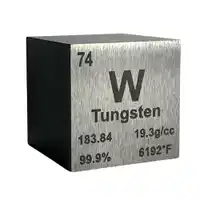
Example: This image shows a cube of the element Tungsten, a real-world example of a metal, displaying its information as found on the periodic table.

Access all questions and much more by creating a free account
Create resources
Host any resource
Get auto-graded reports

Continue with Google

Continue with Email

Continue with Microsoft
or continue with

%20(1).png)
Apple

Others
By signing up, you agree to our Terms of Service & Privacy Policy
Already have an account?


