

The Nervous System

Presentation
•
Social Studies
•
11th - 12th Grade
•
Practice Problem
•
Medium

Macey Eng
Used 466+ times
FREE Resource
16 Slides • 4 Questions
1
The Nervous System

2
Nervous System
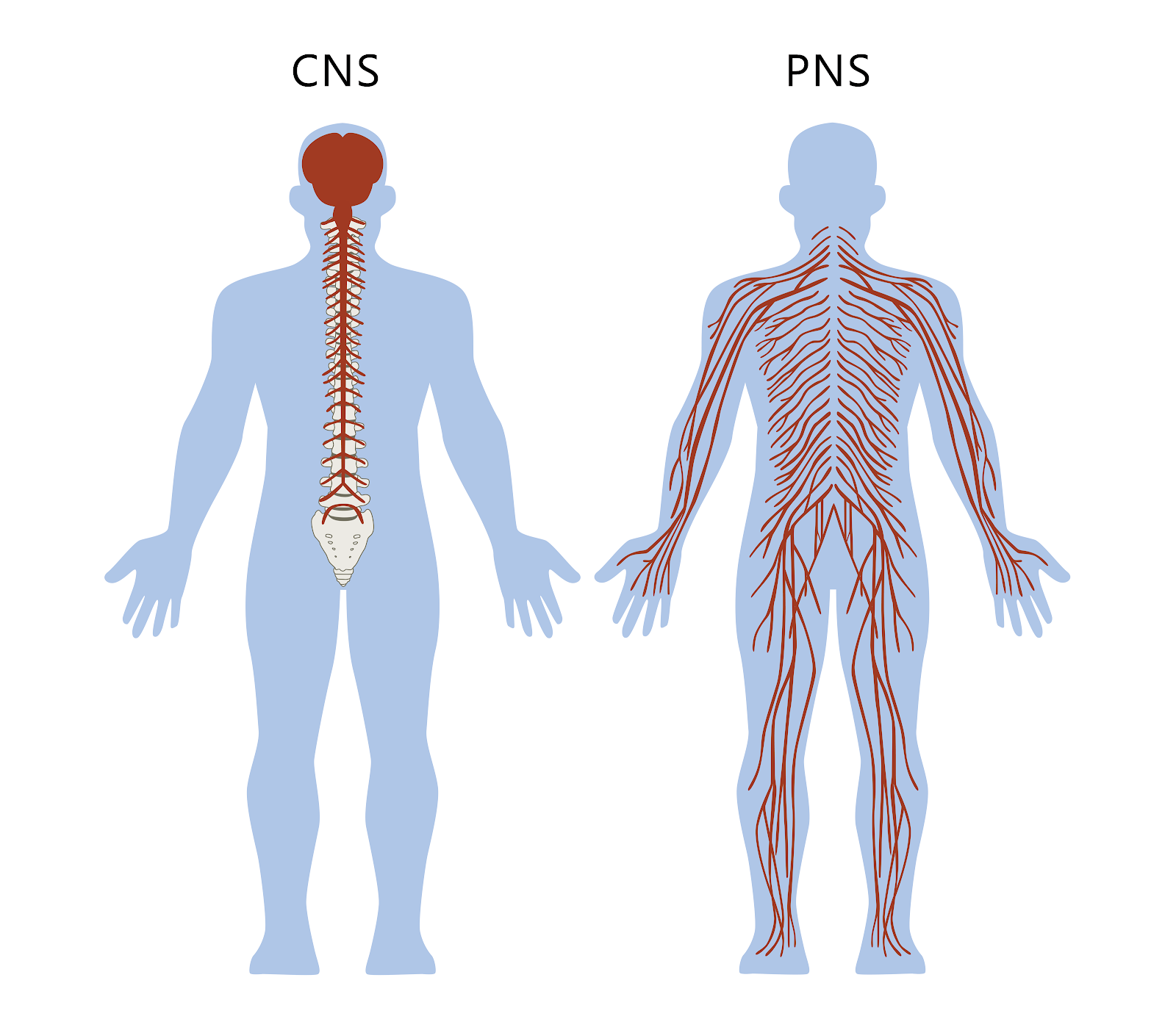
The nervous system controls your emotions, movements, thinking, and behavior
Dived into two parts:
The Central Nervous System (CNS)- includes the brain and spinal cord The Peripheral Nervous System (PNS)- made up of all of the other nerves in the body
3
The PNS is connected with the CNS so that the two systems can communicate quickly and efficiently.
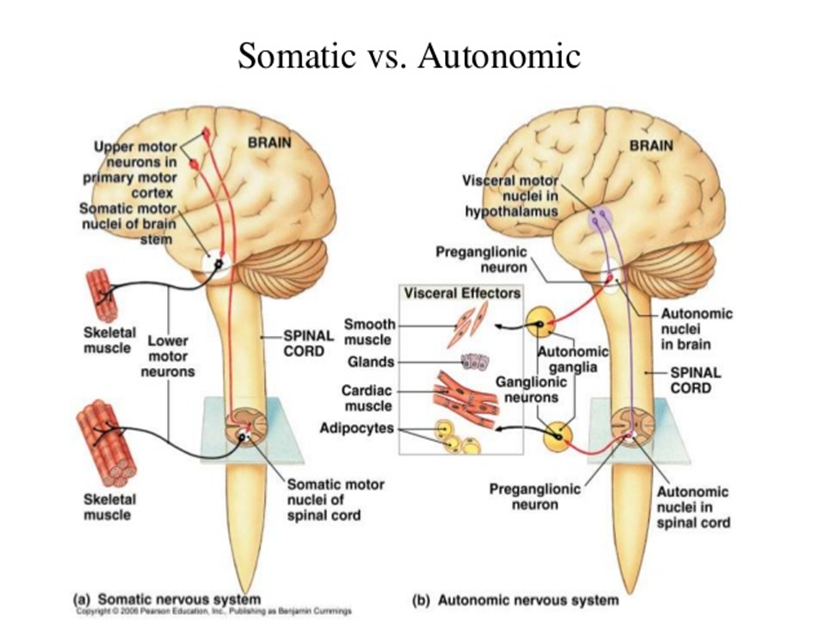
The PNS is divided into two parts: AUTONOMIC and SOMATIC
4
Peripheral Nervous System
The PNS is divided into two parts:
Somatic- controls voluntary muscles (legs and feet while you walk, for example)
Autonomic- controls the involuntary muscles (heart and lungs, for example)

5
Multiple Select
6
The autonomic system can also be divided into two parts:
Sympathetic-alerts the body and helps it get “energized” to respond to a stressor: speeds up our breathing and heart rate and prepares for the fight or flight response
Parasympathetic-calms us down and returns heartbeat and breathing to normal levels

7
Neurons
Neurons are the long, thin cells of nerve tissue along which messages travel to and from the brain
They send signals to and from the brain whenever the cells are stimulated and send a signal from other neurons.

8
Neurons “fire” with the all-or-none principle: When a neuron fires, it does so at full strength and if the neuron is not stimulated past the minimum, it does not fire at all

9
Parts of a neuron: Dendrites
At the “top” of a neuron, extending out from a center, are the branch-like structures called “dendrites.”
These reach out and connect to the ends of other neurons, and receive impulses from them.

10
Parts of a neuron: Soma
The soma or cell body is at the center of the dendrites and contains the nucleus
If enough energy is sent from the dendrites to the cell body, it will cause the nerve to “fire.”

11
Parts of a neuron: Axon
The axon is the elongated portion of the neuron
It connects the “top” (soma) to the “bottom” of the neuron, the terminal branches.
When a neuron “fires,” the impulse is sent along the axon.

12
Parts of a neuron: Myelin Sheath
The myelin sheath is a fatty covering that some axons have to help insulate and speed along the electrical impulses that occur within the axon.
Not all neurons have a myelin sheath

13
Multiple Choice
14
In some neurological disorders, the myelin can become damaged, causing the neurons to fire more slowly, or less consistently. An example is Multiple sclerosis (MS)

15
Parts of a neuron: Axon Terminal
The axon carries impulses from the cell body towards the axon terminals
Axon terminals release neurotransmitters to stimulate the dendrites of another neuron
They are located at the end of the axon

16
Fill in the Blanks
17
Neural Communication
Neurons only fire “one way” – from the soma down the axon to the terminal buttons. Communication throughout the nervous system, then, must be a “two-way street.”

18
Neurons called afferent neurons carry information to the brain from sensory organs like eyes, ears, nose, and skin

19
Neural Communication
Neurons called efferent neurons carry orders away from the brain out to the rest of the body. When you walk, move exercise, or interact with your environment, efferent neurons coordinate the movements

20
Poll
The Nervous System
Show answer
Auto Play
Slide 1 / 20
SLIDE

