

Two Kinds: Analyze Craft & Structure and Language

Presentation
•
English
•
7th Grade
•
Practice Problem
•
Medium
+38
Standards-aligned

Brittney Burrows
Used 98+ times
FREE Resource
6 Slides • 15 Questions
1
Two Kinds, Amy Tan
Close Read
Analyze Craft and Structure
Language
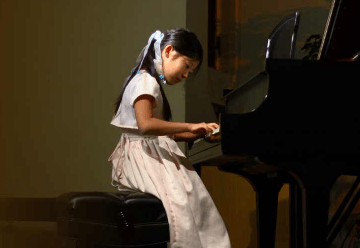
2
Multiple Choice
In paragraphs 4 and 5, the words "Ni Kan" are italicized. Why would the author choose to italicize these words?
Ni Kan is a Chinese term that Jing Mei's mother uses when she wants her to pay attention. It is italicized to emphasize the tension between Jing Mei and her mother.
Ni Kan is a Chinese term that is italicized to show how much Jing Mei's mother loves and supports her no matter what.
3
Multiple Choice
Paragraph 32: “Why don’t you like me the way I am? I’m not a genius! I can’t play the piano. And even if I could, I wouldn’t go on TV if you paid me a million dollars!” I cried.
What does the punctuation suggest about the tone of this conversation?
Exclamation points are used by authors to convey happiness and excitement only. The tone of the conversation is there for excited, and friendly.
Exclamation points are used by authors to suggest strong emotions. The tone of the conversation is therefore emotional, heated, and tense.
4
Multiple Select
Compare and Contrast: How are the mother and daughter similar and different?
Both the mother and daughter are strong-willed.
The mother is more idealistic believing anything is possible if you try hard enough.
The daughter is more realistic believing that people have limitations on what they are capable of achieving.
5
Poll
Draw Conclusions: In this story, conflict, or a struggle between the characters, results when a mother pushes her daughter to succeed. Is there a winner in this conflict?
Yes
No
6
Open Ended
What have you learned about how people of different generations interact from reading this story? What does this story tell us about how people of different generations can have an influence on each other?
7
Analyze: Character
Character traits are the individual qualities that make each character unique. You can identify character traits by making inferences, or educated guesses, about a character based on how they think, act, and speak.
A character’s motives are the emotions or goals that drive him/her/they to act in a certain way.
A character’s perspective is how he/she/they view events based on their experiences or emotions.
8
Analyze: Point of View
Point of view is the perspective from which the story is told.
When a story is told from the first-person point of view, the narrator is a character who participates in the action and uses first-person pronouns such as I and me to refer to themselves.
When a story is told from the third-person point of view, the narrator is not a character in the story. The narrator uses third-person pronouns such as he/she/they to refer to the characters.
9
Multiple Choice
Which character traits sound the most like Jing Mei?
Rebellious, Insecure, Proud, funny, undisciplined.
Goal oriented, Confident, Idealistic, Disciplined.
10
Multiple Choice
From what point of view is the story told?
First Person (I/me/my)
Third Person (he/she/they)
11
Latin Prefix: in-
The prefix in- means “not.” When this prefix is added to a base word, the new word takes on the opposite meaning from the original word.
Example: Incorrect means not correct.
12
Multiple Choice
Incomplete means
complete
not complete
13
Multiple Choice
Insecure means
Secure
Not Secure
14
Language: Nouns
A common noun names a person, place, thing, or idea. Example: mother, daughter, street
A Proper Noun names a specific person, place, or thing. Example: Mr. Chong, Jing Mei, Sacramento Street
A possessive noun shows ownership. Example: The audience's reaction.
15
Language: Pronouns
A personal pronoun takes the place of a noun or several nouns named elsewhere in the text, referring to a specific person or thing. (I, me, we, us, you, she, her, he, him, they, them, it)
A possessive pronoun shows possession or ownership. (mine, hers, his, theirs, ours, its)
16
Multiple Choice
John likes computer games. John doesn't, play computer games very often.
Him / them
He / it
Hims / they
He / them
17
Multiple Choice
The girl is happy. The girl is going to the cinema.
He
She
Her
It
18
Multiple Choice
19
Multiple Choice
20
Multiple Choice
21
Open Ended
Evidence Log: How does the story Two Kinds connect to the prompt- In what situations can one generation learn from another? How does this text change or add to your thinking?
Two Kinds, Amy Tan
Close Read
Analyze Craft and Structure
Language
Show answer
Auto Play
Slide 1 / 21
SLIDE
Similar Resources on Wayground

17 questions
Subordinating Conjunctions
Presentation
•
7th Grade
15 questions
Poerty
Presentation
•
7th Grade
17 questions
Evaluating Credible Sources
Presentation
•
7th Grade
17 questions
Narrative Introductions
Presentation
•
7th Grade
18 questions
Fiction and non-fiction
Presentation
•
7th Grade
18 questions
Point of View Review
Presentation
•
7th Grade
18 questions
PAST SIMPLE VS PAST CONTINUOUS
Presentation
•
7th Grade
16 questions
Coordinating and Subordinating Conjunctions
Presentation
•
7th Grade
Popular Resources on Wayground
10 questions
How much do you know about our Portrait of an Eagle?

Quiz
•
10th Grade
10 questions
Fast Food Slogans
Quiz
•
6th - 8th Grade
21 questions
Continents and Oceans
Quiz
•
6th Grade
20 questions
Parts of Speech
Quiz
•
5th Grade
16 questions
Subject & Predicate
Quiz
•
5th Grade
25 questions
Multiplication Facts
Quiz
•
5th Grade
12 questions
Map Skills
Quiz
•
3rd Grade
22 questions
Continents and Oceans
Quiz
•
5th Grade
Discover more resources for English
25 questions
Making Inferences
Quiz
•
6th - 8th Grade
12 questions
Chemical Reactions

Interactive video
•
7th Grade
15 questions
Thank You Ma'am
Quiz
•
7th Grade
16 questions
Theme Practice
Quiz
•
7th Grade
30 questions
Central Idea practice Grade 7-8
Quiz
•
6th - 8th Grade
17 questions
Figurative Language
Quiz
•
7th Grade
20 questions
Point of View
Quiz
•
6th - 7th Grade
20 questions
Simple, Compound, and Complex Sentences
Quiz
•
7th Grade