

BIO 101 Lab Final Practical Review Session

Presentation
•
Biology
•
9th Grade - University
•
Easy
+1
Standards-aligned

SN Goebel
Used 9+ times
FREE Resource
57 Slides • 93 Questions
1
BIO 101 Lab Final Practical Review Session

2

3
What are genes?
Genes, the unit of inheritance, are located on chromosomes.

4
Each individual inherits one set of chromosomes from each parent.
Most cells in your body have 46 chromosomes;
23 from your mother and 23 from your father.

5
The different versions of genes are called alleles
Each individual inherits two alleles for a trait (one from each parent).

6
Genotype vs Phenotype
Phenotype refers to the physical characteristic (that you “see”), such as tall, green, or wrinkled.
Genotype refers to the actual alleles (that are located on the chromosomes).

7
Homozygous vs Heterozygous
Homozygous means the two alleles are the same (“PP” or “pp”);
Heterozygous means the two alleles are different (“Pp”).

8
Dominant vs Recessive Traits
Dominant traits are always expressed; , they completely mask the other, recessive allele; you use a capital letter to represent a dominant trait
Recessive traits are masked when a dominant trait is present; You must have two recessive alleles for the trait to be expressed. You use a lower case letter to represent a recessive trait

9
Types of inheritance

10
Monohybrid vs Di-Hybrid Cross
Monohybrid cross - only examines 1 trait
Dihybrid cross - examines 2 traits on 2 separate chromosomes

11
Multiple Choice
12
Multiple Choice
13
Multiple Choice
14
Multiple Choice
15
Multiple Choice
16
Multiple Choice
17
Multiple Choice
18
Multiple Choice
19
Multiple Choice
20
Multiple Choice
21
Multiple Choice
22
Multiple Choice
23
Multiple Choice
24
Multiple Choice
25
Multiple Choice

Calculate the expected number of purple, smooth kernels. Remember: phenotypic ratio x total # of kernels observed
26
Multiple Choice
Calculate the expected number of yellow, smooth kernels. Remember: phenotypic ratio x total # of kernels observed
27
Multiple Choice
Calculate the expected number of purple, wrinkled kernels. Remember: phenotypic ratio x total # of kernels observed
28
Multiple Choice
Calculate the expected number of yellow, wrinkled kernels. Remember: phenotypic ratio x total # of kernels observed
29
Multiple Choice

Calculate the %green using the class data.
30
What is a plasma membrane?
All cells are surrounded by a selectively permeable plasma membrane.
“Permeable” means that substances can pass through it (either into the cell or out of the cell).
“Selectively” means not everything can pass through.

31
What is passive transport?
Diffusion describes how molecules passively move from a region where they are highly concentrated to a region where they have a lower concentration.
Osmosis is a special type of diffusion that describes the movement of water from a region of higher concentration to a region of lower concentration.

32
Multiple Choice

The picture is an example of _________________.
33
Multiple Choice
34
Multiple Choice
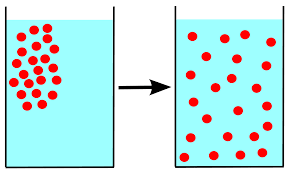
The picture below is an example of _________________.
35
Surface and Volume of Cells
The surface area of a cell is the area of the cell that is in direct contact with the environment (essentially the plasma membrane).
A cell’s volume is everything inside the cell.
As a cell becomes larger, surface area does not increase proportionally with volume.

36
How to calculate the surface area to volume ratio
First, calculate the surface area
Second, calculate the volume
Third, surface area ÷ volume
The larger the ratio, the more efficient the cell is at bringing in and taking out substances through its membrane

37
Fill in the Blanks

Calculate the surface area to volume ratio of a cube with 4 mm sides. Only input the number with one decimal place
Type answer...
38
Fill in the Blanks
Calculate the surface area to volume ratio of a sphere with 4 mm sides. Only input the number and two decimal places
Type answer...
39
Fill in the Blanks
Calculate the surface area to volume ratio of a cube with 8 mm sides. Only input the number and two decimal places
Type answer...
40
Fill in the Blanks
Calculate the surface area to volume ratio of a sphere with 8 mm sides. Input only the number - two decimal places
Type answer...
41
Multiple Choice

CLICK ON IMAGE: Which cell would have the smallest surface area and largest volume?
42
Multiple Choice
CLICK ON IMAGE: Which cell would have the greatest surface area and smallest volume?
43
Multiple Choice
44
Multiple Choice
45
Dialysis Tubing Experiment Reminder
Set up: glucose (monosaccharide) and starch (polysaccharide) were placed in a dialysis tubing and placed in a beaker of water. IKI (iodine) was put in the water.
The glucose was small enough to go through the pores in the dialysis tubing into the water in the beaker
The starch was too big to move through the pores in the dialysis tubing
The iodine went into the bag and turned the starch a blue/black color.

46
Osmosis is the diffusion of water
Water molecules move freely through cell membranes via the process of osmosis.
The predominant direction of movement of water is determined by the concentration of solutes on each side of the membrane.
Water like all other substances diffuses from a region where it is highly concentrated to a region where it has a lower concentration.

47
What is a solution?
The concentration of water in a solution is determined by the solute.
For example, in a 5% (NaCl) solution, the concentration of the solute (NaCl) is 5%, which means the water concentration is 95%.
Since solute molecules displace water molecules, the greater the concentration of solute, the lower the concentration of water.

48
Types of solutions
Isotonic - a solution that has the same solute concentration as the cell. There is no net movement of water and the overall concentration on both sides of the membrane remain constant.
Hypertonic - a solution that has a higher solute concentration than the cell. Water moves out of the cell, causing crenation (shrinking).
Hypotonic - a solution that has a lower solute concentration than the cell. Water moves into the cell, causing the cell to swell and eventually lyse (burst).

49
Multiple Choice
50
Multiple Choice
51
Multiple Choice
52
Multiple Choice
53
Reminder: Egg Experiment
The shell was removed by placing the egg in vinegar for 2 days
The egg membrane is an example of a semipermeable membrane

54
Next step: corn syrup soak
The egg was placed in corn syrup overnight
There are more solutes in the syrup (hypertonic) than in the egg.
The water moved from the egg into the solution
The egg shrank or crenated.

55
Next Step: water soak
The egg was placed into colored water
The water has less solutes than the egg. The water is hypertonic.
The water moved to where there was more solutes (inside the egg).
The egg swelled.

56
Enzymes are biological catalysts.
A catalyst is a substance that increases the rate of a chemical reaction but is not consumed or changed by that reaction.

57
Activation energy is the amount of energy required for a reaction to proceed.
Enzymes function by lowering the activation energy of reactions.

58
Most enzymes are proteins.
In order to function properly, proteins must have the proper three‐ dimensional structure.

59
Enzyme Parts and their functions
Active site - The area of the enzyme where the substrate binds; its the substrate exactly
Substrate - The reactant that binds to the active site of the enzyme
Product -The end result of the reaction.

60
How temperature and pH affect an enzyme.
Since enzymes are proteins, they are sensitive to changes in their environment, such as temperature and pH.
These environmental factors may affect the rate (speed) of a chemical reaction.
Extremes in temperature and pH can cause a protein to be denatured (lose its normal three‐dimensional confirmation

61

62
Catechol and Catecholase
The enzyme catecholase and the compound catechol are found in the cells of many fruits and vegetables.
In intact cells, the enzyme catecholase and its substrate catechol are separated from one another.
In damaged cells, the enzyme and substrate come into contact with one another and the following enzymatic reaction occurs:

63
Why does fruit and vegetables turn brown?
When the product benzoquinone gets exposed to air, it gets converted to melanin.
Melanin is a pigment and is responsible for the dark coloration of bruised fruits and vegetables

64
How to tell if enzyme is working
To determine the rate of a chemical reaction, scientists typically use the amount of product that is formed.
If a chemical reaction is occurring quickly (i.e. has a high reaction rate), then lots of product is made.
If the chemical reaction is happening very slowly or not at all, then very little product is made.

65
In our experiment, the browner the sample, the more product was produced - the enzyme was working properly.
If the color didn't change, little product was formed - the enzyme was not denatured.
Test tubes on the right: 1 (no catechol) and 2 (had catechol) = 24°C; 3 (no catechol) and 4 (had catechol) = 80°C
Test tube 2 produced the most product - it was at the optimal temperature; Test tube 4 did not produce product because it was too hot and denatured the enzyme.

66
Effect of pH on Catecholase
Low pH (4) and high pH tubes - the enzyme (catecholase) was denatured and didn't not turn brown - no product formed
The optimal pH for catecholase is 7 (neutral) pH - It turned brown - most product formed at neutral pH

67
Multiple Choice
68
Multiple Choice
69
Multiple Choice
70
Multiple Choice

In the potato juice experiment, how did high pH affect the enzyme catecholase (test tube 10)?
71
Multiple Choice

In the potato juice experiment, how did neutral pH affect the enzyme catecholase (8th test tube)?
72
Multiple Choice
73
Multiple Choice

For our potato juice experiment, did you get lots of product formation at 80 C (test tubes 3 and 4)?
74
Multiple Choice
75
Multiple Choice
76
Multiple Choice
77
Multiple Choice

In our potato juice experiment, if the contents of the tube turned dark brown (test tube 2), does that mean the enzyme is working or not working?
78
Multiple Choice

What is a pigment and is responsible for the dark coloration of bruised fruits and vegetables, as can be seen in the cut apple?
79
Multiple Choice

catechol + 2O2 + catecholase --> ___________ + H2O
80
Multiple Choice

What enzyme is found in the cells of many fruits and vegetables - in normal conditions, this enzyme stays apart from its substrate. But, in damaged cells, the substrate and this enzyme can come in contact with each other and react?
81
Multiple Choice

As the substrate enters the active site, the enzyme slightly changes its conformation. This ________________ allows the substrate to fit tightly into the active site on the enzyme
82
Multiple Choice

What part of the enzyme binds to a specific substrate?
83
Multiple Choice

What is the amount of energy required for a reaction to proceed?
84
What is the purpose of cellular respiration?
To release energy from food molecules and make ATP

85
Glucose (a carbohydrate) is typically used as an example of chemical energy, as this is the form of energy most cells prefer.
In glucose metabolism, glucose is oxidized (loses its electrons).
Oxidation of glucose using oxygen is referred to as aerobic cellular respiration.
Oxgyen becomes reduced (gains electrons)
Remember this! LEO says GER - loss of electrons = oxidation; Gain of electrons = reduction

86
What is the difference between aerobic respiration and anaerobic respiration (fermentation)?
aerobic = uses oxygen
anaerobic = does not use oxygen

87
Respiration locations
Glycolysis happens in the cytoplasm
Anaerobic respiration happens in the cytoplasm
Aerobic respiration starts with the products of glycolysis: in the mitochondria
Pyruvate oxidation and Kreb's cycle happen in the stroma of the mitochondria
Oxidative phosphorylation (ETC and chemiosmosis happen in the inner membrane of the mitochondria

88
Lactic Acid Fermentation
Sometimes your cells are unable to get the oxygen they require for this process.
When you are exercising heavily, your muscle cells cannot get oxygen fast enough; they then switch to an anaerobic (without oxygen) breakdown of glucose called lactic acid fermentation.
Glycolysis proceeds normally and produces 2 ATP and 2 pyruvic acids

89
Alcoholic Fermentation
Glycolysis proceeds normally and produces 2 ATP and 2 pyruvic acids
With the absence of oxygen, ethanol and CO2 is produced; NAD+ is regenerated
Yeast cells are single‐celled eukaryotic organisms (belonging to Kingdom Fungi).
When oxygen is not present (anaerobic conditions), yeast ferment glucose to produce ethanol and release carbon dioxide gas.

90
Bromothymol Blue
When carbon dioxide gas bubbles through a bromothymol blue indicator solution, the indicator solution turns yellow. The yellow color indicates an acidic solution. Aerobic cellular respiration produces carbon dioxide gas which combines with water forming carbonic acid, lowering the pH.
When carbon dioxide is being removed from the solution through the process of photosynthesis, the indicator solution turns blue. The blue color indicates a more basic/alkaline pH.

91
Algae Beads Experiment Results
Tube 1 - algae beads were placed in light; tube not covered. Algae beads changed the color of the solution in tube to bluish color indicating carbon dioxide being removed from solution - this indicated photosynthesis occurred
Tube 2 - tube with algae beads was covered over so no light entered in tube. Solution turned yellow indicated a lower pH which indicates cellular respiration occurred in this tube.

92
Flask A contains yeast and a sugar solution, and Flask B contains only a sugar solution. Each flask is connected to a container containing a bromothymol blue indicator solution by a U shaped tube.
Is carbon dioxide produced in Flask A or Flask B? Flask A (turned yellow) - Flask A produced carbon dioxide which turned the solution acidic - BMB turns yellow with low pH
What caused the production of carbon dioxide? Yeast was fermenting the sugar solution producing ethanol and releasing CO2

93
Multiple Choice

In the algae bead experiment was there a difference in pH between the wrapped vial and the unwrapped vial?
94
Multiple Choice

In the algae bead experiment, vial 1 was placed under the lamp, looking at the color, the algae beads did what? cellular respiration or photosynthesis?
95
Multiple Choice
In the algae bead experiment, vial 2 was wrapped in foil and placed under the lamp, looking at the color, the algae beads did what? cellular respiration or photosynthesis?
96
Multiple Choice

At the beginning of the experiment were the algae beads doing mostly cellular respiration or photosynthesis?
97
Multiple Choice

If the algae beads are predominantly undertaking photosynthesis, the pH indicator will be more __________, which indicates a more basic/alkaline pH?
98
Multiple Choice

If the algae beads are primarily undertaking aerobic cellular respiration, then the pH indicator will be what color? This color indicates a more acidic pH.
99
Multiple Choice

If algae beads are exposed to light, the algae beads will perform what?
100
Multiple Choice
If algae beads are in darkness for any length of time, they will carry out primarily _______________________ , as they are unable to do the light reactions of photosynthesis without light. O
101
Multiple Choice

When carbon dioxide gas bubbles through a bromothymol blue indicator solution, the indicator solution turns ________.
102
Multiple Choice
103
Multiple Choice

What type of fermentation is this?
104
Multiple Choice

Glycolysis breaks down glucose (a 6 carbon compound) into two 3 carbon compounds called what?
105
Multiple Choice
106
Multiple Choice
107
Multiple Choice

Where does oxidative phosphorylation (electron transport chain and chemiosmosis) take place?
108
Multiple Choice
Where does pyruvate oxidation and the Citric Acid Cycle take place?
109
Multiple Choice

Where does glycolysis take place?
110
Multiple Choice

In glucose metabolism, is oxygen oxidized or reduced (remember LEO says GER)?
111
Multiple Choice
In glucose metabolism, is glucose oxidized or reduced (remember LEO says GER)?
112
Photosynthesis
Plants and plant‐like organisms are unique in that they are able to produce their own food (sugar) using only two reactants, carbon dioxide and water.
This light‐driven process is called photosynthesis.
“Photo” refers to light, and “synthesis” refers to the organic molecules that are produced (sugar).
The products of photosynthesis are glucose (sugar) and oxygen gas (O2)

113
Photosynthesis
Products of photosynthesis: Glucose is used by almost every organism as a source of energy, and oxygen is used by animals and other organisms in the process of aerobic cellular respiration.
The general equation for photosynthesis is:

114
Where does photosynthesis happen?
In plants, photosynthesis takes place in chloroplasts.
A series of photosynthetic pigments including chlorophyll, xanthophylls, and carotenoids are found in chloroplasts and function to capture light energy from the sun.

115
Photosynthesis occurs in two stages
Light Reaction: In the first stage of photosynthesis (the light reactions), the energy trapped by these pigments is used to create the products ATP and NADPH. Gives off oxygen as a byproduct
Calvin Cycle: The products from the light reaction (ATP and NADPH) and CO2 are used in the Calvin cycle to synthesize sugar.

116
Organisms that make their own organic molecules (sugar) are called autotrophs, and they form the base of any food chain. Therefore, all life is dependent upon these photosynthetic organisms to produce food and oxygen for virtually every living thing on Earth; Plants, some bacteria and some protists
Organisms that do not make their own food are called heterotrophs. They consume plants or other animals for their energy; All animals and fungi are heterotrophs

117
Water is essential for photosynthesis
Without water, photosynthesis could not take place.
Therefore, plants must have adequate amounts of water to live and thrive.
Plants receive water from roots or root‐like structures.
Water may be conducted from these structures to other parts of the plant for use in photosynthesis.

118
Transpiration and the Potometer
Transpiration is defined as water loss from plants via "pores" in the leaves termed stomata.
A potometer is a device used to estimate transpiration rates
Measurements were taken at the beginning of the experiment, then 30 minute increments.

119
Potometer results
Transpiration rate = total volume of water transpired in ml/total time in hours
First, calculate the total volume of water transpired in mL: Take the intial reading - the final reading: -2.8 mL - (-0.7 mL) = -2.7 mL
-2.7 mL/2.5 hours = -0.85 mL is the transpiration rate

120
Multiple Choice

Calculate the rate of transpiration per hour using the data in the table: the test was run for 2 hours.
121
Multiple Choice

Calculate the rate of transpiration per hour using the data in the table: the test was run for 2 hours.
122
Multiple Select

What are the products for photosynthesis?
123
Multiple Select

What are the reactants for photosynthesis?
124
Multiple Choice

What do you put first in the spectrophotometer?
125
Multiple Choice

What colors of light correspond to the wavelengths at 650 nm?
126
Multiple Choice
What colors of light correspond to the wavelengths at 425 – 475 nm?
127
Multiple Choice

Which wavelengths of light do chlorophyll absorb the best
128
Multiple Choice

According to the diagram, chlorophyl absorbs which color the most?
129
Multiple Choice
130
Multiple Choice
131
Multiple Choice
132
Multiple Choice

Where are photosystems located?
133
Multiple Choice

Where do the light reactions happen?
134
Multiple Choice
135
Multiple Choice
136
Multiple Choice
137
Multiple Choice
138
Multiple Choice
139
Spectrophotometer
A spectrophotometer is an instrument that measures the amount of light absorbed by a sample.

140
Calibrate the Spectrophotometer: Set the wavelength to the desired wavelength. Place the cuvette with the blank in the cuvette holder. Press the 0 Abs/100% T key. Take the blank out.
Take sample readings: place the sample in the cuvette holder and close the lid. Take the reading.
If staying at same wavelengths, don't press any buttons, just place the samples in one at a time.
If changing wavelength, put the blank back in, change the wavelength, press 0 Abs/100% T key. Take the blank out. Then, continue with the sample.

141
Multiple Select

What wavelengths are absorbed best (pick 2 answers!)?
142
Paper chromatography
Chromatography lets us separate substances according to the size of their particles.
As the solvent rises through the paper, it dissolves the sample mixture, which then travel up the paper.
Small particles travel further (and faster) than large particles, due to differences in solubility and their attractions with the paper.

143
What 3 factors affect the rate at which pigments migrate?
solubility
molecular mass
hydrogen bonding

144
What is a pigment?
Different colors or shades of a color

145
Paper chromatography results using spinach leaves
Which pigment went the farthest on the virtual ink Pigment Separation?
carotene
Which pigment barely moved?
chlorophyll b

146
Name the 4 pigments from the plant separation in order from largest to smallest
chlorophyll b
chlorophyll a
xanthophyll
carotene
147
Terminology
What is meant by the solvent front?
The distance that the solvent has moved
What is meant by the solvent front?
Distance travelled by spot/Distance travelled by solvent

148
Multiple Choice

What is the Rf for C?
149
Multiple Choice
What is the Rf for A?
150
Multiple Choice
What is the Rf for B?
BIO 101 Lab Final Practical Review Session
Show answer
Auto Play
Slide 1 / 150
SLIDE

