Electric Charge & Static Electricity
Presentation
•
Science
•
7th - 8th Grade
•
Practice Problem
•
Medium
+1
Standards-aligned
Kimberly Whitaker
Used 37+ times
FREE Resource
12 Slides • 26 Questions
1
Electric Charge & Static Electricity
Chapter 6 Lesson 1 p. 158-165
2
3
Multiple Choice
4
Multiple Choice
5
6
Multiple Choice
Mrs. Davis rubbed two balloons with a piece of wool. What will happen when the balloons are brought near each other?
The balloons will repel each other.
The balloons will attract each other.
The balloons will become positively (+) charged.
The balloons will pop.
7
Multiple Choice
What types of charges attract?
Positive and Positive
Positive and Neutral
Negative and Neutral
Positive and Negative
8
9
10
Multiple Choice
What is a region around a charged object where the object's electric force is exerted on other objects?
electric field
magnetic field
electric charge
negative charge
11
12
Multiple Choice
13
Multiple Choice
14
15
Multiple Choice
16
17
18
Multiple Choice
the charging of an object by the contact of a charged object to a neutral object (like touching a door knob)
induction
conduction
friction
19
Multiple Choice
During a lab a balloon was rubbed with a wooly fabric. This is an example of which type of charging?
conduction
friction
induction
20
21
Multiple Choice
Bending water with a charged balloon is an example of what type of charging (charging an object without touching)
friction
induction
conduction
22
23
Multiple Choice
24
Multiple Choice
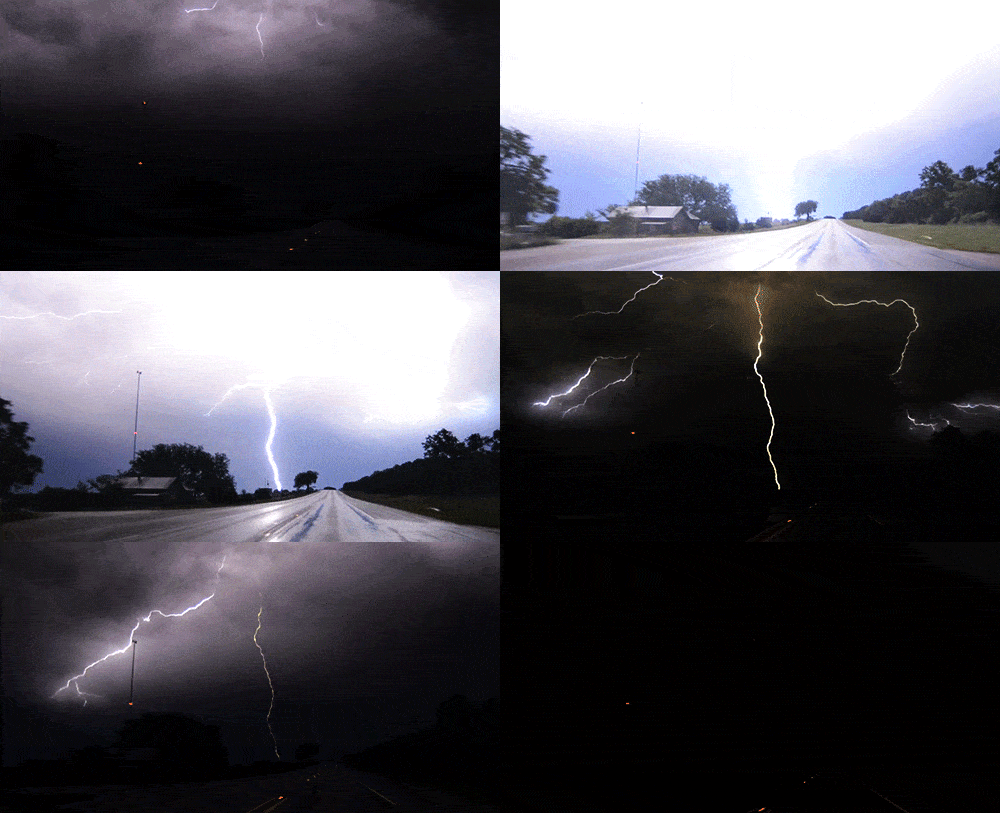
Lightning occurs because ___.
the negative charges at the bottom of clouds are attracted to the positive charges on the ground.
the positive charges at the bottom of clouds are attracted to the negative charges on the ground.
the positive and negative charges inside clouds are attracted to each other
All of these reasons are correct.
25
Review Questions
Time to see what you have learned!
26
Multiple Choice
What charge does an electron have?
negative (-)
positive (+)
neutral or no charge (0)
27
Multiple Choice
What charge does a proton have?
negative (-)
positive (+)
neutral or no charge (0)
28
Multiple Choice
Mrs. Davis rubbed two balloons with a piece of wool. What will happen when the balloons are brought near each other?
The balloons will repel each other.
The balloons will attract each other.
The balloons will become positively (+) charged.
The balloons will pop.
29
Multiple Choice
30
Multiple Choice
What is a region around a charged object where the object's electric force is exerted on other objects?
electric field
magnetic field
electric charge
negative charge
31
Multiple Choice
At which point is the electric field the strongest
A
B
C
D
32
Multiple Choice
At which point is the electric field the weakest?
A because it is the furthest away
A because the field lines are further apart
C because the field lines are further apart
C because it is the furthest away
33
Multiple Choice
the charging of an object by the contact of a charged object to a neutral object (like touching a door knob)
induction
conduction
friction
34
Multiple Choice
Electrical charge built up on the surface of an object is called _________________.
static electricity
current electricity
lightning
electrons
35
Multiple Choice
During a lab a balloon was rubbed with a wooly fabric. This is an example of which type of charging?
conduction
friction
induction
36
Multiple Choice
Bending water with a charged balloon is an example of what type of charging (charging an object without touching)
friction
induction
conduction
37
Multiple Choice
Which of the following is caused by static electricity?
a stove getting hot when it is turned on
a magnet being attracted to a refrigerator
a lightning strike during a storm
a light bulb coming on when a switch is turned on
38
Multiple Choice
Lightning occurs because ___.
the negative charges at the bottom of clouds are attracted to the positive charges on the ground.
the positive charges at the bottom of clouds are attracted to the negative charges on the ground.
the positive and negative charges inside clouds are attracted to each other
All of these reasons are correct.
Electric Charge & Static Electricity
Chapter 6 Lesson 1 p. 158-165

Show answer
Auto Play
Slide 1 / 38
SLIDE

Similar Resources on Wayground
35 questions
Magnetic Force
Presentation
•
6th - 8th Grade
35 questions
Newton's Laws of Motion
Presentation
•
8th Grade
33 questions
Organs & Organ Systems
Presentation
•
7th Grade
33 questions
Specific Heat & Local Winds
Presentation
•
6th - 8th Grade
32 questions
Genetic Engineering
Presentation
•
8th Grade
32 questions
TCi Adaptation Lesson 3
Presentation
•
6th - 8th Grade
32 questions
Circulatory System
Presentation
•
6th - 8th Grade
35 questions
Balanced and Unbalanced Forces
Presentation
•
6th - 8th Grade
Popular Resources on Wayground
10 questions
5.P.1.3 Distance/Time Graphs
Quiz
•
5th Grade
10 questions
Fire Drill
Quiz
•
2nd - 5th Grade
20 questions
Equivalent Fractions
Quiz
•
3rd Grade
22 questions
School Wide Vocab Group 1 Master
Quiz
•
6th - 8th Grade
20 questions
Main Idea and Details
Quiz
•
5th Grade
20 questions
Context Clues
Quiz
•
6th Grade
20 questions
Inferences
Quiz
•
4th Grade
12 questions
What makes Nebraska's government unique?
Quiz
•
4th - 5th Grade
Discover more resources for Science
8 questions
Amoeba Sister Asexual vs Sexual Reproduction
Interactive video
•
8th Grade
19 questions
Introduction to Properties of Waves
Presentation
•
6th - 8th Grade
16 questions
Interactions within Ecosystems
Presentation
•
6th - 8th Grade
10 questions
Exploring the Layers of the Earth
Interactive video
•
6th - 10th Grade
16 questions
Photosynthesis and Cellular Respiration Review
Quiz
•
7th Grade
20 questions
Abiotic & Biotic Factors
Quiz
•
7th Grade
10 questions
Exploring the Evolution of Cell Theory
Interactive video
•
7th Grade
17 questions
Human body systems
Quiz
•
7th Grade